

A 14 SEER air conditioning system offers a balance between energy efficiency and affordability for homeowners in Fairfax County, VA. Installing a 14 SEER AC unit can lower your cooling costs compared to older systems while meeting current efficiency standards.
Many local HVAC companies service the Fairfax area and can help you choose and install the right system for your home. You’ll also want to know when your current system needs replacement and what to expect during the installation process.
This guide walks you through everything about 14 SEER AC installation in Fairfax County. You’ll learn about costs, how to pick a reliable installer, and how to keep your new system running well for years to come.
Here’s what you need to know:
- What is a 14 SEER AC and why it matters
- Signs you need a 14 SEER AC installation
- Costs and considerations for 14 SEER AC installation
- The 14 SEER AC installation process
- Choosing the Right System and Installer
- Maintaining your 14 SEER AC for longevity
Keep reading! Understanding what a 14 SEER rating means and how it affects your comfort and utility bills helps you make a smart decision.
To see what a new system runs at your home and square footage, use the AC and furnace price estimator. It takes about two minutes and shows monthly payment options.
What is a 14 SEER AC and why it matters
A 14 SEER AC represents the baseline for modern cooling efficiency in most U.S. homes, and understanding how this rating affects your energy bills and comfort helps you make better decisions about your Fairfax County home’s cooling system.
Understanding SEER ratings and energy efficiency
SEER stands for Seasonal Energy Efficiency Ratio. This number measures how efficiently your air conditioner converts electricity into cooling power over an entire cooling season.
The calculation works like this: SEER divides the total cooling output in BTUs by the total electricity used in watt-hours. A higher SEER number means your AC uses less electricity to produce the same amount of cooling.
A 14 SEER system meets the federal minimum efficiency standard for air conditioners. You should note that the industry recently updated its testing standards to SEER2, which measures efficiency more accurately. Under this new system, your old 14 SEER unit would rate as 13.4 SEER2.
Per the U.S. Department of Energy (DOE), as of January 2023 the updated efficiency metric is SEER2 (with updated test procedures), so comparing “14 SEER” to new equipment should be done using SEER2 values and current labels.
For Fairfax County homes, this rating directly impacts your monthly electric bills. The more efficient your system runs, the less you pay to stay cool during hot Virginia summers.
Differences between 14 SEER and other AC systems
The main differences between SEER ratings involve efficiency, technology, and cost. Here’s what separates a 14 SEER system from higher-rated options:
Efficiency gap: A 16 SEER unit uses about 12-15% less energy than a 14 SEER system. An 18 SEER unit can reduce energy consumption by roughly 25-30% compared to the 14 SEER baseline.
Technology features: Higher SEER systems often include variable-speed compressors and advanced humidity control. Standard 14 SEER units typically use single-stage compressors that run at full capacity or shut off completely.
Noise levels: Systems rated above 14 SEER generally operate more quietly because their variable-speed technology runs at lower speeds most of the time.
Initial investment: A 14 SEER air conditioner costs less than a 16 SEER one of the same size. The upfront savings make 14 SEER units attractive for budget-conscious homeowners.
How a 14 SEER AC benefits Fairfax County homes
The benefits of 14 SEER AC systems align well with Fairfax County’s climate and housing needs. This moderate efficiency level provides reliable cooling without the premium price tag of higher-rated systems.
Your energy bills stay reasonable with an energy-efficient AC installation at 14 SEER. Most Fairfax County homeowners see monthly cooling costs between $90-$150 during peak summer months, depending on home size and usage patterns.
The simpler technology in 14 SEER units means lower maintenance costs and easier repairs. Parts are widely available, and most local HVAC technicians can service these standard systems without specialized training.
For homes with older ductwork or limited insulation, a 14 SEER system makes practical sense. Investing in ultra-high efficiency equipment won’t deliver maximum returns if your home’s envelope can’t support it. You get better value addressing those issues first before upgrading beyond 14 SEER.
These systems also work well as replacement units in rental properties or homes you plan to sell within 5-7 years, where the payback period for higher SEER ratings might extend beyond your ownership.
Signs you need a 14 SEER AC installation
Your air conditioner shows clear warning signs when it’s time for a replacement. Recognizing poor performance, higher bills, and mounting repair costs helps you decide when upgrading to a 14 SEER system makes financial sense.
Poor cooling or inconsistent air delivery
Your AC system should cool your Fairfax County home evenly throughout every room. When you notice hot spots in certain areas or rooms that never reach the temperature on your thermostat, your system is struggling to do its job.
Weak airflow from your vents indicates problems with the compressor or ductwork. You might feel barely any air coming out, or the air feels warm instead of cold.
Strange noises like grinding, squealing, or banging point to mechanical failures inside your unit. These sounds often mean parts are wearing out or breaking down.
If your system runs constantly but fails to cool your home properly, it’s working too hard without results. This wastes energy and drives up your utility bills while leaving you uncomfortable.
Rising energy bills and aging systems
Your energy costs provide clear evidence of AC efficiency problems. A sudden spike in your electric bill during cooling season means your system uses more power to produce the same cooling output.
Systems older than 10-15 years lose efficiency over time. If your current AC was installed before 2011, it likely has a SEER rating of 10 or lower. Upgrading to a 14 SEER unit can reduce your cooling costs by up to 30%.
Fairfax County homes with 20-year-old systems see the biggest savings from replacement. Older units also use outdated refrigerants that are being phased out, making repairs more expensive and difficult.
Frequent repairs vs. full system replacement
You should track how much you spend on AC repairs each year. If repair costs exceed half the price of a new system, replacement makes better financial sense.
The $5,000 rule helps you decide: multiply your system’s age by the repair cost. If the total exceeds $5,000, replace the unit instead of repairing it.
Multiple service calls in a single cooling season signal your system is at the end of its life. Components will continue failing one after another, leaving you paying for repairs repeatedly.
Parts for older systems become harder to find and more expensive. Your HVAC technician may need to special order components or substitute parts, extending repair time and increasing costs.
Costs and considerations for 14 SEER AC installation
Installing a 14 SEER air conditioner in Fairfax County involves understanding equipment prices, labor rates, and local requirements. Your total investment depends on system size, existing infrastructure, and energy savings over time.
Typical installation cost in Fairfax County VA
An air conditioner on its own is priced by size in our heating and cooling estimator, and a furnace and air conditioner replaced together run $8,898 to $23,000 installed. That price covers the equipment and professional installation by a licensed HVAC contractor.
From about $148 a month at 0% APR for 60 months, the whole price financed, on approved credit. How financing works
The price varies based on your home’s cooling needs: a 2 ton unit for a smaller home costs less than a 3 ton, and a larger home that needs 4 tons costs more again.
Fairfax County labor rates tend to be slightly higher than the national average due to the region’s cost of living. Most contractors include the outdoor condenser unit, indoor evaporator coil, refrigerant, and basic installation in their quotes. You should verify what your quote covers before signing a contract.
Factors that influence pricing (size, ductwork, permits)
Your unit size directly affects the 14 SEER air conditioner cost in Fairfax County. Contractors calculate tonnage based on your home’s square footage, insulation quality, and ceiling height.
Existing ductwork condition plays a major role in total costs. If your ducts need repairs, sealing, or replacement, that is priced on top, after we see them, and new duct installation is a bigger addition again.
Fairfax County requires an HVAC permit, and your contractor typically handles the application. Some installations need electrical upgrades if your current panel can’t support the new system, and that is priced on top.
According to Fairfax County Land Development Services, residential HVAC projects can require submitting specific documentation (for example, a Residential HVAC Certification and an Air Leakage/Duct Leakage Test form) as part of the permitting/inspection workflow, so your installer should account for these steps in the project timeline.
Key cost drivers:
- Equipment size and brand
- Ductwork repairs or replacement
- Electrical panel upgrades
- Permit and inspection fees
- Disposal of the old unit
Comparing long-term savings vs upfront cost
A 14 SEER system costs less upfront than higher-efficiency models while still providing reasonable energy savings.
Your monthly cooling costs depend on usage patterns and local electricity rates. In Fairfax County, where summer temperatures average 85-90°F, a 14 SEER unit running 8 hours daily costs approximately $120 to $180 per month during peak season.
Upgrading from an older 10 SEER system saves you about 25-30% on cooling costs. This translates to $300 to $500 in annual savings for most homes. Your payback period for the new system typically falls between 8 and 12 years based on these savings.
Higher SEER ratings offer greater long-term savings but require longer payback periods. You should consider how long you plan to stay in your home when deciding between efficiency levels.
The 14 SEER AC installation process
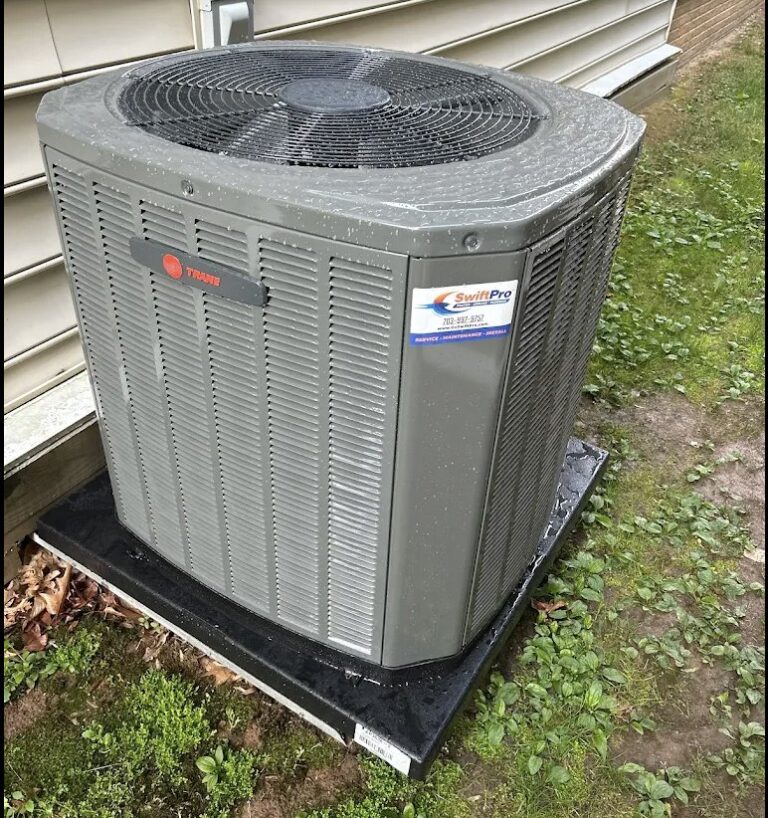
Installing a 14 SEER air conditioning system involves careful planning, precise execution, and thorough testing to ensure optimal performance. Your contractor will follow specific steps to properly size, install, and calibrate your new cooling system.
Pre-installation home assessment and load calculation
Your HVAC contractor needs to perform a detailed home assessment before installation begins. This evaluation examines your home’s square footage, insulation levels, window types, ceiling heights, and sun exposure patterns. The contractor also checks your existing ductwork for leaks, damage, or sizing issues.
The load calculation determines the exact cooling capacity your home requires. This calculation prevents undersizing or oversizing your unit, which both cause problems. An undersized unit can’t cool your home properly, while an oversized unit cycles on and off too frequently and wastes energy.
Your contractor will review your current electrical panel to confirm it can handle the new system’s power requirements. The condensing unit operates on 24 VAC controls with standard thermostats. If upgrades are needed, you’ll know before installation day.
What to expect on installation day
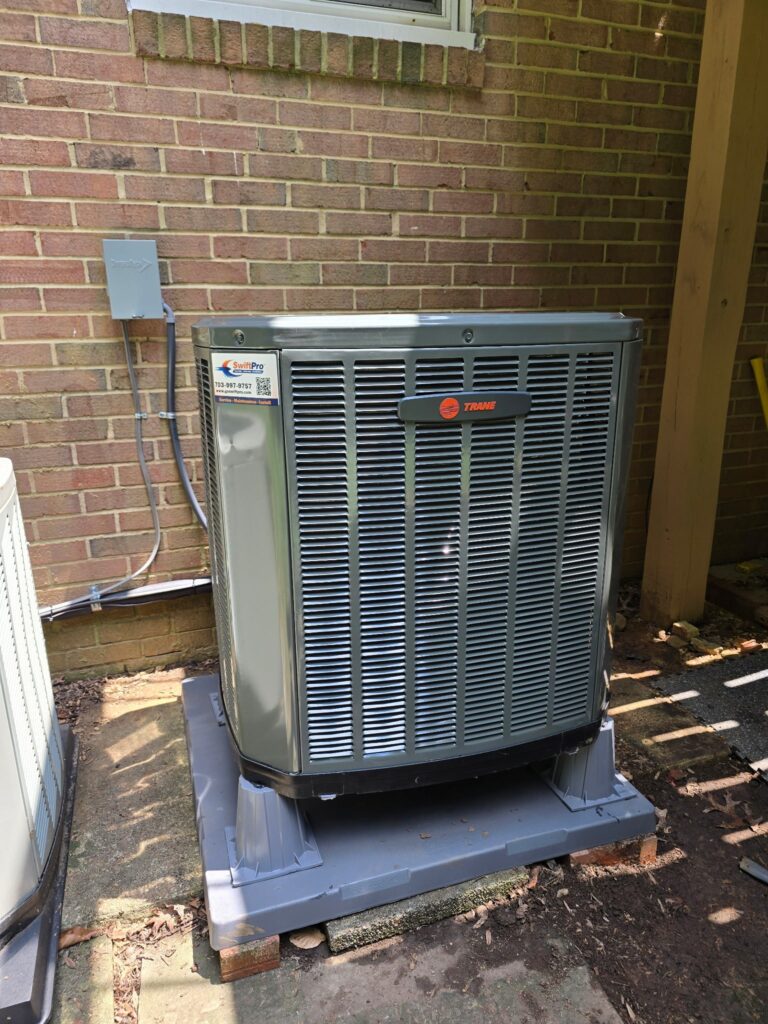
The installation team will arrive with your new condensing unit and air handler or furnace. They’ll remove your old system and prepare the installation site. The outdoor condensing unit gets positioned on a stable pad with proper clearances for airflow and service access.
Inside your home, the team installs the air handler and connects it to your existing or new ductwork. They run refrigerant lines between the outdoor and indoor components, using R-410A refrigerant that operates at 50% to 70% higher pressures than older R-22 systems.
The factory refrigerant charge covers the unit plus 25 feet of standard interconnecting lines. Your installer will evacuate the system and check for proper refrigerant levels. They’ll also seal all connections, insulate refrigerant lines, and install the thermostat.
Ensuring proper calibration and performance testing
After installation, your technician runs comprehensive tests to verify system performance. They check refrigerant pressure levels, airflow rates, and electrical connections. The thermostat gets calibrated to communicate properly with your 2-stage condensing unit.
Your installer measures the temperature drop across the evaporator coil to confirm adequate cooling capacity. They test both stages of cooling operation to ensure smooth transitions between low and high-speed modes.
The final inspection includes checking for refrigerant leaks, verifying proper drainage from the condensate line, and testing all safety controls. Your contractor will demonstrate thermostat operation and explain your system’s maintenance requirements before completing the job.
Choosing the Right System and Installer

Selecting a 14 SEER AC unit requires evaluating your home’s specific cooling needs and finding a qualified contractor who can install it correctly. The right combination of equipment and installer will ensure your system runs efficiently for years.
How to select the best 14 SEER AC model for your home
You need to calculate your home’s cooling load before choosing a unit. This involves measuring your square footage, counting windows, checking insulation quality, and noting which direction your home faces.
The best 14 SEER AC units Fairfax County residents choose typically range from 2 to 5 tons in capacity. A system that’s too small won’t cool properly, while an oversized unit will cycle on and off too frequently.
Consider these factors when comparing models:
- Brand reputation for reliability and warranty coverage
- Noise levels measured in decibels during operation
- Compatibility with your existing ductwork and thermostat
- Features like two-stage cooling or variable-speed fans
Single-stage compressors work at full power whenever they run. Two-stage models offer a lower setting for mild days, which saves energy and reduces wear.
Questions to ask your HVAC contractor
Ask potential contractors how long they’ve been installing AC systems in Fairfax County. Experience with local building codes and permit requirements matters for smooth installation.
Request these details in writing before signing any contract:
- Total project cost including equipment, labor, permits, and disposal fees
- Installation timeline with specific start and completion dates
- Warranty terms for both parts and labor
- Credentials such as a current Virginia contractor license and manufacturer training
Find out if they’ll perform a Manual J load calculation. This industry-standard assessment determines the correct system size for your home. Contractors who skip this step often install the wrong capacity unit.
Ask about their disposal process for your old system. Responsible contractors properly recycle refrigerants and metal components according to EPA guidelines.
According to the U.S. EPA, Section 608 of the Clean Air Act requires technicians who maintain, service, repair, or dispose of equipment that could release refrigerants to be certified, reinforcing that refrigerant recovery and disposal during AC replacement should be handled by properly credentialed professionals.
Why a certified Fairfax County installer matters
Professional AC installation Fairfax VA contractors must hold valid licenses from the Virginia Board for Contractors. This credential confirms they’ve met state requirements for technical knowledge and financial responsibility.
A current state contractor license and factory training show a technician has passed rigorous exams on HVAC installation and service. These professionals understand proper refrigerant charging, ductwork sizing, and electrical connections.
Local installers know Fairfax County’s permit requirements and inspection processes. They handle the paperwork and schedule necessary inspections with county officials. Improper installation voids most manufacturer warranties. A certified installer documents their work and follows brand-specific installation guidelines that protect your coverage.
Maintaining your 14 SEER AC for longevity
A 14 SEER AC unit in Fairfax County can last 10 to 15 years with proper care. Regular maintenance protects your investment and keeps your system running efficiently through hot Virginia summers.
Recommended maintenance schedule
You should change or clean your air filters every 1 to 3 months during cooling season. This simple task prevents dust buildup and keeps air flowing properly through your system.
Schedule a professional tune-up once per year, ideally in spring before the cooling season starts. A technician will check refrigerant levels, clean coils, and inspect electrical connections during this visit.
Your outdoor condensing unit needs attention too. Clear away leaves, grass clippings, and debris from around the unit every few weeks. Keep at least two feet of clearance on all sides for proper airflow.
Check your thermostat batteries twice per year. Replace them before they die to avoid system interruptions.
Filter care and airflow optimization
Clean filters are the most important factor for efficient AC operation. Dirty filters force your system to work harder and use more energy.
Check your filter monthly by holding it up to light. If you can’t see through it easily, replace or clean it right away. Homes with pets or high dust levels may need filter changes every month instead of every three months.
Your indoor vents and registers need regular cleaning too. Vacuum them monthly and make sure furniture or curtains don’t block airflow. Each room should have both supply and return vents unobstructed.
The outdoor condenser coils collect dirt and pollen over time. Spray them gently with a garden hose once per season to remove buildup. Always turn off power to the unit before cleaning.
When to call for professional service
Contact a licensed HVAC technician immediately if you notice weak airflow, warm air from vents, or unusual noises. These signs indicate problems that can damage your system if ignored.
Ice forming on refrigerant lines or the outdoor unit means you have a serious issue. Turn off your AC and call for service right away. Your system uses R-410A refrigerant which operates at much higher pressures than older refrigerants and requires professional handling.
Water pooling around your indoor unit signals a clogged condensate drain. While you can try clearing it yourself, persistent drainage problems need professional attention.
Rising energy bills without increased usage suggest your system is losing efficiency. A technician can diagnose and fix the underlying cause before it leads to a complete breakdown.
Finalizing Your 14 SEER Air Conditioning Installation
A 14 SEER AC installation in Fairfax County VA meets the minimum efficiency requirements set by local regulations. Your new system will need to pass county inspection before it can be used.
For the total, the heating and cooling estimator prices an air conditioner on its own by your home’s size, equipment and professional installation by a licensed contractor included.
You should work with an experienced HVAC company that knows Fairfax County’s building codes and permit requirements. Proper installation ensures your system runs efficiently and lasts longer. Your contractor will handle the old system removal, new equipment installation, and all necessary connections.
Your new AC system will lower your monthly cooling costs compared to older, less efficient units. The investment pays off through reduced energy bills over the system’s lifespan.
Make sure you get multiple quotes from licensed contractors in your area. Check that they include warranty information and post-installation support. Your comfort and long-term savings depend on choosing the right equipment and qualified installers.
Schedule a professional on-site evaluation and written quote with SwiftPro for 14 SEER AC installation in Fairfax County, VA so your system is properly sized, permitted, and installed to meet current efficiency requirements.
Watch real system replacements go in
Real jobs in Northern Virginia homes, filmed by our own crew. Tap one to watch.