

Finding a hidden water leak in a Northern Virginia house runs $200 to $470 for most homes, and the middle is around $330. That covers the diagnosis, including opening drywall where the leak is when that is what it takes. The repair is separate and depends on what we find, which is the honest reason no company can quote a repair over the phone.
Before you pay anyone for a search, spend twenty minutes proving you have a leak and narrowing where. The EPA’s own numbers say it is worth doing: household leaks waste close to a trillion gallons a year nationally, the average home loses over 9,300 gallons a year, and nine percent of homes are losing 50 gallons a day or more. Fixing them cuts a water bill by about ten percent.
The meter test, which settles it in two hours
Turn off every faucet, the ice maker and the irrigation, and make sure nobody flushes. Find the water meter. In Fairfax Water and Loudoun Water territory it is usually in a pit near the street under a cast iron lid, though Fairfax notes that most houses built between 1971 and 1980 have an inside meter instead. Most meters have a small triangle or star that spins with any flow.
If that dial is moving with everything off, water is going somewhere. Fairfax Water’s own instruction is to read the meter, wait at least fifteen minutes with nothing running, and read it again; EPA suggests a two hour window for smaller leaks. Either way, a number that changed means a leak.
Then narrow it in one step. Close the main shutoff valve inside the house and watch the meter again. If it still moves, the leak is between the meter and that valve, which means it is underground in your yard. If it stops, the leak is inside.
If the meter is still and you still have a wet spot, the water is coming from a drain, a fixture overflow, the roof or the outside, not the supply. Different search entirely.
Where leaks hide in houses here
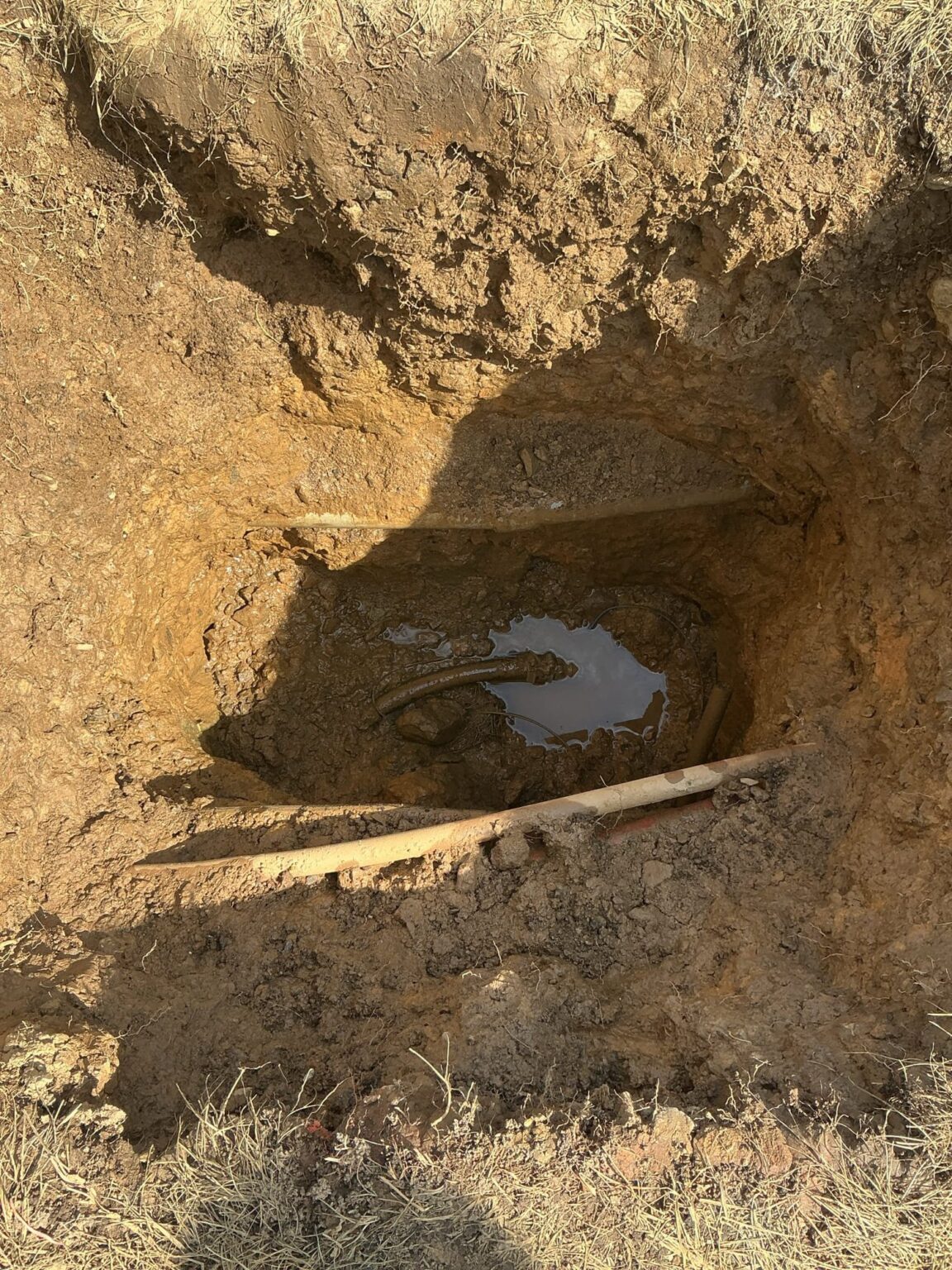
The service line, under the front yard. Every local utility says the same thing: the line from the meter to the house is yours. Fairfax Water spells out that your plumbing includes everything from the meter or valve near the street to the faucets inside, and that it does not maintain your pressure reducing valve either. Virginia American Water says the same for Alexandria, from the curb stop to the building. A soggy patch of lawn that never dries, a wet spot near the foundation, or a bill that jumped with no change in habits is the classic pattern, because the water goes into the ground and you never see it.
Under the slab. Ramblers and split levels with plumbing run in the concrete. The classic signs are a warm spot on the floor, because it is usually the hot line, the sound of water running when nothing is on, and a water heater that never stops. Insurers list the same set.
Inside a wall or ceiling. A stain under a bathroom, soft drywall, bubbling paint. Usually a fitting, a shower valve, or a pinhole in copper. Pinholes in older copper are a documented regional problem: across the river, WSSC logged more than 5,000 customer reports and found nearly 80 percent of them in homes built before 1970, mostly in cold water horizontal runs. Nobody on the Virginia side publishes an equivalent statement, but the copper and the era are the same, and so is what we find.
Polybutylene, anywhere in the house. If your home was built or replumbed between 1978 and 1995 and the pipe is grey plastic with crimp fittings, that is polybutylene. It was the subject of a $1.073 billion class action settlement in 1995, it fails at fittings without warning, and at least one Virginia carrier lists it as unacceptable in its underwriting guidelines. Finding one leak in a polybutylene house is finding the first one.
The obvious places nobody checks. A toilet flapper leaking silently into the bowl. Put ten drops of food coloring in the tank and wait ten minutes; if color reaches the bowl, that is your leak, and Fairfax Water gives out free dye tablets for exactly this. Also: a water heater relief valve dripping into a drain, an outdoor spigot cracked open with a hose attached, and an irrigation head that broke last fall. We would rather you find one of these than pay us to.
How we actually find it
We isolate sections and watch pressure. Hot side against cold side first, which cuts the house in half. Then the service line alone, using the main valve trick above.
Acoustic listening picks up the sound of water escaping a pressurized pipe, and the sound is loudest nearest the leak. It works well on slab leaks and service lines. A thermal camera finds the warm streak of a hot line leak in a floor or wall. Moisture meters map how far a wet area actually extends, which tells us where to open.
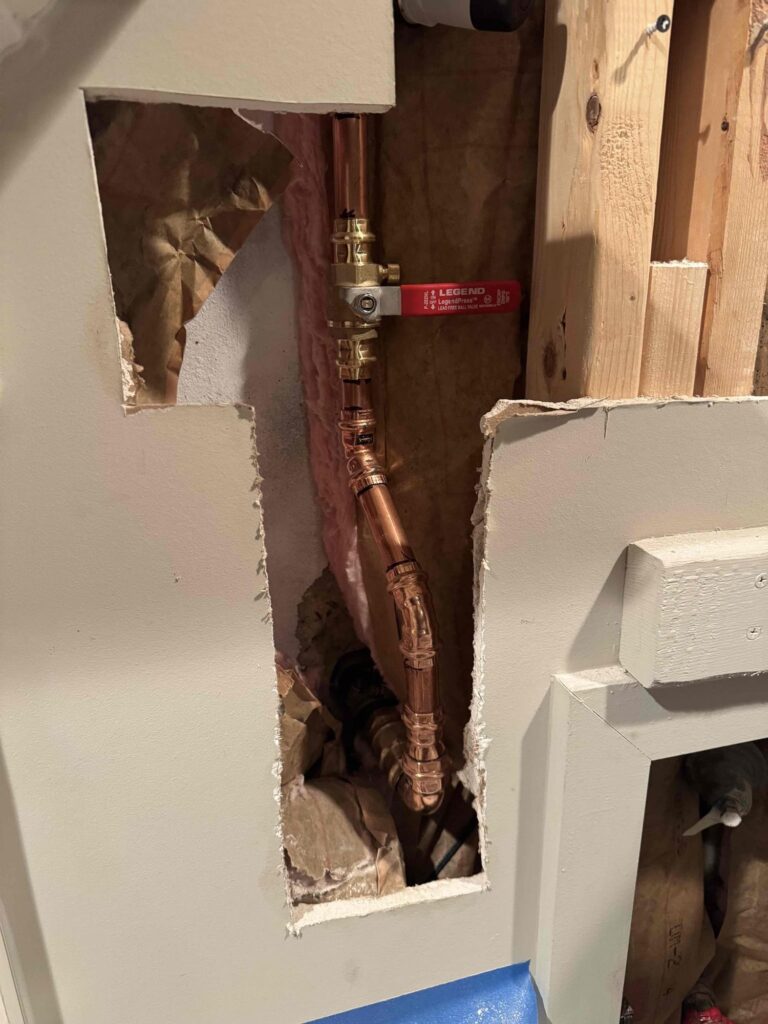
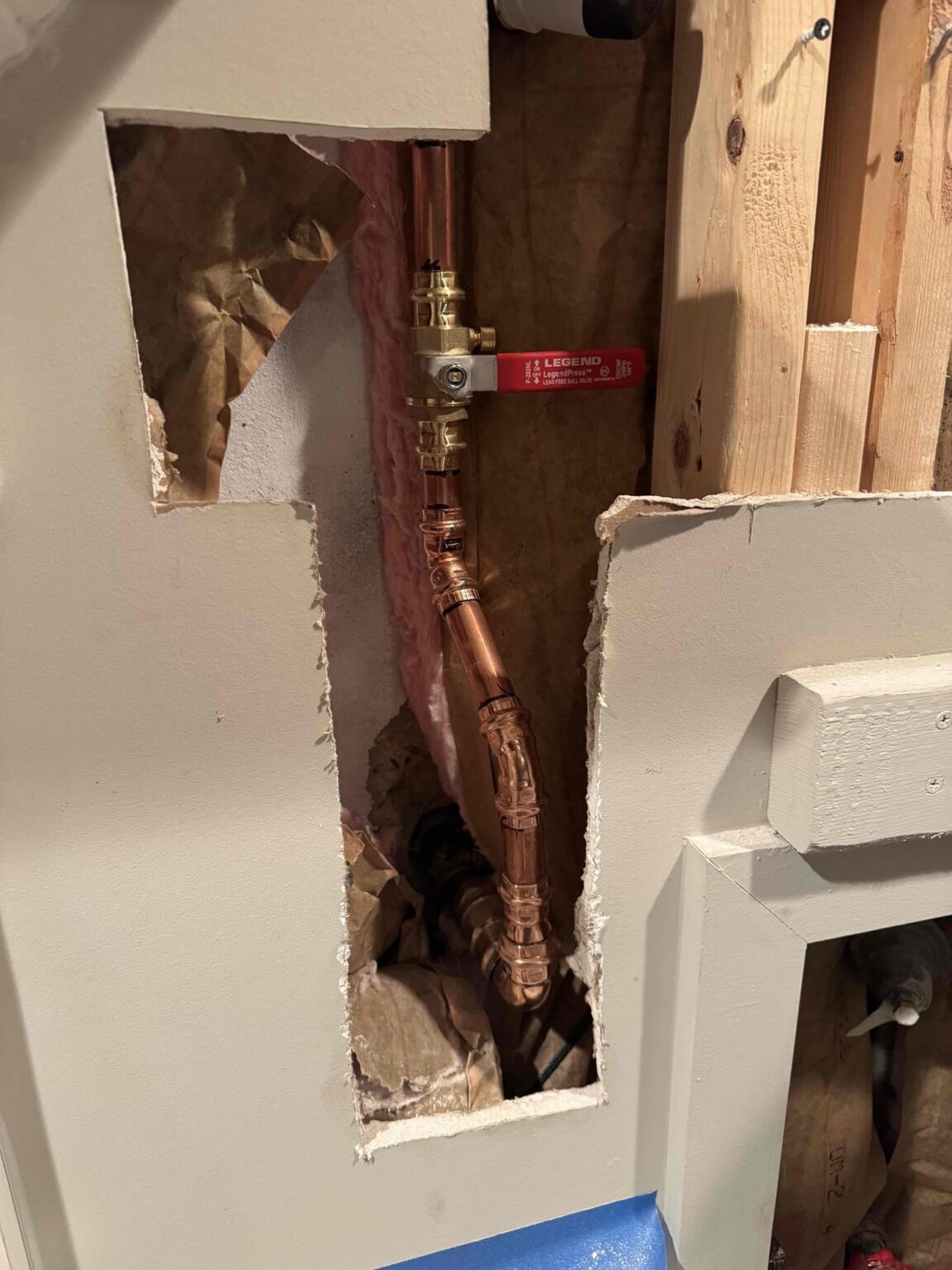
Then we open the wall or the floor in one spot, where the evidence says the leak is. Opening drywall is part of a search and it is in the numbers above. What we do not do is open three walls to find one leak, which is the difference between a search and a demolition.
The pressure problem behind a lot of leaks
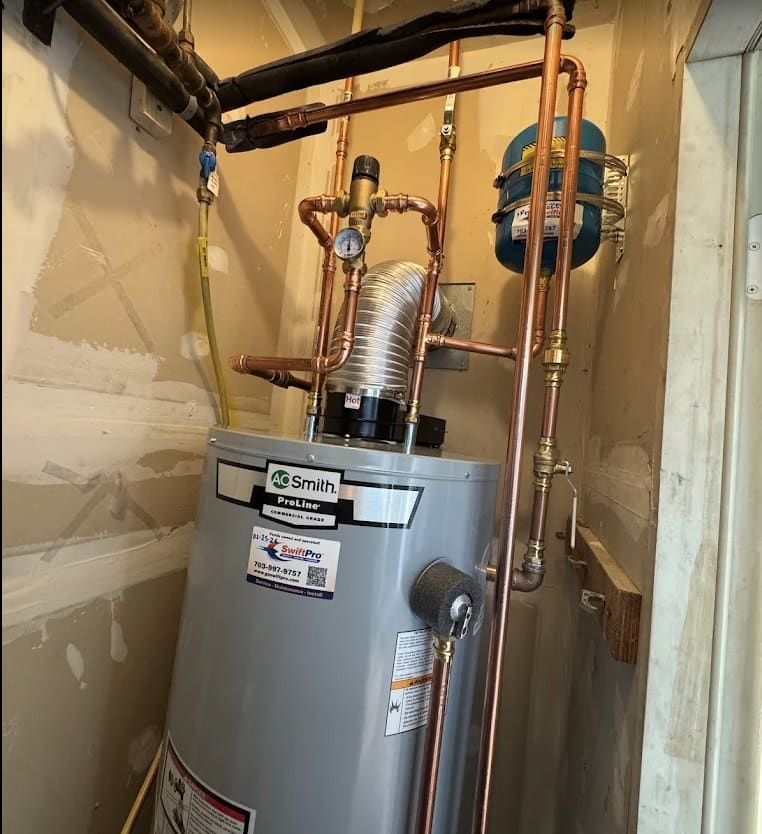
Water pressure off the main in parts of Northern Virginia runs well over 100 psi. Plumbing code requires a pressure reducing valve wherever static pressure exceeds 80 psi, and those valves wear out. When one fails, your whole house runs at street pressure, and you get pinholes, running toilets, banging pipes and a water heater relief valve that weeps.
If you have had two leaks in a year, check the pressure before you fix the third. A gauge that screws onto a hose bib costs about $12. Replacing a failed pressure reducing valve runs $500 to $994, most right around $930, and it is the repair that prevents the next three.
Your water bill, and what the utility will do about it
Every local utility has some form of leak adjustment, and none of them advertise it loudly.
Fairfax Water offers a one-time courtesy leak adjustment: you must repair promptly, provide receipts, and have had no adjustment in the previous five years. One quarterly billing period, capped at $5,000. Loudoun Water gives a courtesy adjustment on underground leaks between the meter and the main cutoff covering the water and sewer overage, up to two quarters, and it sends smart-meter leak alerts by email or phone. Prince William Water will send someone to check the meter; the number is 703-335-7950. Arlington requires a plumber’s invoice with the request.
Two things follow from that. Keep the invoice. And fix it quickly, because every one of those policies is conditioned on prompt repair.
Things people ask
Can you find it without opening anything? Often, to within a foot or two. Confirming and fixing it means opening that foot or two. We will show you where before we cut.
Will insurance pay? Sudden leaks and the damage they cause are usually covered; the pipe repair itself often is not, and long term seepage is a fight. Photograph everything, call your carrier before the repair when the damage is significant, and ask us for a written finding. We write those routinely.
Is the $79 plumbing inspection the same as a leak search? No. The inspection is a walk through of the visible plumbing, the pressure, the water heater and the fixtures, and it catches the obvious leaks and the conditions that cause them. A leak search is the targeted hunt for one you already know is there. Start with the inspection if you are not sure, and the search if the meter is spinning.
It is winter and a pipe just burst. That is a different emergency. Shut the main first, and here is the rest of the first four minutes.
SwiftPro finds and repairs water leaks across Northern Virginia. Call (703) 997-9757, or book online.