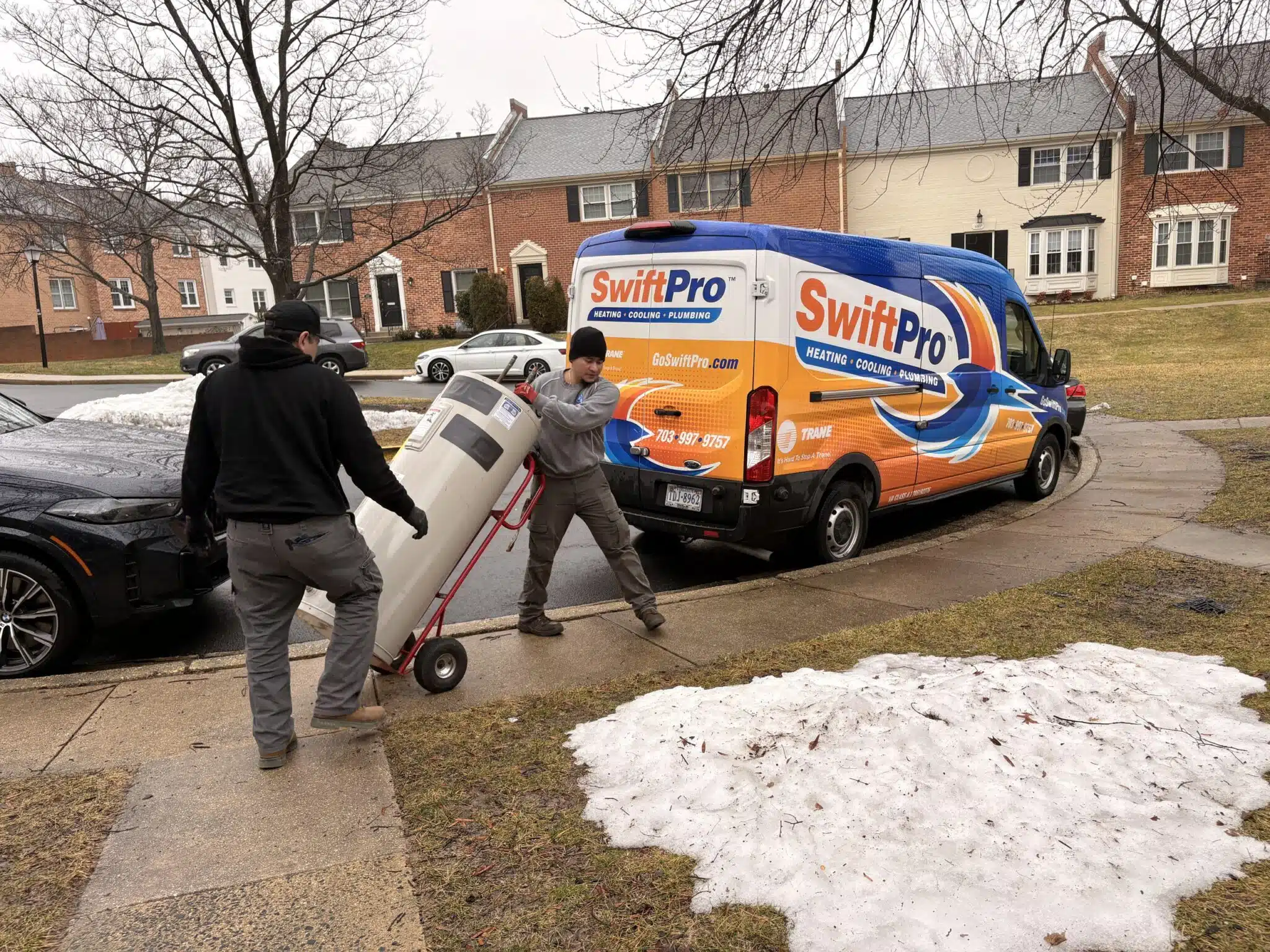


Most people buy two or three water heaters in a lifetime, which means nobody gets much practice at it. So when yours quits in Fairfax and three quotes come back describing three apparently different jobs, here’s the missing manual: what a water heater installation is supposed to include, where the corners get cut, and how to decide between another tank and going tankless. Read this and you’ll know exactly which questions separate a real installer from a box-swapper.
Right-sizing comes first
“Whatever size the old one was” is how houses end up rationing showers for a decade. Proper sizing looks at the household, not the closet: how many bathrooms, whether the tub actually gets used, laundry habits, and how many people need hot water in the same hour. Sometimes the answer is the same 50-gallon tank. Sometimes it’s a taller tank, a higher recovery rate, or the moment to switch technologies. The point is that somebody should actually do that math for your house before quoting you a unit.
What a to-code install includes in Fairfax
- A permit and an inspection. A water heater replacement needs a plumbing permit in most Northern Virginia jurisdictions, Fairfax included. An installer who waves that off is telling you how the rest of the job will go. We pull the permit and meet the inspector as part of the work.
- An expansion tank. Most Fairfax homes are closed plumbing systems, with a pressure reducing valve or check protection at the meter. Heated water expands, and in a closed system that pressure needs a tank to absorb it. Skipping this stresses the new heater and every fixture in the house.
- A proper temperature and pressure relief discharge. The TPR valve is the heater’s safety release, and its discharge pipe has to be the right size, the right material, and aimed somewhere safe. It’s a small detail with an outsized safety job.
- Correct venting for gas units. Draft problems are invisible right up until they aren’t. Vent sizing and slope get checked, not assumed, and combustion air matters if the heater lives in a closet.
- A drain pan over finished space, code-required in placements like attics and smart everywhere a leak would find drywall.
- New shutoff, clean connections, haul-away. The old unit leaves with us, and you shouldn’t inherit a corroded valve on a brand-new install.

Tank or tankless, honestly
A tank is the lower upfront cost, the simpler install, and completely fine for many households. Its tradeoffs are a fixed supply of hot water, a footprint on the floor, and a typical 8-to-12-year life.
Tankless heats water on demand: endless hot water, roughly double the service life, lower standby energy use, and a reclaimed corner of the basement. The tradeoffs are a higher upfront cost and a real installation, since gas supply and venting usually need upgrading to feed one properly. The households that love tankless are the ones that kept outrunning their tank; if your current tank never leaves you cold, its replacement probably shouldn’t cost tankless money.
Replacement day is the cheapest moment to make the switch, because you’re paying for install labor either way. Ask for both options priced side by side and decide with real numbers for your house.
If it hasn’t died yet
A water heater near the end usually sends warnings: rusty hot water, rumbling as sediment cooks on the tank bottom, moisture around the base, recovery getting slower every month. Catching it at the warning stage means replacing on your schedule, with time to size it right, instead of during the flooded-utility-room version of this story. And if your current unit is mid-life, a periodic flush extends it; our $99 water heater flush exists for exactly that.
Getting it done
SwiftPro installs and replaces water heaters across Northern Virginia, with Fairfax square in the middle of the service area. Straight quotes, real sizing, permits handled, and most replacements done the same day so the cold showers end tonight, not Thursday. Call (703) 997-9757 or book online and tell us what the old unit is doing; we’ll tell you what it needs, and what it doesn’t.