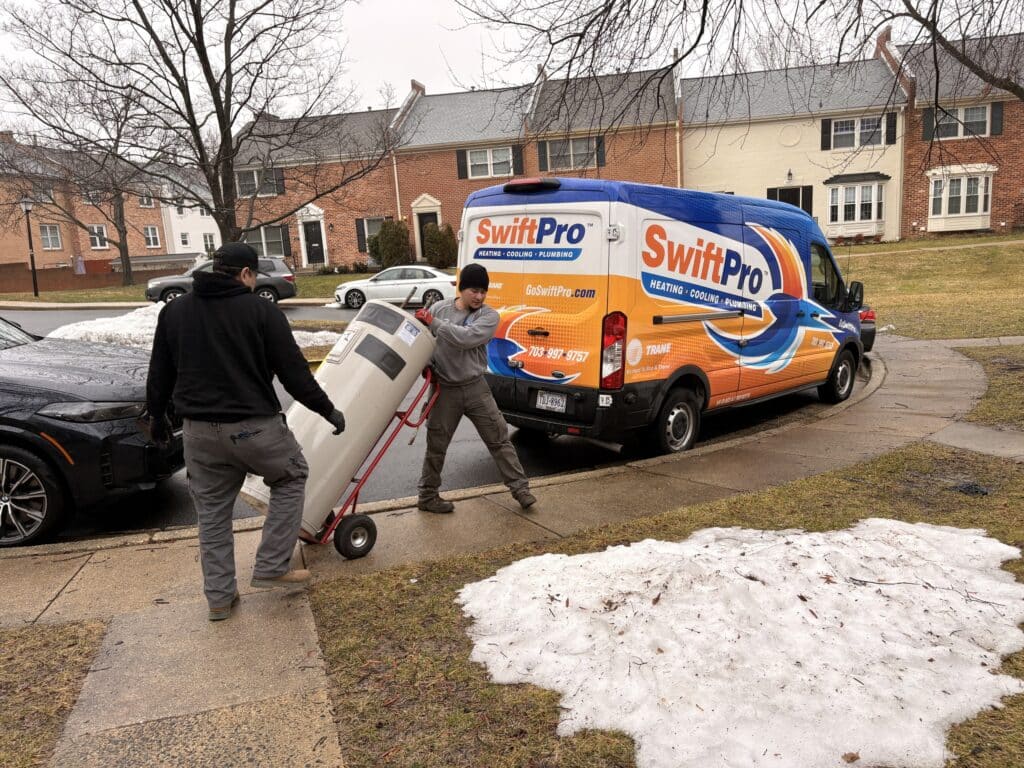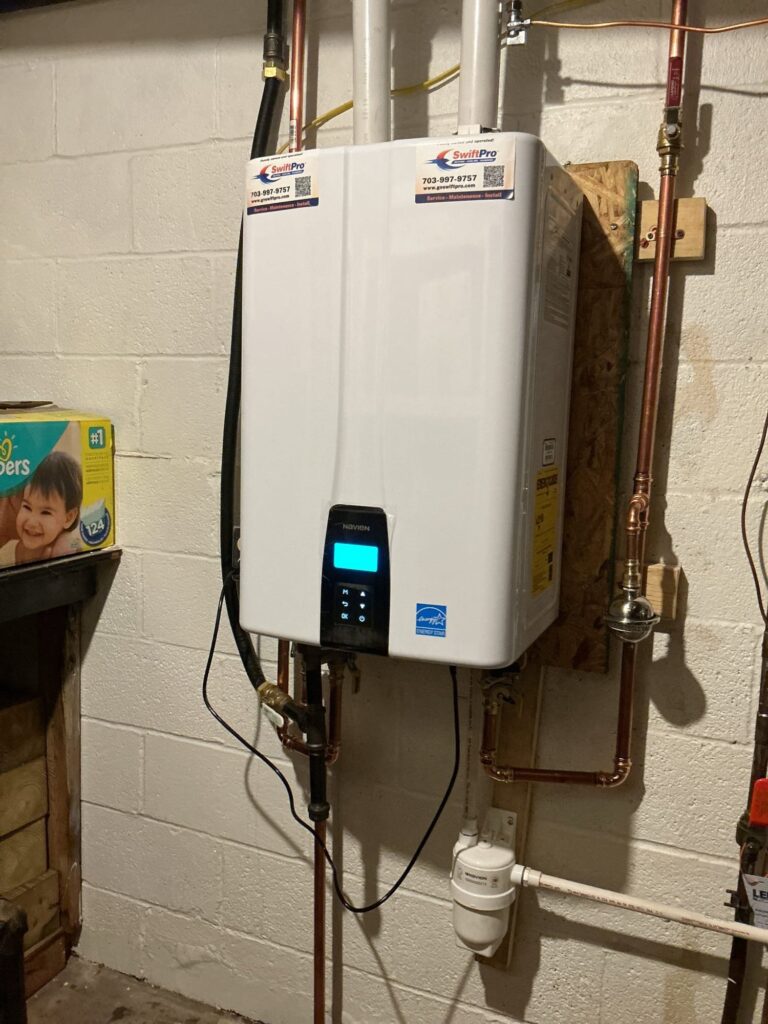


There is water under your water heater. Before anything else, here is the sentence that matters most: where the water is coming from tells you whether this is a repair or a replacement, and the two answers are not close.
A leak from the top or the side is usually a fitting, a valve or a connection, and those get fixed. Water coming from underneath the tank itself usually means the tank has rusted through, and a rusted tank cannot be repaired by anyone at any price. It is a steel container with a glass lining, the lining has failed, and the only fix is a new one.
So the first job is figuring out which one you have.
Find the actual source before you panic
Water runs downhill and then sits, so a puddle on the floor tells you almost nothing about where it started. Dry everything with towels, then look.
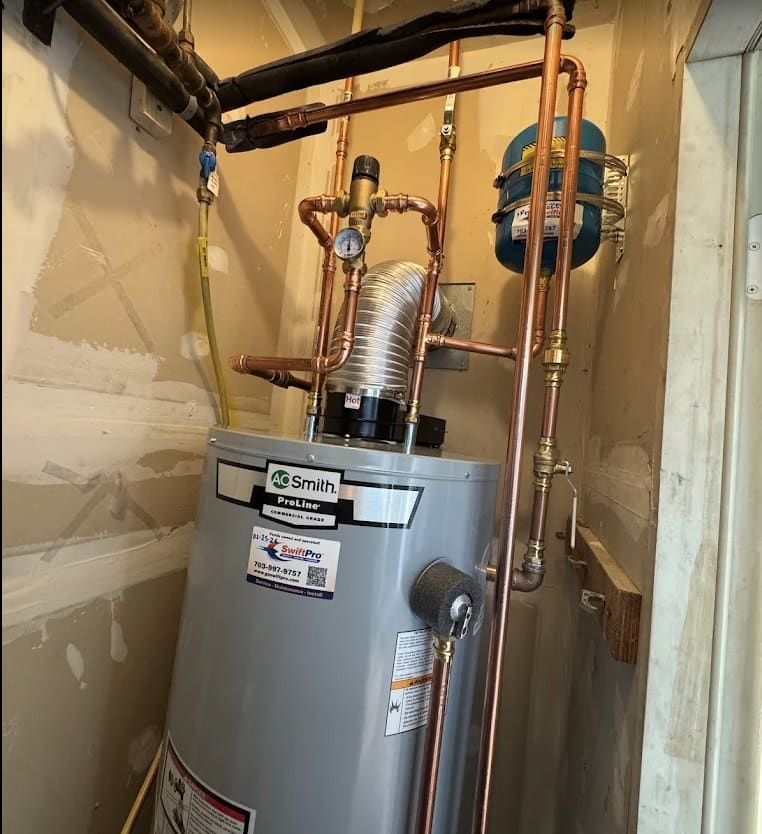
Check the top first. The cold inlet and hot outlet connections sit up there, and so does the anode rod fitting. A slow weep at a threaded connection leaves a mineral trail and a bit of corrosion. This is repairable.
Check the T and P valve. That is the temperature and pressure relief valve, usually on the side near the top, with a pipe running down toward the floor. If water is coming out of that discharge pipe, the valve is doing its job, and the real question is why. Either the valve has failed, or your system pressure or temperature is too high, which is its own problem worth solving. Do not cap this pipe. It is the safety device.
Check the drain valve. Near the bottom, looks like a hose spigot. These drip after they have been opened, and they get replaced. Repairable.
Check the fittings on any expansion tank mounted above or beside the heater.
Now check under the tank itself. Dry the pan or the floor completely, put down paper towel, and wait an hour. If water reappears from beneath the tank with every connection above it bone dry, that is the tank. That one is done.
Why the bottom is fatal and the top is not
Inside every tank water heater is a glass lining protecting the steel, and a sacrificial anode rod that corrodes on purpose so the tank does not. When the anode is used up, the steel starts to go. Sediment on the bottom accelerates it, because it traps heat against the tank floor and cooks that steel harder than the rest.
By the time water is weeping through, the failure is through the wall of the vessel. There is no patch, no weld, no sealant, and any company that offers you one is selling you a week.
Connections and valves are different. They are hardware bolted onto a sound tank, and hardware gets replaced.
What to do in the next ten minutes
If it is a drip, you have time to think. If it is running, do these in order.
- Kill the heat. Gas: turn the control knob on the front to OFF, or close the gas shutoff valve on the supply line. (A gas appliance that is sooting or smelling sharp is a different emergency.) Electric: switch off the breaker labelled for the water heater. Never leave an electric element energized in a draining tank.
- Shut off the water. There is a valve on the cold line entering the top of the heater. Turn it clockwise until it stops. If that valve will not close or does not exist, use the main shutoff for the house.
- Get the water away from anything that matters. Towels, a wet vacuum, and move boxes off the floor. A fifty gallon tank holds fifty gallons.
- Then call. Not before step one.
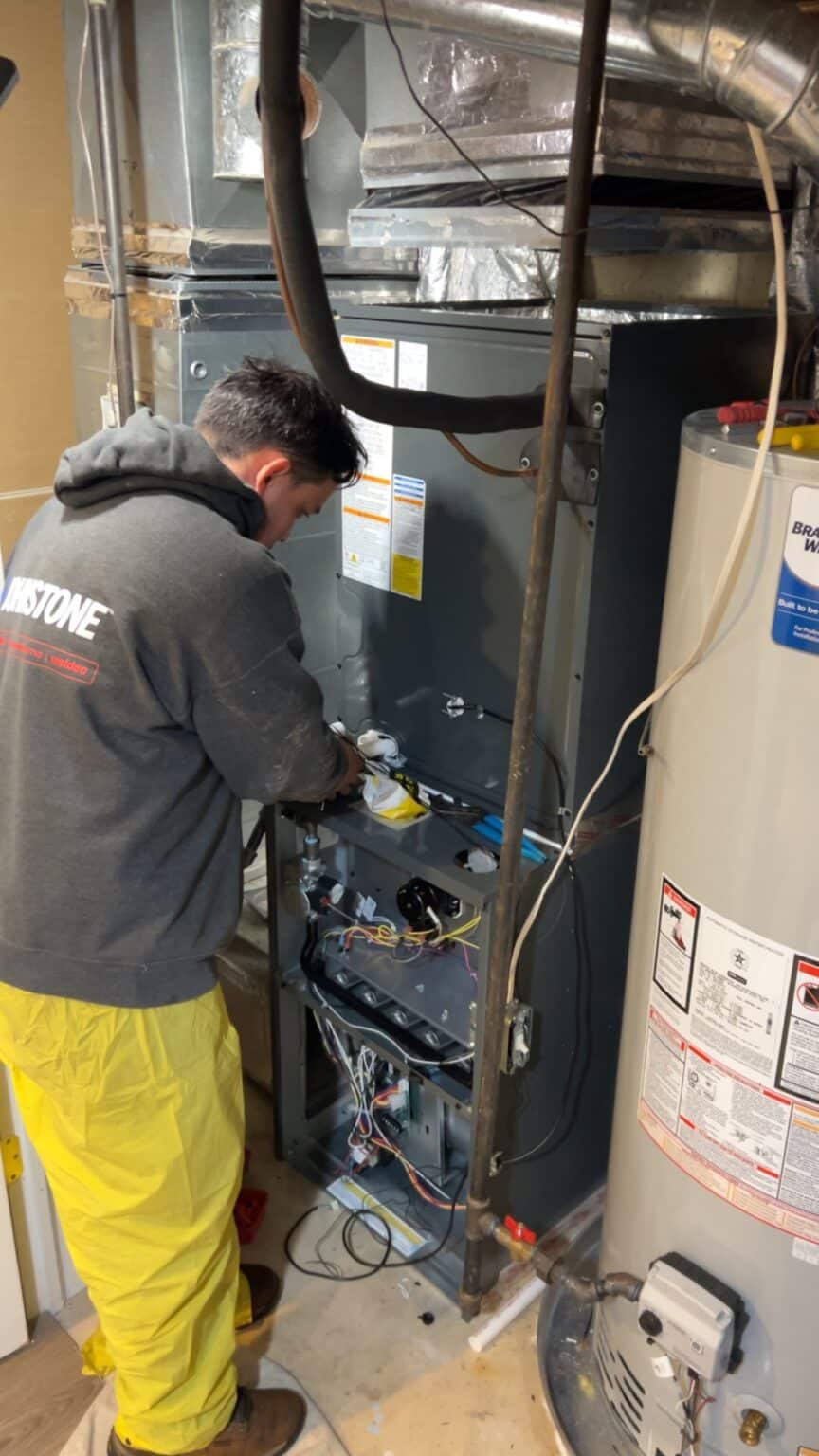
If you cannot find the main shutoff, that is worth solving on a calm afternoon rather than a wet one. Here is where it usually is in a Northern Virginia house.
The noises that come before the leak
Tanks give notice. Popping, rumbling or a sound like gravel in a pot is sediment on the bottom, superheating and flashing pockets of water to steam under the layer. It means the tank is running hotter on the floor than it was designed to, and that is the exact spot that eventually fails.
Other advance warnings: rusty or brown hot water (and only hot), hot water running out faster than it used to, moisture or rust staining around the base, and a unit past ten years old that has never been flushed.
If your heater is mid-life and rumbling, a flush and an anode check buys real time. Our $99 water heater flush exists for that stage. Once it is weeping from underneath, a flush is money spent on a tank that is leaving anyway.
How long you actually have
A tank that is seeping from the bottom might last a week or might open up tonight. Nobody can tell you which, including us. The failure mode when it goes is not a drip, it is the full contents of the tank on your floor, and if that floor is above finished space the water damage costs more than the heater did.
If yours is over ten years old and leaking from the tank, replace it on your schedule this week rather than the tank’s schedule at 2am.
What replacement runs
We publish our real numbers rather than a national average. Straight tank replacements in our books mostly land between about $2,300 and $5,300 installed, with the middle near $3,300, and what moves you inside that range is broken down here.
Getting it handled
SwiftPro repairs and replaces water heaters across Northern Virginia, with most replacements done the same day. We will tell you which of the two problems you have before we quote either one. Call (703) 997-9757 or book online, and if it is actively pouring, use the emergency line.