

Before you call anyone, spend ten minutes on the list below. About a third of the “emergency” AC calls we run on a July evening are a tripped breaker, a dead thermostat battery, a choked filter, or a float switch doing exactly what it’s for, and every one of those is fixable by the person standing in the house. The other two thirds are real, and for those the number is (703) 997-9757, answered around the clock.
And one thing first, because it’s the part people underestimate. The first week of July 2026, Reagan National hit 102, 102 and 103 on consecutive days and the heat index at Dulles reached 110. Fairfax County opened a 24-hour cooling center. The CDC counts about 700 heat deaths a year in this country, most of them people over 65, and a house with no AC in that weather is where a lot of them happen. So the ten minute check comes first, and then the question is whether anyone in the house needs to be somewhere else tonight.
AC stopped working? The ten minute check
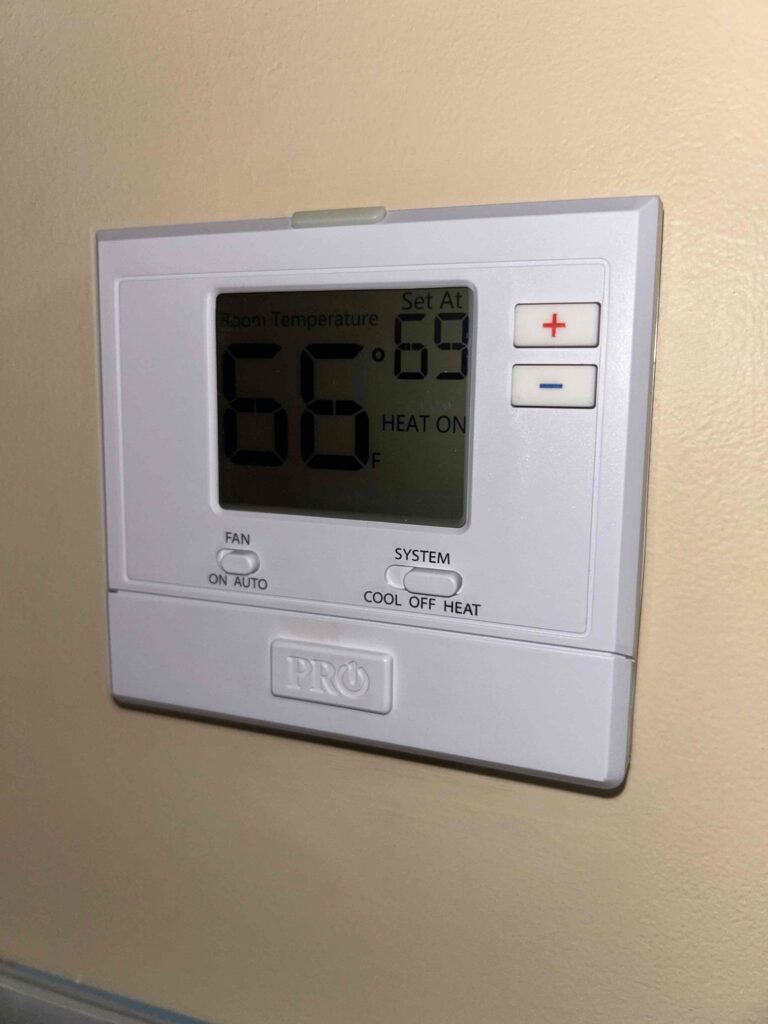
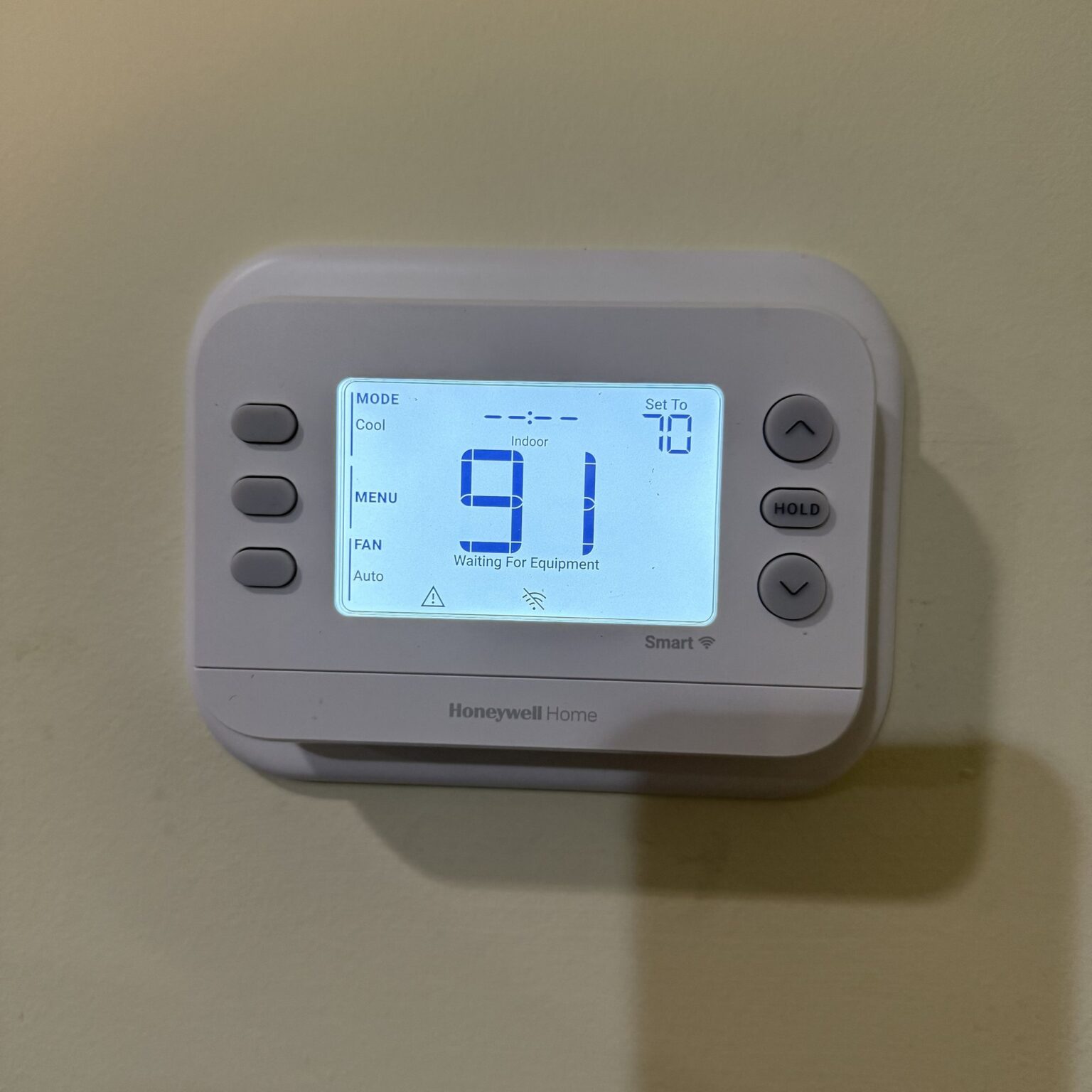
Thermostat. Screen blank? Batteries. The system won’t run without it. Set to Cool, and set below the room temperature? It sounds stupid until you find out a kid changed it.
Breakers. There are two, one for the indoor unit and one for the outdoor unit, often in different panels. A tripped breaker sits between On and Off. Flip it fully off, then on. If it trips again within a minute, leave it off and call. A breaker that keeps tripping is protecting you from something, and the fourth reset is how motors catch fire.
AC stopped working after a power outage? Same two breakers, plus the outdoor disconnect, a small grey box on the wall by the outdoor unit that gets pulled during yard work and painting. Push it in. Then give the thermostat five minutes; most systems have a built-in delay after power returns.
The filter. Pull it. If you can’t see light through it, that’s your problem or one of them. A choked filter starves the coil of air, the coil freezes, the system stops cooling.
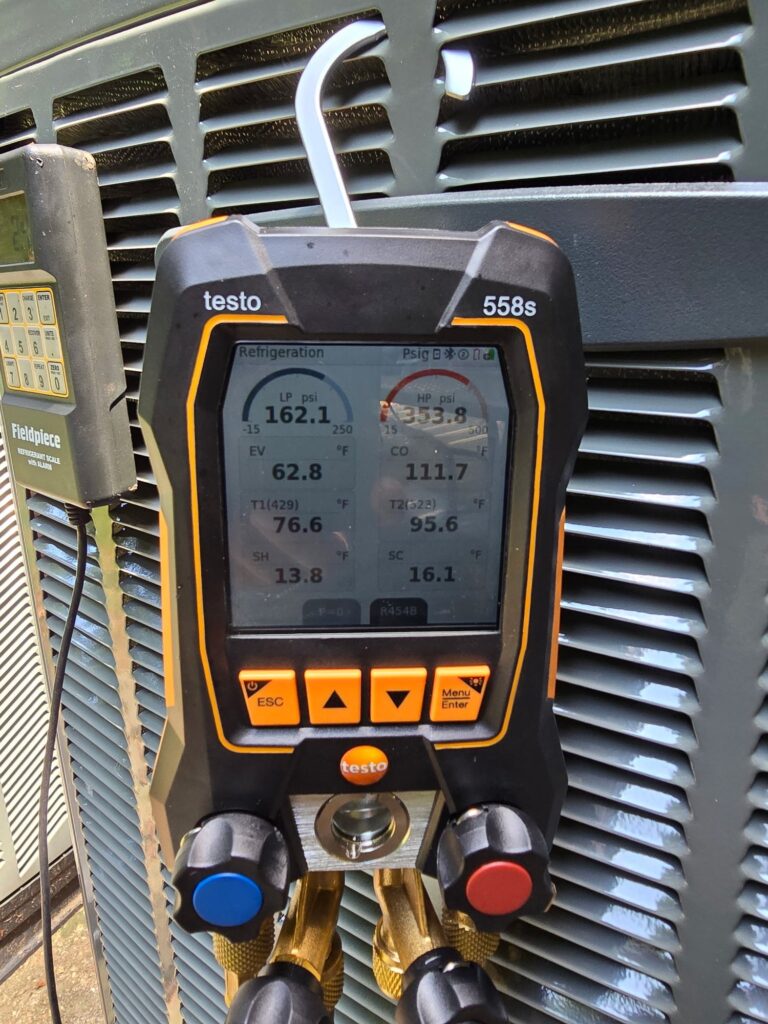
AC frozen? Look at the copper line where it enters the outdoor unit, and at the indoor coil if you can see it. Frost or a block of ice means the system froze, from a bad filter or low refrigerant. Carrier’s instructions: thermostat to Off, fan to On, and leave it at least three to four hours until all the ice is gone. Trane adds: don’t chip at it. Running a frozen system pushes liquid at the compressor, which is how a $12 filter problem becomes a $3,000 one. Put in a new filter, try again after the thaw. If it cools, you got lucky. If it re-freezes within a day, it’s low on refrigerant, and that’s a next-day service call, not an emergency.
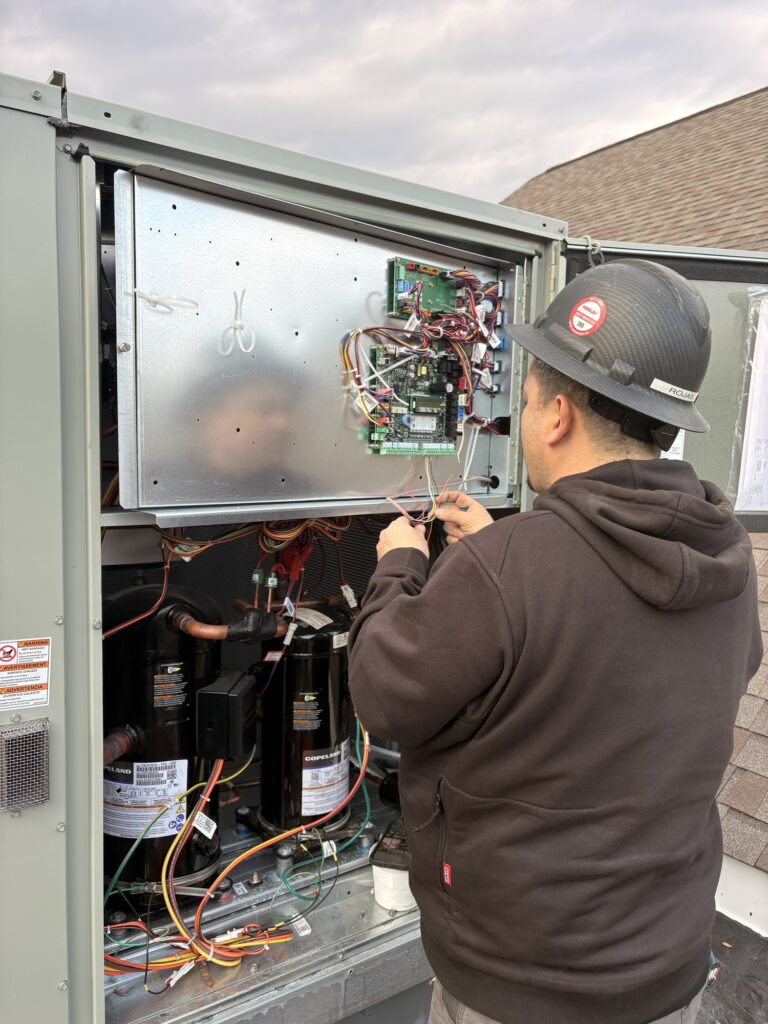
AC not blowing cold air but running? If the indoor fan runs and the outdoor unit is silent, it’s the outdoor breaker, the disconnect, a contactor, or a capacitor. If both run and the air is just not cold, it’s refrigerant, a frozen coil, or a compressor. Go look at the outdoor unit: if the fan on top isn’t spinning but you hear a hum, that’s a capacitor, the single most common AC failure there is, and it’s a quick fix once a technician is there. Don’t poke the fan with a stick to start it. That works once.
Water. Water in the pan under the indoor unit, or on the floor beside it? Many systems have a float switch that shuts the whole system off when the condensate drain backs up, precisely so the water doesn’t come through the ceiling. Full pan means clogged drain. Some people can clear it with a wet vac on the outside end of the drain line. If not, that’s the call, and it’s a routine one.
When it’s an emergency, and when it can wait for morning
We’ll come out at night for any of these, and you shouldn’t hesitate to ask:
- No cooling with an infant, someone over 65, a pregnant person, or anyone with a heart or breathing condition in the house, and the indoor temperature climbing into the mid 80s. Those are the CDC’s high-risk groups, and older adults in particular don’t feel heat stress coming.
- Water actively coming through a ceiling from an attic air handler.
- A burning smell, smoke, or a breaker that trips every time you reset it. Kill the breaker and call.
- A bang or grinding from the outdoor unit that wasn’t there yesterday. Turn it off. Running it can turn a fan motor into a compressor.
What can wait, honestly: the house is 79 and the system is running but not keeping up; it cools but makes a new noise; it works downstairs and not upstairs. Real problems, next-day problems. Booking them as emergencies buys the after-hours premium for the same repair.
How long can you go without AC?
That depends on who’s in the house and what the weather is doing, and here are the actual thresholds. The National Weather Service calls a heat index of 90 to 103 “extreme caution” and 103 and up “danger,” and full sun adds up to 15 degrees to those numbers. The CDC says a fan is fine below 90 degrees indoors; above 90, a fan can raise your body temperature instead of lowering it. So the fan strategy has a ceiling, literally.
Fairfax County activates its heat plan when the NWS issues a heat advisory, and libraries, community centers and REC centers become cooling centers during their hours. The county’s line is 703-324-7329, and 703-324-7948 for anyone older or disabled who needs help getting somewhere cool. Loudoun, Prince William, Arlington and Alexandria run similar programs, and dialing 2-1-1 will find the nearest one from any of them. If someone in the house is confused, not sweating, or has a fast pulse and skin that’s hot to the touch, that’s heat stroke and it’s 911, not a cooling center.
For everybody else, until the truck arrives: close the blinds on the sunny side, run ceiling fans counterclockwise (here’s which way that is) and turn them off in empty rooms, don’t run the oven, and open windows only after the outside temperature drops below the inside, which in a Virginia July may be midnight or never. If the house is over 90 and someone in it is vulnerable, a hotel is cheaper than an ER visit.
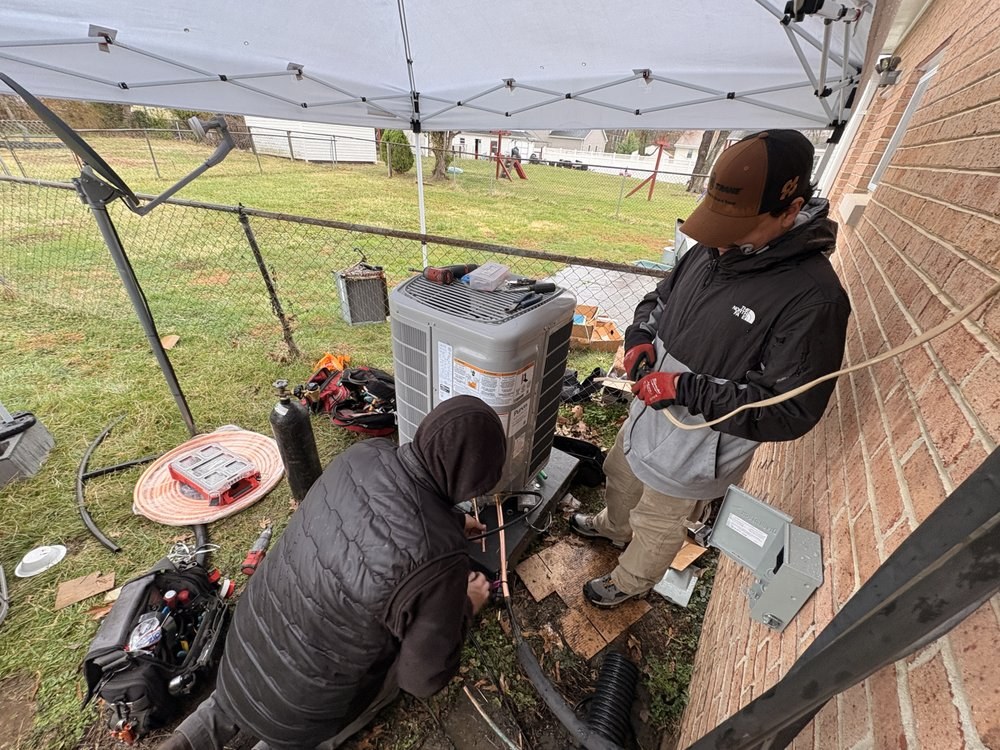
What the emergency visit costs
An after-hours visit carries a premium over a daytime one, at every company. Ask what it is before the truck rolls; ours is quoted on the phone, not discovered on the invoice. The repair itself is the repair. Here’s what the common ones run at our company, from a capacitor at a few hundred dollars to a compressor in the thousands. If the fix turns out to be one of the ten minute items above, we’ll say so.
If it’s the compressor on a system past ten years old, the honest advice is usually not to fix it, and you’ll want the replacement number before deciding at 9 pm. The furnace and AC estimator gives you that range for your size of house in two minutes, so you’re deciding with a number instead of a guess.
How to not be here next July
Most emergency calls are a part that was going to fail and did it on the hottest day, because the hottest day is when it works hardest. Trane’s own service guidance says heat is the number one killer of capacitors. A drain line that’s half clogged in May is fully clogged in July. A spring tune-up finds both, and it’s included in the Family Care Plan along with priority scheduling, which in a heat wave means you’re ahead of the line rather than in it. Here’s what a real tune-up includes.
SwiftPro runs emergency heating, cooling and plumbing service across Northern Virginia, 24 hours a day. (703) 997-9757. For anything that can wait until morning, book online and pick a time. The emergency page is here.