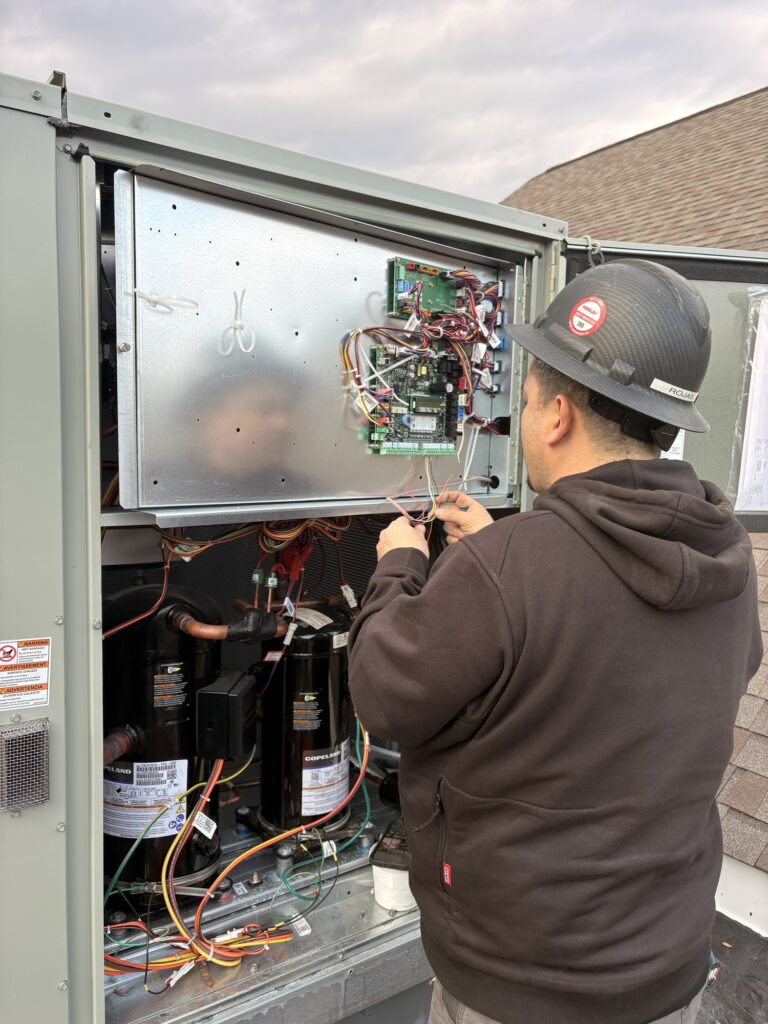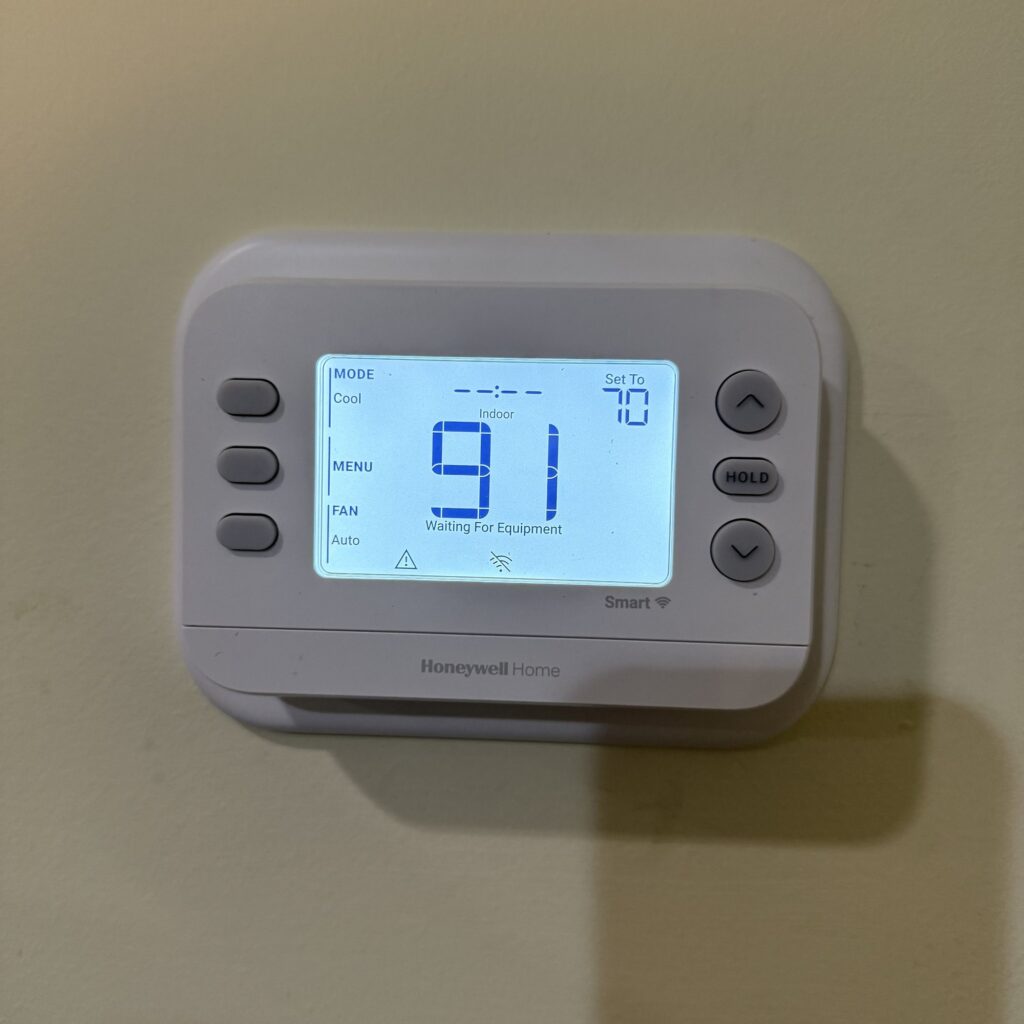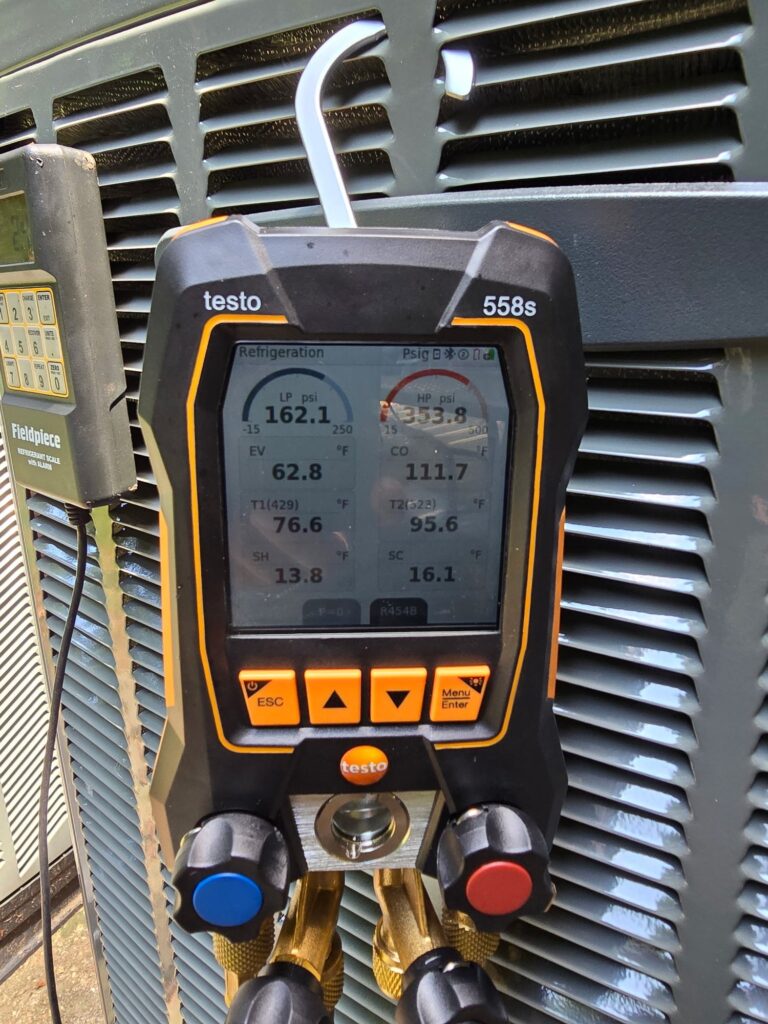


A thermostat is the cheapest part of your heating system and the one blamed for the most problems it did not cause. Here is how to tell whether yours is actually the fault, and what to know before you buy a replacement, especially if you have a heat pump.
Blank screen
Batteries, in most cases. Many thermostats run on two AA or AAA cells even when they are wired to the system, and a dead set means a dead screen and no heat. Change them first.
If it stays blank with fresh batteries, the thermostat is not getting power from the system. Check the furnace switch, the one that looks like a light switch beside the unit, and the breaker. Then check the furnace door is fully seated, because the door safety switch cuts power to everything including the thermostat on many units. A blown low voltage fuse on the control board does the same thing, and that is a small part but a technician’s job to diagnose, because the fuse blew for a reason.
Screen works, but nothing happens
Set it to Heat and push the setpoint five degrees above the room temperature. Wait a few minutes, because many systems have a built in delay.
If nothing at all happens, the thermostat is either not sending the call or the system is not receiving it. If the furnace runs when somebody jumps the wires at the board, which is a technician test, the thermostat is the fault. If the furnace does nothing either way, the thermostat is innocent and the problem is downstream.
Replacing a thermostat runs $300 to $640, depending on what goes on the wall.
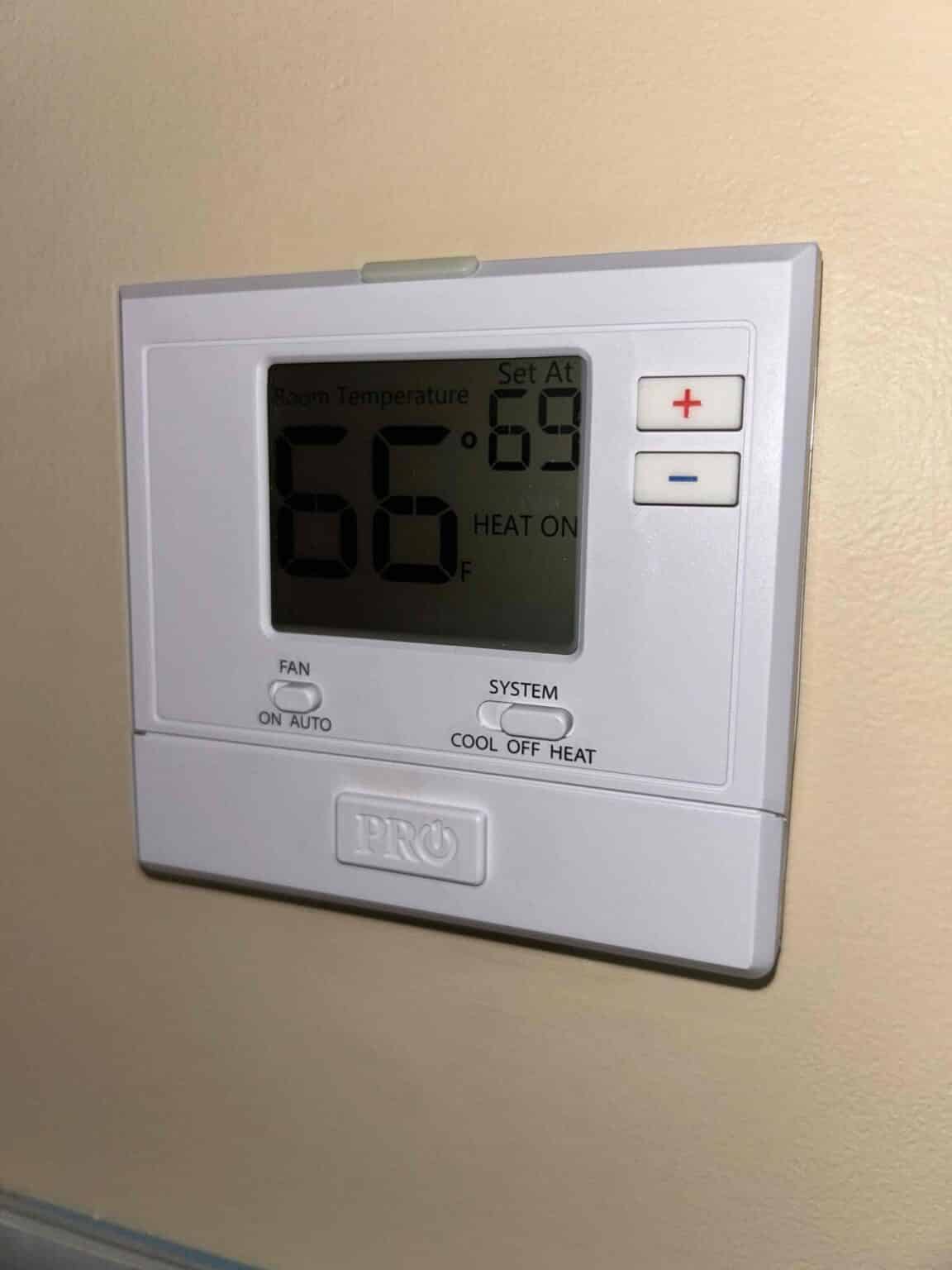
It says the heat is on and the air is cold
Almost always not the thermostat. On a gas furnace the burners are not lighting, which is usually the flame sensor or the igniter. On a heat pump, air that is warmer than the room and cooler than your hand is normal.
One genuine thermostat cause worth knowing: on a heat pump, the reversing valve is controlled by a wire labeled O or B, and if a thermostat was installed by somebody who did not configure that correctly, the system runs backwards. You get cooling when you call for heat, all winter. That is a setup fault rather than a broken part, and it is fixed in the thermostat configuration.
The temperature is wrong by several degrees
Check where the thermostat is. A thermostat in direct sun, above a lamp, on an exterior wall, near a supply register, or in a hallway with a draft reads its own microclimate rather than the house. Moving it is real work but it permanently fixes complaints that no amount of equipment will.
Some thermostats also have a calibration offset in the settings menu, which somebody may have set years ago and forgotten.
Buying the next one, and the heat pump trap
This is where people get caught, so it is worth being specific.
If you have a heat pump, the thermostat has to be a heat pump thermostat. It needs to drive the reversing valve with an O or B wire and to manage auxiliary heat as a separate stage. A conventional thermostat wired onto a heat pump either runs backwards or runs the electric strips far more than it should, and the second one is expensive in a way you only notice on the bill. If you are shopping, the box will say heat pump compatible and will list stages like 2 heat / 1 cool or similar.
Most smart thermostats need a C wire. The C, or common, wire provides continuous power. Older systems frequently do not have one run to the thermostat, and the workarounds, including the little adapters some manufacturers ship, are hit and miss. Before you buy, pull your thermostat off the wall and photograph the wires and their letters. That photo answers most of the question.
Dual fuel needs a thermostat that knows it. If you have a heat pump with a gas furnace as the backup, the thermostat has to decide when to stop using the heat pump and start using the furnace. Getting that setting wrong means either an uncomfortable house or a gas bill for heat the heat pump could have provided more cheaply.
Is a smart thermostat worth it
On a gas furnace, yes, mostly for scheduling and for being able to see what the system is doing. Setting the temperature back while you are out genuinely saves money.
On a heat pump, the answer is more careful. Deep setbacks can cost more than they save, because the recovery brings on the electric resistance strips, and the Department of Energy makes exactly that point in its heat pump guidance. A good heat pump-aware thermostat handles this by ramping back up slowly without calling the strips. A cheap one, or a smart one configured as though it were on a furnace, does the opposite. If you have a heat pump and you are going to run schedules, buy the one that understands heat pumps.
There is money on the table either way. Dominion pays $25 up front and $25 a year to enroll an eligible smart thermostat in its rewards program, and lists a rebate of up to $50 on an ENERGY STAR certified unit. Washington Gas pays $100 toward one for its natural gas customers, up to two per household, when the thermostat costs $100 or more before tax. Those are worth ten minutes of paperwork.

Before you replace the thermostat
Rule out the cheap things: batteries, the furnace switch, the breaker, the furnace door. Then ask whether the symptom is really a thermostat symptom. A house that is cold in one room, a furnace that short cycles, or a heat pump that runs aux constantly is not fixed by a new thermostat, and buying one is a way to spend $400 and still have the problem.
If it is genuinely the thermostat, or you are upgrading, tell us what system you have and we will tell you what it needs. If it is a heat pump and you have been seeing Aux on the display, read this first.
SwiftPro installs and services thermostats across Northern Virginia, usually alongside a heating tune-up. Call (703) 997-9757 or book online.