
Northern Virginia · backflow testing and repair
Backflow testing and repair in Northern Virginia
Got the yearly notice from your water utility? We test the backflow preventer on your sprinkler system, fire line or pool, fix it if it fails, and handle the report the utility asks for. One visit.
4.95 from 1,131 reviews
“My technician James gave an honest assessment of my situation, clearly laid out the scope of work, and provided different pricing options to resolve my concern. I will definitely call SwiftPro in the future for any plumbing needs!”Kyle Kotasenski · Google · July 2026
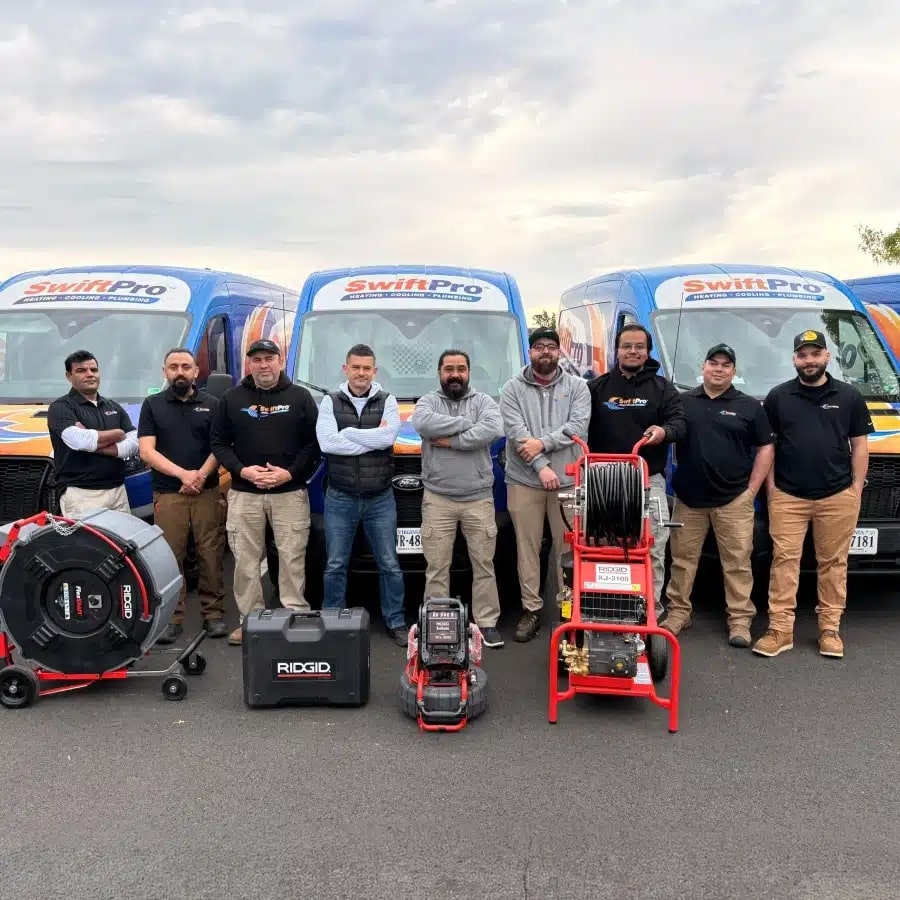
What we do
Backflow testing, repair and installation.
Most people find us with a notice in hand. That’s the test. If the device fails, we fix it and test it again. Putting in a new sprinkler system, pool line or fire service? We install the device your county wants.
Every year
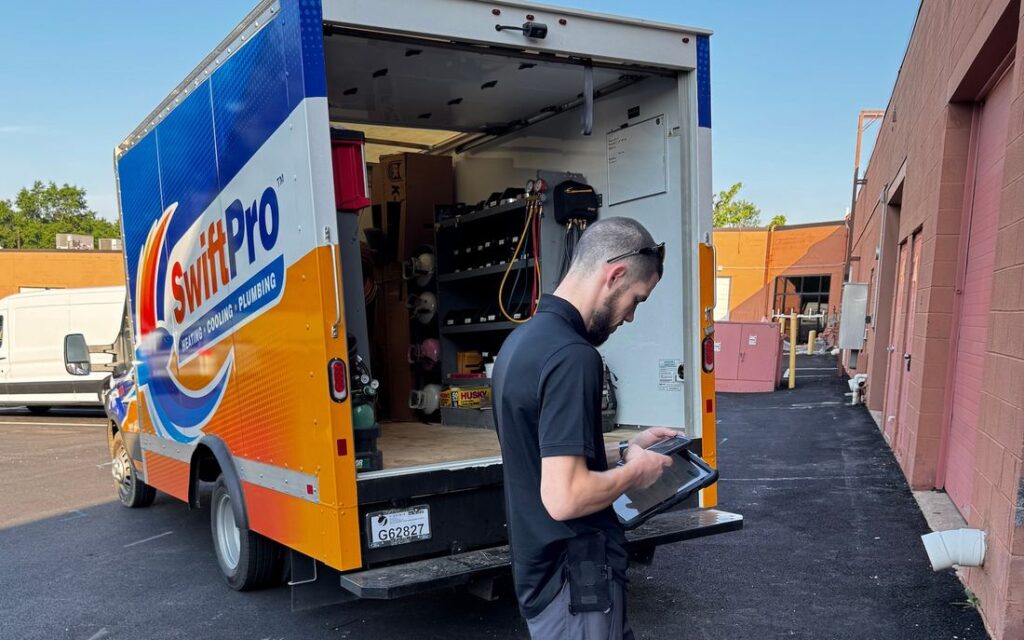
Annual backflow testing
The test your notice asks for.
- A calibrated test kit on the device’s test cocks
- Each check valve, and the relief valve on an RPZ, read against its pass mark
- Pass: the report goes where your utility wants it, and you keep a copy
- Fail: you get the reason and a price before anything gets fixed
If it fails
Backflow repair and replacement
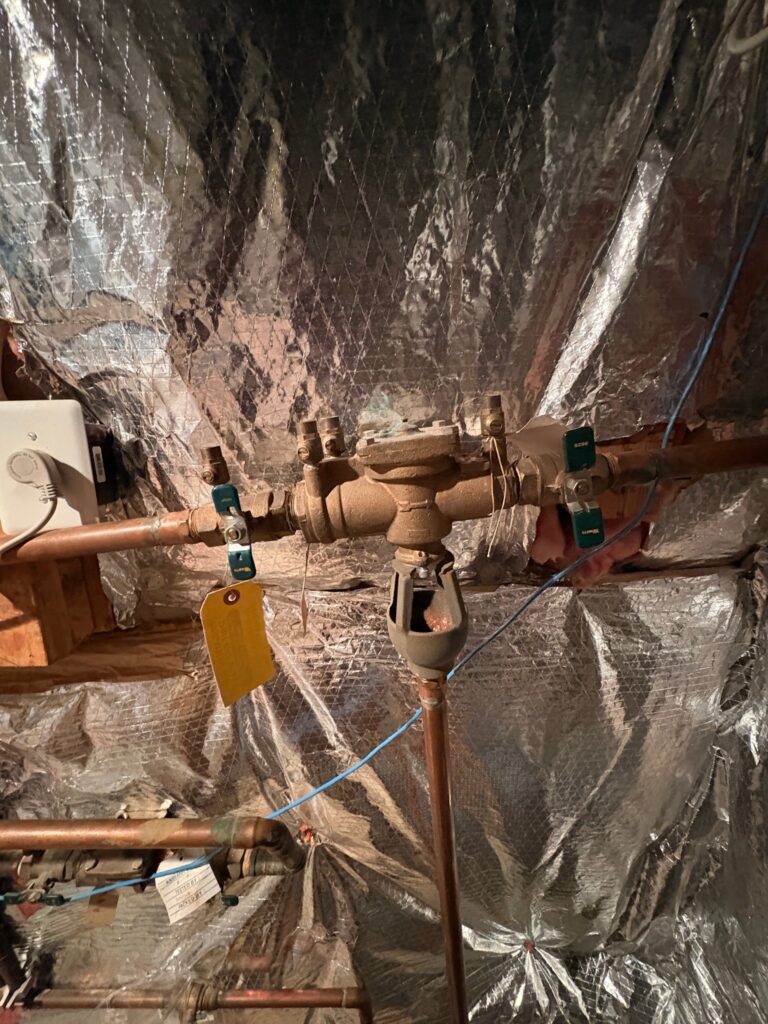
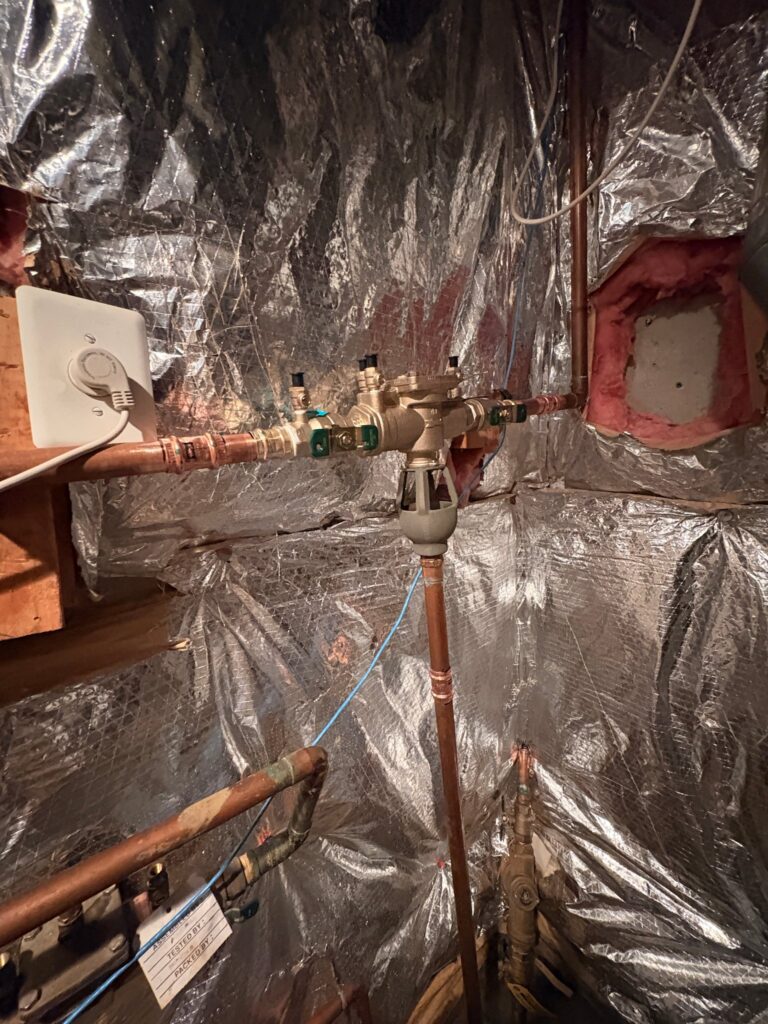
Most failures can be rebuilt. This RPZ in a Loudoun County basement was replaced instead: before at 9:44, after at 11:47, the same morning.
- Worn springs, seats and rubber parts rebuilt
- Freeze-cracked bodies replaced
- Tested again after the repair, which Virginia requires
- The passing report filed, so the utility closes your file
New
Backflow preventer installation
For sprinkler systems, pool lines and fire services.
- The right device for your county’s rules
- Permits pulled under our Virginia Class A license
- Set up so it can be tested every year
- Tested when it goes in, which Virginia requires
Why you got the letter
You’re not in trouble. It’s a yearly rule.
A backflow test is a yearly check that the valve on your sprinkler, fire or pool line still stops water from flowing backward into the drinking water. Virginia’s waterworks regulations call for one when a PVB, RPZ or double check goes in, right after any repair, and every year after that. Your water utility sends the notice to make sure it happens.
Source: Virginia Waterworks Regulations, 12VAC5-590-600
Who gets the notice
Homes with lawn sprinkler systems, buildings with fire sprinkler lines, pools and hot tubs piped to the water supply, and commercial equipment like chillers and cooling towers.
Who can test it
Since January 1, 2023, Virginia only accepts tests from a DPOR-certified Backflow Prevention Device Worker. A test by anyone else doesn’t count.
If it fails
The clock starts. Loudoun Water gives you 30 days from its notice to repair and retest. Leesburg wants a passing report within 15 days.
Sources: Loudoun Water, Cross Connection and Backflow, Town of Leesburg, Backflow and Cross Connection
If you ignore it
Loudoun Water and Virginia American Water both say in writing that they can shut off the water to a property that stays out of compliance.
Sources: Loudoun Water, Cross Connection and Backflow, Virginia American Water, Cross Connection and Backflow
Your utility’s rules
Who requires what, utility by utility.
It’s one state rule, run seven different ways. Find the name on your notice.
Fairfax Water and Fairfax County
Most of Fairfax County
- A yearly test on lawn sprinklers, fire sprinklers, pools, hot tubs and other testable devices.
- The tester has to be on the county’s Authorized Vendor List.
- The vendor files the report and the county emails you when it’s in. Nothing after 14 days? The county asks you to check with them.
Source: Fairfax County, Cross Connection Program
Backflow testing in Fairfax CountyLoudoun Water
Most of Loudoun County
- A yearly test by a certified tester.
- A device that fails: 30 days from Loudoun Water’s notice to repair and retest it.
- A device taken off for the winter gets retested when it goes back on.
Source: Loudoun Water, Cross Connection and Backflow
Backflow testing in Loudoun CountyPrince William Water
Prince William County
- Yearly notices when a device comes due.
- The tester gives you the passing results, and you send them to Prince William Water’s Cross Connection Coordinator.
- County code: every lawn sprinkler system needs a backflow device, and one winterized with antifreeze can only use an RPZ.
Sources: Prince William Water, Backflow Prevention, Prince William County, Lawn Irrigation System Requirements
Backflow testing in Prince William CountyVirginia American Water
Alexandria
- Testable devices: tested every year and reported through BSI Online.
- Residential dual checks, the kind that can’t be tested: inspected, repaired or replaced every five years.
- Repeated requests ignored can end in the water being shut off.
Source: Virginia American Water, Cross Connection and Backflow
Town of Leesburg
Leesburg town water
- Residential sprinkler test results are due June 1 every year.
- A device that fails needs a passing report within 15 days.
Source: Town of Leesburg, Backflow and Cross Connection
Backflow testing in Loudoun CountyCity of Manassas
Manassas city water
- Tested when it’s installed, after any repair or replacement, and every year.
- RPZs, double checks and PVBs get their rubber parts replaced every five years.
Source: City of Manassas, DCSM Article 13
Backflow testing in Prince William CountyArlington County
The exception
- Restaurants and commercial buildings: the county inspects every year, and wants the devices tested by a Virginia-licensed backflow professional first.
- Homes: the county inspects a sprinkler system once, after it’s installed. Testing after that is optional.
Checked against each utility’s published rules on September 30, 2026.
What to expect
The backflow test, start to finish.
Book a window
Book online or call. Tell us how many devices you have, which utility sent the notice, and the date on it.
The test
The tester hooks a calibrated gauge to the test cocks and shuts the water off for a few minutes. Each check valve, and the relief valve on an RPZ, has to hold its pass mark. Figure about 30 minutes a device.
Pass
The report goes in. Where the utility takes it from the tester, we send it. Where it wants it from you, like Prince William, you get the completed form to send. You keep a copy either way.
Fail
You get the reason and a price first. Then we repair or replace it, test it again and file the passing result.
The tester’s job is to prove each valve holds. Gauge readings, test cocks and pass marks are all in the long version.
What happens during a backflow testBefore the first freeze, drain the PVB.
Winter breaks more backflow preventers here than anything else. An above-ground PVB that isn’t drained in the fall can crack when the water trapped inside freezes, and you find out at the next test.
When the sprinklers get blown out this fall, make sure the backflow preventer gets drained too. How to winterize it.
Know your device
PVB, RPZ or double check: which one is yours?
Go and look at it. Most houses with sprinklers have a PVB. Most commercial buildings have an RPZ.
PVB
Pressure vacuum breaker
- How to spot it
- It stands up out of the ground on two pipes, with a cap on top.
- Where you find it
- Most home sprinkler systems, usually near the house.
It lives outside, so it’s the one winter breaks.
RPZ
Reduced pressure zone assembly
- How to spot it
- A longer body with a relief valve underneath that can dump water.
- Where you find it
- Commercial, medical and other high-hazard lines. Also the only device Prince William allows on a sprinkler system winterized with antifreeze.
A steady stream from that relief valve means something inside needs work.
Double check
Double check valve assembly
- How to spot it
- Two check valves in a row, and no relief valve.
- Where you find it
- Lower-hazard lines and some fire services, often in a box in the ground.
Underground boxes flood and freeze, so give it a look after a hard winter.
The orange part in each drawing is the giveaway. Leaking? See what each leak means, or start with what backflow is.
What neighbors say
4.95 from 1,131 reviews.
BBB Accredited, A rating
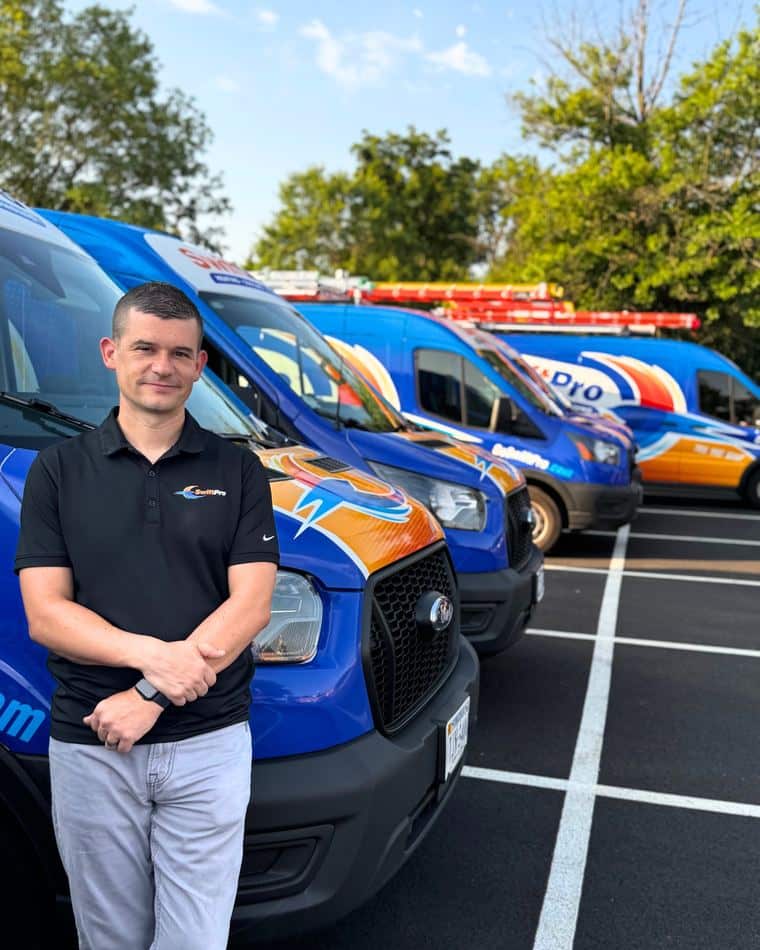
Our own plumbers and our own trucks, family owned and based in Chantilly. We work in Northern Virginia and nowhere else.
“Zabi helped us with a complex plumbing problem. He explained clearly the problem and gave us various repair options. He is courteous, professional and highly experienced. We recommend him!”
“SwiftPro did an outstanding plumbing job for us. They answered their telephone before hours, came to our house and solved two leaks, one in our utility room and another in the kitchen. The leaks were not related so it took some critical thinking. Hats off to a great company. Thank you for being there for us.”
“Tyson was wonderful; professional, very knowledgeable, thorough and fast. He was great at telling me about what was needed, and I very much appreciated that. For the next plumbing problem we have, I will have SwiftPro on speed dial.”
Backflow testing near you
Pick your county for the local rules.
Each county page has its utility’s deadlines, the towns we cover there, and the questions that come up locally.
Fairfax County
Fairfax Water notices, the county’s vendor filing, and every town from Vienna to Lorton.
- Fairfax
- Vienna
- Reston
- Herndon
- Chantilly
- Centreville
- Springfield
- Burke
- Annandale
- Oakton
- Great Falls
- McLean
- Lorton
- Clifton
- Fairfax Station
- Falls Church
Loudoun County
Loudoun Water’s 30-day repair clock, the winter retest rule, and Leesburg’s June 1 deadline.
- Ashburn
- Sterling
- Leesburg
- South Riding
- Brambleton
- Broadlands
- Lansdowne
- Aldie
- Stone Ridge
- Chantilly
- Potomac Falls
- Cascades
- Dulles
- Belmont
Prince William County
Dale City, Woodbridge and Manassas: the antifreeze rule and the Manassas five-year overhaul.
- Dale City
- Woodbridge
- Lake Ridge
- Manassas
- Manassas Park
- Gainesville
- Bristow
- Haymarket
- Dumfries
- Montclair
- Occoquan
- Lorton
- Nokesville
- Linton Hall
Commercial properties
Property managers, HOAs and businesses: whole device lists, RPZs and fire lines, on one schedule.
Commercial backflow testingAlexandria is on Virginia American Water and Arlington runs its own program; both are in the utility rules above.
Book your test
Book the test before your deadline.
Send your name and number, and a SwiftPro plumber calls you back to set a time and give you the price, before anyone comes out.
Have the notice handy. The utility, the due date and how many devices you have are all we need.
Call (703) 997-9757Rather pick a time yourself? Use the online scheduler.
Request a backflow test
We call you back to set a time.
Straight answers
Backflow testing questions, answered.
Do I really have to test my backflow preventer every year?
Yes, if the device is testable and your water comes from Fairfax Water, Loudoun Water, Prince William Water, Virginia American Water, Leesburg or Manassas. Virginia’s waterworks regulations call for a test when it goes in, right after any repair, and every year after that. Arlington County is the exception: a home sprinkler system there only needs the county’s first inspection.
What happens if I ignore the notice?
The notices keep coming, and then the utility can shut off your water until the device is tested and passing. A device that fails runs on a short clock too: 30 days in Loudoun Water’s area and 15 days in Leesburg.
How much does a backflow test cost?
We give you a flat price per device when you book, before anyone comes out. How many devices you have, and whether one needs a repair, is what moves it. Our cost guide has the national numbers and what changes them.
How long does a backflow test take?
About 30 minutes a device. Your water is off for a few of those minutes while the gauge readings are taken.
Who is allowed to test a backflow preventer in Virginia?
Since January 1, 2023, only a DPOR-certified Backflow Prevention Device Worker. Some places add their own list on top: Fairfax County wants the tester on its Authorized Vendor List. A test by anyone else doesn’t count and has to be done again.
What if my backflow preventer fails?
Most failures can be rebuilt: a worn check spring, debris on a seat, or a body cracked by a freeze. You get the reason and a price first. Then we repair or replace it, test it again and file the passing result.
Is a backflow inspection the same as a backflow test?
No. An inspection is a look: the right device, installed right, not leaking. A test puts a gauge on it and proves the valves hold. Your yearly notice wants the test. More in inspection or test.
When is the backflow test due in Leesburg?
June 1 every year for residential sprinkler systems. If the device fails, the Town wants a passing report within 15 days.
Do I need a backflow test in Arlington?
For a house, usually not every year. Arlington County inspects a home sprinkler system once, after it’s installed, and testing after that is optional. Restaurants and commercial buildings are different: the county inspects those every year. Not sure about yours? Call and we’ll tell you straight.
Should I winterize my backflow preventer?
Yes, if it’s an above-ground PVB on a sprinkler system. Water left inside can freeze and crack the body. Drain it when the sprinklers get blown out in the fall. In Loudoun Water’s area, a device you take off for the winter has to be retested when it goes back on. Here’s how to winterize it.
Why is my backflow preventer leaking?
On an RPZ, a little water from the relief valve can be normal when the pressure jumps. A steady stream usually means a check valve isn’t sealing. A PVB leaking from the cap often means a worn poppet or a freeze crack. Every leak pattern, and what each one means.
Do you test commercial backflow devices?
Yes: RPZs, double checks, fire lines, and whole device lists for property managers and HOAs. See commercial backflow testing.
Keep reading
- What is backflow?Backsiphonage, backpressure, and where the cross-connections in a house are.
- How do you know you have a backflow problem?Nine signs, the look-alikes, and what to do in the first hour.
- Backflow preventer leaking?What each drip, spray and gush means, and which ones are normal.
- What happens during a backflow testThe gauge, the test cocks and the pass marks, step by step.
- Backflow inspection or backflow test?Which one your notice wants, and the pros and cons of each device.
- Got a backflow test notice?What the letter means and what to do before the date on it.
- What backflow testing costsThe national numbers, and what moves the price up or down.
- Backflow testing in Woodbridge and Prince WilliamThe notice, the county rules, and the antifreeze catch.
- Winterize the sprinkler’s backflow preventerHow to drain it before the first freeze, and why it matters.
SwiftPro Heating, Cooling & Plumbing · Family owned, Chantilly, VA · Virginia Class A 2705192276 · BBB Accredited, A rating · Licensed and insured · Northern Virginia only. Utility rules on this page checked September 30, 2026.