

What furnace repairs cost at SwiftPro in Northern Virginia:
- Diagnostic visit: about $99.
- Flame sensor cleaned: $95 to $180. The cheapest furnace repair there is, and one of the most common.
- Igniter or flame sensor replaced: $240 to $410.
- Condensate drain cleared or trap replaced (high efficiency furnaces): $175 to $420.
- Thermostat replaced: $300 to $640.
- Blower wheel pulled and cleaned: $300 to $440.
- Control board: $550 to $1,180.
- Blower motor: $670 to $2,400, with most around $1,500. Variable speed motors sit at the top.
- Inducer motor: about $1,950 on the one we replaced this past year; generally the same neighborhood as a blower motor.
- Cracked heat exchanger: not a repair. Here’s why, and how to know the diagnosis is real.
Now the useful part: what your furnace is doing, what that usually means, and which line above it lands on. A furnace runs a fixed sequence every time it starts, and where the sequence stops tells you what failed.
How a furnace starts, in twenty seconds
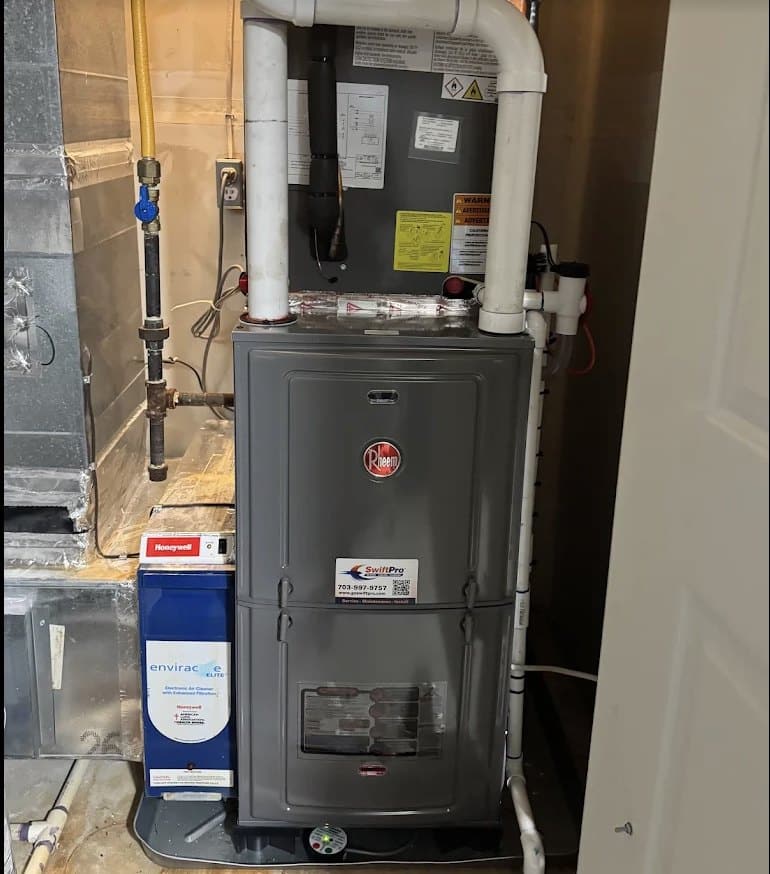
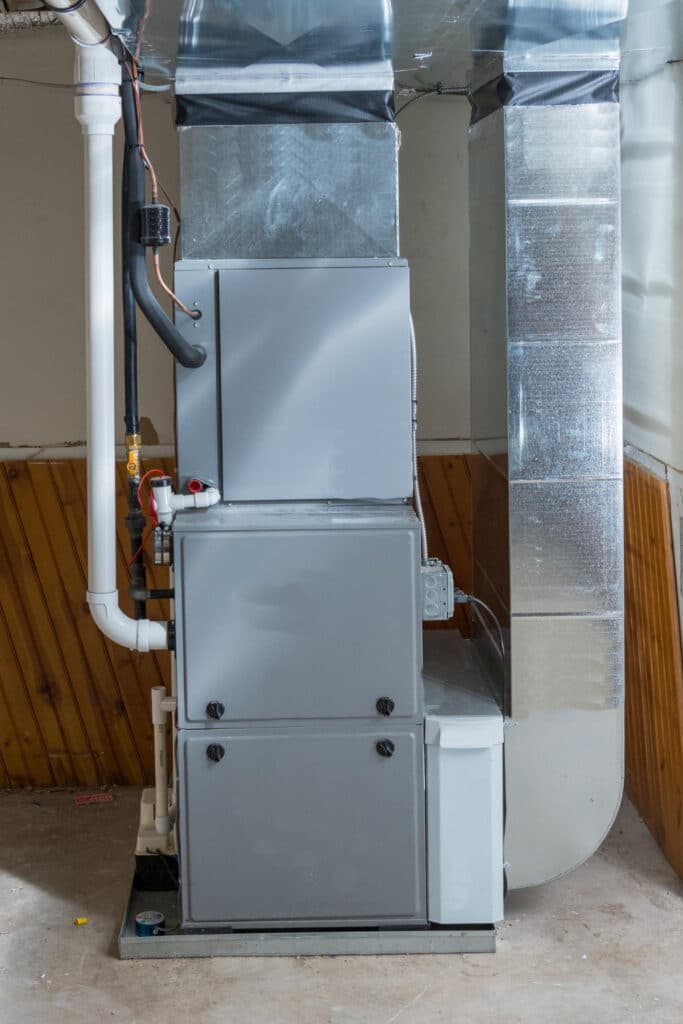
The thermostat calls for heat. A small fan called the inducer spins up to clear the flue. A pressure switch confirms the inducer is moving air. The hot surface igniter glows orange. The gas valve opens and the burners light. A flame sensor, a metal rod sitting in the flame, tells the control board the fire is real. Ten to sixty seconds later the main blower starts and warm air reaches the vents. Every symptom below is that sequence stopping somewhere.
Furnace not turning on at all
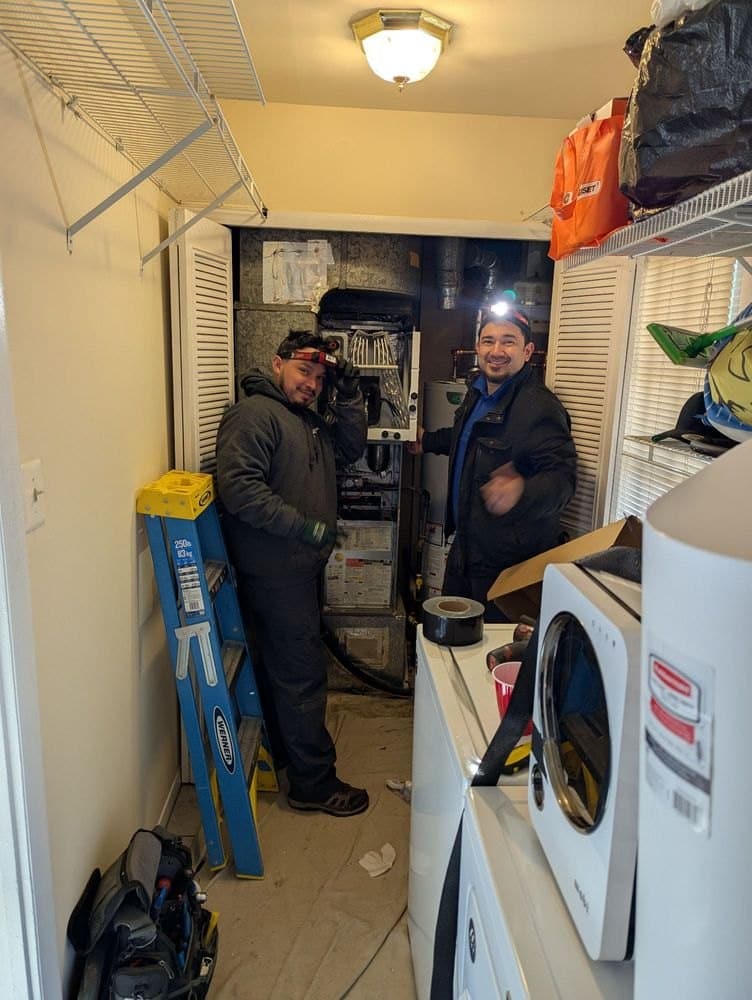
Nothing happens: no inducer, no click, no fan. Check three things before calling. The thermostat (blank screen means batteries). The furnace switch, which looks like an ordinary light switch on or near the unit and gets flipped off by accident. The breaker. If it has power and a call for heat and still does nothing, it’s the control board, a safety that has tripped, or a door switch not making contact because the panel isn’t seated. A high efficiency furnace with a clogged condensate drain refuses to start on purpose; that’s the $175 to $420 line. After a power outage, give it five minutes and try the thermostat again before assuming the worst.
Furnace keeps shutting off after a few minutes
It lights, runs a few seconds to a few minutes, shuts down, tries again. Two different failures do this and they sit at opposite ends of the price list.
Lights and dies in seconds, then retries: the flame sensor. A thin coating of oxide on the rod stops it from passing its tiny signal to the board, so the board thinks there’s no flame and closes the gas. Cleaning it is a ten minute job, $95 to $180, and if a technician quotes a control board for this symptom without cleaning the sensor first, ask why.
Runs ten or fifteen minutes and shuts off, then comes back later: overheating. A limit switch is opening because the furnace can’t move enough air through itself. The filter, first, always. Then the blower wheel, packed with a felt of dust that cuts airflow enough to trip the limit; cleaning it is $300 to $440. If the filter is clean, the wheel is clean and it still overheats, the blower motor is failing or the ductwork is undersized, and those are different conversations.
Furnace blowing cold air
The blower runs, the air is room temperature or cooler. If you hear clicking, the igniter is trying and failing; hot surface igniters are a ceramic element that gets brittle with age, and a new one is $240 to $410 installed. If there’s no click at all, the gas valve may not be opening, which is a bigger part. If it blows cold only for the first minute, that’s normal; the blower on many furnaces starts before the exchanger is fully warm. If it blows cold after a filter change, check that the filter went in the right direction and the panel is fully seated. More on cold air in winter here, including the heat pump version, which is a different animal.
Noises
A squeal, hum, or grinding from the blower: the blower motor, on its way out. If it still runs, don’t wait; a motor that seizes in a cold snap takes a weekend to source, and it’s $670 to $2,400 depending on what the furnace takes. A whine or rattle before the burners light: the inducer, the small fan that clears the flue. When it fails the furnace won’t light at all, because the pressure switch is waiting for it. A boom on ignition: delayed ignition from dirty burners, and that one gets looked at soon, not next month.
The one that isn’t a repair
The heat exchanger is the metal wall between the flame and the air you breathe. When it cracks, exhaust can reach the house air. The industry guideline is blunt: any split, crack or hole means the exchanger or the furnace gets replaced, full stop. Here’s why we don’t soften that. The CDC counts more than 400 unintentional carbon monoxide deaths a year in this country and over 100,000 emergency room visits, and the Consumer Product Safety Commission’s latest tally puts heating systems second among the causes, with most deaths between November and February. Symptoms are a headache, dizziness, nausea and confusion, which feel like the flu, and people who are asleep can die before they notice anything. If the furnace smells like exhaust or the CO alarm sounds, turn the furnace off, open windows, leave, and call from outside. That’s not a price conversation until the furnace has been looked at.
While we’re here: Virginia’s building code requires carbon monoxide alarms in new construction with fuel burning appliances, but there’s no retrofit rule for existing houses, which means a lot of 1970s and 80s homes around here have never had one. A plug-in CO alarm on each sleeping floor costs less than the diagnostic fee, and it’s the single best thing on this page.
Repair it or replace it
Under ten years old, repair it, almost regardless of part. Over fifteen, anything above $1,000 is a conversation, because a new furnace starts at $4,498 installed, Washington Gas is paying $500 to $700 toward a high efficiency one this cycle, and a $1,500 blower motor on a seventeen year old furnace is a third of the way there with the rest of the furnace still seventeen years old. Between ten and fifteen, it’s the part: an igniter is a repair, a heat exchanger is not, a blower motor depends on whether the rest has been maintained. If the AC is the same age, the estimator shows what replacing both runs for your house, so you’re making the decision with a number.
Do this in September
If the furnace limped through last winter with a repair or two, run it now, for an hour, on the first cool morning. What it does in the first ten minutes tells you most of what you need to know, and October is a better month to find out than the first 25 degree night, when we’re running calls until midnight. Change the filter (ENERGY STAR says check it monthly, replace it at least every three months), clear the storage bins away from the intake on a high efficiency unit, and if it’s been more than a year since anyone had the panel off, book the tune-up. It’s included in the Family Care Plan along with 15 percent off every repair on this page.
Identifying and Diagnosing Unusual Furnace Noises
Can I clean the flame sensor myself? If you can find it, turn the power off, and are comfortable removing one screw, yes. Fine emery cloth or a dollar bill, gently, put it back. If that doesn’t fix it, don’t keep pulling things.
Is the repair under warranty? Parts often are, five to ten years from install if the furnace was registered. Labor usually isn’t unless you bought a labor warranty. We check before we quote, and you should ask anyone else to.
Do you do emergency furnace repair? Yes, around the clock. No heat with a baby, someone elderly, or pipes at risk of freezing is an emergency; a furnace short cycling but holding 66 can wait for morning.
SwiftPro repairs every brand of gas furnace across Northern Virginia. (703) 997-9757, or book online. The heating repair page has the rest.