

A maintained boiler outlives two furnaces. A neglected one gets expensive in a way that furnaces do not, because the failure modes involve water sitting somewhere it should not.
If you heat with a boiler and radiators or baseboard, here is the September list: what you can do yourself in half an hour, and what actually gets checked on a service visit.
What you can do yourself
Read the pressure gauge. Most residential systems sit around 12 to 15 psi when cold. If yours reads near zero, the system has lost water and the boiler may be running dry, which damages it quickly. If it is climbing well above normal when hot, the expansion tank is likely waterlogged. Either reading is worth a call rather than a wait.
Bleed the radiators. Air collects at the top of the system over a summer of sitting still, and a radiator that is warm at the bottom and cold at the top is holding air. Open the small bleed valve at the top with a key or a screwdriver, let the hiss become a dribble of water, close it. Start with the lowest floor and work up. Check the pressure gauge afterwards, because bleeding lowers it.
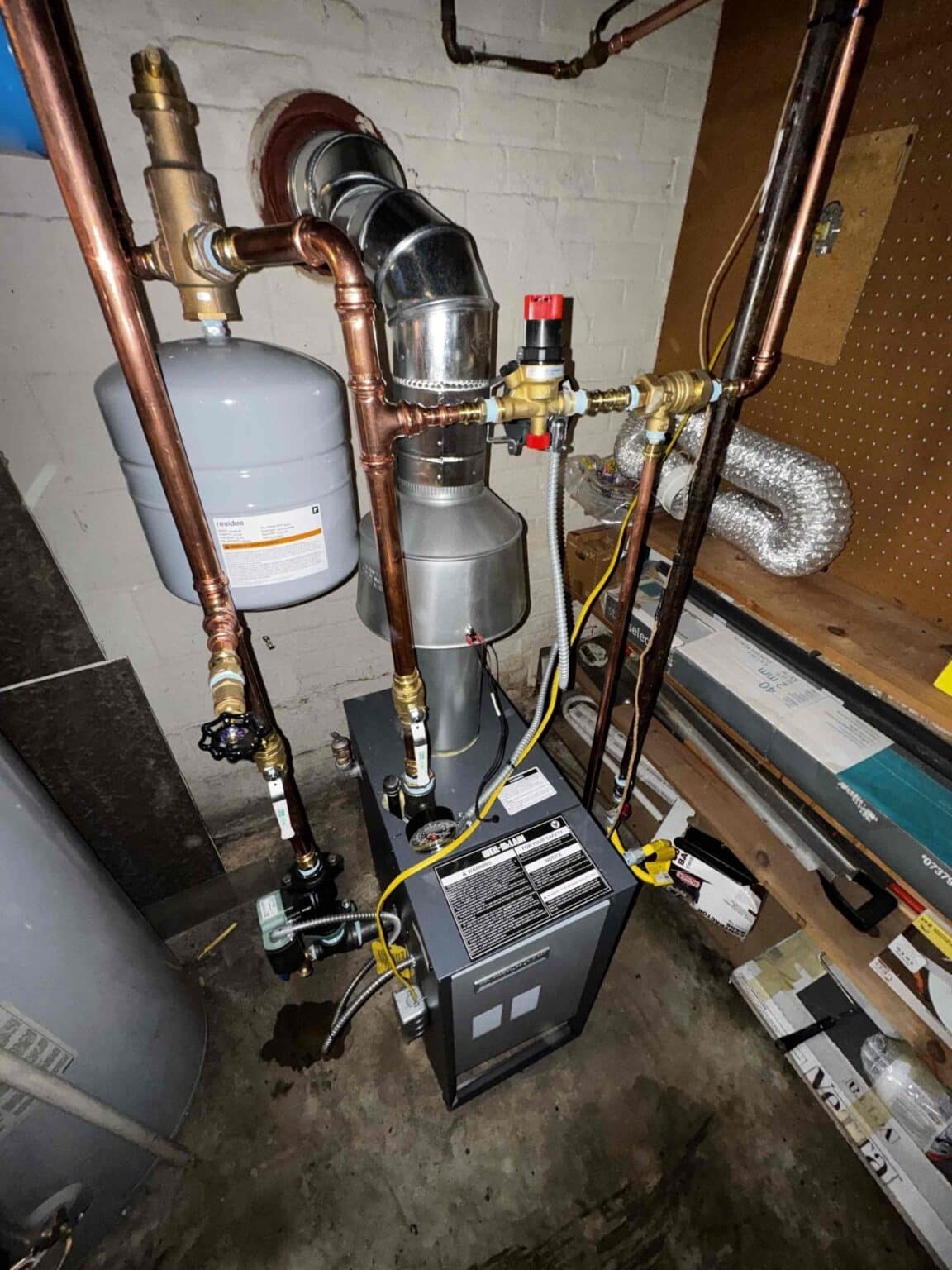
Look underneath and around. Any staining, rust, or drip at the base of the boiler, on the near-boiler piping, or under a radiator valve. Small and persistent is the pattern that matters: a system that loses water slowly gets topped up automatically by the fill valve, so nobody notices until corrosion has been feeding on fresh oxygenated water for years.
Clear the space around it. A gas boiler needs combustion air. If the room has been finished, filled with storage, or had a door added since the boiler went in, that is a safety item rather than a tidiness one. The fire service’s guidance is to keep anything that can burn at least three feet from any heat source, which in a basement full of boxes and folding chairs is worth taking literally.
Run it now, in September. Turn the heat on for an hour on a cool morning. A boiler that will not fire in September is a Tuesday appointment. The same fault on the first cold night is an evening call behind everybody else’s.
What a service visit actually covers
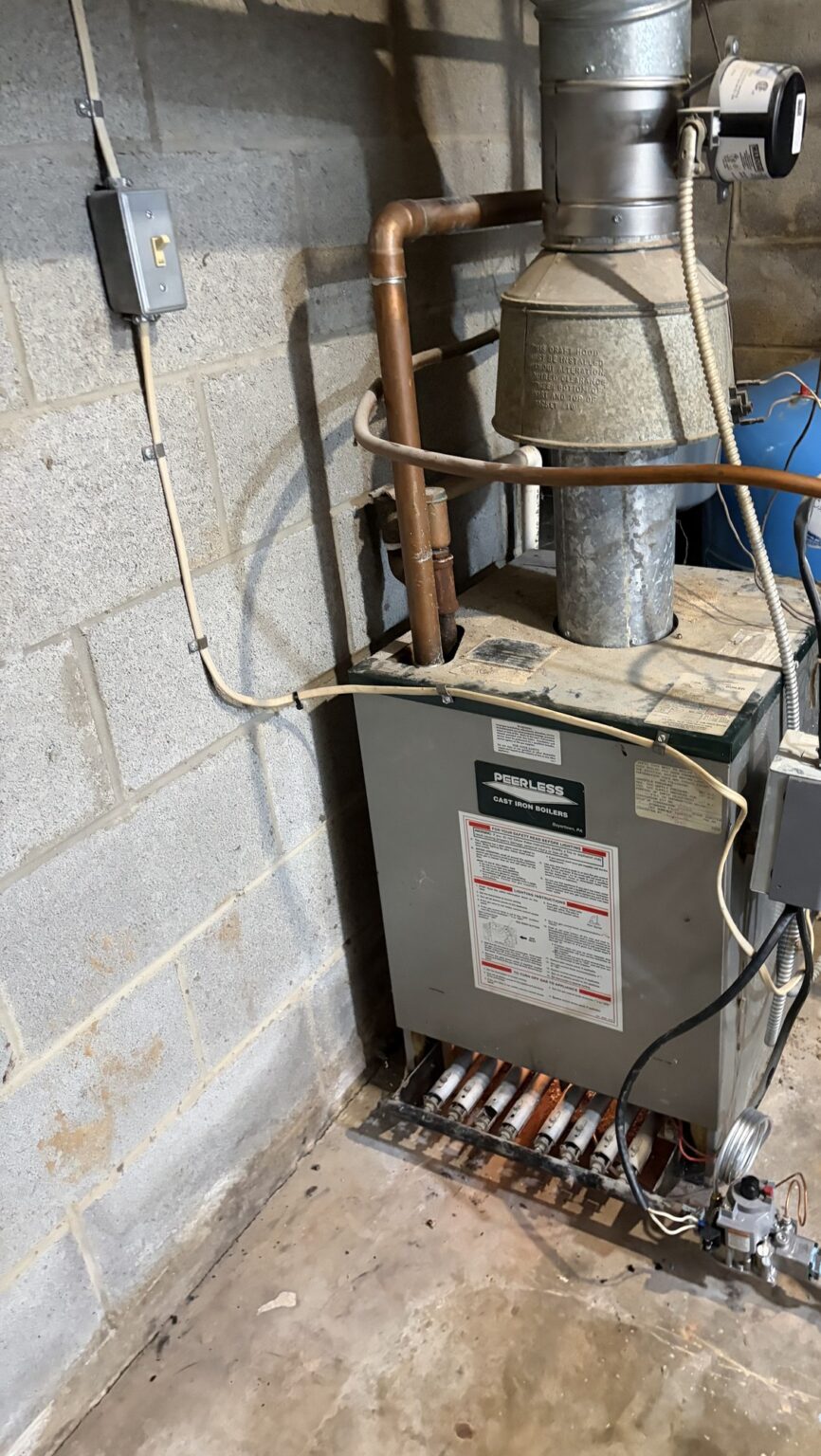
Combustion. Burners cleaned, gas pressure checked, and combustion readings taken. On an older atmospheric boiler this also means checking the draft and the flue, because a boiler that is not venting properly is the one genuinely dangerous failure on this list.
The safety chain. Pressure relief valve, low water cutoff where fitted, high limit, and the controls that are supposed to shut the thing down before anything bad happens. These are the parts nobody thinks about and the reason the visit exists.
The expansion tank. It absorbs the pressure change as water heats. When it waterlogs, pressure spikes and the relief valve starts discharging, which people misread as a failing boiler. Checking and recharging it is routine.
Circulator and zone valves. A circulator that has seized or a zone valve that will not open produces a zone that stays cold while the boiler runs happily. Very common, and modest to fix.
Water quality and pressure. On a system that has been topped up repeatedly, the water carries oxygen and minerals that corrode from the inside. Finding out why it is losing water matters more than replacing what it lost.
The flue and the chimney. The fire service’s guidance is to have heating equipment and chimneys cleaned and inspected every year by a professional. On a masonry chimney serving an older boiler, that is not a formality.
Symptoms and what they usually mean
One radiator cold, the rest fine. Air in it, or a stuck valve. Bleed it first. This is not a dying boiler and you should not be quoted one for it.
A whole zone cold. Circulator or zone valve, not the boiler.
Banging or clanking when it fires. Air, or water where it should not be. In steam systems usually a pitch or venting problem. Worth fixing because it is hard on the piping.
It runs constantly and the house never gets there. Circulator, controls, or zones that somebody closed off years ago and nobody reopened.
Pressure dropping, or you keep adding water. A leak somewhere in the loop. Deal with it now rather than in January, because a boiler that loses water and keeps firing damages itself fast.
The relief valve is discharging. Usually a waterlogged expansion tank or excessive pressure, occasionally a failed valve. Do not cap it, ever. It is the device that stops the system becoming genuinely dangerous.
A smell of exhaust, or a carbon monoxide alarm. Turn the boiler off, open windows, leave, and call from outside. The CDC counts more than 400 unintentional carbon monoxide deaths a year in this country outside of fires, and the Consumer Product Safety Commission puts heating systems second among the causes, with most falling between November and February.
Which is worth repeating for boiler houses specifically: Virginia requires carbon monoxide alarms in new construction with fuel burning appliances and has no retrofit rule, so the older houses that still have boilers are exactly the ones least likely to have an alarm. One on every sleeping floor.
When a boiler is genuinely done
Not age alone. Cast iron boilers run for decades and most parts on them are serviceable: circulators, zone valves, controls, expansion tanks and relief valves are all normal replacements.
What ends one is a cracked or leaking section, or a heat exchanger that cannot hold pressure. At that point it is replacement rather than repair, and the honest conversation includes whether the near-boiler piping and the controls come along with it, because on a forty year old system they usually should. What a boiler replacement costs in this region is here.
One thing worth checking before that conversation: whether the system is oversized for the house it heats now. Many older boilers were sized for a building with single-glazed windows and no insulation, and matching the old output on a replacement carries forward an assumption nobody has rechecked in decades.
Do it in September
Boiler parts are less commonly stocked than furnace parts, and a circulator or a zone valve that needs ordering in January is a cold weekend. Everything on this page is easier, cheaper and less urgent in a shoulder month.
SwiftPro services and replaces boilers across Northern Virginia. Call (703) 997-9757, book online, or see the boiler service page. The annual visit is included in the Family Care Plan.