
Here is the answer first: SwiftPro’s boiler replacements in Northern Virginia run $9,900 to $16,500 installed, and a high-efficiency condensing or combi boiler lands at $12,782 to $16,500. A tune-up is $99 a system, and a repair starts with a $99 diagnostic. Where your replacement lands depends on the piping around the boiler and the flue, so the exact price gets written down at the house. The rest of this explains what moves the number, so the quote you get makes sense when you read it.
From about $165 a month at 0% APR for 60 months, the whole price financed, on approved credit. How financing works
Boilers are a minority of the heat in this region. Most homes built here since about 1980 have a furnace or a heat pump, so a boiler house is usually an older Arlington, Alexandria, Falls Church, McLean or inside-the-Beltway Fairfax house, plus a scattering of condos and townhomes on hydronic loops.
Why the range is so wide
A furnace or an air conditioner swap is close enough to the same job from house to house that our estimator can price it by size. A boiler swings more. The two biggest pieces of the bill are the piping around the boiler and what happens to the chimney, and neither one shows up in a photo or a model number. That’s why SwiftPro’s range runs $9,900 to $16,500 installed: the low end is a cast iron boiler swapped on the same chimney, the top is a combi boiler that makes your hot water too. The boiler estimator narrows it for your house, every noise and symptom is answered on our boiler page, and you get the exact price in writing before any work starts.
The single biggest decision inside that price is cast iron or condensing, and it gets its own section below. A chimney liner, a new gas line or extra piping work can each land on the same quote, and a good quote names every one of them.
What moves the number
How big it has to be. Boilers are sized in MBH, thousands of BTU per hour. Ours have run from 85 MBH in a small house up to 133 MBH and higher. Bigger unit, bigger price. The right way to land on that number is a heat loss calculation on your house, not a look at the plate on the old one, because the old one was very often oversized when it went in.
Cast iron or condensing. This is the fork that moves the price most, and it gets its own section below.
What happens to the chimney. An old boiler is usually one of two appliances drafting up a masonry flue. Put in a smaller or more efficient unit and that flue can end up too large for what is left, which condenses moisture inside the chimney and eats it from the inside. The fix is a stainless liner, and it is a real line item, not an upsell. Go condensing instead and the chimney comes out of the picture entirely, replaced by a PVC vent through a side wall.
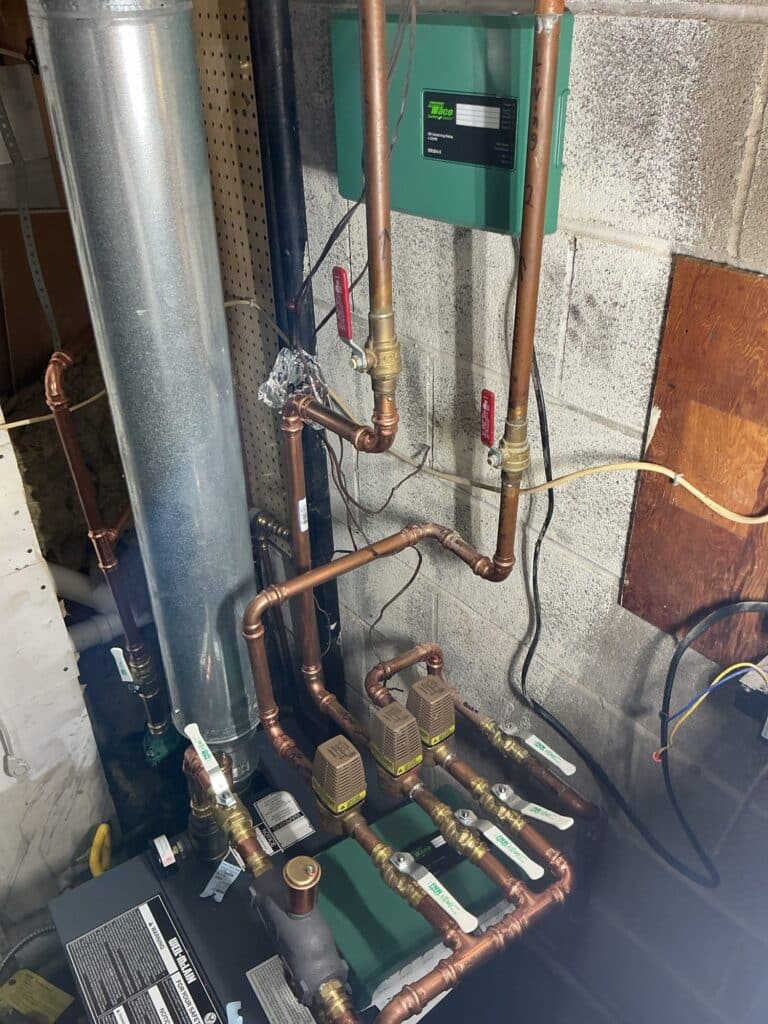
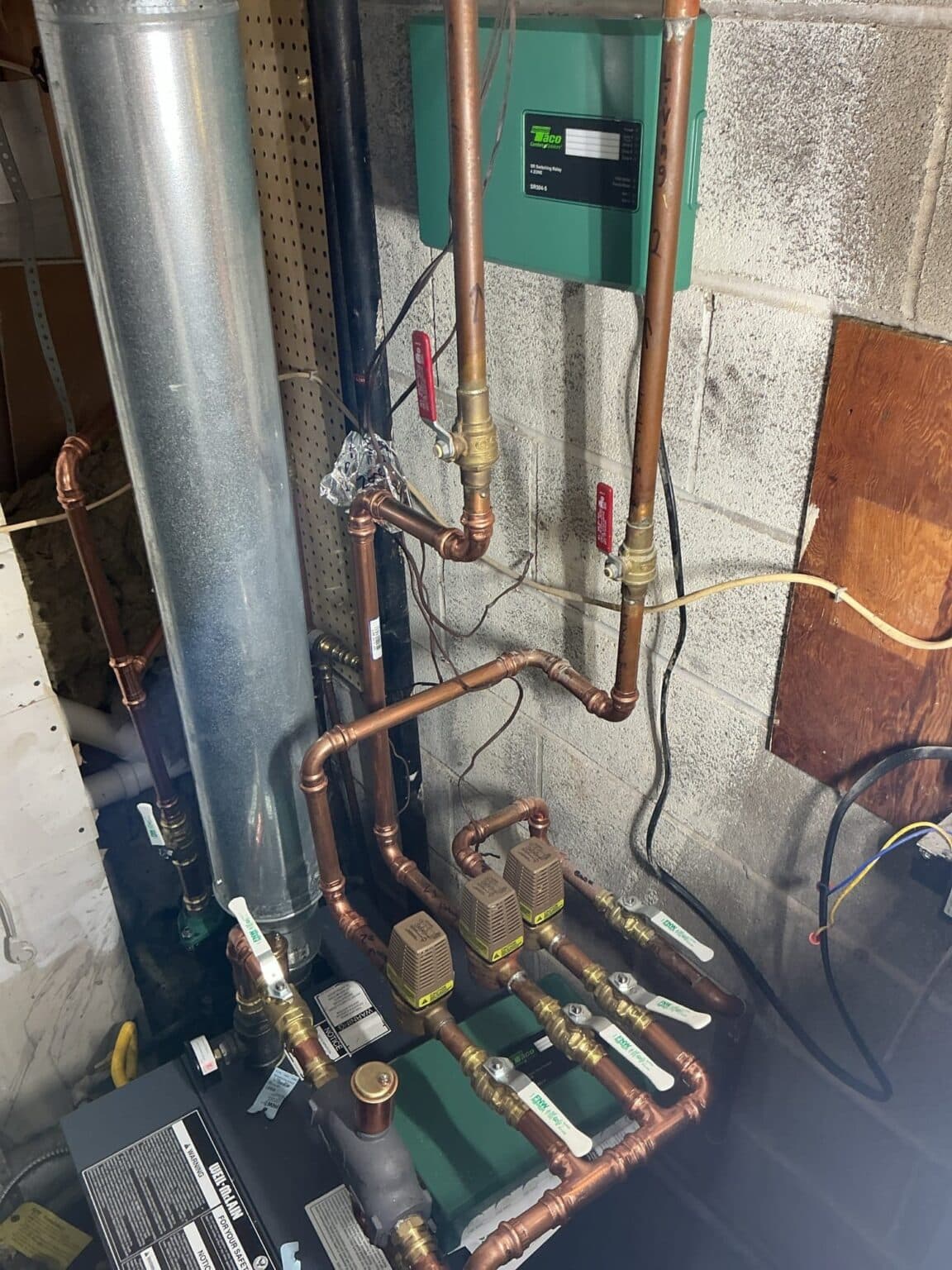
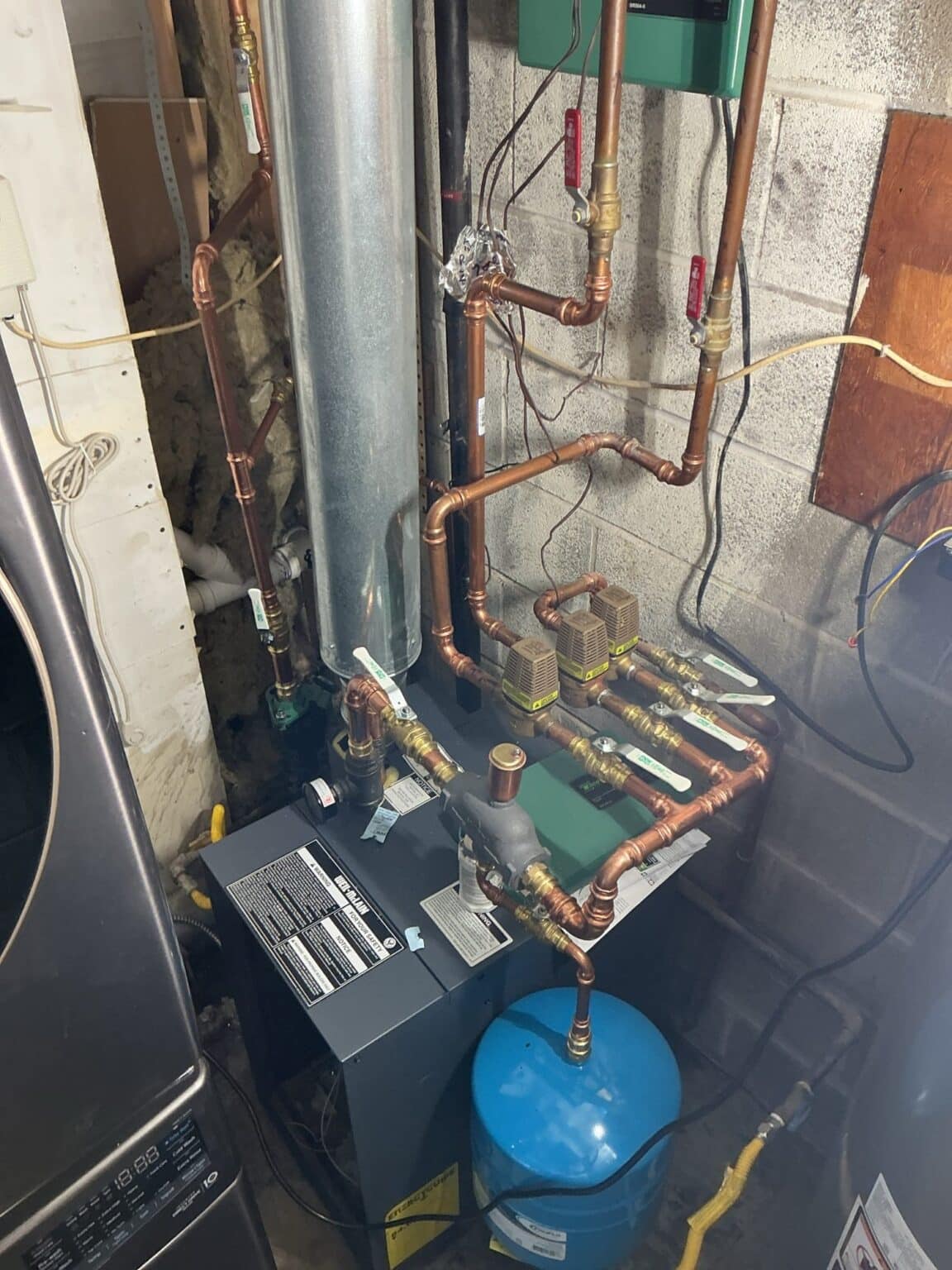
The piping around the boiler. On a quote this is the part people skip past, and it is most of the labor. Circulator pump, expansion tank, air separator and automatic vent, fill valve and backflow preventer, zone valves and their controller, isolation valves so the next service call does not mean draining the house. On a 30-year-old system, most of that is at the end of its life too, and doing it while the water is already drained is far cheaper than doing it later.
Whether it also makes your hot water. If you are moving to a combi, the new boiler makes your hot water too, so the project absorbs your water heater as well. That raises the boiler quote and removes a separate $2,757 to $7,494 replacement you were going to face anyway. Compare those two futures, not just the two quotes.
Gas, electric and combustion air. A higher-input unit sometimes needs a larger gas line. A sealed-combustion unit needs its intake run. A mechanical room that was fine for a draft hood is not automatically fine for what replaces it.
Getting to it. A walkout basement with room to work is the easy case. A crawlspace, a closet under a finished stair, or a unit that has to come apart to get out of the building all add hours, and sometimes a second technician.
Cast iron or condensing: which one goes back in
A cast iron boiler is the traditional one: heavy sections, an open burner, drafting up a chimney. Federal minimum efficiency for a new gas hot water boiler is 84% AFUE, so that is roughly what these run. They are simple, they tolerate old piping and old water, and the good ones last decades. Weil-McLain is what we install most.
A condensing boiler pulls extra heat out of the exhaust until it condenses, which is how it reaches the low to mid 90s in AFUE. It vents in PVC, so no chimney. A combi is a condensing boiler that also makes your domestic hot water on demand, so it replaces the water heater and frees the floor space where the tank stood. Navien is what we install most.
The honest way to choose is not “which is more efficient,” because the answer to that is obvious and it is still often the wrong buy. Ask these instead:
- Is the chimney a problem? If the flue needs a liner anyway, some of the condensing premium is already spent.
- Is the water heater also near the end? If yes, a combi is doing two jobs and the comparison changes completely.
- How long are you staying? The efficiency gap on a Northern Virginia heating season is real but it is not enormous, and a condensing unit asks for annual service to keep it.
- What are your emitters? Condensing units earn their efficiency at lower water temperatures. A house with generous cast iron radiators can run cooler water and gets more out of one. A house with a short run of baseboard sized for 180 degree water gets less.
Neither answer is wrong. Both go into Northern Virginia houses every winter. What is wrong is being handed one number and never being shown the other.
One rumor worth putting down, because it gets used to close sales: cast iron is not being outlawed. The Department of Energy proposed a 95% AFUE minimum in 2023 that would have ended non-condensing residential boilers, and withdrew that proposal on January 17, 2025. The 84% standard stands and non-condensing units are still sold. Buy a condensing boiler because it fits your house, not because someone told you the other kind is about to disappear.
And on the money side, do not let a quote tell you a federal tax credit will soften it. The 25C energy efficient home improvement credit ended for anything placed in service after December 31, 2025, so a 2026 boiler does not qualify. The full state of credits and rebates is here.
Should you repair it instead?
Usually, yes, and that is not a soft answer. Most of what fails on a boiler is a part, not the boiler, and we price the repair after the diagnostic, in writing, before any work starts. The usual parts: a zone valve motor, a circulator, a transformer or relay, a fill valve, a pressure relief valve, an air-bound loop that needs bleeding. A cast iron block that is sound is worth keeping parts on for a long time.
The line worth drawing is the block itself. When a cast iron section is cracked and leaking, that is the boiler, and there is no repair for it. Same story for a heat exchanger on a condensing unit out of warranty. Short of that, run the arithmetic the boring way: if the repair is a fraction of a replacement and buys you seasons, take the repair.
What each of those repairs involves, symptom by symptom, is in our boiler repair guide.
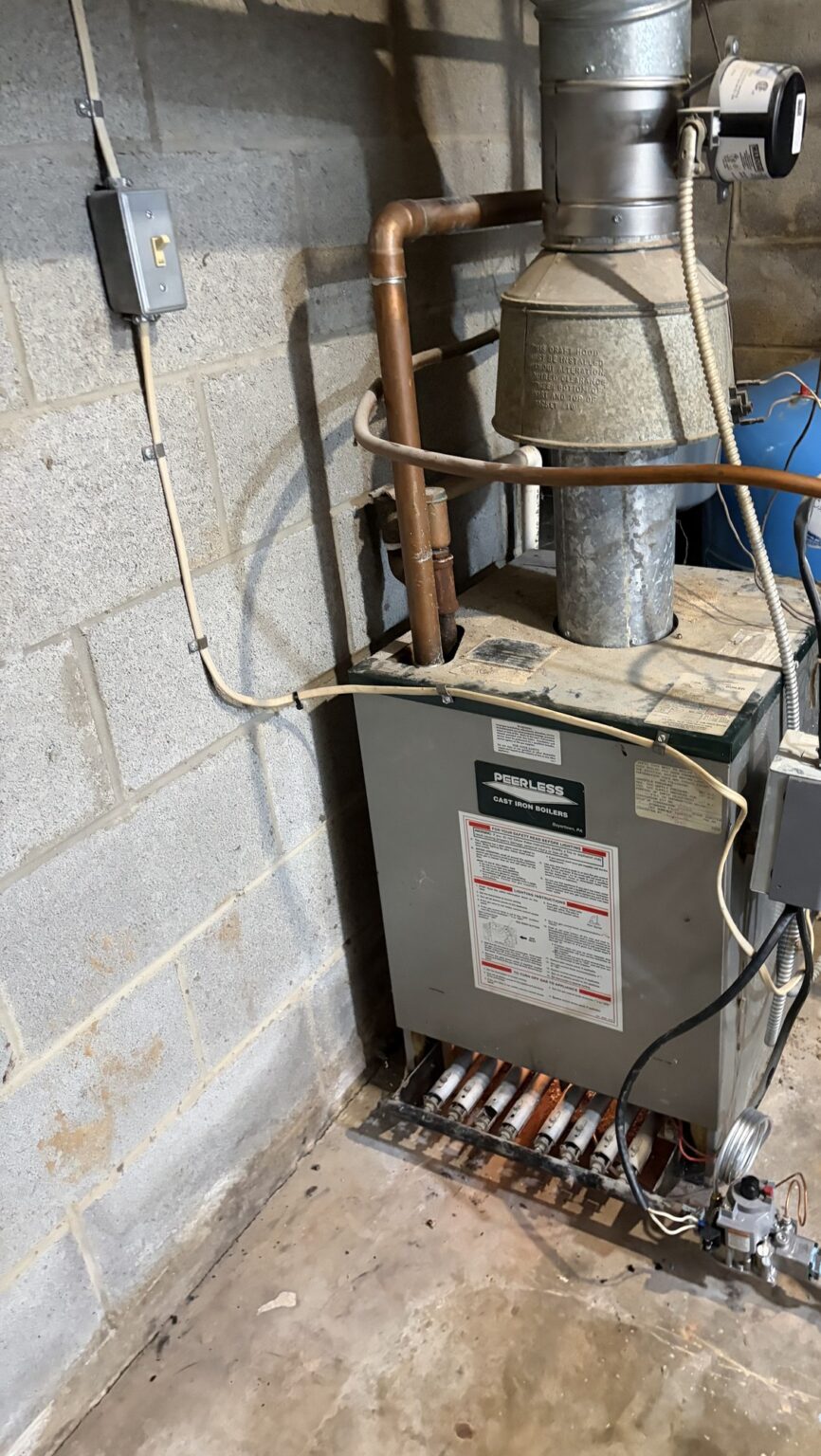
Determining When to Replace Your Boiler
Older than you think. Cast iron boilers routinely run past 30 years, which is the main way they differ from furnaces and water heaters. We open basements in this region and find equipment with a conversion sticker from the Clinton administration still making heat.
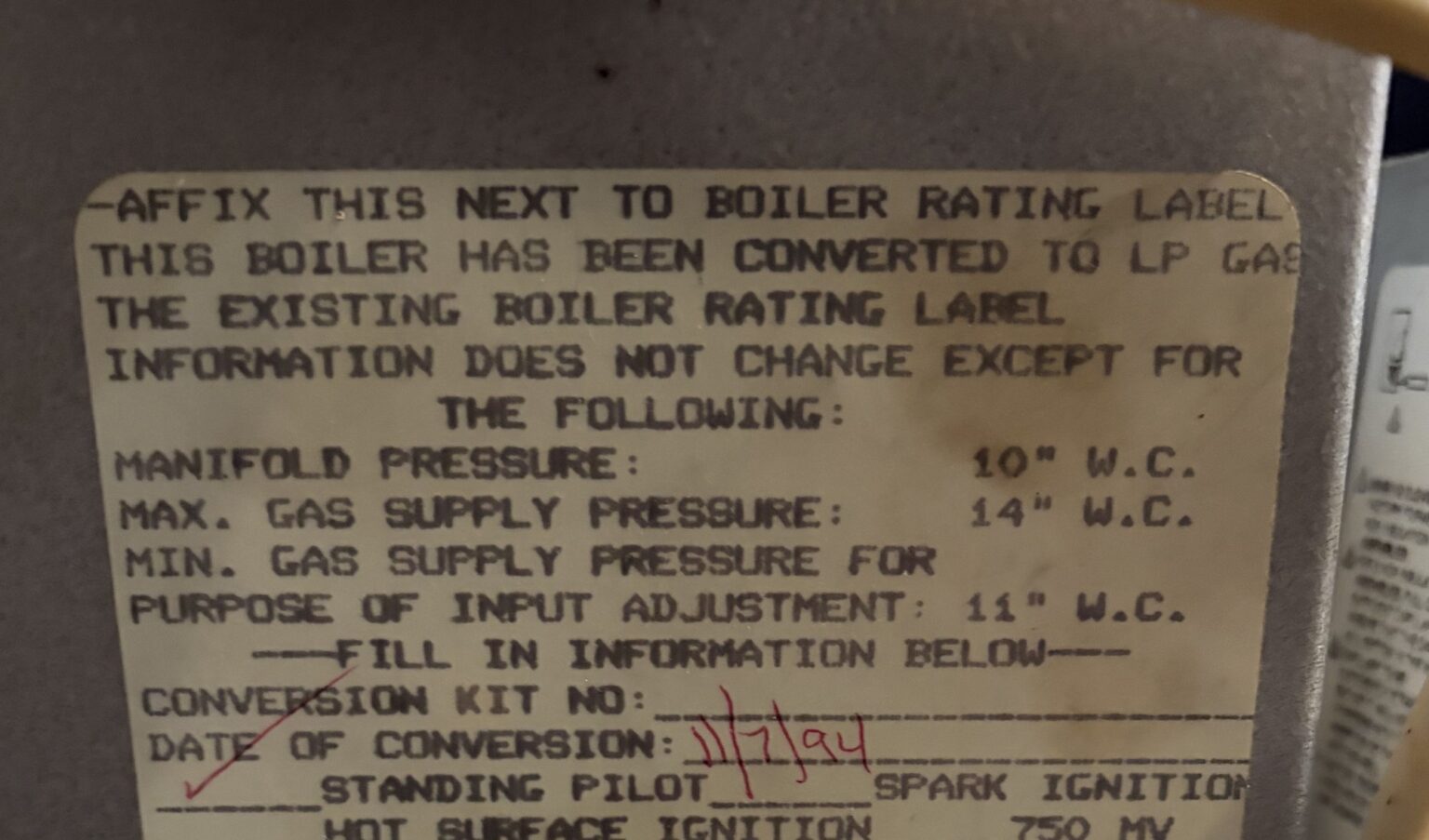
So age alone should not sell you a boiler. These should:
- A leak from the block, or a wet floor that keeps coming back after the joints have been chased.
- Pressure that will not hold, or a system needing water added over and over, which means it is going somewhere.
- Repairs stacking up in the same season, especially when parts get hard to find.
- Anything the technician found on the combustion side: a cracked section, a failed safety, a flue in poor condition, a spillage test the unit does not pass. That last set is a safety call, not a comfort one.
If your boiler is 25 or 35 years old and working correctly, the useful move is not a replacement quote. It is a tune-up and a combustion check before the cold sets in, which costs a small fraction of a replacement and would also tell you if any of the above is true.
What a to-code boiler replacement includes
If you are holding more than one quote, compare these line by line. This is where a lower number usually turns out to be a smaller job rather than a better deal.
- A sizing calculation for your house, on paper, not the rating plate off the old unit.
- New near-boiler piping: circulator, expansion tank, air separator, fill valve and backflow preventer, isolation valves.
- Venting that is correct for the unit going in. A liner if the flue now needs one, or a full PVC vent and intake if the unit is sealed combustion.
- A gas line verified for the input, and combustion air verified for the space, not assumed from what was there.
- Draining, refilling and purging the loops, so you are not chasing air pockets in January.
- A combustion analysis at startup with the numbers written down.
- Haul-away of the old unit, and a boiler is heavy.
- Warranty in writing on the equipment and on our labor, which are two different things.
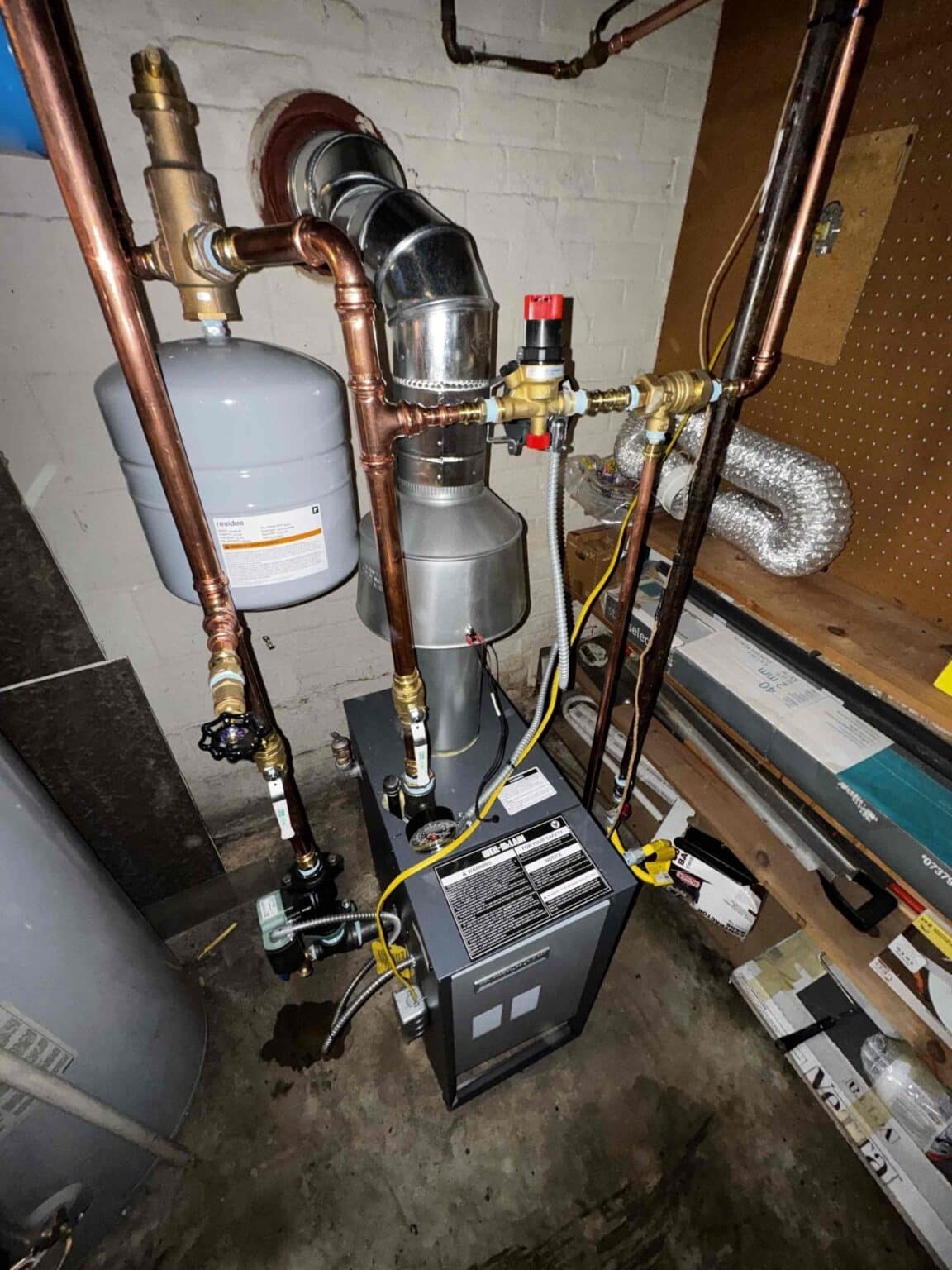
Why a boiler costs more than a furnace
A gas furnace on its own runs $4,285 to $14,040 installed in our estimator. A boiler usually costs more, and the reason is not that the box is more expensive.
A furnace swap is largely a mechanical exchange: pull the old one, set the new one, connect the plenum, the gas and the flue. A boiler is a wet system. It has to be drained, cut out, repiped, refilled, purged and balanced, and it lives with pumps, valves and controls that a furnace does not have. Same trade, more hours, more parts.
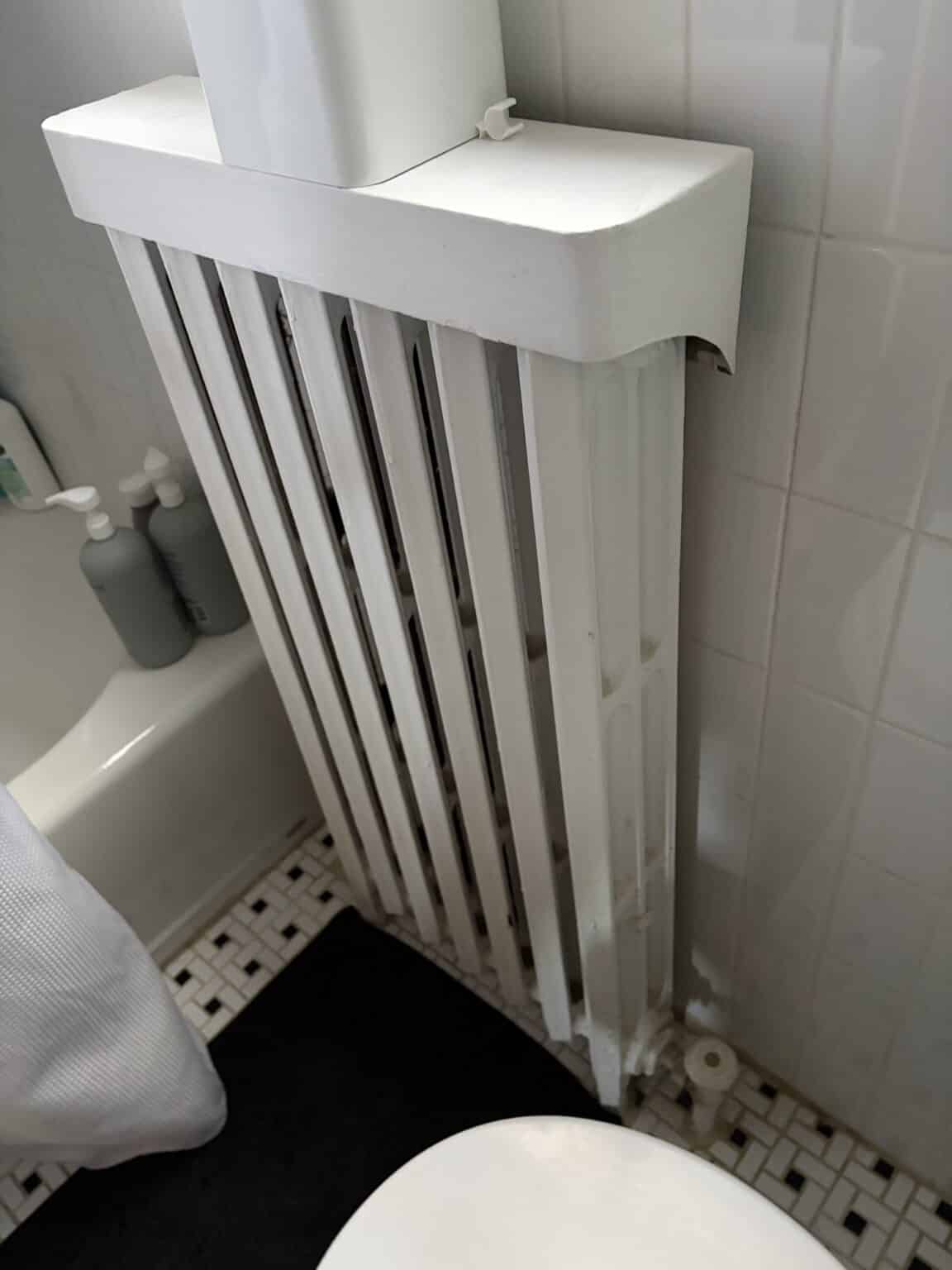
Which raises the question people usually ask next: can you just convert to forced air? Technically yes. Practically, that means ductwork through a house that has never had any, and in an older Arlington or Alexandria home the ductwork is a bigger project than the boiler ever was. Our heat pump versus gas furnace numbers are worth reading if you have that decision in front of you, and our heating and cooling estimator prices forced air by system size. For the boiler itself, the boiler estimator gives you a range for your house, and the exact price gets written down once we have seen the piping, the flue and the room.
Getting a real number for your house
Tell us the input rating off the plate, what your heat comes out of (baseboard, radiators or a coil), and how the boiler vents, and we can tell you on the phone what kind of job you are probably looking at. For the price we come look, because the flue and the piping are half of it and neither one photographs well.
SwiftPro handles boiler repair, service and replacement across Northern Virginia, including Ashburn and the rest of Loudoun, with Virginia Class A license 2705192276. If a company has already quoted you a replacement, our second opinion is free. Call (703) 997-9757 or book online.
Watch our techs on real furnace jobs
Real jobs in Northern Virginia homes, filmed by our own crew. Tap one to watch.