
A Fairfax mailing address covers two different jurisdictions, and if you are replacing a furnace this winter that distinction decides who pulls the permit and who inspects the work.
The City of Fairfax is an independent city with its own building department. Everything else with a Fairfax address, and that is most of 22030, 22031, 22032 and 22033, is Fairfax County. Same houses, same equipment, different permit office. Any contractor who cannot tell you which one your house is in before quoting has not looked.
Beyond the paperwork, Fairfax is the busiest heating territory we cover after Alexandria, and it is busy because it contains nearly every kind of house Northern Virginia builds.
What heats a Fairfax house
The old city core. Houses around Old Town Fairfax that predate the suburbs by a long way, heated by whatever was retrofitted into them. Boilers with cast iron radiators, sometimes converted from oil, plus later additions on their own systems. The mechanical spaces are small and the venting usually runs through masonry.
1950s through 1970s colonials, ramblers and splits. The bulk of it. Gas furnace in a basement or closet, ducts in a crawlspace or an unconditioned attic, one large hallway return that was undersized when it was built. Most are on their second or third furnace.
1980s and 90s subdivisions, heavy in 22033 toward Fair Lakes and Fair Oaks. Gas furnaces and central air, sealed combustion on the later ones, frequently two systems in the larger houses. These are the ones now hitting twenty to thirty years old.
Townhouses and condos throughout. Compact furnaces or air handlers in a utility closet, sometimes a heat pump, and a vent run that is the constraint on everything.
What breaks, and what it means
It lights, runs a few seconds, shuts off, tries again. Flame sensor. A film of oxide on the rod stops it confirming the flame, so the board closes the gas. Cleaning it runs $95 to $180, and it is the single most common no-heat call we run. If someone quotes a control board for this symptom without cleaning the sensor first, get a second opinion.
Clicking with no flame. Hot surface igniter, $240 to $410. A wear item on a fifteen year old furnace, not a death sentence.
It runs ten or fifteen minutes and shuts down, then comes back later. Overheating, because it cannot move enough air through itself. Filter first. Then the blower wheel, which in a house with one hallway return collects a felt of dust that strangles airflow; pulling and cleaning it is $300 to $440.
Water on the floor near a high efficiency furnace, or one that will not start at all. The condensate trap. A 90 percent plus furnace makes water when it runs, and when the drain clogs it shuts itself off on purpose. $175 to $420.
One cold radiator, or clanking. Air in the loop or a stuck valve. Routine, and not a dying boiler.
A whine or rattle before the burners light. The inducer motor, the small fan that clears the flue. When it fails the furnace will not light at all, because a pressure switch is waiting on it. About $1,950, and on an older furnace that is a real fork in the road.
Transparent Pricing for Fairfax Furnace Repairs
Our Northern Virginia prices, which do not change between the city and the county:
- Diagnostic visit: about $99.
- Flame sensor cleaned $95 to $180; igniter or sensor replaced $240 to $410.
- Condensate drain or trap: $175 to $420. Thermostat: $300 to $640.
- Blower wheel cleaned $300 to $440. Blower motor $670 to $2,400.
- Control board $550 to $1,180. Inducer motor about $1,950.
- Heat pump defrost board $450 to $1,150.
- Cracked heat exchanger: not a repair at any price. Here is why.
The full furnace repair list with symptoms is here.
The permit, and why it is not optional
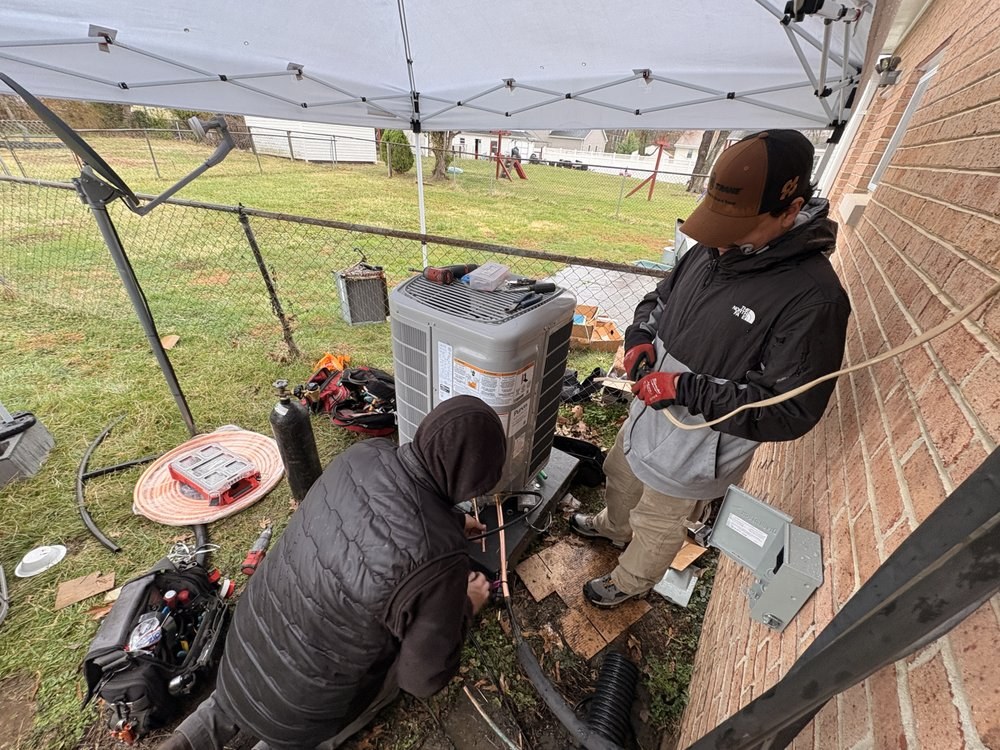
In Fairfax County, replacing a gas appliance requires a permit even when it is a like-for-like swap, and if the job adds new gas piping it becomes a plumbing permit instead. The City of Fairfax has the same requirement through its own office. The inspector is checking the venting and the gas connection, which is exactly the part you want a second set of eyes on.
A quote that skips the permit is not a cheaper job. It is an uninspected one, and it becomes your problem at resale.
When to replace instead of repair
ASHRAE puts a gas furnace’s median service life at eighteen years, and ENERGY STAR’s threshold for even considering replacement is fifteen. The rule we use: past fifteen and the repair is more than a third of a replacement, replace it. Under ten, repair almost every time.
A furnace alone runs $4,498 to $12,300 installed. A furnace and air conditioner together run $8,898 to $23,000 by system size. Washington Gas is currently paying $500 on a furnace at 95.1 to 96.9 percent efficiency and $700 at 97 percent and up, through contractors in its network. The federal tax credit is not available: the IRS is explicit that it ended for equipment placed in service after December 31, 2025.
The furnace and AC estimator gives you the installed range for your system size in about two minutes with no phone number, so you can compare quotes against a published number. What drives that number is here.
Do this in October
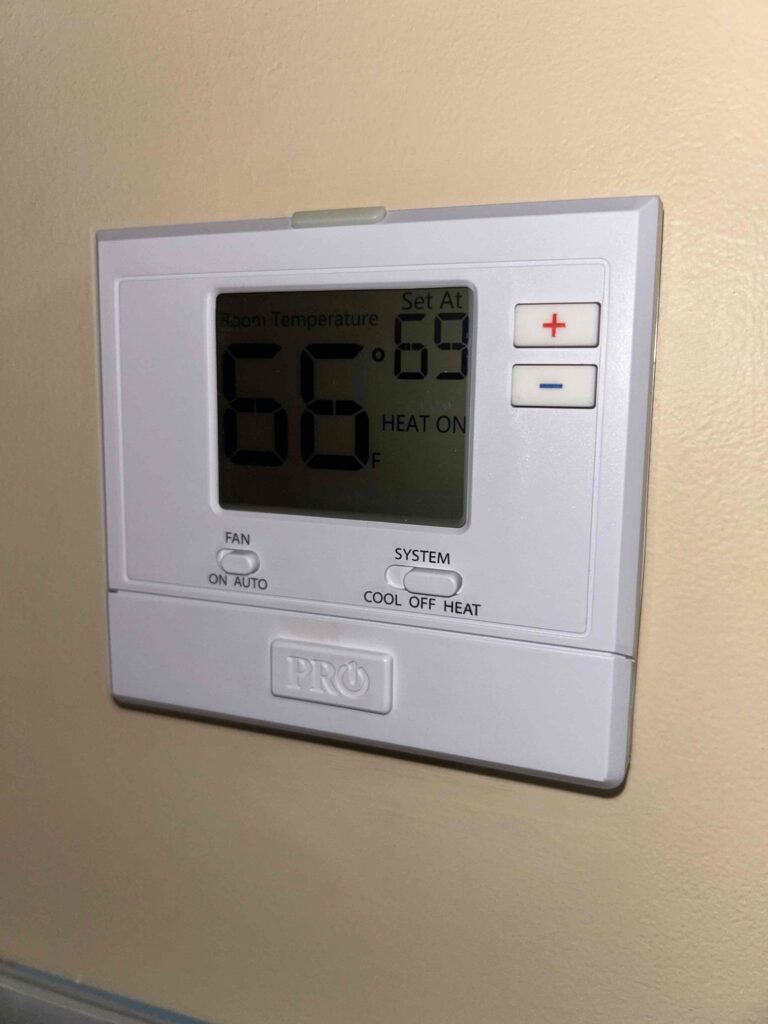
Run the heat for an hour and stand near the furnace for the first two minutes. The sequence is inducer, igniter, burners, blower, in that order, without hesitating. Anything that stalls is a Tuesday appointment now instead of a January emergency.
Change the filter. Put a carbon monoxide alarm on every sleeping floor: Virginia requires them in new construction with fuel burning appliances and has no retrofit rule, so most older Fairfax houses only have one because somebody bought it.
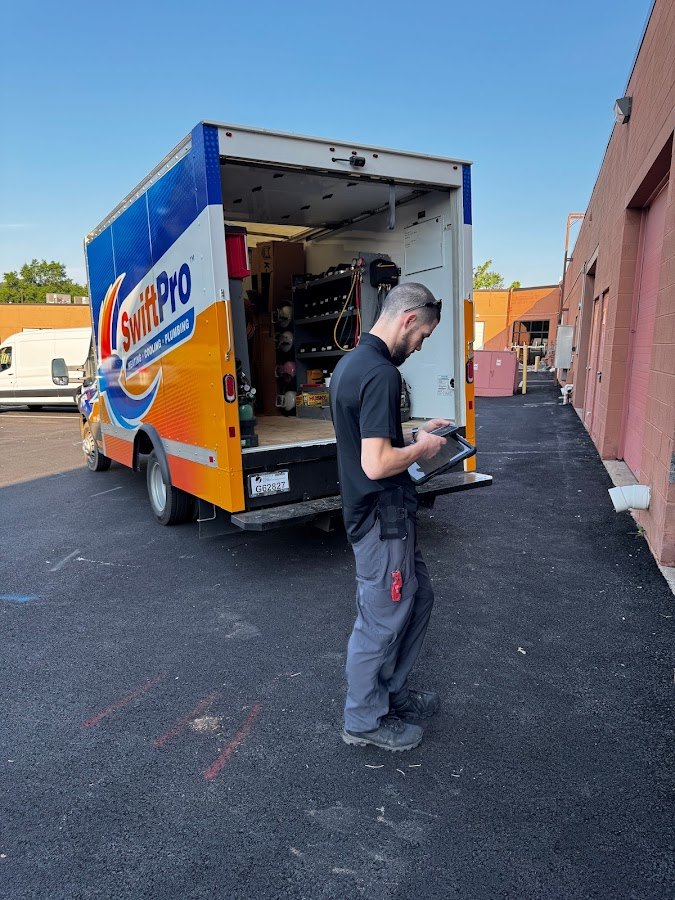
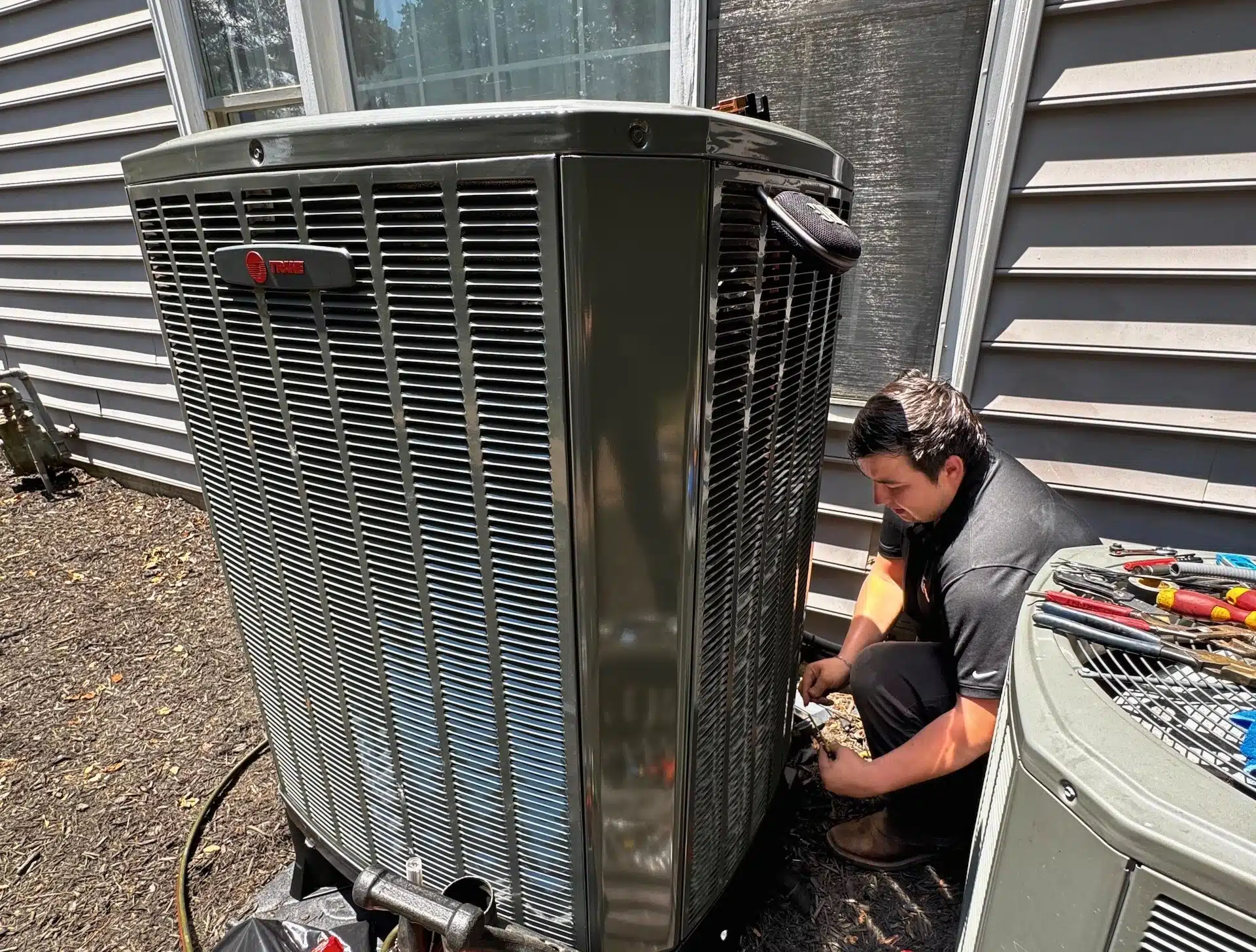
SwiftPro repairs heating systems across the City of Fairfax and Fairfax County. Call (703) 997-9757, book online, or start at the Fairfax County heating repair page. No heat right now is what the 24 hour line is for.