

There are streets in Vienna where a 1955 rambler with one furnace in the crawlspace sits next door to a 2021 rebuild with three zoned systems and a heat pump for the basement. Same street, same weather, two completely different heating problems.
That is the defining thing about working here, and it is worth knowing which house you have before you call anyone, because the advice is not the same.
One piece of paperwork first: the Town of Vienna is incorporated and runs its own permit office. Much of 22182 and 22124 carries a Vienna mailing address but sits in Fairfax County. A contractor should know which one your house is in before quoting, because it decides who inspects the work.
If you are in the older house
One gas furnace, probably its second or third, in a basement or a crawlspace, connected to ductwork that was laid out for the original floor plan. Maybe a boiler with radiators if the house is old enough and nobody converted it.
What fails, in the order we see it:
It lights, runs a few seconds, shuts off, tries again. Flame sensor. $95 to $180 to clean, and the most common no-heat call there is.
Clicking with no flame. Hot surface igniter, $240 to $410.
Runs fifteen minutes and shuts down, comes back later. Overheating on restricted airflow. Filter first, then the blower wheel at $300 to $440.
Cold floors and cold far rooms while the thermostat reads fine. Duct losses, very often in a crawlspace where sixty years of settling has pulled flex ends loose. This is not a furnace repair, and replacing the furnace will not fix it. It is usually the cheapest real improvement available in a house of this era.
One cold radiator or clanking, if you have a boiler. Air in the loop. Bleed it. Routine.
If you are in the new one
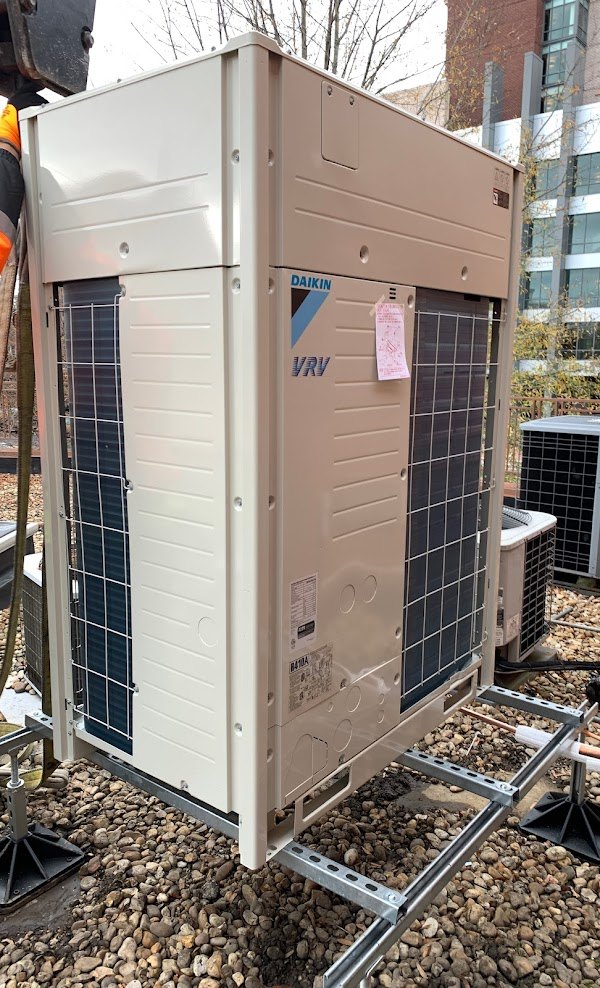
Two or three systems, zoned, often a mix: a gas furnace and air conditioner for the main floors, a heat pump or second furnace upstairs, sometimes ductless for a finished basement or a pool house. Multiple thermostats, multiple filters, and several things that can fail independently.
One zone warm, one cold, same system. A zone damper or its motor, not the furnace. Frequent call, modest repair.
Upstairs never keeps up on the coldest nights. If the upper system is a heat pump, it may simply be at its balance point, which manufacturers put around 30 to 35 degrees for a typical unit. Auxiliary heat coming on at 20 degrees is the system working as designed. Auxiliary heat coming on at 45 degrees is not.
A system you forgot about has been dead for weeks. In a three thermostat house, a failure in a guest suite or a basement goes unnoticed until the first cold night. Run every system in October, not just the one you live in.
Water stain on a ceiling under an attic air handler. Condensate drain, $175 to $420, and cheap against the drywall it prevents.
What repairs cost
Our Northern Virginia prices, the same on both sides of the street:
- Diagnostic visit: about $99.
- Flame sensor cleaned $95 to $180; igniter or sensor replaced $240 to $410.
- Condensate drain or trap $175 to $420. Thermostat $300 to $640.
- Blower wheel cleaned $300 to $440. Blower motor $670 to $2,400.
- Control board $550 to $1,180. Heat pump defrost board $450 to $1,150.
- Cracked heat exchanger: not a repair. Here is why.
Worth saying plainly: our prices do not change because of the zip code. What changes your annual spend in a rebuilt house is the count. Three systems means three filters, three tune-ups and three things that can fail, so the yearly total is naturally higher even when every visit is ordinary.
Replacing, in either house
A furnace alone runs $4,498 to $12,300 installed; a furnace and air conditioner together $8,898 to $23,000 by system size.
In the older house, the thing to insist on is measurement. Half the systems we replace in houses of that era are a full size larger than the house needs, which is exactly why the old one short cycled and never warmed the back bedroom. Matching the sticker on the outgoing unit repeats somebody else’s mistake.
In the newer house, replace by system rather than by house unless everything went in the same week. There is no saving in replacing a seven year old upstairs unit because the main floor one failed at eighteen.
Washington Gas is currently paying $500 on a furnace at 95.1 to 96.9 percent efficiency and $700 at 97 and up, through contractors in its network. The federal tax credit ended for equipment placed in service after December 31, 2025.
The furnace and AC estimator gives you the installed range for your size in about two minutes. For an addition, a converted attic, or a room that has never worked, the ductless estimator is usually the more honest tool.
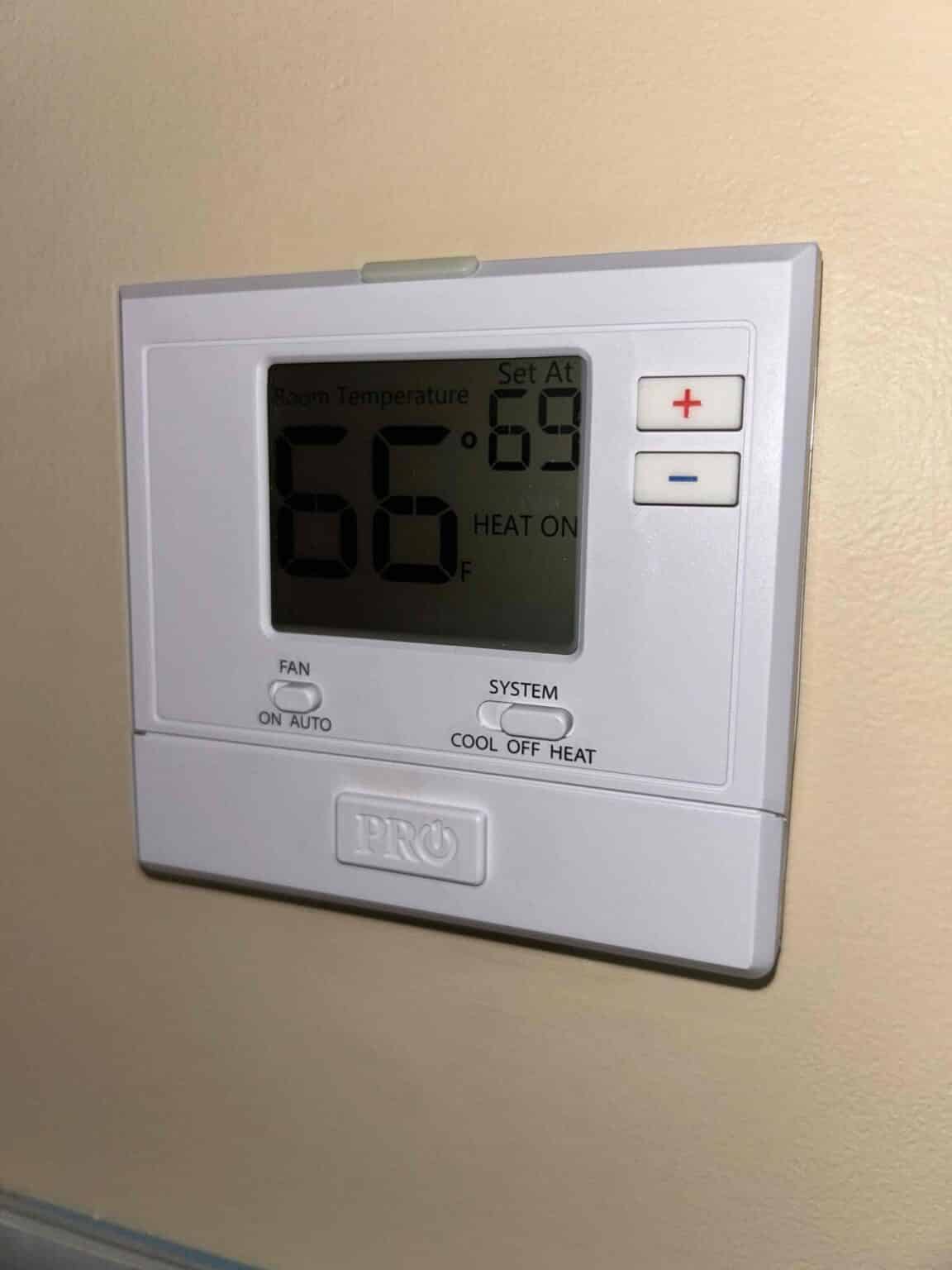
Typical Heating and Furnace Repair Costs in Northern Virginia
Run every system for an hour, including the ones serving rooms you rarely use. Change every filter. If you have a boiler, bleed the radiators now. And put a carbon monoxide alarm on each sleeping floor: Virginia requires them in new construction with fuel burning appliances but has no retrofit rule, so the older houses on the street generally have one only if somebody bought it.
SwiftPro repairs heating systems across Vienna, in the town and the surrounding county. Call (703) 997-9757, book online, or start at the Fairfax County heating repair page.