

A furnace replacement in Fairfax Station costs more than the same brand and model installed ten miles east, and homeowners here are right to ask why. It is not the zip code. It is four specific things, and any quote worth taking should name them.
Equipment size. Bigger houses need more capacity, and capacity costs money. A 120,000 BTU furnace with a matching blower is simply a more expensive machine than the 60,000 BTU unit going into a townhouse.
Duct run length. Long horizontal runs through crawlspaces and attics mean more material, more sealing, and more time to get the airflow right. Short-changing that is how a house ends up with a new furnace and the same cold bedroom.
Zoning. Most houses out here run more than one system, and several run zoned systems with dampers and controls. Replacing one system in a zoned house means the controls have to end up talking to each other correctly, which is work.
Access. Attic air handlers, mechanical rooms at the end of a finished basement, and equipment that has to come a long way from the driveway. Real labor, and it belongs in the quote rather than in a change order.

What is in these houses
Mostly gas furnaces with central air, frequently two systems, often zoned, in houses built from the 1980s onward. Heat pumps on the all-electric properties. Wells and septic on a good share of the acreage, which does not change the heating but does change what a power outage means. Boilers are rare; this housing is newer than the radiator era.
What breaks
It lights, runs a few seconds, shuts off, tries again. Flame sensor, $95 to $180 to clean. The most common no-heat call there is.
Clicking with no flame. Hot surface igniter, $240 to $410.
One zone warm, one cold on the same system. A zone damper or its motor, not the furnace. Common in a zoned house and a modest repair.
Runs fifteen minutes and shuts down. Overheating on restricted airflow. Filter first, then the blower wheel at $300 to $440. On long duct runs this shows up sooner than it would in a compact house.
Water stain on a ceiling below an attic air handler. Condensate drain, $175 to $420, and cheap against the ceiling it saves.
A system nobody uses has been dead for weeks. In a two or three system house the failure in a guest wing or a bonus room goes unnoticed until the first cold night, which is also when everyone else is calling. Run every system in October.
- Diagnostic visit: about $99.
- Flame sensor cleaned $95 to $180; igniter or sensor replaced $240 to $410.
- Condensate drain or trap $175 to $420. Thermostat $300 to $640.
- Blower wheel cleaned $300 to $440. Blower motor $670 to $2,400.
- Control board $550 to $1,180. Inducer motor about $1,950.
- Heat pump defrost board $450 to $1,150.
- Cracked heat exchanger: not a repair at any price. Here is why.
Repair prices are the same here as anywhere else we work. It is replacement, not repair, where the house size shows up.
The power outage question
A gas furnace still needs electricity for its board, inducer and blower, so it stops when the power does. If you have a generator, confirm the furnace circuit is actually on it; plenty of installations cover the refrigerator and the well pump and skip the heat. If you are on a well, no power also means no water, and that is worth planning for together rather than separately.
Replacing it properly
Replace by system rather than by house unless everything went in the same week. And size each one for what it serves now: additions, finished basements and new windows all change the load, and in larger houses we regularly find a system a full size bigger than the space needs, which is exactly why it short cycles and why one room is never right.
A furnace alone runs $4,498 to $12,300 installed; a furnace and air conditioner together $8,898 to $23,000 by system size. Quotes here land in the upper half of those ranges for the four reasons at the top of this page, and a good quote says which of them applies to your house.
Washington Gas is paying $500 on a furnace at 95.1 to 96.9 percent efficiency and $700 at 97 and up, through contractors in its network. The estimator prices a replacement by system size in about two minutes. For a bonus room or an addition that has never been comfortable, the ductless estimator is often the more honest answer than resizing the whole system.
If a quote comes back far outside the published range, the second opinion is free, and plenty of the quotes we look at turn out to be fair, in which case we say so.
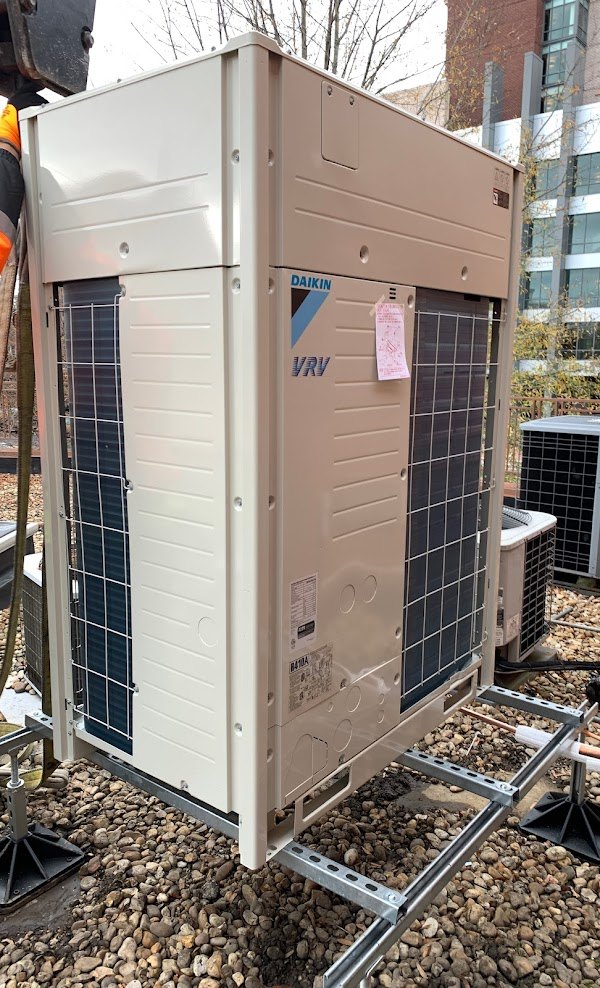
Common Heating System Failures and Repair Estimates
Run every system for an hour, including the ones serving rooms you rarely use. Change every filter. Confirm the generator covers the furnace. Clear leaves from around and under any heat pump outdoor unit. And put a carbon monoxide alarm on every sleeping floor.
SwiftPro services heating systems across Fairfax Station. Call (703) 997-9757, book online, or start at the Fairfax County heating repair page.