

Lorton holds two housing vintages that could hardly be further apart, and the heating advice is different in each.
There is the older Lorton along the Route 1 corridor and the streets off it, where houses have been through two or three heating systems and the ductwork is original. And there is Laurel Hill and the newer developments built on the former reformatory land, where the equipment is young enough that most failures are still under warranty if anyone bothers to check.
Knowing which one you are in tells you whether your next call is a repair or a warranty claim.
If your house is newer
Check the warranty before you pay for anything. Most major brands cover parts for ten years, but only if the unit was registered within a short window after installation: Carrier and Rheem want 90 days, Trane and Goodman 60. Unregistered, the same unit usually drops to five years. None of those standard warranties cover labor, which is why a covered repair still costs something, just far less than the whole job.
If you bought the house from the original owner, the registration may or may not have happened and may or may not transfer. It takes one phone call with the model and serial number off the label inside the furnace door to find out, and it can be the difference between a $99 visit and a four figure one.
What actually fails on newer equipment: the flame sensor first, at $95 to $180 to clean, because oxide builds on it no matter how new the furnace is. Then the condensate trap at $175 to $420, because high efficiency furnaces make water and a blocked drain shuts the furnace off on purpose. Then igniters at $240 to $410.
If your house is older
The equipment is newer than the house and the mismatch is usually the story.
Short cycling, with a cold room at the far end. An oversized furnace on the original ductwork. Somebody replaced a 1970s unit by matching its BTU rating instead of measuring the house, so it blasts, satisfies the thermostat near the hallway, and shuts off before the far rooms catch up. Nothing is broken. The system is wrong for the house, and no repair fixes it.
Cold floors, cold far rooms, thermostat reads fine. Duct losses in a crawlspace. Not a furnace repair, and usually the cheapest real improvement available in a house of that era.
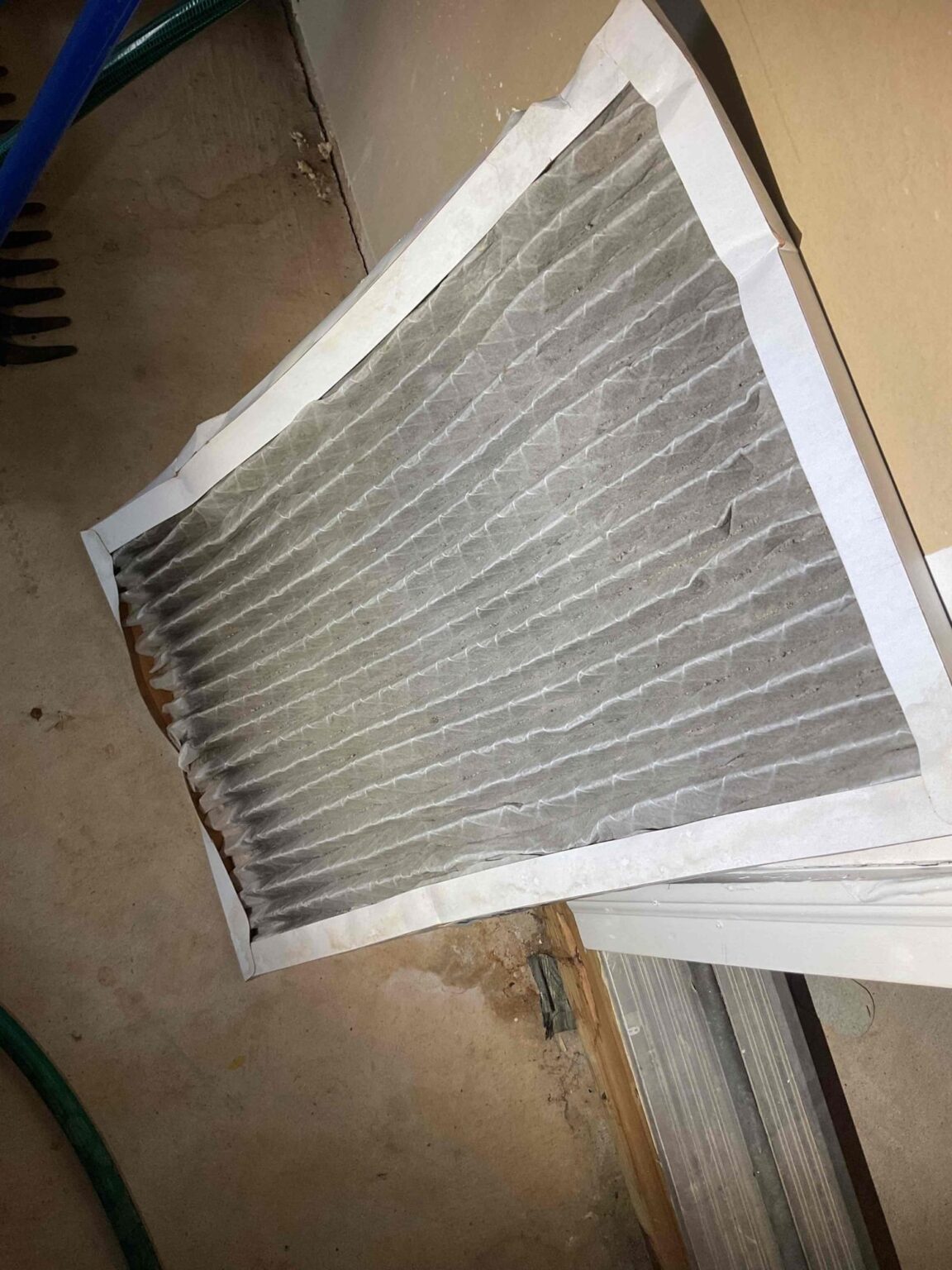
Overheats and shuts down after fifteen minutes. Airflow. Filter, then the blower wheel at $300 to $440, then the return, which is often one grille doing a job that needs two.
A smell of exhaust, or a carbon monoxide alarm. Turn the furnace off, open windows, leave, and call from outside. Virginia requires carbon monoxide alarms in new construction with fuel burning appliances and has no retrofit rule, so older Lorton houses have one only if somebody bought it.
Repair prices
- Diagnostic visit: about $99.
- Flame sensor cleaned $95 to $180; igniter or sensor replaced $240 to $410.
- Condensate drain or trap $175 to $420. Thermostat $300 to $640.
- Blower wheel cleaned $300 to $440. Blower motor $670 to $2,400.
- Control board $550 to $1,180. Inducer motor about $1,950.
- Heat pump defrost board $450 to $1,150. Capacitor $240 to $370.
The full furnace list with symptoms is here.
Typical Furnace and Heating Repair Costs in Lorton
ASHRAE puts a gas furnace’s median service life at eighteen years, and ENERGY STAR’s threshold for even considering replacement is fifteen. Past fifteen, if the repair is more than a third of a replacement, replace it. Under ten, repair almost every time, and check the warranty first.
A furnace alone runs $4,498 to $12,300 installed; a furnace and air conditioner together $8,898 to $23,000 by system size. Washington Gas is currently paying $500 on a furnace at 95.1 to 96.9 percent efficiency and $700 at 97 and up, through contractors in its network. The federal tax credit ended for anything placed in service after December 31, 2025.
In an older Lorton house, the thing to insist on is measurement rather than matching the outgoing sticker, and a look at the return while somebody is there. The estimator gives you the installed range for your system size in about two minutes with no phone number.
October list
Run the heat for an hour and listen to the first two minutes: inducer, igniter, burners, blower, in order, no hesitation. Change the filter. Find the model and serial number inside the furnace door and note them down, because that is what a warranty check needs. And put a carbon monoxide alarm on each sleeping floor.
SwiftPro repairs heating systems across Lorton. Call (703) 997-9757, book online, or start at the Fairfax County heating repair page.