

A Haymarket address covers two very different kinds of property, and the first question worth answering is which fuel you burn.
In the newer subdivisions spreading around the town, it is almost always natural gas feeding a modern sealed combustion furnace. On the rural properties out toward the mountains, natural gas service does not reach every road, and those houses run on propane, on oil in a few cases, or all-electric with a heat pump. Same weather, same equipment brands, different economics and different rebate eligibility.
If you are in a subdivision
Gas furnace with central air, sealed combustion, PVC vent out a side wall, often two systems in the larger houses, heat pumps in a share of the townhouses. The equipment is newer than most of the region, so the failures are the early ones.
It lights, runs a few seconds, shuts off, tries again. Flame sensor, $95 to $180 to clean. The most common no-heat call there is, at any age.
Clicking with no flame. Hot surface igniter, $240 to $410.
Water on the floor, or it will not start at all. Condensate trap on a high efficiency furnace, $175 to $420. The furnace shuts itself off on purpose when it cannot drain.
Runs and quits after fifteen minutes. Airflow. Filter, then the blower wheel at $300 to $440.
And check the warranty before paying for a part. Most brands cover parts ten years if the unit was registered within 60 to 90 days of installation, five if it was not, and none of the standard warranties include labor. The model and serial number are on a label inside the furnace door.
If you are on a rural property
Three things change.
Fuel. A propane furnace is the same machine as a natural gas one with different orifices and a different pressure setting, so any competent technician can service it. What differs is the price of what it burns and who sets that price. It also means the Washington Gas rebates, which pay $500 to $700 toward a high efficiency furnace, are not available to you, since they are for its natural gas customers. The efficiency step up can still pay, because propane generally costs more per unit of heat, so run the numbers on your own delivered cost rather than a generic one.
Power. Rural roads lose power more often and get it back later. A gas or propane furnace still needs electricity for its board, inducer and blower, so it stops when the power does. If you have a generator, confirm the furnace circuit is actually on it. Plenty of installations cover the refrigerator and the well pump and skip the heat.
Water. On a well, no power also means no water, which is the combination that catches people out in a February ice storm. Worth planning for together rather than separately.
Repair prices
- Diagnostic visit: about $99.
- Flame sensor cleaned $95 to $180; igniter or sensor replaced $240 to $410.
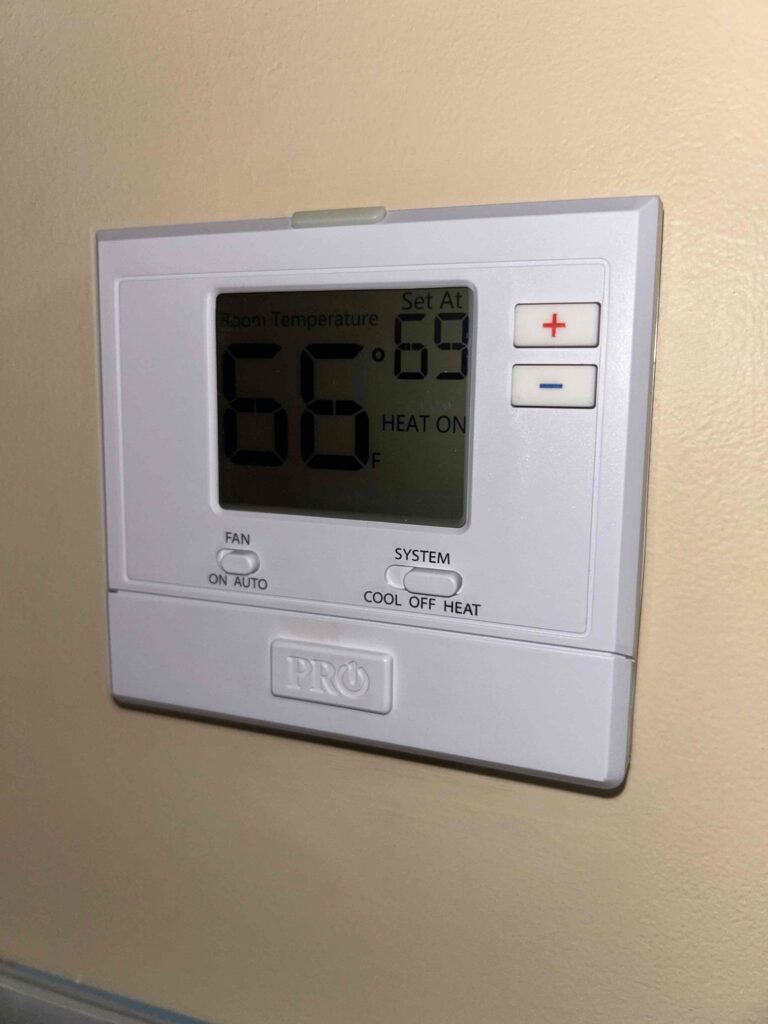
- Condensate drain or trap $175 to $420. Thermostat $300 to $640.
- Blower wheel cleaned $300 to $440. Blower motor $670 to $2,400.
- Control board $550 to $1,180. Inducer motor about $1,950.
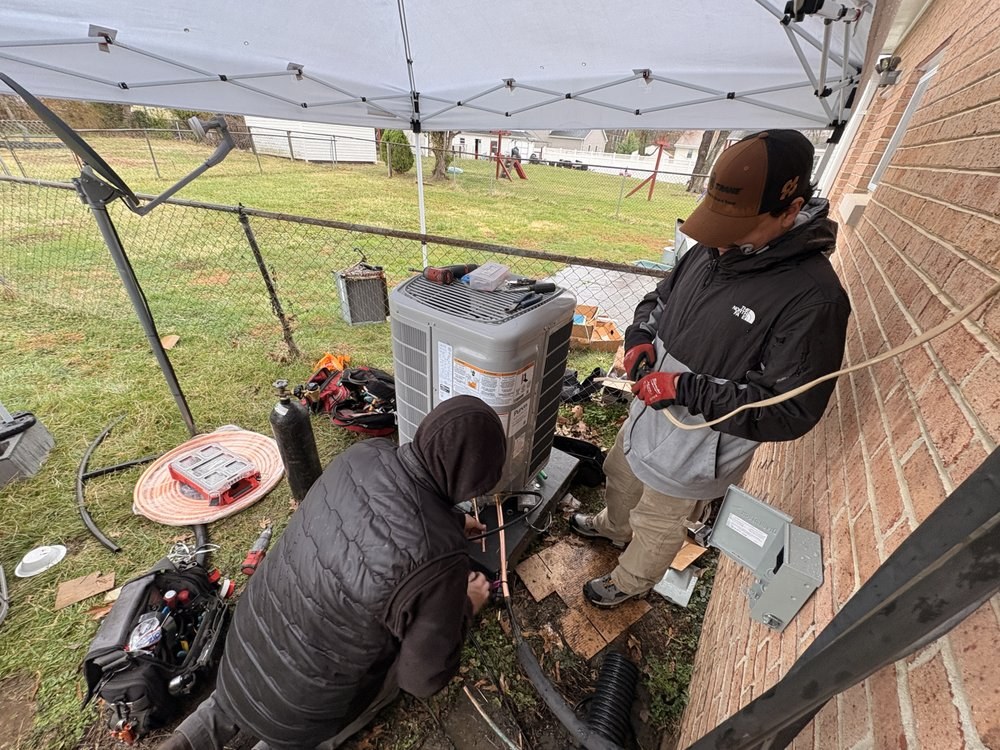
- Heat pump defrost board $450 to $1,150. Capacitor $240 to $370.
- Cracked heat exchanger: not a repair at any price. Here is why.
Heating and Furnace Repair Costs in Haymarket
A furnace alone runs $4,498 to $12,300 installed; a furnace and air conditioner together $8,898 to $23,000 by system size. The estimator prices it by size in about two minutes with no phone number.
If you are all-electric and considering a heat pump, Dominion’s Home Energy Evaluation is a no-cost audit through a participating contractor and it is the door to its heat pump rebates. Ask about it before signing anything.
October list
Run the heat for an hour. Check the propane level before the first cold week rather than after it. Confirm your generator covers the furnace circuit. Change the filter. Clear leaves from around and under any heat pump outdoor unit, because it drains defrost water out the bottom. And put a carbon monoxide alarm on each sleeping floor.
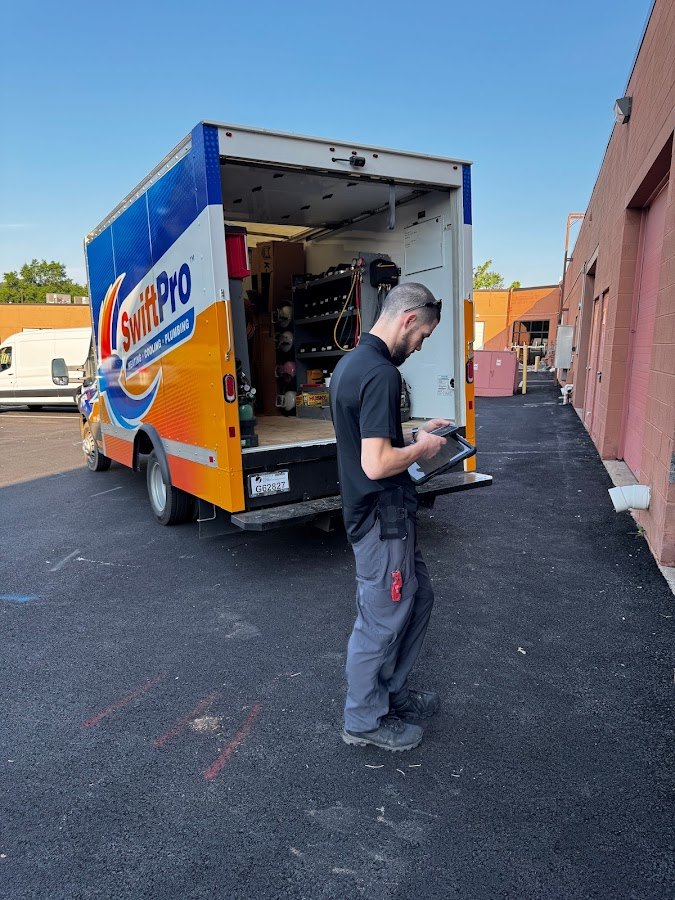
SwiftPro repairs heating systems across Haymarket and western Prince William County. Call (703) 997-9757 or book online.