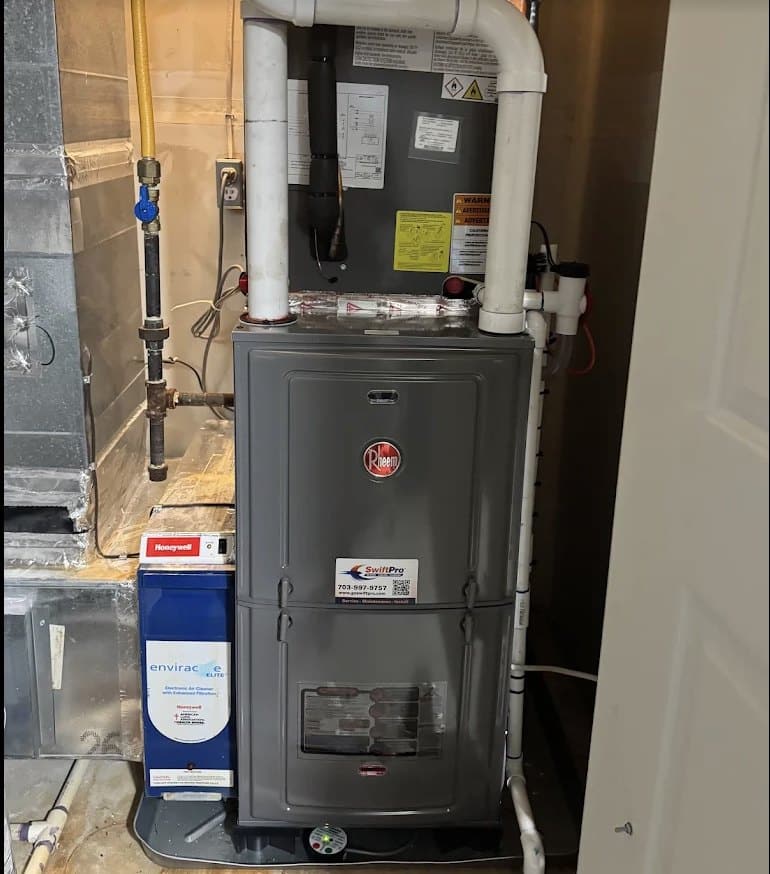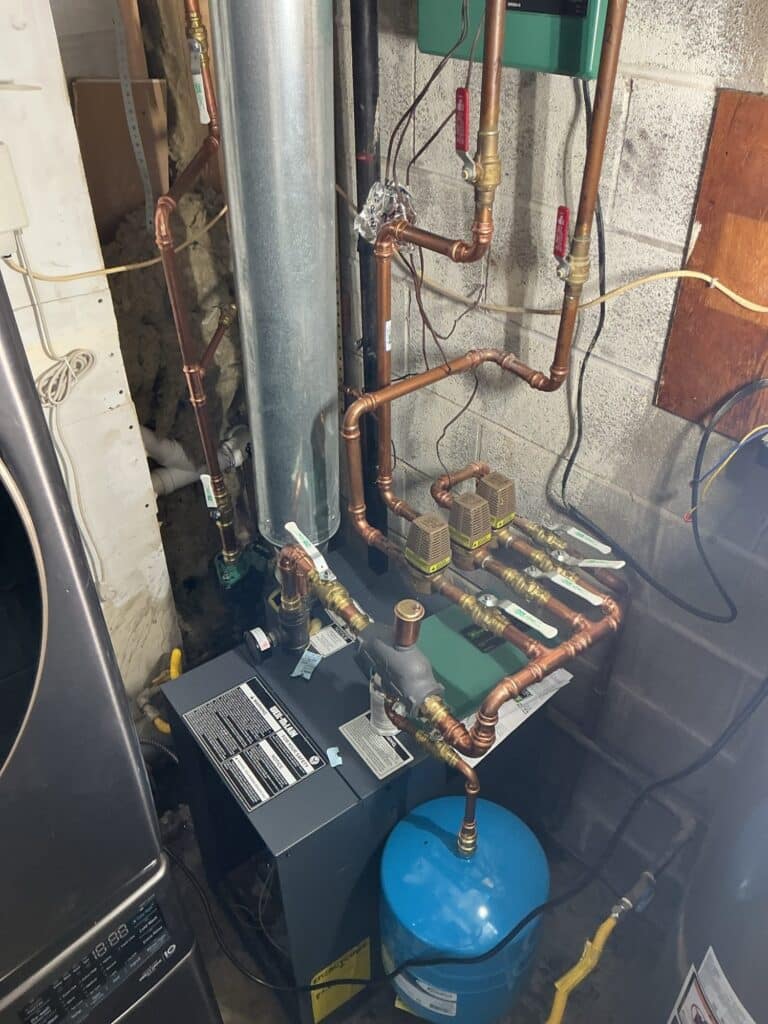


A whole-house humidifier runs $1,000 to $1,500 installed at SwiftPro for a bypass or fan-powered unit, with most landing right around $1,200. A steam humidifier, which is a different machine for a different problem, runs closer to $2,200 to $2,500.
Whether you want one depends on a number you can measure for about $10, so measure it before you spend anything.
Assessing Your Indoor Humidity Levels Before Purchase
Buy a hygrometer, the little humidity gauge sold in any hardware store. Put it in a living area, not the basement or a bathroom, and read it on a cold day when the heat has been running.
The EPA’s guidance for indoor relative humidity is 30 to 50 percent. In a heated Northern Virginia house in January, plenty of homes read in the teens or low twenties, because cold outdoor air holds very little moisture and heating it drops the relative humidity further.
If you are reading 35 percent, you do not need a humidifier and nobody should sell you one. If you are reading 18, everything below is why your house feels the way it does.
What dry air actually does
It is not just comfort, though it is that too.
You feel colder at the same temperature. Dry air pulls moisture off your skin, which is the same evaporative effect that makes a fan feel good in July and miserable in January. People with dry houses run the thermostat two or three degrees higher to feel the same, which costs more than the humidifier does to run.
Static, constantly. Shocks off the doorknob, hair that will not lie flat, clothes clinging. That is the most reliable sign a house is below about 30 percent.
Wood moves. Hardwood floors gap in winter and close up in summer. Doors stick, then stop sticking in April. Furniture joints loosen. Pianos go out of tune. In an older house with original floors this is the argument that usually lands.
Dry nose and throat, and worse sleep. Waking up with a scratchy throat every winter morning and blaming the heat is common and accurate.
Worth being straight about the limits: humidity in the right band is better for comfort and for your house, and going too far the other way causes problems of its own. Above about 50 percent you get condensation on windows, damp in cold corners, and conditions that encourage dust mites and biological growth. A humidifier is a tool for hitting a band, not for making the house as damp as possible.
The three kinds, and which one you want
Bypass humidifier. Mounts on the supply or return duct beside the furnace, uses the furnace blower to push air across a wet pad, and drains the excess. Cheapest to buy and run, no electricity beyond a solenoid, needs a drain nearby. The workhorse, and what goes into most houses.
Fan-powered humidifier. Same idea with its own small fan, so it does not depend on the furnace blower running and it delivers more moisture per hour. The better choice in a larger house or where duct layout makes a bypass awkward. Most of what we install falls in this or the bypass category, and both land in that $1,000 to $1,500 range.
Steam humidifier. Boils water and injects steam. It delivers far more moisture, works whether or not the furnace is heating, and holds a setpoint precisely. It costs more to buy, uses real electricity, and is the right answer for a large house, a house with a serious wood floor or instrument to protect, or a house where the other two could not keep up. That is the $2,200 to $2,500 tier.
What the install actually involves
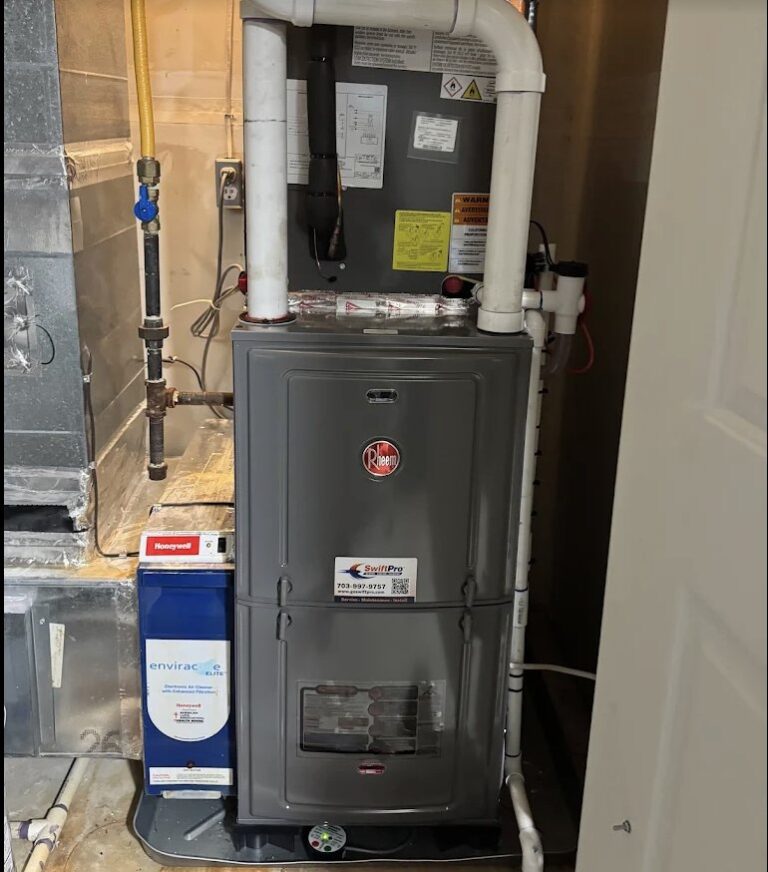
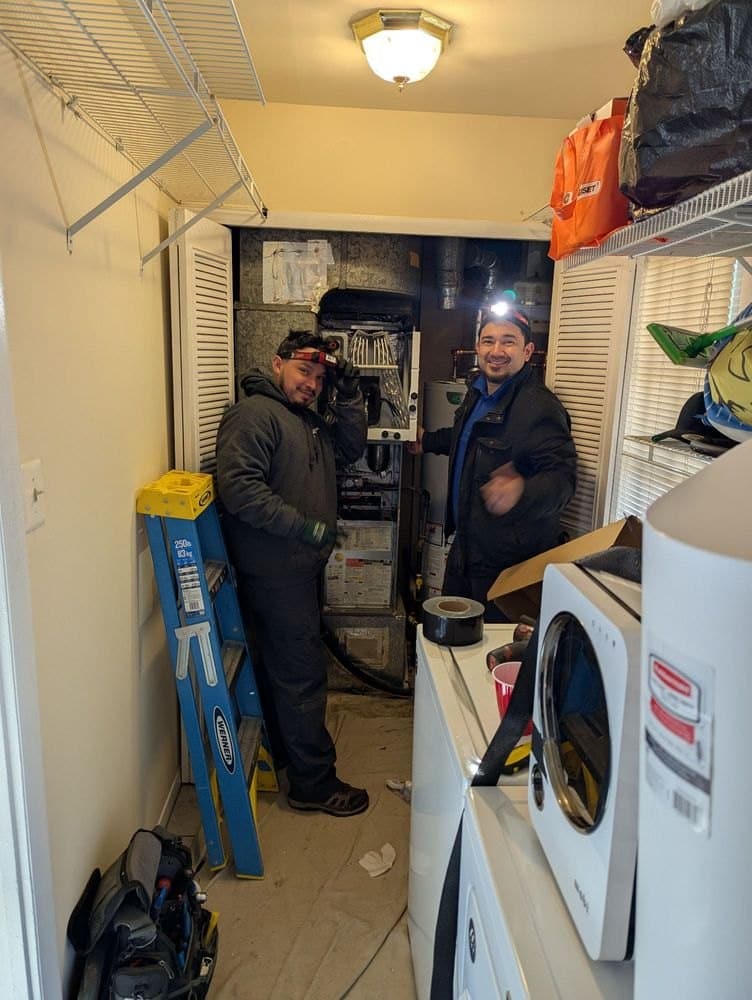
A water line tapped off a nearby cold supply with its own shutoff. A drain line to a floor drain, a condensate pump, or the furnace’s existing condensate route. An opening cut into the ductwork and the unit mounted and sealed. A humidistat, either on the wall or on the return duct, wired to the furnace so the humidifier only runs when there is warm air moving. On a steam unit, add an electrical circuit.
None of that is exotic, and it is a half day. What decides whether your house is an easy install or a longer one is whether the water and the drain are close to the furnace. Ask that question when you get a quote, because it is the variable.
The part people skip, and then regret
A humidifier has a water panel, essentially a stiff mesh evaporator pad, and it needs replacing once a heating season. In Northern Virginia water, which Fairfax Water describes as moderately hard to hard, those pads scale up faster than the manufacturer’s optimistic estimate.
A neglected humidifier does two bad things. It stops humidifying, which you notice in February when the static comes back. And it can keep dribbling water through a scaled pad into a drain that is also scaled, which is how a humidifier ends up leaking onto a furnace. We have replaced furnace control boards that were killed by a humidifier nobody had touched in six years.
So: change the pad every fall, shut the water off at the humidifier’s own valve for the summer, and turn it back on in October. That is the whole maintenance routine, and it takes ten minutes. It is included in the fall tune-up on our Family Care Plan.
When it is not the right purchase
Your hygrometer reads above 35 percent. Save the money.
You have windows dripping with condensation already. That is too much moisture, not too little, and adding a humidifier makes it worse. The fix there is ventilation and possibly the windows.
The house is leaky enough that the humidity will not hold. A humidifier in a house with serious air leakage is pouring water into a bucket with a hole in it. Air sealing first, humidifier second, and the air sealing helps the heating bill too.
The furnace is on its last winter. Put the money toward the replacement and add the humidifier then, when the ductwork is already open and the labor overlaps. What a new furnace costs is here, and the estimator gives you the range for your system size in about two minutes.
Things people ask
Will it make the house feel warmer? Yes, genuinely, and that is most of the point. Most people find they can drop the thermostat a degree or two at the same comfort once the humidity is in range.
Does it use much water? A few gallons a day while it runs in deep winter. It shows on the water bill about as much as an extra load of laundry.
Can I put one on a heat pump? Yes, though a bypass unit depends on warm supply air, and heat pump supply air is cooler than a furnace’s. On a heat pump, a fan-powered or steam unit is usually the better match. Worth mentioning when you ask for a quote.
What about a portable one? Fine for one bedroom. It will not change the house, and it needs filling constantly.
SwiftPro installs and services whole-house humidifiers across Northern Virginia, usually alongside a fall heating tune-up. Call (703) 997-9757 or book online.