

Most restaurant HVAC problems in Northern Virginia are not equipment failures. They are balance problems, and they get misdiagnosed as equipment failures for years while somebody keeps writing checks for repairs that do not fix anything.
If your front door is hard to pull open, your dining room is cold in one corner and stuffy in another, or your hood does not seem to be pulling the way it used to, read the next section before you call anyone about the rooftop unit.
The balance problem, in plain terms
A commercial kitchen throws enormous amounts of air out of the building. The exhaust hood over the line runs continuously during service, pulling conditioned air, grease and heat out through the roof.
That air has to be replaced. In a properly designed restaurant it is replaced by a dedicated makeup air unit, which brings in outside air, tempers it, and delivers it near the kitchen. When the makeup air unit is undersized, broken, switched off, or was never installed correctly, the building replaces that air the only way it can: by sucking it in through every crack, gap and doorway.
That is negative pressure, and here is how it shows up:
- The front door is hard to open, or slams itself. The single most reliable sign, and the one staff mention constantly without anyone connecting it to HVAC.
- The dining room is drafty and cold near the entry, because outdoor air is being pulled straight across it.
- The hood does not capture smoke properly, because there is not enough air in the building for it to move.
- Pilot lights blow out, or gas appliances burn oddly. This is the serious one. A building under enough negative pressure can pull combustion products back down a flue.
- The heating and cooling bills are enormous relative to the space, because you are conditioning outdoor air that is being dragged in uncontrolled.
- Odors from the kitchen reach the dining room rather than going up the hood.
No amount of rooftop unit repair fixes any of that. The fix is measuring the exhaust and the makeup air and correcting the difference, and it is the first thing worth doing in a restaurant that has fought its climate for years.
Rooftop units, and what actually goes wrong
Most restaurants in this region run packaged rooftop units, which combine heating, cooling and the blower in one cabinet on the roof. They are reliable and they are also completely out of sight, which is their real problem: nobody looks at them until something stops.
Belts. Many commercial blowers are belt driven, and belts stretch, glaze and snap. A snapped belt means no airflow at all, and it is a cheap part that closes a dining room.
Filters. A restaurant rooftop unit loads filters far faster than an office does, because it is pulling air in an environment full of grease aerosol. Quarterly is a minimum, monthly is realistic in a busy kitchen.
Condenser coils packed with grease. The kitchen exhaust discharges on the same roof the condensers sit on. Over a few years the coils get coated in a film that traps everything else, and the unit loses capacity steadily until somebody notices it cannot keep up in August. Coil cleaning on a restaurant rooftop is a different job from a residential one, and it needs doing more often.
Economizer dampers. The outside air damper is supposed to modulate. When its actuator fails, it either sticks closed, which starves the building of fresh air, or sticks wide open, which in January means the unit is trying to heat outdoor air at 20 degrees. Stuck economizers are the most common cause of a winter gas bill nobody can explain.
Gas heat sections. The same igniters, flame sensors and inducers as a home furnace, in a harsher environment. They fail the same way and they fail more often.
Refrigeration, because it is on the same roof and the same night
Walk-in coolers and freezers fail in the hours when nobody is in the building, which is why a refrigeration failure costs so much more than the repair. A condenser coil that has been collecting the same grease as the HVAC condensers loses capacity gradually, and the box starts creeping up in temperature long before it fails outright.
Two things worth having in place regardless of who services you: a temperature alarm that reaches somebody’s phone, and a written record of box temperatures that your health inspector can see. The alarm pays for itself the first time it catches a failure at 11pm instead of at 7am.
Why fall is the month to deal with this
Restaurant heating problems reveal themselves in the first genuinely cold week, which is also the week every commercial service company in Northern Virginia is triaging. A rooftop unit that will not heat on a Friday night in December is a different problem from one found on a Tuesday in October.
A fall inspection on a commercial rooftop unit covers the gas heat section, the igniter and flame sensor, the heat exchanger, the belts, the economizer damper and actuator, the filters, the condensate drain and the electrical connections. It takes an hour or two per unit, and it is the difference between a scheduled repair and a closed dining room.
The same visit is when to measure the exhaust and makeup air, because that is a measurement rather than a repair and it does not need to happen during a crisis.

What to ask any commercial contractor
Will you measure the exhaust and makeup air, or just look at the unit? If the answer is only the unit, you will be having this conversation again.
Can you get here at night or before open? Restaurant work that happens during service costs you more than the repair does. Any contractor who cannot schedule around your hours is the wrong contractor.
Do you have the part, or is it a special order? Commercial parts are less commonly stocked than residential ones. Ask what happens if the part is not on the truck, and get the answer before you need it.
What does a maintenance agreement actually include, and how often? For a restaurant, quarterly is a reasonable baseline rather than annual, because the environment is harder on everything.
When a rooftop unit is done
Commercial rooftop units are workhorses, and plenty run twenty years. What ends them is usually the heat exchanger or the compressor, and by then the rest of the cabinet is generally at the same point.
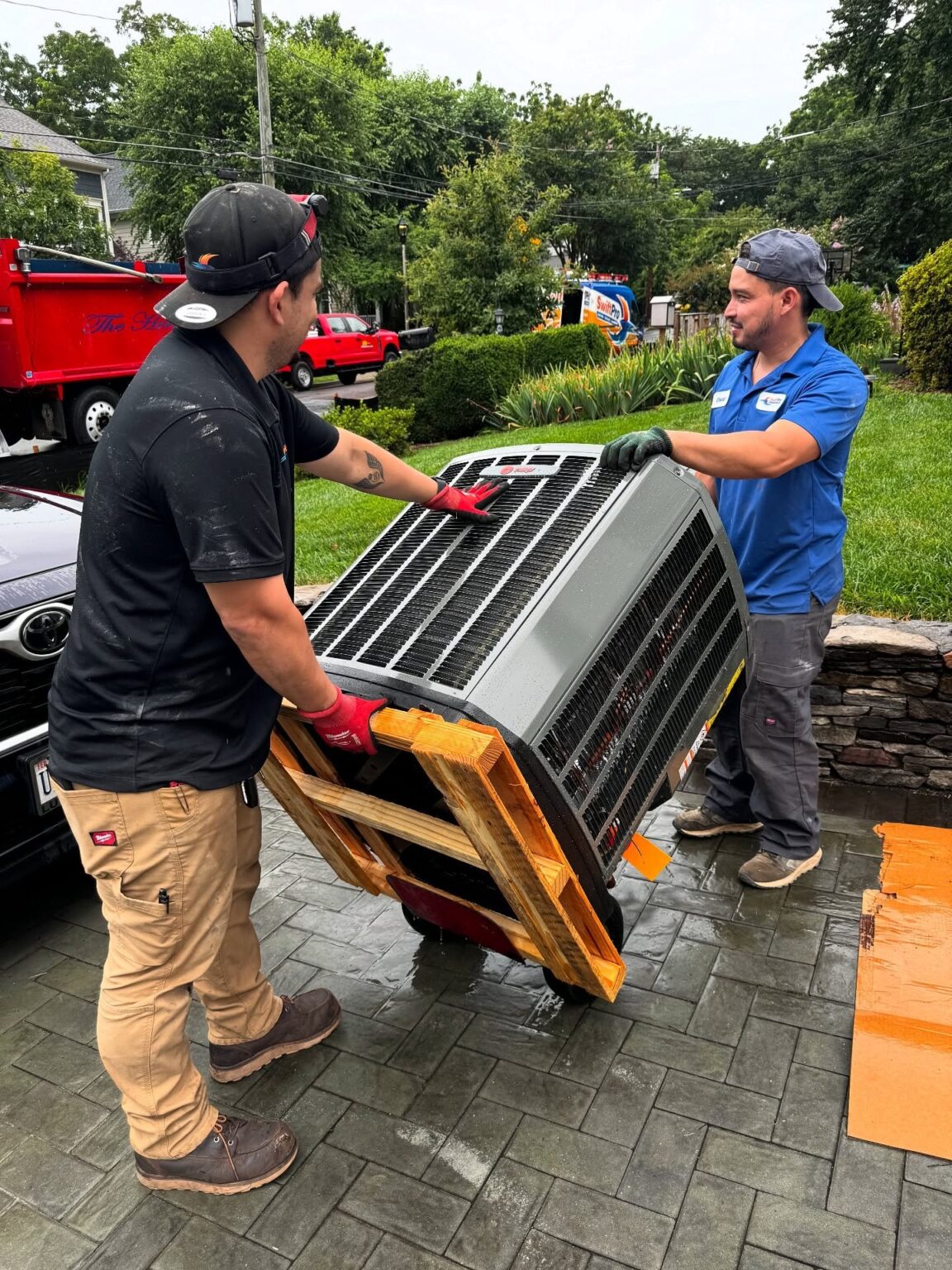
Replacing one is a different kind of project from a residential swap: it involves a crane, a roof curb that may or may not match the new unit, electrical and gas connections, and a day when that part of the building has no conditioning. It is planned work, and it is planned better in the shoulder seasons than in July or January. We do this work, and the honest version of the conversation starts with whether the existing curb and the existing electrical service fit what you actually need now, because restaurants change and the unit that was sized for the previous concept may be wrong for yours.
SwiftPro services restaurant HVAC and refrigeration across Northern Virginia. Call (703) 997-9757, or see our restaurant services page and commercial HVAC and refrigeration. If you also need backflow testing, that is here.