

By Tyler Griffin, Founder of SwiftPro · Updated July 2026
Every summer in Northern Virginia, the same story plays out: a thunderstorm parks over Fairfax or Loudoun County, drops two inches of rain in an hour, and somebody’s finished basement becomes a wading pool. The carpet, the drywall, the family photos in cardboard boxes, gone in an afternoon. Here is the honest homeowner’s guide to our rainy season, what to check before the next storm, and why a working sump pump (with a battery behind it) is the single best insurance policy your basement can have.
Why Your Basement Needs Sump Pump Protection
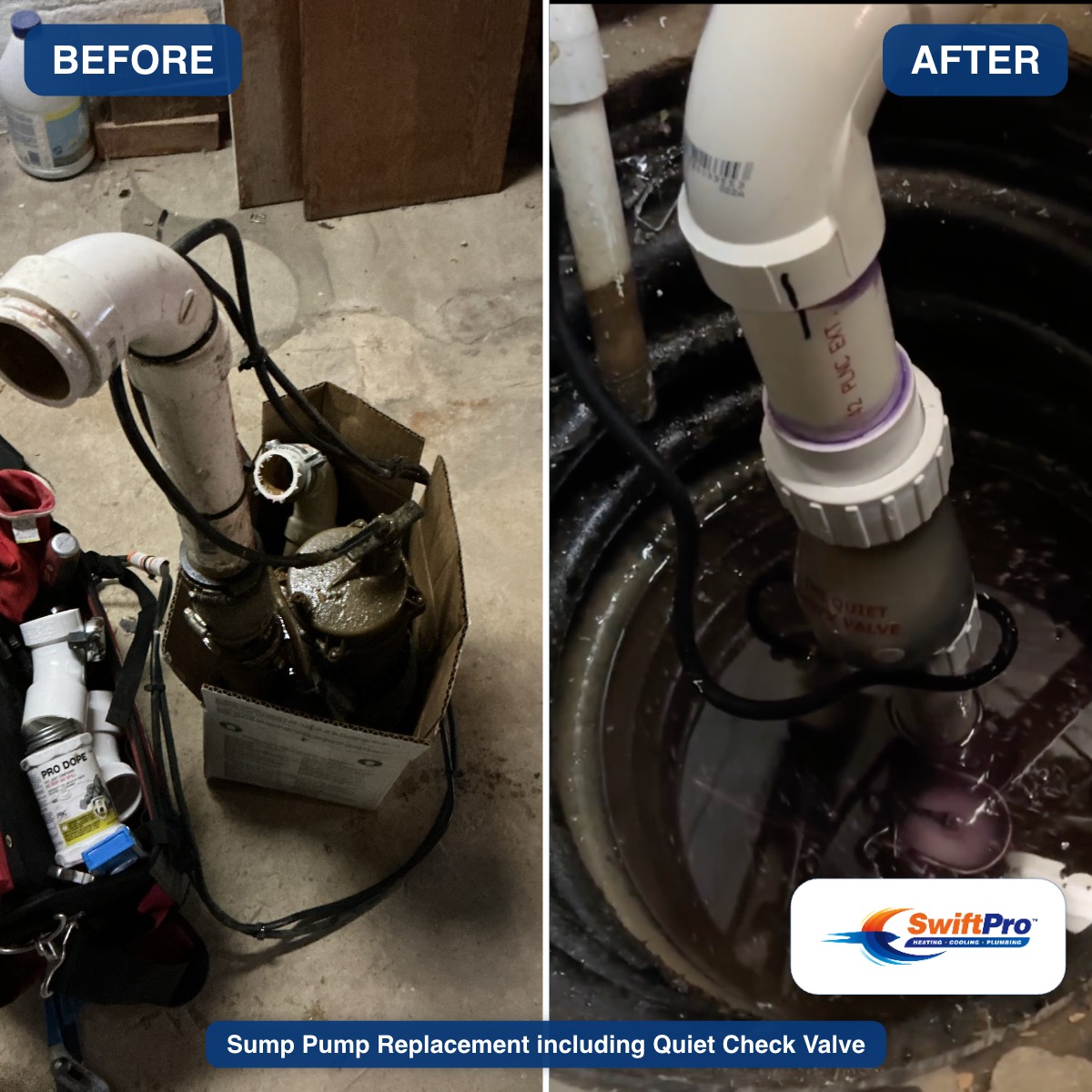
Northern Virginia’s heaviest rain arrives from May through September, when slow-moving thunderstorms and the remnants of tropical systems can drop several inches of rain in a single evening. If your home has a basement, a sump pump is your last line of defense, and because the same storms that flood basements are the ones that knock out power, a battery backup is what keeps that defense standing when the lights go out. At SwiftPro, our Northern Virginia plumbing team replaces a sump pump for $700 to $1,200, or $2,700 to $4,200 with a battery backup system that can run the pump for roughly 48 hours of continuous pumping, typically 1 to 3 days of real-world storm protection, since pumps cycle on and off rather than running nonstop.
From about $45 a month at 0% APR for 60 months, the whole price financed, on approved credit. How financing works
Why Northern Virginia Basements Flood
Our region has a rough combination working against it:
- Intense summer downpours. July and August thunderstorms here are short but violent. When a storm cell stalls over Chantilly, Centreville, or Ashburn, an inch or two of rain can fall in under an hour, faster than the ground can absorb it.
- Tropical leftovers. The remnants of hurricanes and tropical storms track up through Virginia in late summer and early fall, bringing day-long soaking rain on top of already saturated soil.
- Clay-heavy soil. Much of Northern Virginia sits on dense clay that drains slowly. Once it saturates, rainwater has nowhere to go but sideways, and “sideways” often means against your foundation walls.
- Basements everywhere. Unlike much of the South, our housing stock is full of finished basements, rec rooms, home offices, in-law suites. There is real money and real living space below grade in most NoVA homes.
To put the water volume in perspective: a single inch of rain falling on a typical 2,000-square-foot roof sheds over 1,200 gallons of water around your foundation. A two-inch storm doubles that. Your gutters, grading, and drainage system have to move all of it away from the house, and whatever gets through ends up in the soil pressing against your basement walls and under your slab.
And this is not hypothetical for our area. In July 2019, a stalled storm dropped more than three inches of rain on the D.C. region in about an hour, triggering a flash flood emergency and flooding basements from Arlington to Reston. In September 2021, the remnants of Hurricane Ida soaked already-saturated ground across Fairfax, Loudoun, and Prince William Counties and knocked out power while the water was still rising. Every few summers, a storm like that reminds the region which basements had working sump pumps, and which did not.
How to Prepare Before the Next Big Storm
1. Clean your gutters and extend your downspouts
Clogged gutters overflow right at the foundation, the worst possible place. Clear them each spring and check that downspouts discharge at least 4 to 6 feet away from the house.
2. Check your grading
Walk the perimeter of your home after a rain. The soil should slope away from the foundation. If you see water pooling against the house, that water is working its way down to your basement.
3. Test your sump pump, before you need it
Pour a bucket of water into the sump pit until the float rises. The pump should kick on within seconds, drain the pit, and shut back off. If it hesitates, hums without pumping, or rattles like a coffee grinder, get it looked at now, not during the storm when every plumber in the region is booked solid.
4. Look at the pump’s age
Most sump pumps last about 7 to 10 years. If yours is older than a decade, or you have no idea how old it is, assume it is living on borrowed time.
5. Suspect Sump Pump? Call a professional
If you don’t know what you’re looking at and would prefer a professional to take over, give SwiftPro a call at (703) 997-9757. We’ll be happy to inspect your sump pump and give recommendations for sump pumps for the home and any battery backup options.
What Is a Sump Pump, Exactly?
A sump pump sits in a pit (the “sump”) at the lowest point of your basement or crawl space. Groundwater collecting around and under your foundation drains into that pit through perimeter drain tile. When the water rises, a float switch turns the pump on and it pushes the water out through a discharge pipe, away from your home. When the pit empties, the pump shuts off. Simple, quiet, and completely invisible, right up until the day it matters.
How Much Water Does a Sump Pump Move During a Heavy Storm?
More than most homeowners expect. A typical residential sump pump moves roughly 35 to 50 gallons of water per minute depending on horsepower and how high it has to lift the water, that is over 2,000 gallons per hour. During a heavy Northern Virginia storm, it is normal for a sump pump to cycle on every few minutes for hours at a time. That is thousands of gallons of water being quietly escorted away from your foundation in a single night. Every one of those gallons would otherwise be looking for a way into your basement.
What Happens When the Sump Pump Fails?
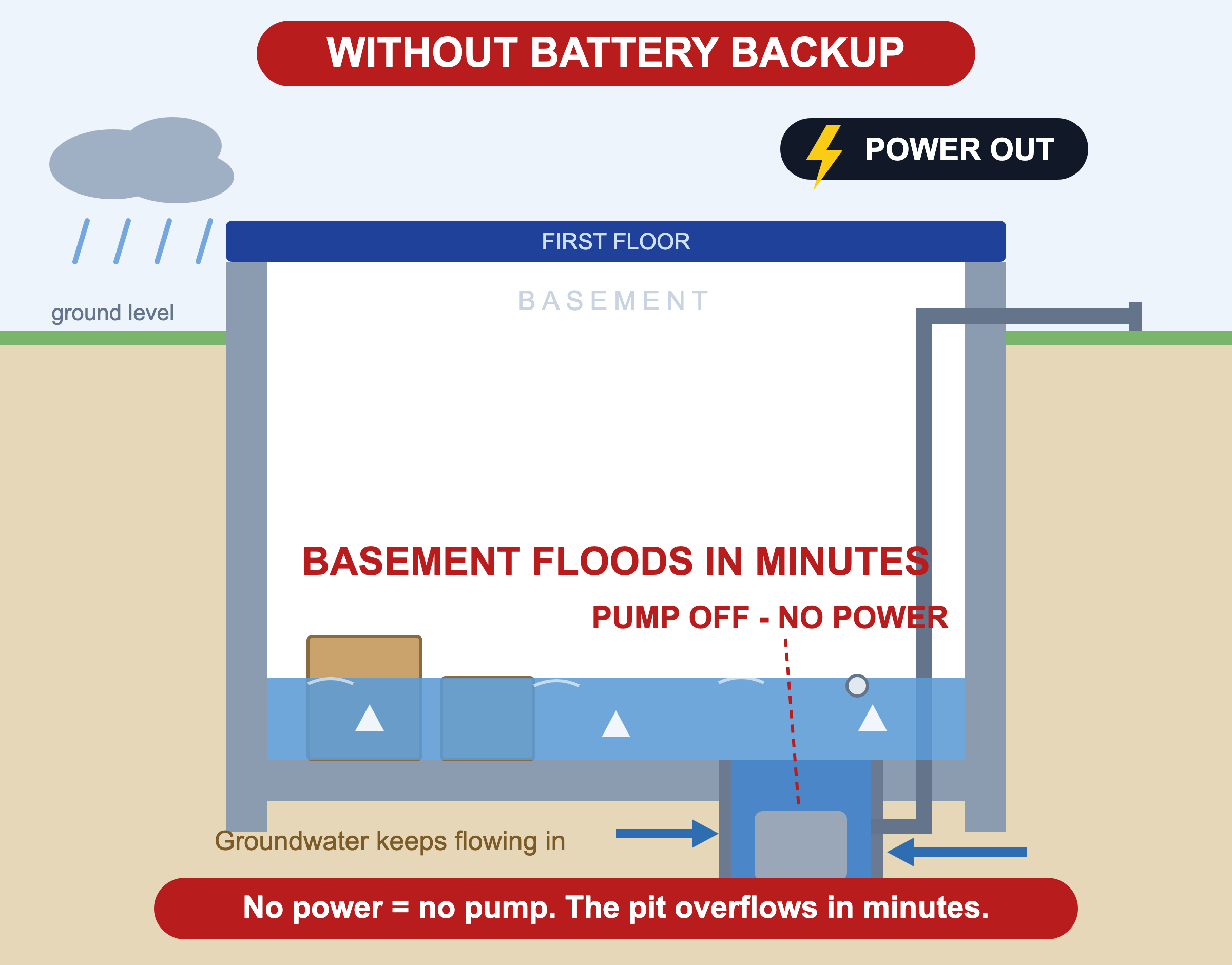
Here is the math nobody likes: if groundwater is entering your sump pit fast enough to make the pump cycle every few minutes, and the pump stops, that same water keeps coming, it just stops leaving. The pit overflows in minutes. Within the hour, water is spreading across the basement floor. In a hard storm, a basement can take on several inches of water in a remarkably short time, enough to ruin carpet, flooring, drywall, furniture, and anything stored in a cardboard box.
Pumps fail for three main reasons:
- Age and wear. Motors burn out, float switches stick, check valves fail, usually during the exact storm that works the pump hardest.
- Overwhelmed capacity. An undersized or tired pump simply cannot keep up with a major storm’s inflow.
- Power outages, the big one. This is the cruel joke of basement flooding: the thunderstorms and tropical remnants that dump the most rain are the same storms that take down power lines. Your sump pump is an electric appliance. When Dominion or NOVEC power drops at the peak of the storm, a standard sump pump becomes a decoration, at the precise moment the water is rising fastest.
Ask anyone in Fairfax or Loudoun who has lost power during a summer storm: the outage and the downpour arrive together. That is why the pump alone is only half the answer.
Battery Backup Sump Pumps: Protection When the Power Goes Out
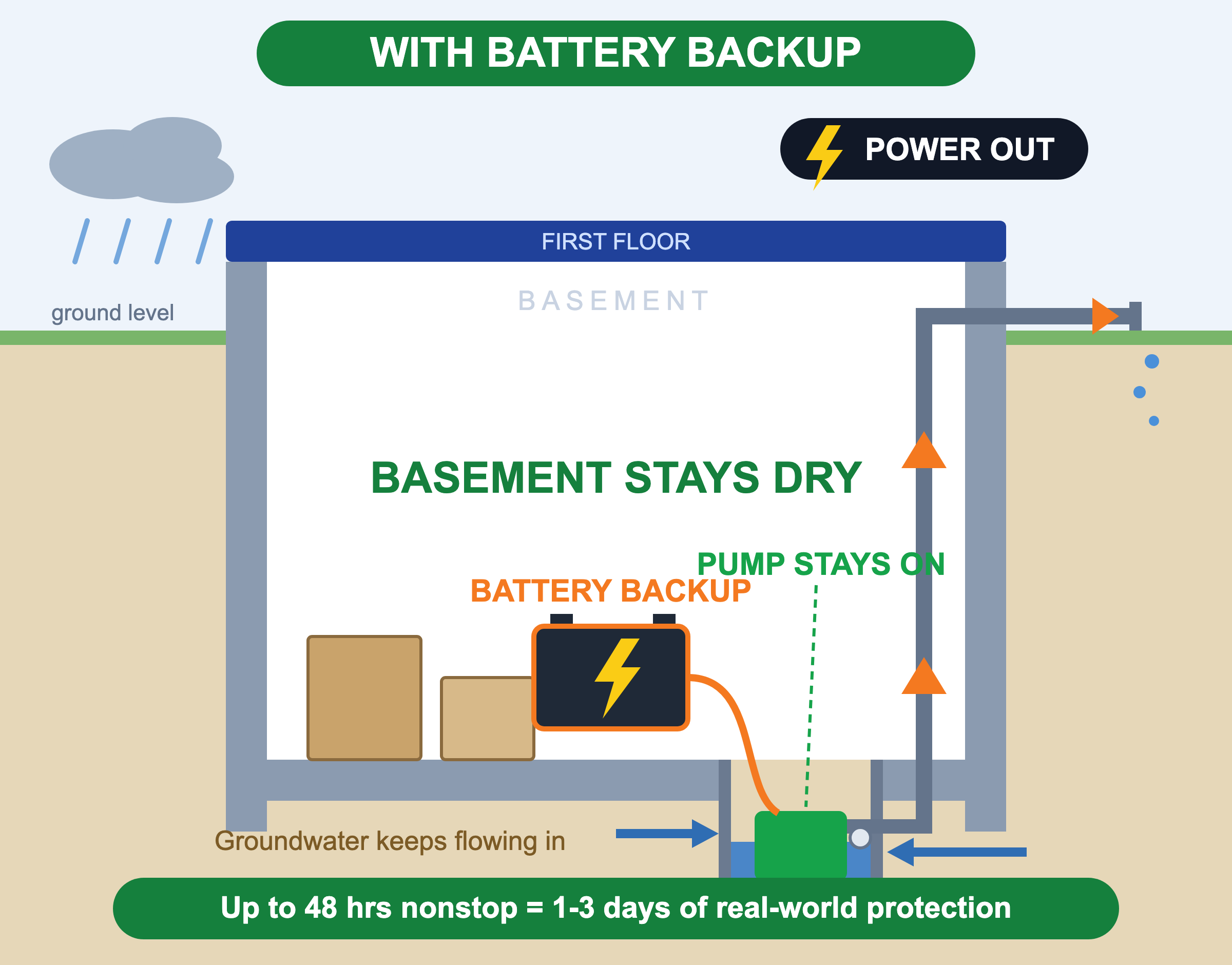
A battery backup system pairs your sump pump with a dedicated deep-cycle battery and controller. When utility power drops, the battery takes over automatically, no generator to start, no switch to flip, nothing to remember at 2 a.m.
What to expect from a quality battery backup:
- Roughly 48 hours of continuous, non-stop pumping on a full charge. In the real world, sump pumps cycle on and off as the pit fills, so that charge realistically stretches to about 1 to 3 days of storm protection, more than enough to outlast the vast majority of Northern Virginia outages.
- Automatic switchover. The system monitors power and takes over the instant it is needed, then recharges itself when the grid comes back.
- A 3-to-5-year battery life. Like a car battery, the backup battery is a wear item. Plan on replacing it every 3 to 5 years to keep the protection real, a dead backup battery is just an expensive paperweight. We check battery health as part of any service visit.
How Much Does a Sump Pump Cost in Northern Virginia?
We believe in straightforward pricing, so here it is:
- Sump pump, replaced: $700 to $1,200. Quality pump, new check valve, proper discharge, tested under load before we leave. A straight replacement in the pit you have is the flat $697 sump pump offer.
- Sump pump with a battery backup system: $2,700 to $4,200. Everything above, plus the battery, charger, and controller that keep it pumping through a power outage.
For comparison, insurance-industry figures put the average basement flooding claim in the tens of thousands of dollars once flooring, drywall, and belongings are counted, and many standard homeowner policies limit or exclude groundwater flooding entirely. The battery backup is the cheapest part of the whole equation: it is the difference between a system that works most of the time and one that works when it counts.
Why Your Basement Needs Sump Pump Protection
Rainy season in Northern Virginia is not a maybe, it shows up every year, usually with a power outage riding shotgun. If your basement has ever taken on water, if your pump is pushing 10 years old, or if you have no battery behind it, take care of it on a sunny day. The homeowners who call us during the storm are the ones who wish they had called the week before.
We install and service sump pumps across Fairfax, Loudoun, Arlington, Prince William, and Fauquier Counties. And while we are in your basement, it costs nothing to have us glance at the water heater sitting a few feet away, the two most expensive water problems in a NoVA basement usually live in the same room.
Sump Pump FAQs for Northern Virginia Homeowners
How much does a sump pump cost installed?
At SwiftPro, replacing a sump pump runs $700 to $1,200. With a battery backup system (battery, charger, and automatic controller), the total is $2,700 to $4,200.
How long do sump pumps last?
Most sump pumps last about 7 to 10 years. If yours is older than a decade, or you do not know its age, plan on replacing it before it gets tested by a major storm.
What happens to a sump pump when the power goes out?
A standard sump pump stops the instant power is lost, and the storms that drop the most rain are the same ones that cause outages. Without a battery backup, the sump pit can overflow within minutes and the basement floods quickly. A battery backup switches over automatically and keeps pumping through the outage.
How long does a sump pump battery backup last?
A quality battery backup provides roughly 48 hours of continuous, non-stop pumping on a full charge. Because pumps cycle on and off rather than running constantly, that realistically covers about 1 to 3 days of storm protection. Replace the battery every 3 to 5 years.
How do I test my sump pump?
Pour a bucket of water into the sump pit until the float rises. The pump should turn on within seconds, drain the pit, and shut off. Hesitation, humming without pumping, or grinding noises mean it needs service, before the next storm, not during it.
Does homeowners insurance cover basement flooding?
Often not the way people assume. Standard homeowner policies typically exclude groundwater seepage and flood damage; water-backup and sump-overflow coverage is usually an optional rider you have to add, and true flood coverage requires a separate flood policy. Check your policy before rainy season, many families discover the gap after the water is already in the carpet.
When is rainy season in Northern Virginia?
The heaviest rain typically falls May through September, violent summer thunderstorms first, then the remnants of tropical systems in late summer and early fall, often landing on soil that is already saturated.
About SwiftPro Heating, Cooling & Plumbing
We are SwiftPro, an independent, family-owned heating, cooling, and plumbing team based on Lafayette Center Drive in Chantilly, with 1,132 reviews across Northern Virginia. Our founder Tyler Griffin built SwiftPro on one principle: honest education over high-pressure sales. We give you a clear diagnosis, real options for your budget, and the time to decide, then we stand behind every install and every service call we make.
Get Your Basement Storm-Ready
Want a sump pump installed, a battery backup added, or just an honest opinion on the pump you have? Schedule your visit online or call us directly at (703) 997-9757. We will test what you have, show you what we find, and let you make the call, no pressure, ever.
SwiftPro Heating, Cooling & Plumbing · 4230 Lafayette Center Drive, Suite N, Chantilly, VA 20151 · (703) 997-9757 · VA License #2705192276. Published July 2026 as a free homeowner education resource. Pricing current as of July 2026 and subject to change; every home is different, final pricing confirmed on site before any work begins.
Related: sump pump repair or replacement cost. A new sump pump in the pit you have is $697 installed, and if yours is acting up, sump pump repair covers what each symptom means.
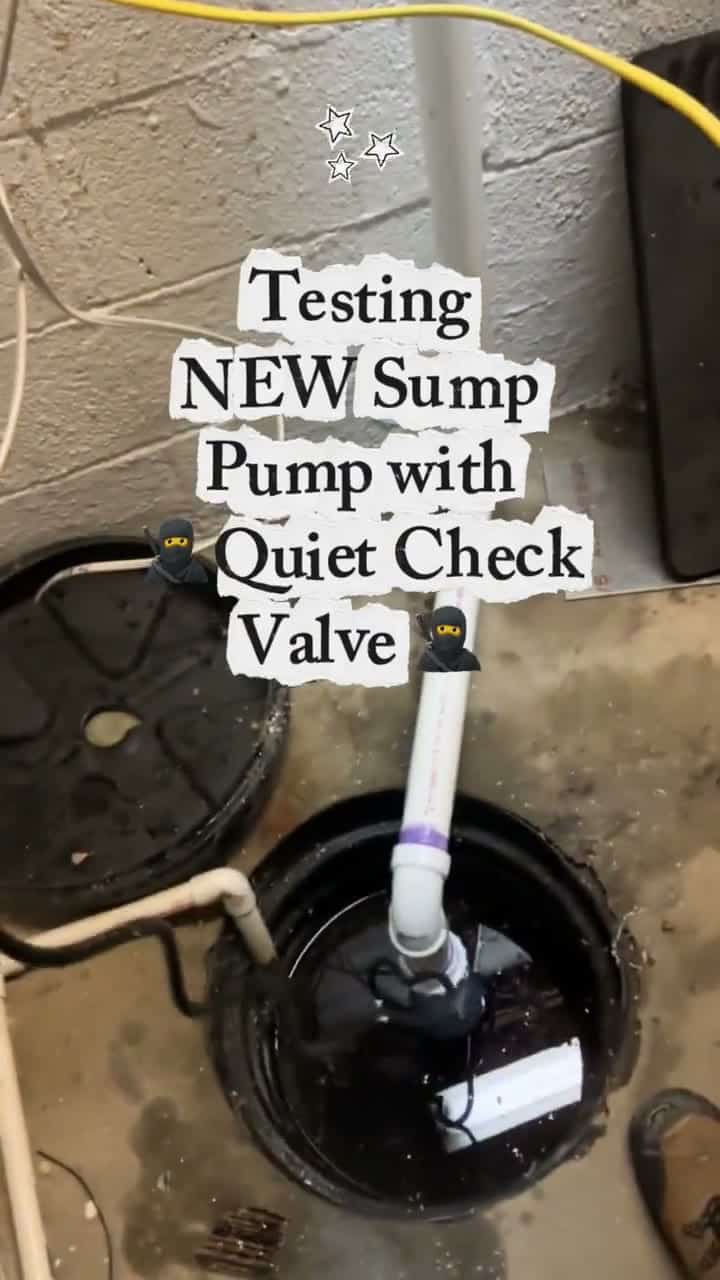
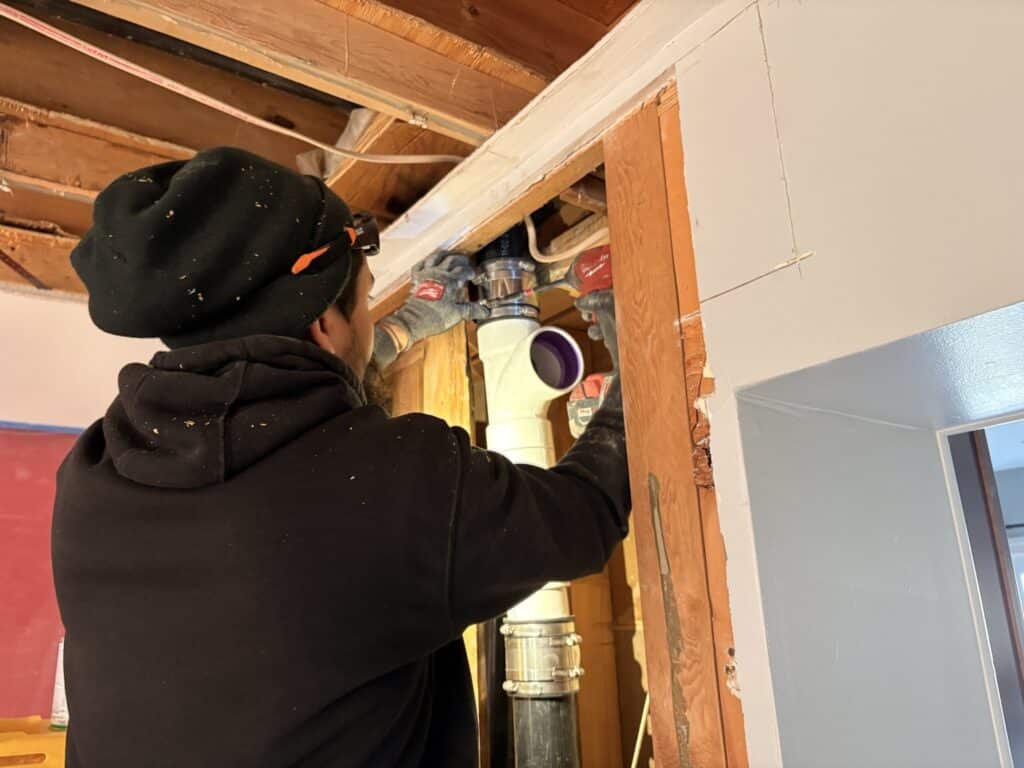
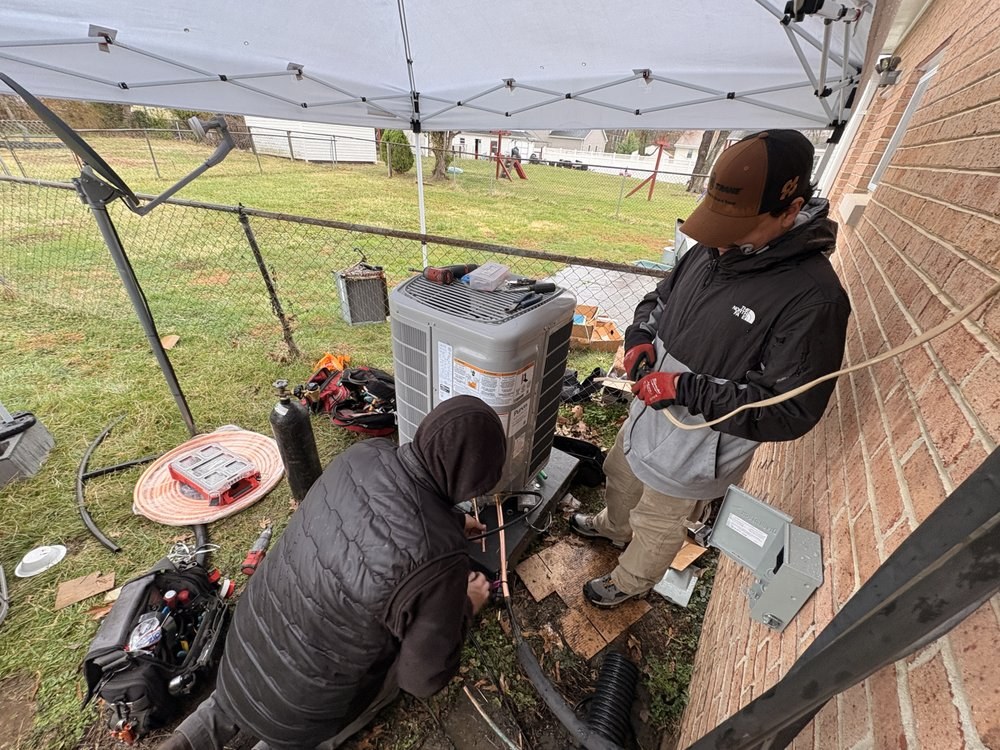
Watch our plumbers on real sump pump jobs
Real jobs in Northern Virginia homes, filmed by our own crew. Tap one to watch.