

There’s always one. The whole house sits comfortable at 69, and then there’s the bedroom over the garage, or the office at the end of the hall, running five or eight degrees colder like it pays rent somewhere else. One cold room is one of the most common calls we run in Northern Virginia every fall, and the good news is the cause list is short and it runs roughly in order of likelihood. Start at the top, and you can check the first few yourself before anyone charges you a dime.
If the answer for that room turns out to be a ductless mini split, you can price one yourself with the ductless mini split estimator, and see whole-system numbers on the furnace and AC estimator.
1. The vents (yes, really, check them first)
Supply registers get closed by painters, shut by a previous owner balancing summer airflow, and blocked by beds, dressers, and rugs more often than anyone admits. Open the register fully, make sure furniture isn’t sitting on it, and put your hand over it while the heat runs. Strong warm airflow means the room’s problem is heat loss (keep reading). Weak or no airflow means the problem is delivery, which is causes 3 and 4.
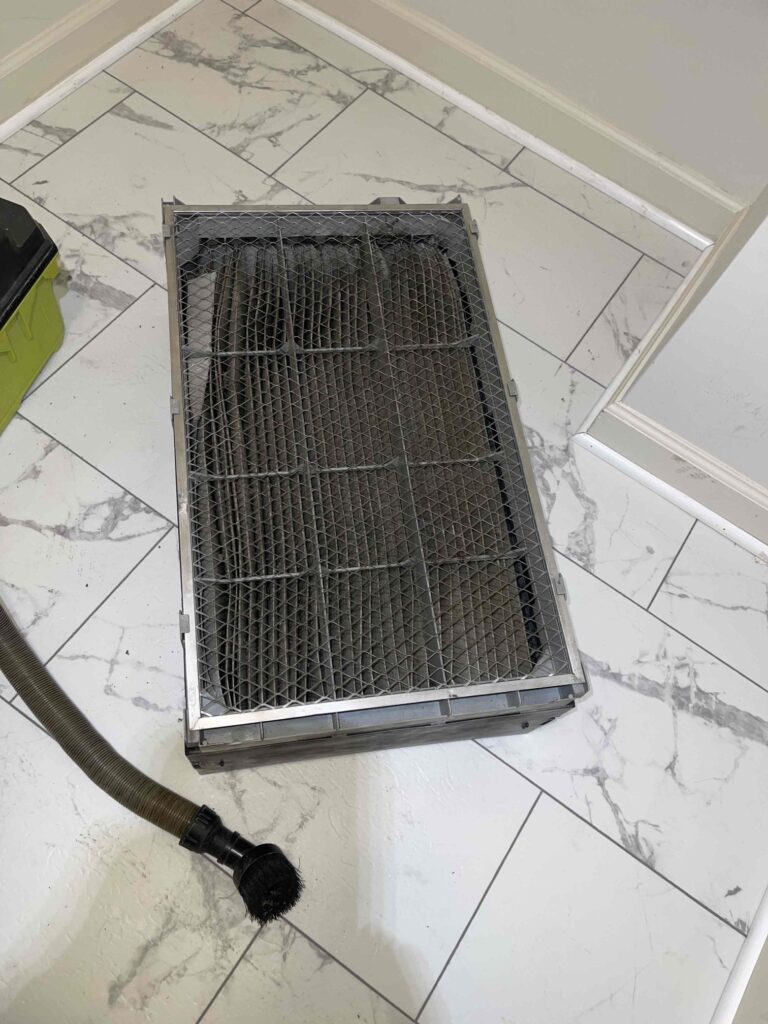
2. A clogged filter starving the whole system
A packed filter chokes airflow everywhere, but the rooms at the end of the longest duct runs feel it first, and that’s usually the room you’re cold in. If you can’t remember changing the filter, that’s your answer, and it costs a few dollars to test.
3. Duct problems you can’t see
The air for that room may be leaking into a crawlspace or attic before it ever arrives. Flexible duct runs get crushed by stored boxes, pull loose at joints, or were simply run too long and skinny when the house was built. Leaky ductwork routinely loses a meaningful share of the heated air pushed through it, and an unheated attic happily absorbs your bedroom’s supply all winter. Weak airflow at the register with a clean filter points here, and this one takes a pro with a duct inspection to confirm.
4. The room lost the balancing lottery
Many duct systems have balancing dampers near the trunk line that were set once, decades ago, or never. If your system heats the basement beautifully while the top floor shivers, the split may just be tuned wrong. Rebalancing dampers, and adjusting the blower to deliver more air where winter needs it, is a legitimate fix that doesn’t involve buying anything.
5. The room itself is leaking heat
Rooms over garages, above porches, at corners with two exterior walls, or with big windows lose heat faster than the rest of the house by design. If the vent blows strong and warm and the room still won’t hold temperature, the heat is escaping: thin insulation in the floor over the garage, gaps around window frames, a leaky can-light path into the attic. Weatherstripping and attic-hatch sealing are cheap wins; floor and attic insulation are the durable ones.
6. The thermostat can only see one room
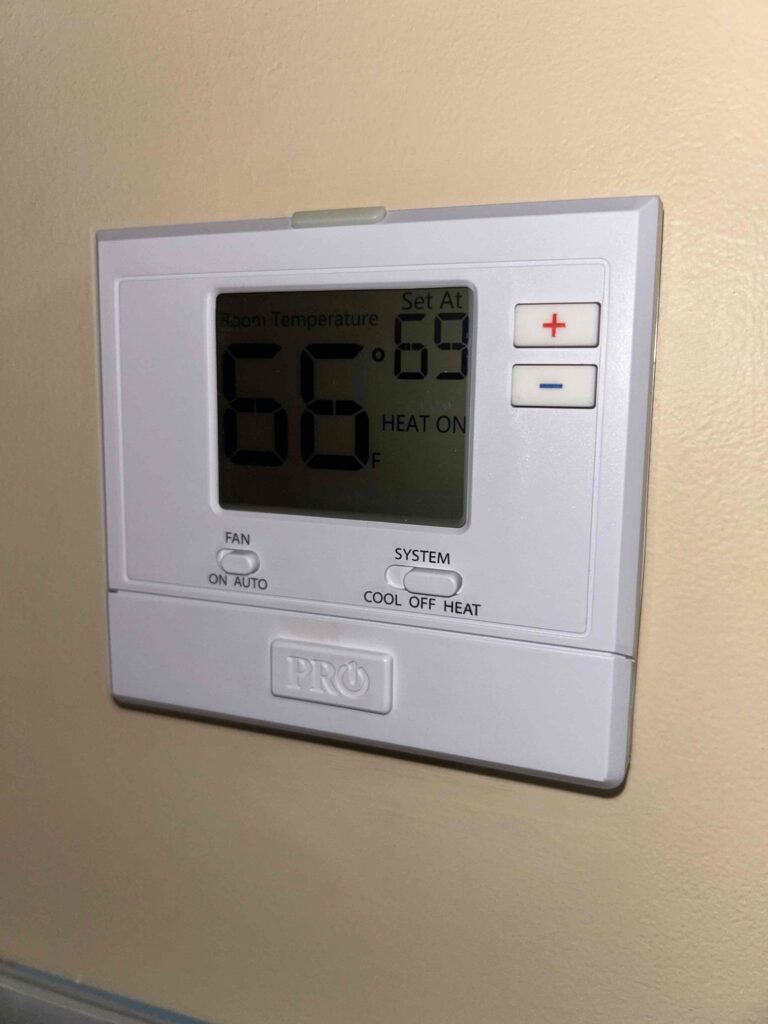
A single thermostat in the hallway shuts the system down when the hallway is warm, whatever the far bedroom thinks. That’s not a broken system, it’s a one-zone system doing exactly what it was told. The fixes scale with how much the room matters: a smart thermostat with a remote sensor in the cold room, true zoning with motorized dampers, or the cleanest answer for one stubborn room, a ductless mini-split that gives it its own heat source and its own thermostat. We covered why Mitsubishi owns that category in our brand rundown.
What to do, in order
- Today, free: open and clear every register in the cold room, swap the filter, and close the curtains at night on big windows.
- This week, cheap: weatherstrip the room’s windows and any door to unconditioned space; check the attic hatch if it’s nearby.
- If airflow is weak: book a duct inspection. Crushed, disconnected, or leaky runs are findable and fixable, and while a tech is there, ask them to check the balancing dampers.
- If airflow is fine and the room still loses: insulation for the floor or attic above, a remote temperature sensor, or a mini-split for the room, in rising order of commitment.
One more seasonal note: if the whole system seems weaker than last winter, not just one room, start with a heating tune-up before chasing room-by-room fixes, and if the air from the vents actually blows cold in heat mode, that’s a different problem with its own causes.
Questions homeowners ask us
Why is one room so much colder than the rest of the house?
Usually delivery or loss: the room isn’t receiving its share of heated air (blocked register, clogged filter, crushed or leaky duct, bad balancing), or it’s receiving it and losing it fast (over a garage, two exterior walls, big windows, thin insulation). The register test above tells you which family you’re in.
Does closing vents in warm rooms push more heat to the cold one?
A little, and closing one or two partway is fine. Closing many vents backfires: it raises pressure in the ducts, increases leakage, and can strain the blower. Balance, don’t strangle.
Do those plug-in space heaters solve it?
They mask it, at roughly the highest cost per unit of heat in your house, and the worst of them are a burn and fire risk. Fine as a bridge, expensive as a plan.
What if nothing on this list fixes it?
Then it’s time for eyes on the ductwork and the load: a tech can measure airflow at the register, inspect the run, and tell you in one visit whether the fix is a damper, a duct repair, insulation, or a mini-split. That diagnosis beats guessing with money.
The bottom line
A cold room is a symptom with maybe six common causes, and half of them cost nothing to rule out. Work the list top to bottom, and when you hit the parts that need real eyes, call (703) 997-9757 or book online. We’ll find which cause is yours and fix that one, not sell you all six.