

If your carbon monoxide alarm is sounding right now, or anyone in the house has a headache, nausea, dizziness or confusion that gets better when they go outside: get everyone out of the house, including pets, and call 911 from outside. Do not open windows first, do not hunt for the source, do not wait to see if it settles. Fire departments respond to this and they bring meters.
Everything below is for the other situation, the calmer one, where a technician has told you that you have a cracked heat exchanger and you are trying to work out what that means and whether it is true.
What a heat exchanger is, in one paragraph
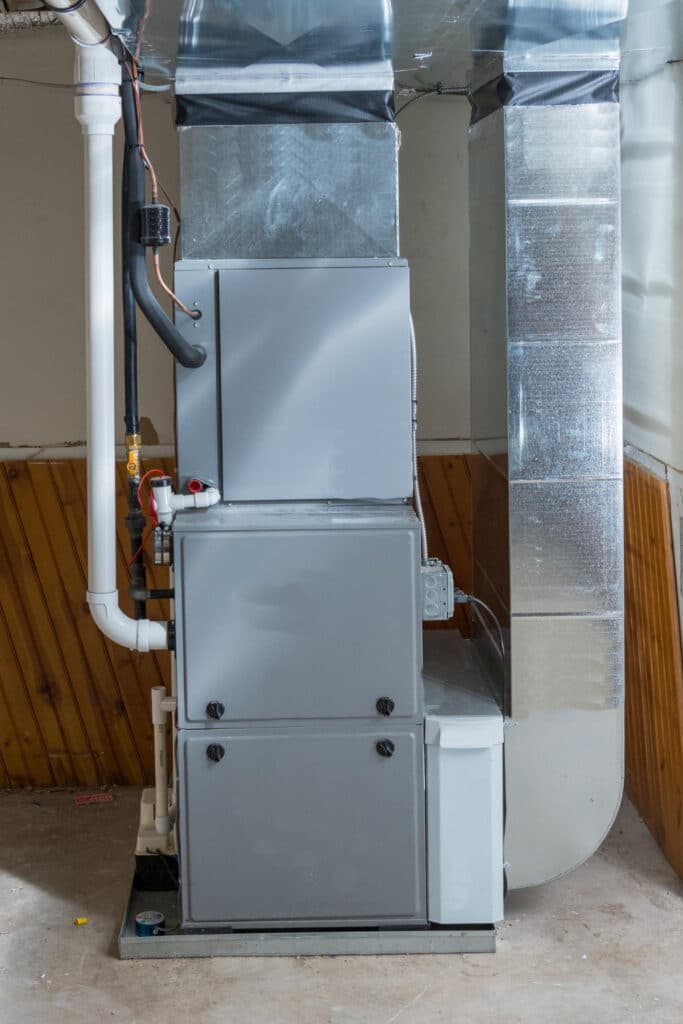
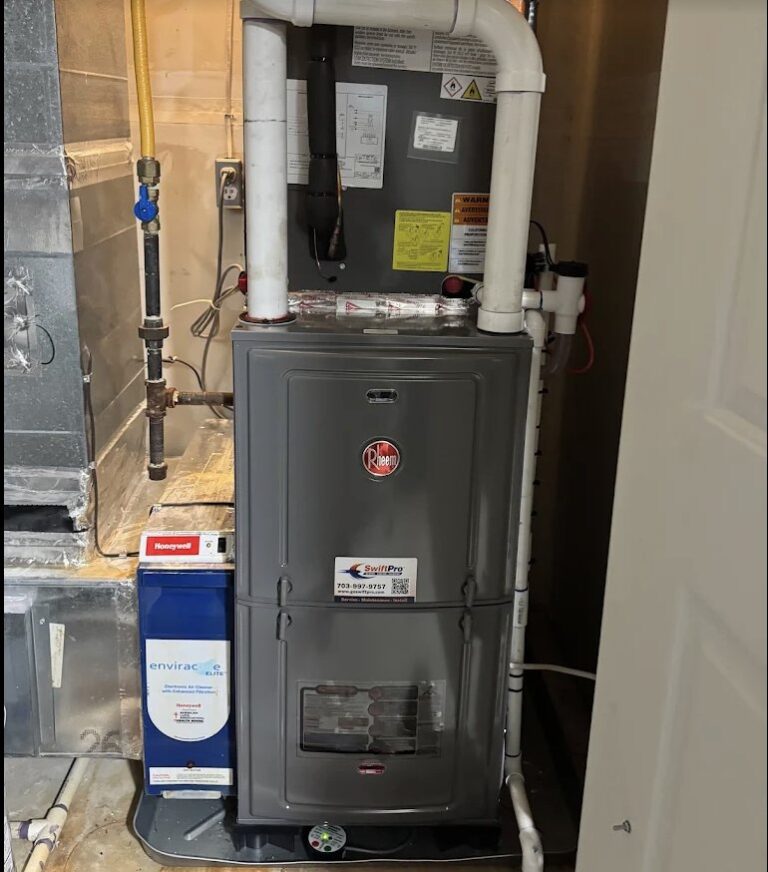
Inside a gas furnace, burning gas produces hot exhaust. That exhaust travels through a sealed metal chamber, the heat exchanger. Your house air blows across the outside of that chamber, picks up the heat, and goes to the vents. The exhaust goes up the flue. The two never touch.
That separation is the entire safety design of a furnace. A crack in the exchanger is a hole between the exhaust side and the air you breathe, and what is on the exhaust side includes carbon monoxide.
The metal cracks because it expands and contracts with every heating cycle, for fifteen or twenty years. It is a fatigue failure, and it is a normal end-of-life event rather than a defect.
Why it gets condemned instead of repaired
A cracked heat exchanger means the furnace gets red-tagged and shut off, and a technician who finds one is generally obliged to do that. It is not a scare tactic in itself.
The exchanger is not repairable in any meaningful sense. Welding it is not a thing anyone reputable does, because the metal around the crack has the same fatigue history as the crack. Replacing the exchanger alone is occasionally possible under warranty, but the labor is most of the cost of a furnace, so on any unit past about twelve years it is not the rational choice.
So the answer really is usually a new furnace. Which is exactly why you should make sure the finding is real.
How to make sure it is real
This is the part of the industry with the worst reputation, and it is earned. “Cracked heat exchanger” is the single most common high-pressure sale in residential HVAC, because it is scary, it is urgent, and the customer cannot see the part.
You are entitled to all of this, and a good company offers it before you ask:
- Show me. A photo or video from the inspection camera, of the actual crack, in your furnace. Not a stock image, not a diagram. Technicians carry cameras for this.
- Where is it. Which section, which cell. A real finding has a location.
- What did the combustion analyzer read. A proper diagnosis includes measured carbon monoxide in the flue and in the supply air, in parts per million, with the numbers written on the invoice.
- Is it red-tagged. If the finding is genuine, the furnace should be shut off and tagged, and the gas utility is often notified. If a company tells you it is cracked and dangerous but leaves it running so you can “think about it over the weekend”, those two statements do not fit together.
- What is the model and the age. Some exchangers carry a twenty year or lifetime warranty, which changes the economics completely.
If you get vague answers to those, get a second opinion before you sign anything. We do those for free, and we would rather look at a furnace that turns out to be fine than have a neighbour buy one they did not need.
The symptoms that come before the alarm
Carbon monoxide is odourless, so the human symptoms are the early warning, and they get mistaken for other things all winter.
- Headaches, nausea, dizziness or unusual fatigue that improve when you leave the house and return when you come back. That pattern is the tell.
- More than one person, or the pets, feeling it at the same time.
- Flu-like symptoms without a fever, during heating season.
Physical signs at the furnace:
- A burner flame that is yellow or orange and lazy, rather than crisp and blue.
- The flame moving, rolling or being pulled sideways when the blower kicks on. That is air crossing from the blower side into the burner compartment, and it is a classic exchanger symptom.
- Soot or dark staining around the furnace or the flue.
- Rust flakes inside the burner compartment, or moisture on the outside of the flue.
- A sharp or acrid smell when the heat runs.
Your alarms, which are the actual answer
A working carbon monoxide alarm is worth more than all of the above, because it does not depend on anyone noticing anything.
Put one on every level of the house and outside every sleeping area. Virginia’s residential code requires them in homes with fuel-burning appliances or an attached garage, and both describe most Northern Virginia houses.
Two things people get wrong. They expire. The sensor has a life of about seven to ten years, there is a date on the back, and an expired alarm can pass its own test button while detecting nothing. And a smoke alarm is not a carbon monoxide alarm unless it explicitly says so on the unit.
Digital models that display a live ppm reading are worth the few extra dollars, because they show you a low-level problem that is not yet loud enough to alarm.
The other sources, because it is not always the furnace
Gas water heaters, gas ranges, fireplaces, and a car left running in an attached garage all produce carbon monoxide. So does a blocked flue, and a blocked flue is a very common cause: birds nest in them over the summer, and the first cold morning is when you find out.
An annual heating inspection catches most of this, and the combustion test is the part that matters. If a tune-up does not include measured combustion numbers, it is a filter change with a nicer name.
What we do on a heating inspection
SwiftPro inspects, repairs and replaces furnaces across Northern Virginia. Our heating visits include a camera look at the exchanger and measured combustion readings, and you get the photos and the numbers whether or not there is anything wrong.
Call (703) 997-9757 or book an inspection. If somebody has already told you your exchanger is cracked and something about the conversation felt off, that is exactly what the free second opinion is there for.