

Aux heat is your heat pump asking for help. Emergency heat is you telling it to stop trying. They are not the same thing, they cost different amounts to run, and the difference matters most on the coldest week of the year.
If your thermostat has been showing one of them and you are not sure whether to worry, here is the whole thing in plain language.
What a heat pump is doing in winter
A heat pump does not make heat the way a furnace does. It moves heat from the outdoor air into your house, which works remarkably well until the outdoor air runs short of heat to move. Below a point manufacturers call the balance point, typically somewhere around 30 to 35 degrees on a standard unit, the heat pump alone cannot keep up with what the house is losing.
That is not a failure. That is the design. The system has a second heat source for exactly this, and it turns it on automatically.
Aux heat: automatic, and usually correct
Auxiliary heat is a set of electric resistance elements in the air handler, essentially a very large toaster in your ductwork. The thermostat brings them on alongside the heat pump when it needs more output than the heat pump can deliver.
Three things trigger it, and all three are normal:
- The outdoor temperature dropped below the balance point. January morning, 22 degrees, Aux on the display. Working as designed.
- You raised the setpoint by more than a couple of degrees at once. Most thermostats bring on the strips to close a gap quickly rather than making you wait an hour.
- The unit is in a defrost cycle. The outdoor coil ices up in damp cold weather, the system briefly runs backwards to melt it, and the strips cover the house in the meantime. Five to fifteen minutes, several times a day when it is raw out.
So Aux showing up on a cold night is fine. Aux showing up in the 40s is not, and that is the section below.
Emergency heat: manual, and almost always the wrong switch
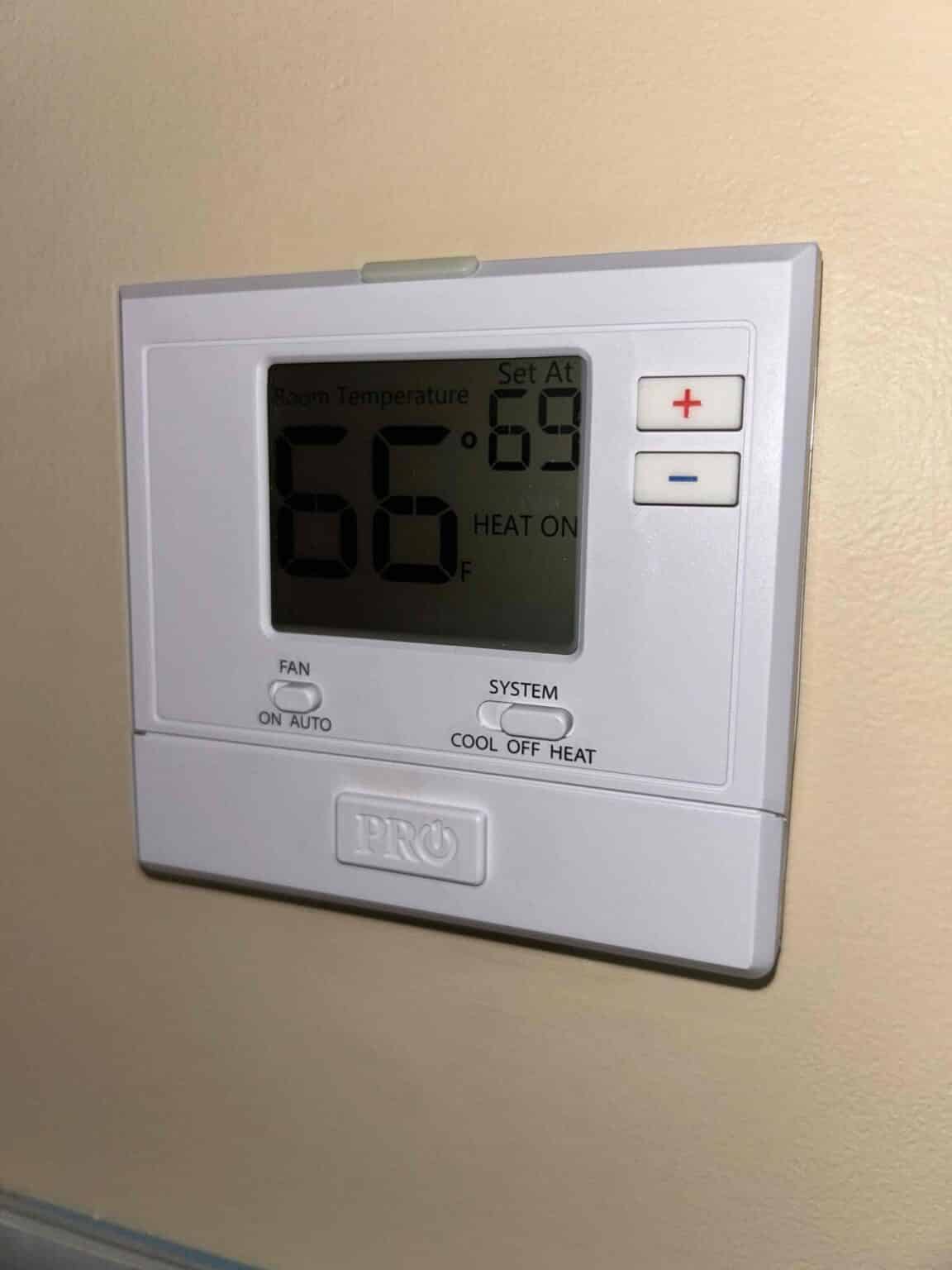
Emergency heat, labeled Em Heat on most thermostats, shuts the heat pump off entirely and runs the house on the electric strips alone. It exists for one situation: the heat pump is broken and you need heat until somebody can get there.
It is the most expensive way to heat a house in Virginia. You are paying resistance-heating prices for every degree, with none of the efficiency that made you buy a heat pump. Leaving it on for a month because somebody flipped it during a cold snap in December is a genuinely painful Dominion bill, and we see it every year.
Use Em Heat when: the outdoor unit is iced solid, making a bad noise, or not running at all, and you are waiting on a technician. Turn it back to Heat as soon as the repair is done.
Do not use Em Heat because it is cold outside, because the air feels cool, or because you want the house warm faster. The first two are normal heat pump behavior and the third costs more than it saves.
When aux heat is telling you something is wrong
Aux runs in mild weather. If the thermostat shows Aux at 45 degrees outside, the heat pump is not carrying a load it should easily carry. Low refrigerant, a failing compressor, a stuck reversing valve, or a thermostat that was never configured for a heat pump. You will see this on the bill before you feel it in the room.
Aux runs constantly, all winter. Same list, further along. This is the single most expensive fault a heat pump can have, because nothing is obviously broken. The house is warm. You are just paying two or three times what you should to keep it that way.
Aux never comes on at all and the house gets cold. The strips or their relay have failed, or a breaker for them is off. Many air handlers have a separate breaker for the heat strips, and plenty of people have run a whole winter cold without knowing it existed.
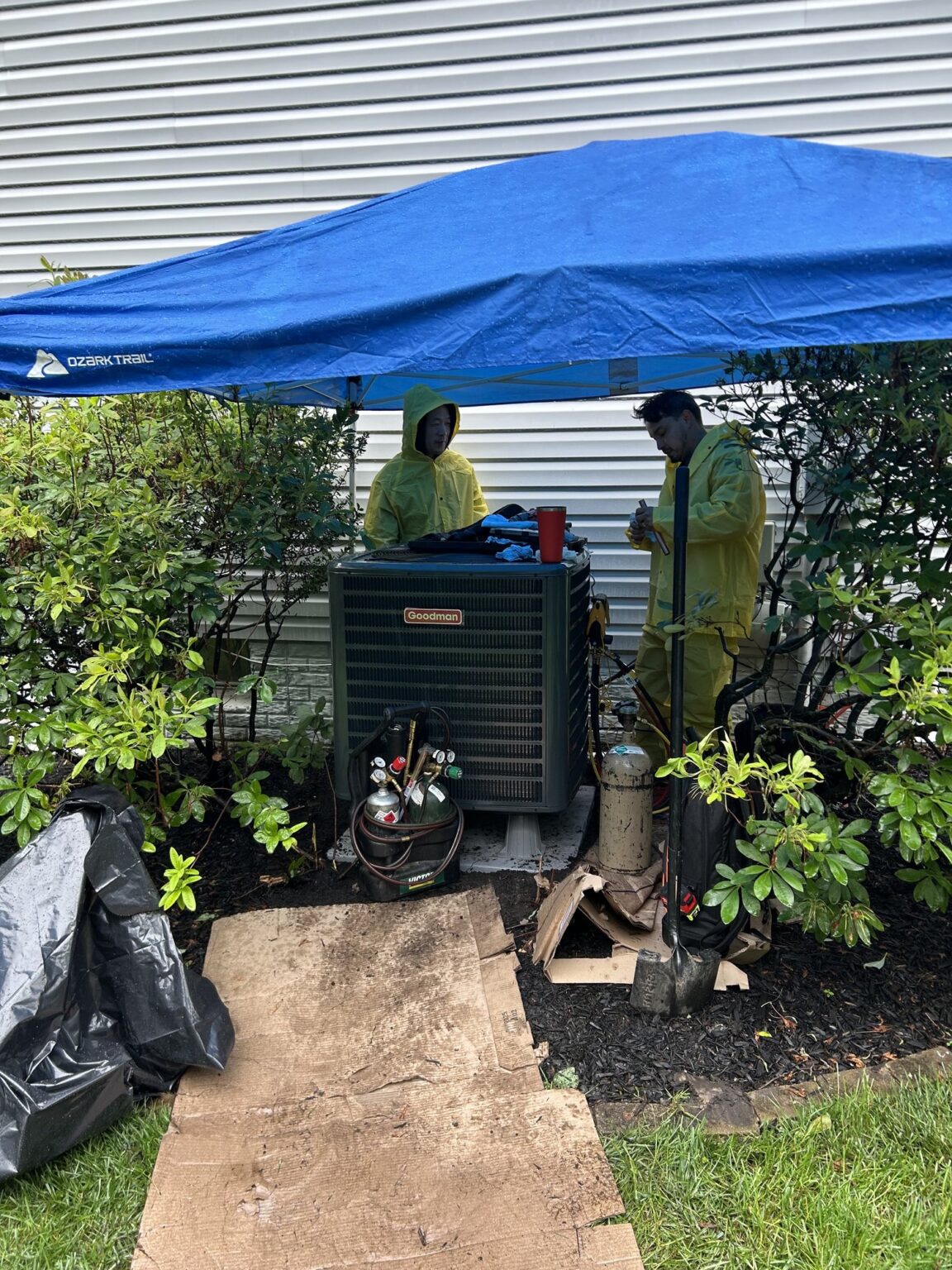
The outdoor unit is iced and Aux is doing everything. Defrost is not working, usually the defrost board at $450 to $1,150. Switch to Em Heat and call, because running it iced bends the fan blades and eventually damages the coil.
The thermostat setback question
On a gas furnace, turning the heat down at night and back up in the morning saves money. On a heat pump it often does not, because the recovery triggers the electric strips and the strips cost more than you saved overnight. The Department of Energy makes the same point in its heat pump guidance: avoid setbacks that force the backup heat to run.
The practical version: on a heat pump, pick a temperature and leave it, or use a thermostat that is actually designed for heat pumps and knows how to ramp back up slowly without calling the strips. That is a $300 to $640 job and on an older system it sometimes pays for itself in one winter.
Aux Heat vs. Emergency Heat: A Quick Troubleshooting Guide
- Aux, on a cold night: normal. Do nothing.
- Aux, during a defrost cycle: normal. Do nothing.
- Aux, in the 40s or all the time: call. Something is wrong and it is costing you daily.
- Em Heat, because the heat pump is broken: correct. Turn it back after the repair.
- Em Heat, left on for weeks: the most expensive mistake on this page.
Getting it checked before the cold
The time to find out your heat pump is leaning on the strips is October, when a diagnostic is a Tuesday appointment. What each heat pump repair costs is here, and how a heat pump handles a Virginia winter is here.
If the system is past fourteen years and running aux constantly, that is replacement territory rather than repair territory, and a new heat pump system starts at $8,698 installed. The estimator gives you the range for your size in about two minutes with no phone number.
SwiftPro services heat pumps across Northern Virginia. Call (703) 997-9757 or book online.