

Half the “heat pump not heating” calls we run in a Northern Virginia winter are a heat pump doing exactly what a heat pump does. The other half are real, and most of them are a few hundred dollars if they’re caught before the compressor pays for them. Here’s how to tell which one you have, and what each actually costs from our own sold jobs.
Four things that are normal
Heat pump blowing cool air in heat mode. A gas furnace puts out air around 125 degrees. A heat pump puts out air in the 90s to around 110, which is warmer than the room and cooler than your hand, so it reads as cool. Carrier says the same thing on its own support pages: heat pump air “may naturally feel cooler” than a furnace. If the house is holding temperature, nothing is wrong.
Steam off the outdoor unit and the fan stopping for a few minutes. That’s a defrost cycle. On a damp 35 degree day, which is most of a Virginia winter, frost builds on the outdoor coil. The board runs the unit briefly in reverse to melt it: outdoor fan stops, steam rises, hissing, cool air indoors for a few minutes while the backup strips cover, then back to normal. Manufacturers say five to fifteen minutes, as often as every half hour when it’s raw out.
Long run times. Heat pumps are built for long, steady cycles. Forty minutes on and ten off is fine. A furnace mindset expects short blasts and a heat pump doesn’t work that way.
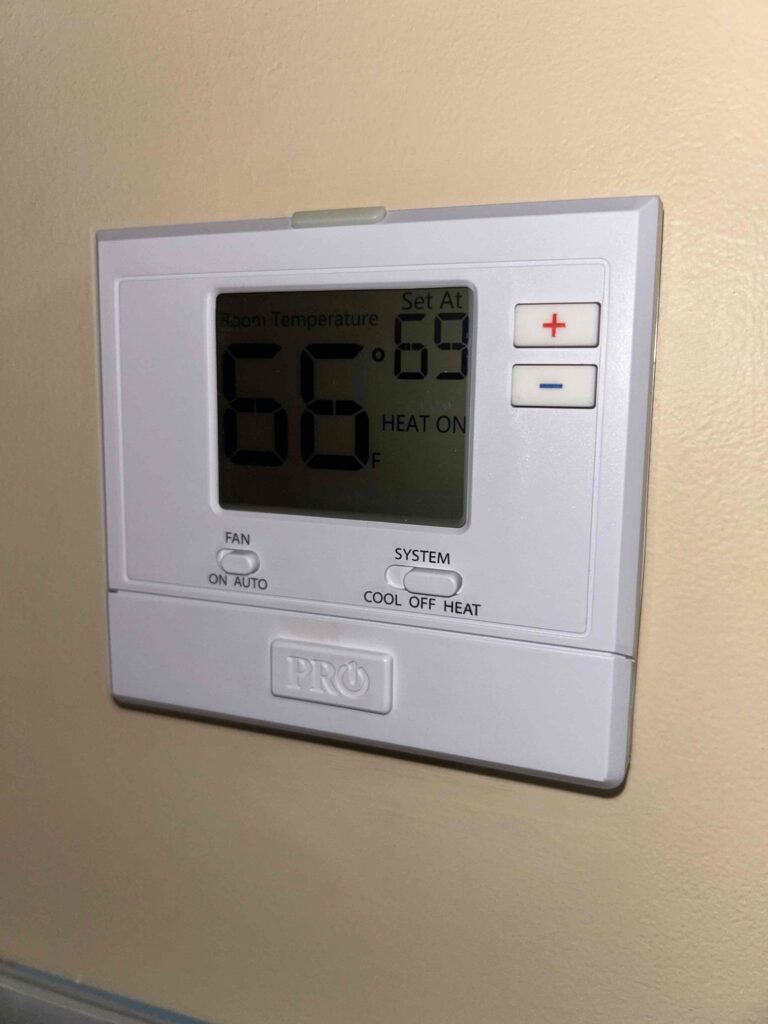
Aux heat on when it’s very cold. Below the balance point, which Carrier puts at about 30 to 35 degrees for a typical unit, the heat pump alone can’t keep up and the electric strips help. Aux also runs during defrost and whenever you push the thermostat up more than a couple of degrees at once, which is why setbacks cost more on a heat pump than they save. On a 20 degree January night, Aux on the thermostat is expected. Here’s the longer version of what a heat pump does through a Virginia winter, and what it costs to run.
Six things that aren’t
Heat pump frozen: ice on the outdoor unit that never clears. Frost is normal. A unit encased in ice, or ice still there at noon, means defrost isn’t happening. Manufacturers’ own service rule is that a defrost longer than fifteen minutes or a coil that stays a block of ice is a fault: the defrost board or its sensor most often, sometimes the outdoor fan motor, sometimes low refrigerant or a stuck reversing valve. On our tickets a defrost board replacement runs $450 to $1,150, median about $980. Left alone, the ice bends the fan blades and eventually damages the coil, and then it’s a much bigger number. Switch the thermostat to Emergency Heat and call.
Heat pump aux heat keeps coming on, even in the 40s. The heat pump isn’t carrying the load and the strips are doing it, which is the most expensive way to heat a house in Virginia. You’ll see it on the Dominion bill before you feel it. Low refrigerant, a failing compressor, a bad reversing valve, or a thermostat that’s set up wrong for a heat pump. This one needs gauges.
It cools when it should heat, or the reverse. Reversing valve stuck, or a thermostat wiring problem: heat pump thermostats use an O or B wire to flip the valve, and a thermostat installed by somebody who didn’t know that runs backwards. The thermostat fix is $300 to $640. A reversing valve is replaced rather than repaired, and Lennox and Trane both list the same tells: stuck in one mode, lukewarm air, a click or hiss when it tries to switch.
The outdoor unit hums but the fan doesn’t turn. Capacitor, $240 to $370. Same part as on an air conditioner, and it fails the same way, from heat and hours.
The outdoor unit doesn’t come on at all. Contactor ($290 to $425), a breaker, or the disconnect box on the wall. Check the breaker and the grey box first.
Short cycling: on two minutes, off, on again. Oversized system, bad thermostat placement, a refrigerant problem, or a failing compressor. The first two are cheap. The last one isn’t, and short cycling is what kills compressors, so it’s not one to live with for a season.
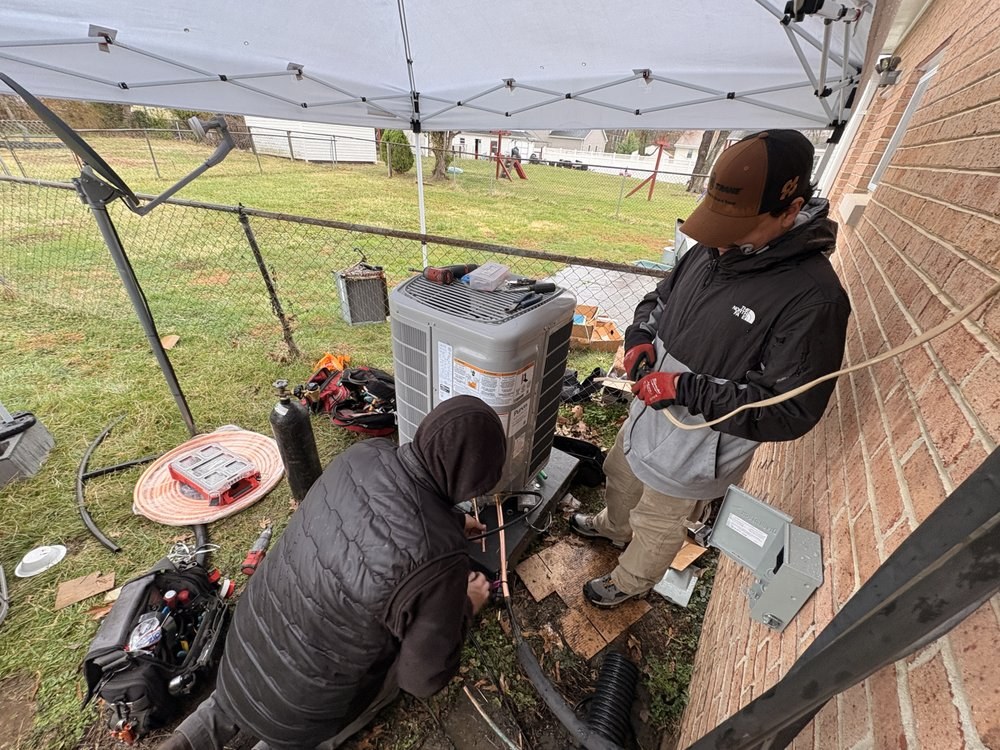
Heat pump repair cost, from our sold jobs
- Diagnostic visit: about $99.
- Capacitor: $240 to $370.
- Contactor: $290 to $425.
- Thermostat, replaced with one that knows it’s on a heat pump: $300 to $640.
- Refrigerant added, one to three pounds: $190 to $740, most $250 to $580. If it’s low, it leaked; see below.
- Defrost board: $450 to $1,150.
- Outdoor fan motor: $1,100 to $1,500 typical.
- Compressor, out of warranty: $2,200 to $5,100. Under parts warranty, labor and refrigerant: $1,900 to $2,500.
The full list with the air conditioning side, which shares most of these parts, is in what AC repairs cost.
The refrigerant question, because it’s different on a heat pump
A refrigerant top-off on an air conditioner buys a summer. On a heat pump it buys a summer and then fails you in January, because the heat pump needs the refrigerant in both seasons and a slow leak becomes no heat on the coldest week. If the system needs refrigerant twice, find the leak.
And the price of that refrigerant is moving. R-410A, in almost every system installed from about 2010 through 2024, is being phased down under federal law: production and imports are capped at 60 percent of the old baseline through 2028 and 30 percent after that. The EPA is clear that you can keep repairing an R-410A system, including replacing the compressor. What’s changed is the cost of the gas, which trade reporting this year puts around $45 a pound against about $22 two years ago. So a refrigerant-heavy repair on an older unit leans harder toward replacement than it did.
Heat Pump Repair vs. Replacement: When to Upgrade Your System
Heat pumps in this climate run year round, so a twelve year old heat pump has the hours of a twenty year old furnace. ASHRAE’s median life for one is fifteen years, and ENERGY STAR’s line for thinking about replacement is ten. Under eight years, repair. Over fourteen, a compressor or a reversing valve is replacement money, and a new system starts at $8,698 installed. In between, it’s the part and the refrigerant. If you’re on the fence, the estimator shows what a new furnace and AC pair runs for your house, and for an all-electric replacement the ductless estimator covers the room-by-room option. Dominion’s Home Energy Evaluation, a no-cost audit through a participating contractor, is the door to its heat pump rebates, so ask about it before signing anything.
Two things to do this month
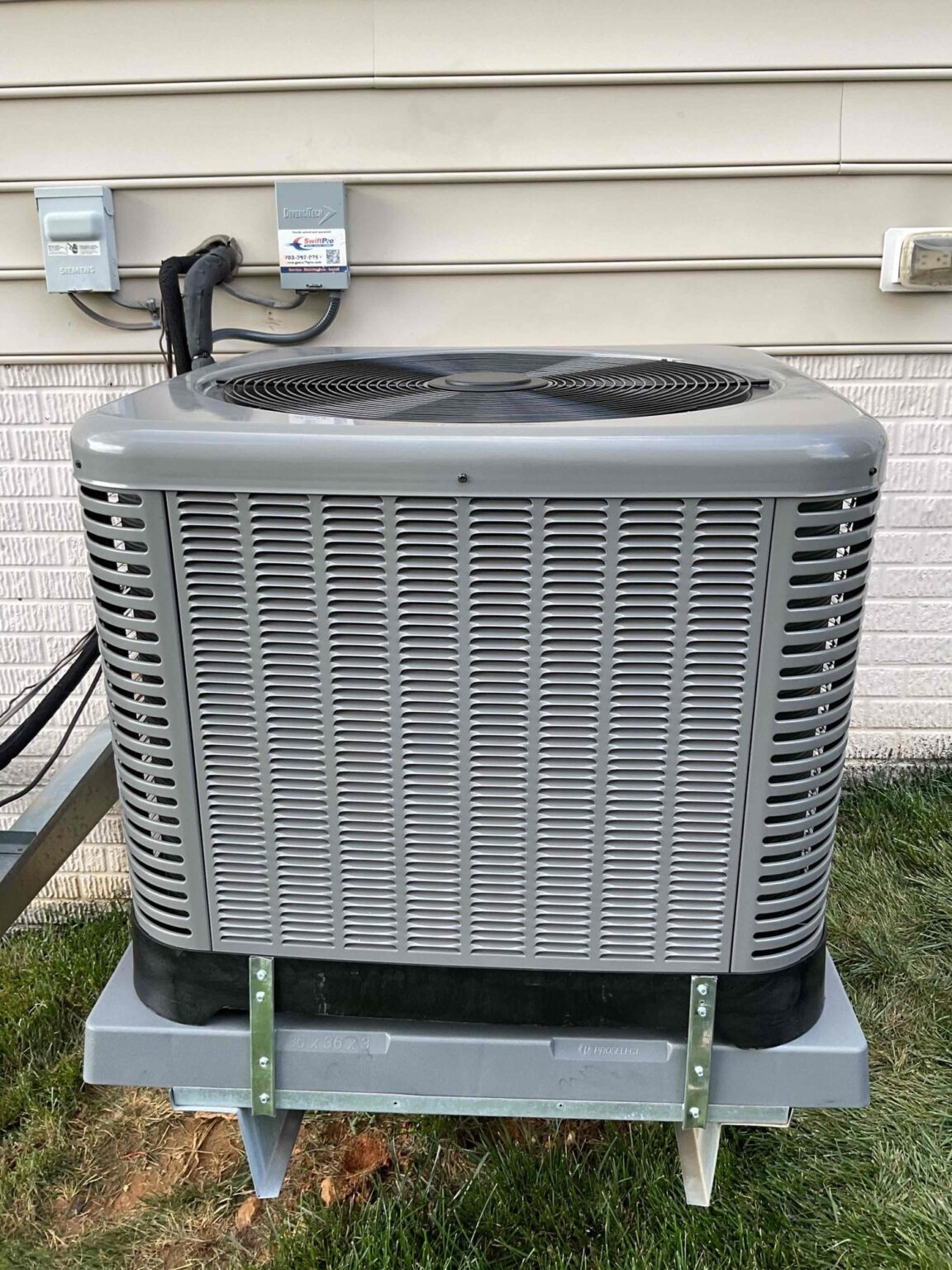
Run it in heat mode for an hour before the first cold night, in October, and see whether the air is warm and the outdoor unit runs. Problems found in October get fixed on a Tuesday; problems found on the first 25 degree night get fixed after everyone else’s. And clear around and under the outdoor unit. It drains defrost water out the bottom, and a unit sitting in leaves or on a pad that has sunk into the mud freezes itself to the ground by February.
SwiftPro repairs every brand of heat pump across Northern Virginia, including ductless. (703) 997-9757, or book online. The heat pump service page is here.