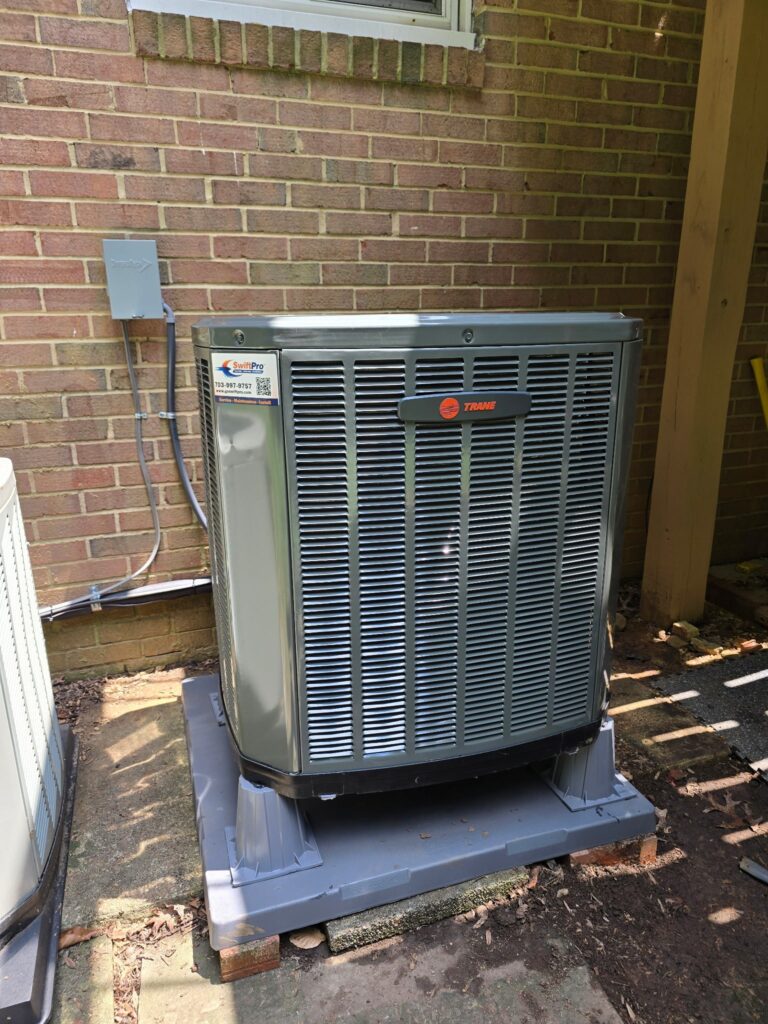
Written October 2026, after the EPA’s May 2026 rule, with our current repair and installed prices.
Central air conditioners and heat pumps built since January 1, 2025 run on R-454B or R-32 instead of R-410A. If yours runs on R-410A, it can still be repaired and recharged with R-410A for as long as it lasts. Nothing in the federal rules makes you replace a system that works. With us, a refrigerant top-off runs $190 to $740, and a new central AC runs $5,942 to $14,450 installed. From about $99 a month at 0% APR for 60 months, the whole price financed, on approved credit.
So the question that matters isn’t whether R-410A is going away. It’s what to do when your system needs some, and that turns on three things: how old the system is, whether this is the first top-off or the third, and which part is leaking.
If you only do one thing: when someone tells you your system is low, ask how many pounds went in and whether anyone looked for the leak. An air conditioner doesn’t use refrigerant up. If it’s low, it leaked, and a top-off every summer pays for the same leak over and over.
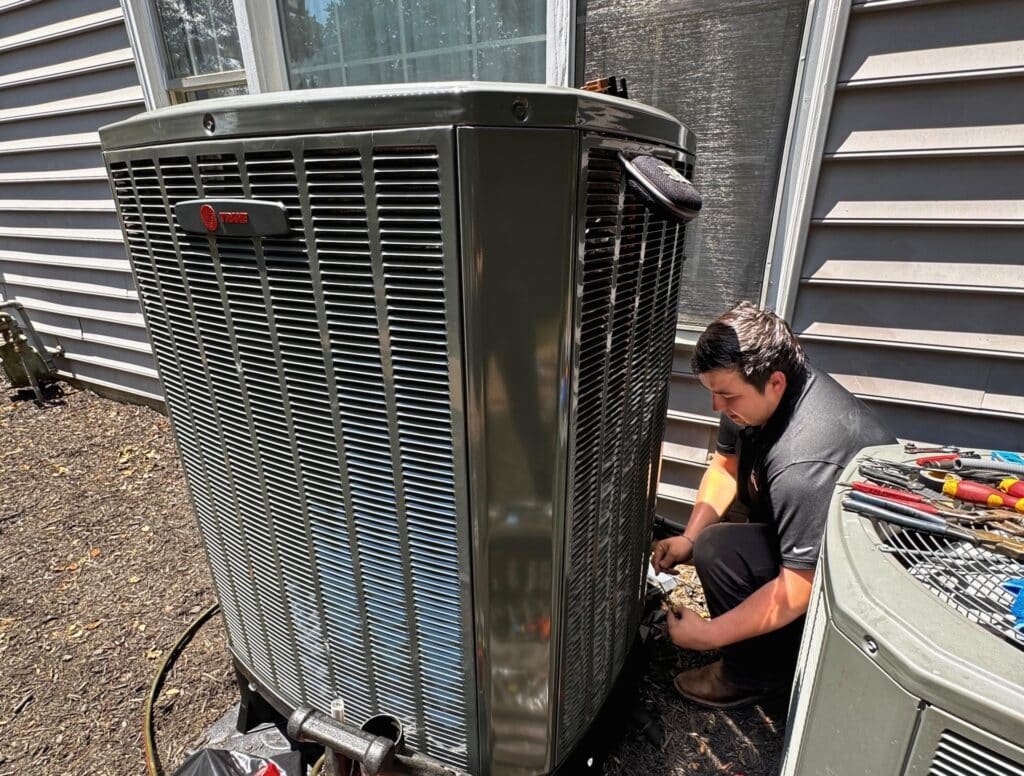
R-454B refrigerant vs R-410A and R-32, side by side
The three refrigerants you’ll hear about, with the EPA’s own figures. The first row is global warming potential (GWP), the number the federal limit is written in.
| R-410A | R-454B | R-32 | |
|---|---|---|---|
| Global warming potential | 2,088 | 465 | 675 |
| ASHRAE safety class | A1: no flame spread | A2L: lower flammability | A2L: lower flammability |
| Where you’ll find it | Most central ACs and heat pumps built from about 2010 through 2024 | New Trane, Carrier, Rheem, Lennox and Mitsubishi Electric systems | New Daikin systems, some Goodman and Amana models, some ductless |
| A new system installed with it? | Only equipment built before 2025, until the stock runs out | Yes | Yes |
| Can it still be serviced? | Yes, with R-410A, for the life of the system | Yes, with R-454B | Yes, with R-32 |
| Can it take a different refrigerant? | No | No | No |
Here’s what changed, in order. In 2023 the EPA, under a federal law called the AIM Act, set a limit for new home air conditioners and heat pumps: starting January 1, 2025, a new system has to use a refrigerant with a GWP under 700. R-410A, at 2,088, was out. R-454B and R-32 both clear it, and the EPA notes that the US manufacturers in this market already build with one or the other.
Then came a grace period. R-410A equipment built before 2025 could still be installed until January 1, 2026. That deadline is gone now. In a final rule announced in May 2026 and in force since July 27, the EPA removed it, so R-410A equipment made or imported before 2025 can still go in until the stock runs out. Its reasons: installs moved to the new refrigerants faster than expected in 2025, which left bigger stocks of older equipment “at risk of being stranded,” and R-454B in service cylinders was scarce in some regions that year. Anything built in 2025 or later still has to come in under 700. The EPA’s own table of the rules shows it the same way.
None of that touches the system already in your house. Asked whether you can keep repairing yours, the EPA’s answer is yes, and that “includes replacing a major component like a condensing unit or compressor.” That FAQ still repeats the old January 2026 date in a couple of its answers; the May 2026 rule is the newer word.
Is R-410A being phased out?
Phased down, not banned. Two different rules get blurred together here. The one above is about new equipment. The other is a cap on supply: under the same law, the EPA is cutting how much HFC refrigerant, the family R-410A belongs to, can be made or imported in the US, by 85 percent by 2036. The cap has been 60 percent of the old baseline since 2024. It drops to 30 percent in 2029, 20 percent in 2034 and 15 percent from 2036. Carrier makes a fair point about that schedule: it covers HFCs overall, not R-410A pound for pound.
What it means for you is price, eventually, more than whether you can get it. Trane says R-410A “will be available for years to come,” with recovered R-410A coming back as old units get replaced. Carrier says it may get more expensive as supply drops, and the EPA said the same in its May 2026 rule: the price of the older refrigerants “may rise as the phasedown continues.” Nobody publishes a per-pound figure we’d stand behind, and anyone who tells you what it’ll cost in 2029 is guessing.
So no, you don’t need to replace a working R-410A system because of the rules. Carrier says it outright: homeowners “do not need to replace a functioning R-410A system simply because of the refrigerant transition.” Rheem says the same. What changes is the math on a big refrigerant repair.
My R-410A system needs refrigerant. Fix it or replace it?
Three things decide it: how old the system is, whether this is a one-time top-off or a leak that keeps coming back, and which part is leaking. Here’s how we’d call the usual cases, with our prices.
| What we find | Our price | Our call |
|---|---|---|
| Low for the first time, no leak found yet | $190 to $740 | A top-off is fine once. Ask how many pounds went in. If it needs more next summer, it’s leaking. |
| A leak, found and repaired, then recharged | $1,850 to $2,700 or $31/mo at 0% APR for 60 months |
Under 10 years old, fix it. Past 10, the money usually belongs in a new system, and we’ll price both. |
| The leak is in the indoor coil | Priced after we look | On an R-410A system you can still replace the coil with a matching R-410A one. On an older system the coil is half the system, so price the whole thing beside it. |
| Compressor failed, part still under warranty | $1,900 to $2,500 or $32/mo at 0% APR for 60 months |
Usually fix it: the manufacturer covers the part and you pay labor and refrigerant. Check this before anyone quotes you a system. |
| Compressor failed, out of warranty | $2,200 to $5,100 or $37/mo at 0% APR for 60 months |
On an older system, this is usually where replacing wins. We’ll give you both numbers. |
| It runs on R-22, not R-410A | Priced after we look | A leak here usually ends the repair road. More on R-22 below. |
Monthly figures: 60mo @ 0% APR on each starting price, the whole price financed, on approved credit. Longer plans lower the payment and cost more in total. The lender sets the final terms.
The age line isn’t only ours. Trane says an R-410A system “approaching 15 years in service” is a reason to start thinking about replacement, while one that’s “only a few years old” and well kept can take smaller repairs “for years to come.” Our guide to how long AC units last covers what moves that number in a Northern Virginia summer.
Then do Goodman’s math. When a major part fails or the repair comes close to half the price of a new air conditioner, Goodman says replacing may be the better money. Put the repair quote next to what a new system costs: a central AC is at the top of this page, and a new heat pump system runs $8,499 to $21,650 installed. From about $142 a month at 0% APR for 60 months, the whole price financed, on approved credit.
A heat pump raises the stakes on a leak, because the same refrigerant heats the house in January. A slow leak you can live with in July becomes a cold week in winter. What heat pump repairs cost has the full list.
Whatever we find, you get the problem and the price in writing before any work starts, and the diagnostic visit is $99. Our repair or replace guide walks through more cases, and what AC repairs cost has every part we price.
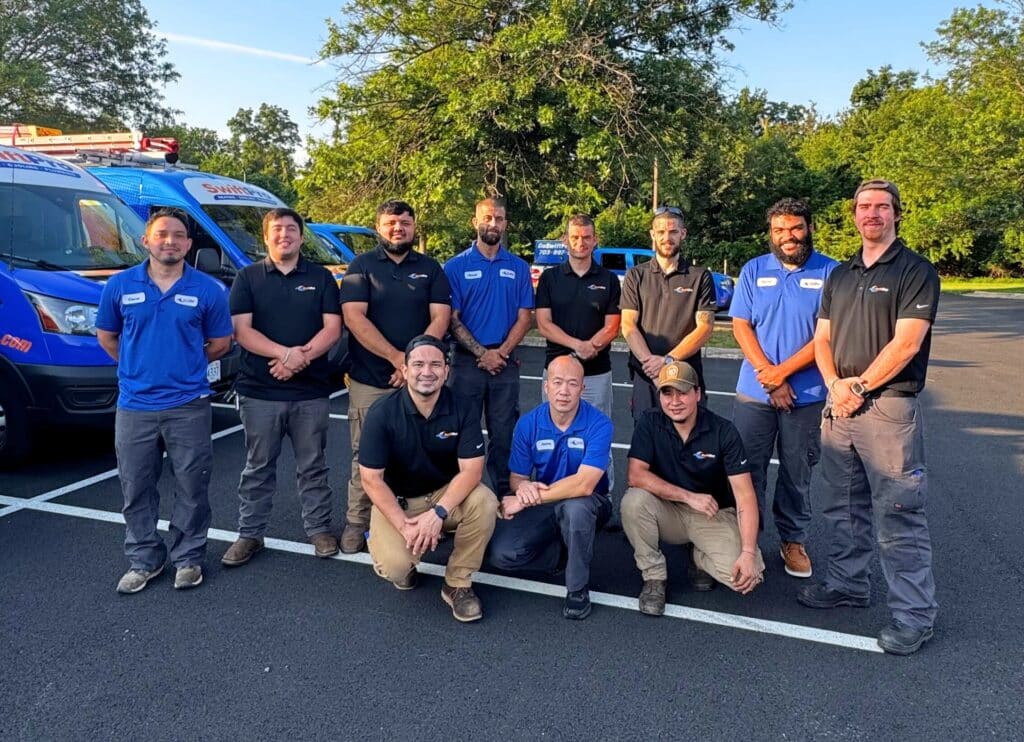
Can a new R-454B outdoor unit go on your old indoor coil?
Usually not, and this is the part that surprises people. A central AC or heat pump is two halves rated as a pair: the outdoor unit and the coil inside, which in a house with a gas furnace sits right on top of the furnace. A new R-454B outdoor unit needs an indoor coil approved for R-454B. A few late-model coils were built to convert with a kit; a typical R-410A coil wasn’t. Lennox’s installation sheet for one of its R-454B units says it “must be installed with an approved indoor air handler or coil,” and Rheem’s manual for its R-454B units says an R-410A coil “has not been evaluated” for R-454B. Trane’s advice is that the outdoor unit and the coil “should always be replaced together.”
Going the other way is allowed. If your R-410A outdoor unit or coil fails, the EPA says you can replace it “with a similar R-410A component,” and Trane still sells an R-410A replacement coil. Replace both halves at once, though, and the EPA counts it as a new system, which puts it under the new-equipment rule: leftover pre-2025 R-410A stock, or a new refrigerant.
When the half that failed is the air handler, what each path costs, from the repair to a matched heat pump system, is in air handler replacement cost.
And the refrigerants don’t mix. Ask Trane whether R-454B can go into an R-410A system and the answer is “No. R-454B is not compatible with older systems.” Carrier says R-410A systems aren’t compatible with it because of “different pressure requirements and safety standards.” Each system runs only on the refrigerant it was built for.
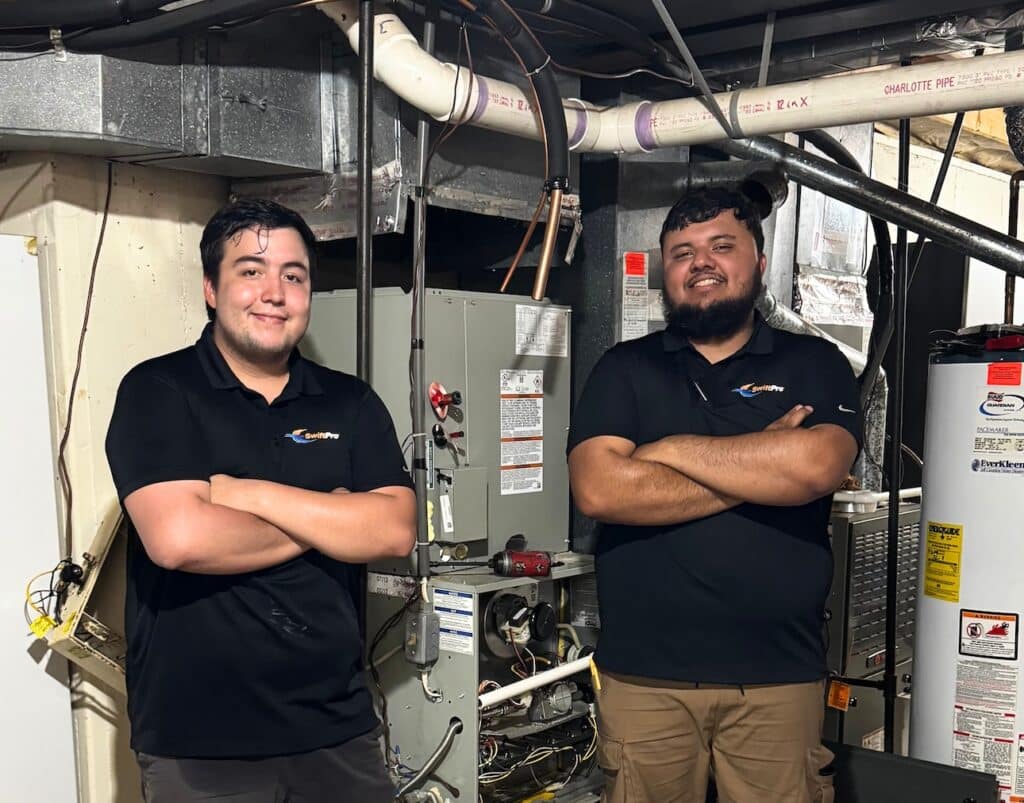
The copper lines between the two halves, the line set, can sometimes stay. The EPA allows existing tubing to be reused if it’s inspected and suitable. Rheem wants an old line set purged and flushed with nitrogen first, and recommends replacing it if you can. A line set left from an R-22 system can be the wrong size for new equipment, which is what our crew found on this job.
The system we put in first
Built to take a beating. Put in by our crew.
Heat lamps, snow and rain on one outdoor unit: that’s Trane’s own film. We’re a Trane Comfort Specialist, on Trane’s own dealer locator, and when you pick a Trane, our crew puts it in.
Films: Trane’s own.
Is R-454B safe? What A2L means
R-454B and R-32 carry the safety class A2L under ASHRAE Standard 34, the industry’s refrigerant classification. The A means lower toxicity. The 2L means lower flammability: under the right conditions it can burn, but slowly, with a burning velocity of 10 centimeters a second or less. R-410A is A1, no flame spread at all. You’ll see A2L called “mildly flammable,” and the EPA points out that isn’t ASHRAE’s term. Lower flammability is.
That’s why new systems come with a leak sensor. Under the safety standard they’re built to, UL 60335-2-40, most A2L equipment needs a refrigerant detection system: a sensor in the indoor unit, usually low and near the coil. If it detects refrigerant at a quarter of the level where it could burn, the system typically reacts within 15 seconds, UL explains: the indoor fan comes on to mix it into the house air, and the compressor and any electric heat shut off.
The EPA’s risk screens for these refrigerants in home equipment never came close to a flammable level in the room. In the most conservative cases they did pass that quarter mark, which is exactly what the sensor watches for. Virginia’s building code allows A2L systems in homes, and in Fairfax County a new A2L install needs a permit, a pressure test of the refrigerant system at 450 PSI for at least 60 minutes, and the sensor tested before the final inspection. The county spells it out in its technical bulletin on A2L refrigerants.
Which refrigerant Trane, Carrier, Rheem and Mitsubishi Electric chose
Most of the big names went with R-454B. Trane says its new systems “will use R-454B refrigerant.” Carrier sells it as Puron Advance, its name for R-454B. Rheem calls R-454B its primary refrigerant, with some of its mini-splits moving to R-32. Mitsubishi Electric’s new residential heat pumps, in series such as FX and GX, contain R-454B. Lennox uses R-454B for ducted systems and R-32 for ductless.
The R-32 side is Daikin, which uses it in its mini-splits, air conditioners and heat pumps, plus some Goodman and Amana models. R-32 is a single refrigerant; R-454B is a blend that’s about 69 percent R-32. Both clear the EPA’s limit.
Our take: R-454B or R-32 isn’t the reason to pick one brand over another. Both clear the same rule and carry the same safety class. Pick the system and the installer. The best HVAC brands and the best heat pump brands are ranked by the people who install them.
If your system is older still: R-22
A system built before about 2010 probably runs on R-22, and the nameplate on the outdoor unit will say. R-22 hasn’t been made or imported in the US since January 1, 2020. You can keep using an R-22 system as long as it runs, and repairs draw on recovered and reclaimed R-22 and what was made before 2020, the EPA says. But a leak on an R-22 system is usually where the repair road ends, and the replacement is a whole new matched system: outdoor unit, coil and sometimes the line set. Our AC replacement and heat pump replacement pages have the prices.
R-454B and R-410A questions we hear
Do I have to replace my R-410A system in 2026?
No. Nothing in the federal rules requires it. The EPA says you can keep repairing an existing system, including a major part like the compressor or the outdoor unit, and R-410A is still sold for service.
Can a contractor still install a new R-410A system?
Yes, if every major part was made or imported before January 1, 2025. The EPA’s May 2026 rule lets that stock be installed until it runs out. Anything built since has to use a refrigerant under the limit, like R-454B or R-32. If you’re quoted R-410A equipment, ask when it was made. For a system you plan to keep 15 years, we’d start on the refrigerant the industry is building for now.
Can I put R-454B in my R-410A system?
No. Trane’s answer is a flat no: R-454B is not compatible with older systems. The pressures and the safety requirements are different, and the EPA didn’t list either one as a retrofit for existing equipment.
Can you top off an R-454B system with R-410A?
No. Each system runs only on the refrigerant it was built for. Rheem prints it on the charge chart of its R-454B units: do not charge with R-22 or R-410A.
Is R-454B safe in a house?
It’s classed A2L, lower flammability, and new systems carry a leak sensor that turns the indoor fan on and shuts the compressor off if it detects refrigerant. The EPA’s risk screens for home equipment never came close to a flammable level in the room. In Fairfax County the install also needs a permit, a pressure test and a tested sensor.
What does A2L mean?
It’s the ASHRAE safety class. A is lower toxicity. 2L is lower flammability: it can burn, but slowly, at 10 centimeters a second or less. R-410A is A1, which means no flame spread.
Is R-410A getting more expensive?
That’s the direction. The EPA, Carrier and Rheem all say the older refrigerant may cost more as supply is cut. We haven’t found a current per-pound price from a source we’d stand behind, so we don’t print one. Our top-off price today is $190 to $740.
Can I reuse my line set with a new R-454B system?
Sometimes. The EPA allows existing tubing to be reused if it’s inspected and suitable, and manufacturers want it flushed first. A line set left from an R-22 system can be the wrong size, and then it gets replaced.
How do I know which refrigerant my system uses?
Look at the nameplate on the outdoor unit; the EPA notes most of them name the refrigerant. Built before about 2010, it’s probably R-22. From about 2010 through 2024, usually R-410A. Built since 2025, R-454B or R-32.
Does a heat pump use R-454B too?
Yes. The rule covers air conditioners and heat pumps the same way, ductless mini-splits included. A heat pump leak is just more urgent, because it needs the refrigerant to heat the house in winter too.
My AC is low on refrigerant. Is it worth fixing?
Under 10 years old and the first time, usually yes: find the leak and fix it. Past 10, or on its second or third top-off, put the price of a new system beside the repair. Our diagnostic visit is $99, and we’ll price both if you ask. More in repair vs. replace your AC.
Get both numbers before you decide
If your system needs refrigerant, we’ll put gauges on it, find out why, and give you the repair price in writing; ask, and we’ll price a new system next to it. AC repair and heat pump repair visits start with the $99 diagnostic. Thinking about replacing? The free HVAC estimator shows the installed price for your size, and a free second opinion covers a quote someone else gave you. Whatever we’re running this month is on our offers page.
Call (703) 997-9757 or book online.
More straight answers from our crew: how long an AC unit lasts, heat pump vs. air conditioner, what size AC unit you need and what AC repairs cost.
SwiftPro Heating, Cooling & Plumbing repairs and replaces air conditioners and heat pumps across Northern Virginia, based in Chantilly. SwiftPro is a Trane Comfort Specialist, and we’re Carrier experts. Family owned, Virginia Class A contractor license 2705192276, and rated 5.0 stars across 1,132 reviews on Google, Angi, Yelp, the BBB and Facebook. Read the reviews.