

By Tyler Griffin, Founder of SwiftPro · Updated June 2026
When your AC quits on a 95° Northern Virginia afternoon, the wrong call can cost you thousands. Here is the honest, no-pressure way to know whether to repair or replace, straight from our family-owned team that works in Fairfax and Loudoun homes every single day.
If replacement is looking like the answer, you can price it out right now. Our online furnace and AC estimator gives you a range for your home in a couple of minutes, with no appointment and nobody in your living room.
Repair or Replace: The Decision Framework
Repair or replace? Put the repair quote next to the price of a new air conditioner. Goodman’s rule of thumb is that when a major part fails, or the repair comes close to half the price of a new AC, replacing may be the better money. A system that still runs on R-22, which hasn’t been made since 2020, is usually at the end of its repair road; an R-410A system can still be serviced. If an AC unit can be repaired, we recommend repairing. Everything below is how our technicians make recommendations for your home.
Nobody wakes up wanting to buy a new air conditioner. So when a system quits on a muggy Northern Virginia afternoon, the instinct is to hand over $1,500 for a quick AC repair and pray it holds. Sometimes that is the right move. Just as often, it is good money chasing a dying system. Below are the 10 building-science benchmarks our local technicians use across Fairfax and Loudoun Counties to tell homeowners, honestly, when an air conditioner has crossed the line from repairable to retired.
The Universal Rule of Thumb: The 50 Percent Benchmark

Before diving into specific mechanical symptoms, put two numbers side by side: the repair quote and the installed price of a new air conditioner. Goodman puts the line at about half: when the repair is close to half the price of a new unit, replacing may be the better money. A new central AC with us runs $5,942 to $14,450 installed in Northern Virginia, keeping your furnace (AC replacement prices). From about $99 a month at 0% APR for 60 months, the whole price financed, on approved credit. So a failed compressor on a 14-year-old unit deserves a replacement price beside it; a run capacitor, $240 to $370 in our book, on a 6-year-old one does not.
The 10 Signs It Is Time to Retire Your Cooling System

1. It Runs on R-22, or It Needs Refrigerant Every Summer
The nameplate on the outdoor unit names the refrigerant. Built before about 2010, it likely runs on R-22. No new R-22 has been made or imported in the US since January 1, 2020, so every recharge comes from recovered or older stock, and that system is usually at the end of its repair road. Built from about 2010 through 2024, it runs on R-410A, and R-410A is not obsolete: the EPA says you can keep repairing it, compressor and outdoor unit included. What changed is new equipment. Systems built since January 1, 2025 have to meet the EPA’s new global warming limit, which in practice means R-454B or R-32, and the EPA’s May 2026 rule dropped the deadline for installing R-410A equipment built before 2025. R-410A’s supply is capped along with the other HFCs, and Carrier says it may get more expensive as that supply shrinks. The trap is the same with either gas. An air conditioner doesn’t use refrigerant up, so if yours needs some every summer, it leaks. Find the leak before you pay for a third top-off.
2. The Equipment Crossed the 12-Year Virginia Summer Mark
National blog articles claim central air conditioners last 20 years. That advice applies to temperate climates like Maine or Oregon. In Northern Virginia, where 96-degree July heatwaves meet 80 percent humidity, cooling equipment operates under extreme static strain for nearly 2,200 hours a year. A 13-year-old system in Burke or Centreville has endured the mechanical wear and tear of an 18-year-old system in the Midwest.
3. Your Dominion or NOVEC Summer Bills Are Escalating
Take out your electric utility statements from July of last year and compare them to this summer. If your kilowatt-hour usage jumped by 25 percent or more while your indoor smart thermostat remained set to the exact same 73 degrees, your compressor is suffering from internal SEER degradation. The unit is pulling massive electrical amperage just to maintain baseline cooling.
4. The Evaporator Coil Has Formicary Corrosion Leaks
Formicary corrosion occurs when household volatile organic compounds react with moisture on your indoor copper cooling coil, eating millions of microscopic tunnels through the metal. Once an indoor evaporator coil develops pinhole refrigerant leaks, patching it is impossible. A matching R-410A replacement coil is still legal and still made, so on a newer system a coil swap can be the right repair. On an older one, put a whole-system price beside the coil quote: Trane’s advice is that the outdoor unit and the indoor coil should always be replaced together.
5. You Suffer From the “Cold but Clammy” Syndrome
An air conditioner does two fundamentally different jobs: lowering air temperature and extracting airborne humidity. When an aging single-stage compressor begins to fail, it short cycles. It blasts cold air for ten minutes, satisfies the thermostat setpoint too quickly, and shuts down before it has time to pull moisture out of the living-room rooms. You are left with a chilly, humid indoor climate that encourages ductwork biological growth.
6. The Outdoor Condenser Screams or Shakes on Startup
Walk outside when your system engages. If you hear a loud metallic clank, a grinding rattle, or notice the outdoor fan motor dimming the interior lights inside your kitchen when it kicks on, the compressor is pulling excessive locked-rotor amperage. The mechanical valves inside the hermetic shell are failing to compress the gas.
7. You Are on a “First-Name Basis” With Repair Techs
If you have paid for an emergency AC repair visit two springs in a row across Stone Ridge, Aldie, or South Riding, you are caught in the repair patch cycle. Swapping a capacitor one year followed by a blower module the next is the classic warning sign of cascading component fatigue.
8. The “Hot Upstairs Bedroom” Gap Is Widening
In multi-level colonials across McLean, Great Falls, Oakton, and Vienna, heat rises. When a central blower motor weakens over time, it loses its static velocity. It can no longer push dense conditioned air up through second- and third-story branch ducts, leaving upstairs bedrooms 6 degrees warmer than the main-floor thermostat.
9. Replacement Parts Are Officially Backordered
When a technician tells you a proprietary circuit board or variable-speed blower module for your 2011 system will take three to four weeks to ship from a factory warehouse, listen to the market. Manufacturers deliberately slow down production on legacy parts to encourage consumers toward modern high-efficiency platforms.
10. Your Existing Setup Voids New Homeowner Insurance Policies
If your system was installed years ago by an unlicensed handyman without municipal safety inspections across Springfield, Alexandria, Reston, or Annandale, major property insurance carriers can legally deny secondary water-overflow claims. Modern 2026 installations require electronic float switches and permitted electrical heavy-ups.
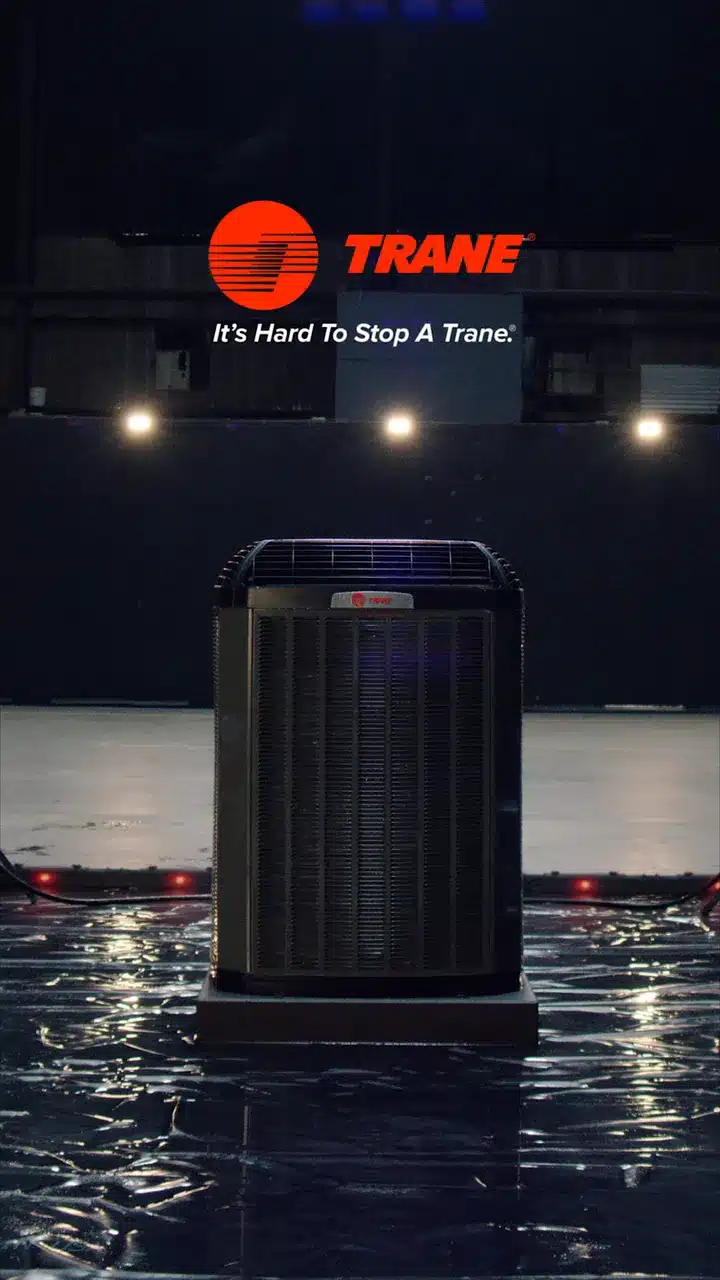
The system we put in first
Built to take a beating. Put in by our crew.
Heat lamps, snow and rain on one outdoor unit: that’s Trane’s own film. We’re a Trane Comfort Specialist, on Trane’s own dealer locator, and when you pick a Trane, our crew puts it in.
Films: Trane’s own.
Seeing Three or More of These Signs? Get a Straight Answer.
If your system is showing three or more of the warning signs above, do not let a contractor guess and do not let one scare you into a rushed decision. You deserve an honest diagnosis, clear options, and the time to choose what is right for your home and budget. That is exactly how we treat every home in Fairfax, Loudoun, and across Northern Virginia.
About SwiftPro Heating, Cooling & Plumbing
We are SwiftPro, an independent, family-owned heating, cooling, and plumbing team based on Lafayette Center Drive in Chantilly. With 1,130 reviews across Northern Virginia, we hold premier factory status as a Trane Comfort Specialist™, a Rheem Pro Partner, and a Mitsubishi Electric Diamond Contractor, so we can match you to the right brand instead of pushing the only one we carry.
How we work: Our founder Tyler Griffin built SwiftPro on one principle, honest education over high-pressure sales. We give you a clear diagnosis, several equipment options to fit your household budget, and the time to decide. Then we stand behind every AC repair, furnace maintenance visit, and emergency plumbing call we make.
Our promise: You get fast, efficient service delivered with the genuine care of a local family neighbor. We want to be a trusted resource in the community and happy to help with second opinions, ac repairs, furnance repairs, and replacement options.
Get a Straight, 5.0-Star Diagnosis
Want an expert onsite? We offer affordable on-site diagnostics, give us a call today.Schedule your diagnostic online or call us directly at (703) 997-9757. We will register your factory warranties and give you the unhurried time you need to make the right call.
SwiftPro Heating, Cooling & Plumbing · 4230 Lafayette Center Drive, Suite N, Chantilly, VA 20151 · (703) 997-9757 · VA License #2705192276. Published June 2026 as a free homeowner education resource.
Related: what AC repairs cost, part by part.
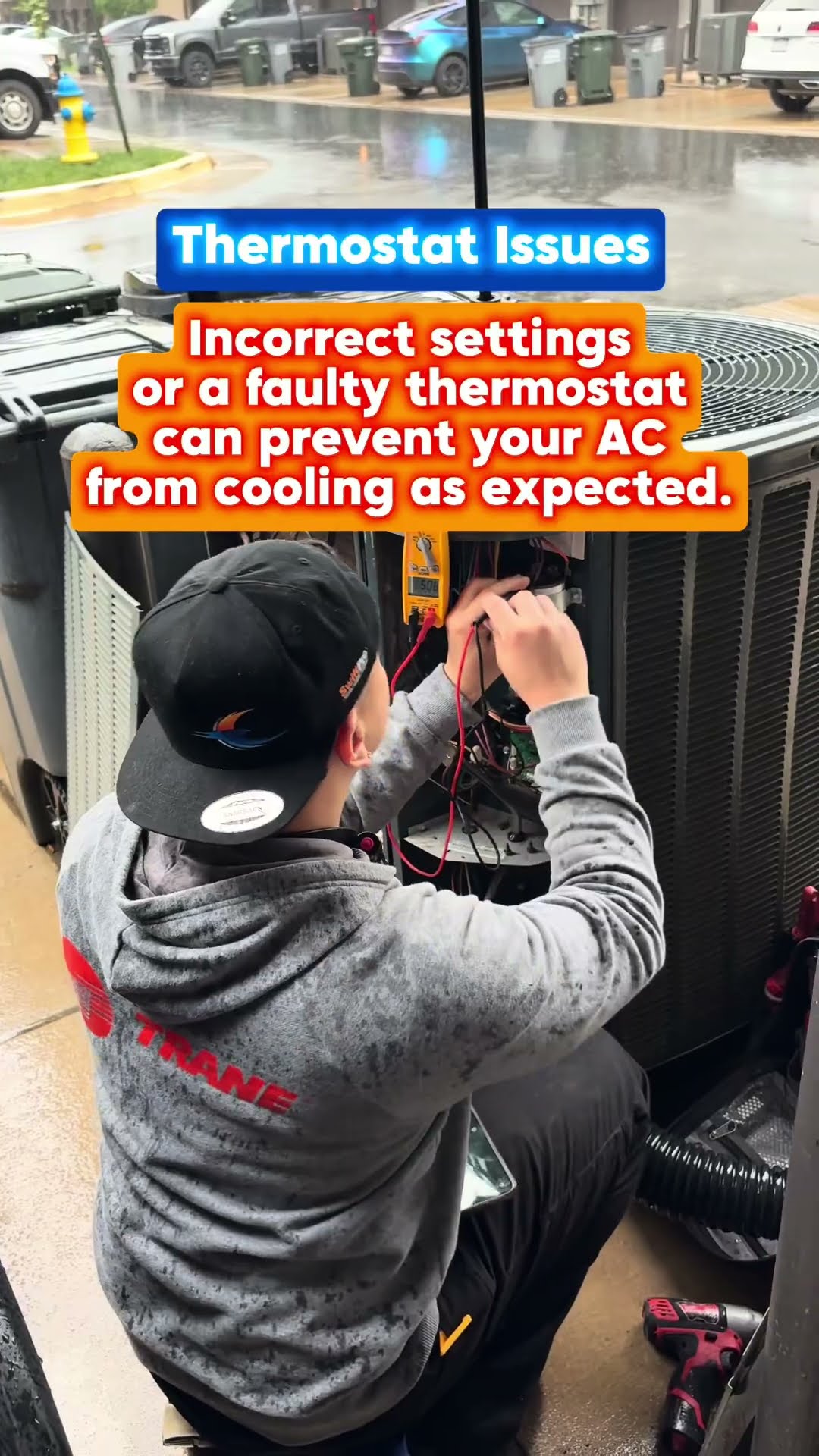
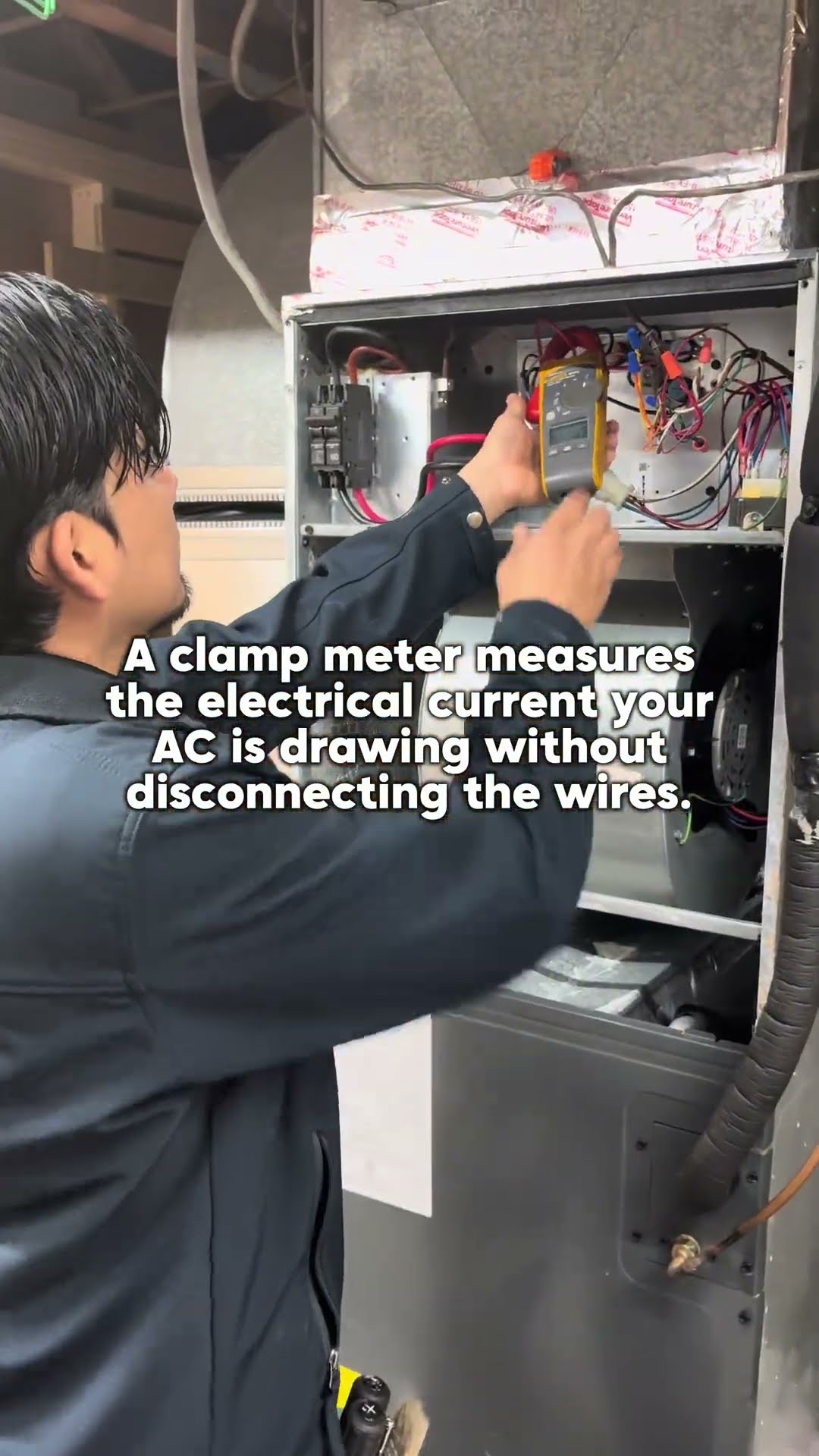
Watch us find what's wrong with an AC
Real jobs in Northern Virginia homes, filmed by our own crew. Tap one to watch.