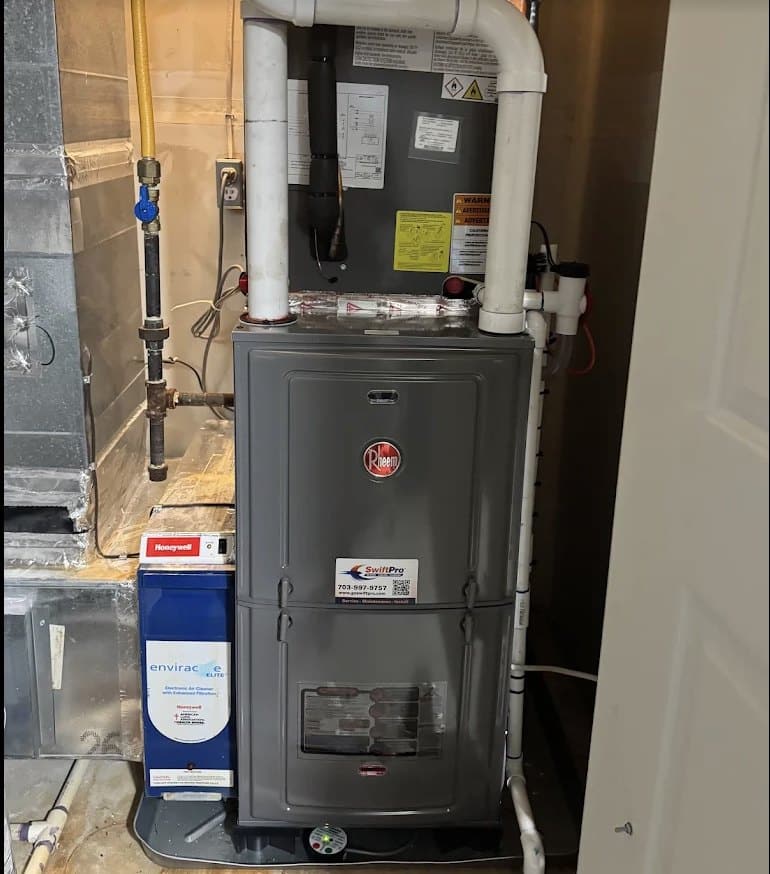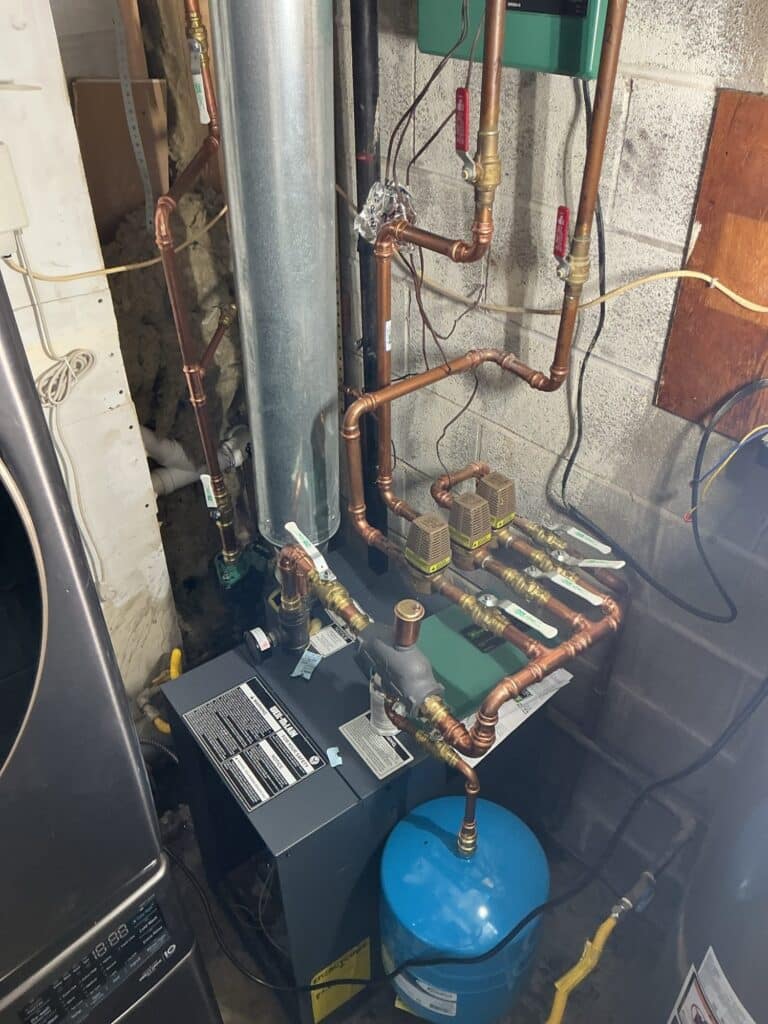


Your furnace lights, runs for a few minutes, shuts off, and starts again a little later. The house never quite gets comfortable and the thing never seems to stop starting. That is short cycling, and it is worth taking seriously for a reason that has nothing to do with comfort: every start is the hardest moment in a furnace’s life, and a furnace that starts six times an hour ages several times faster than one that starts twice.
There are five causes. Two you can check yourself in ten minutes, and they are the two most common.
First, how long is a normal cycle
On a cold day, a correctly sized furnace runs ten to fifteen minutes at a stretch and rests. On a very cold day it may run almost continuously, which is fine and is what it is for. If yours runs three to five minutes and shuts down, something is wrong. If it runs fifteen and rests, nothing is.
Worth separating out: a furnace that runs a few seconds, shuts off, and immediately retries two or three times before giving up is not short cycling. That is an ignition problem, and it is the flame sensor almost every time. $95 to $180 to clean.
Cause one: restricted airflow, which is usually the filter
This is the most common cause by a wide margin, and it is the one to rule out before calling anybody.
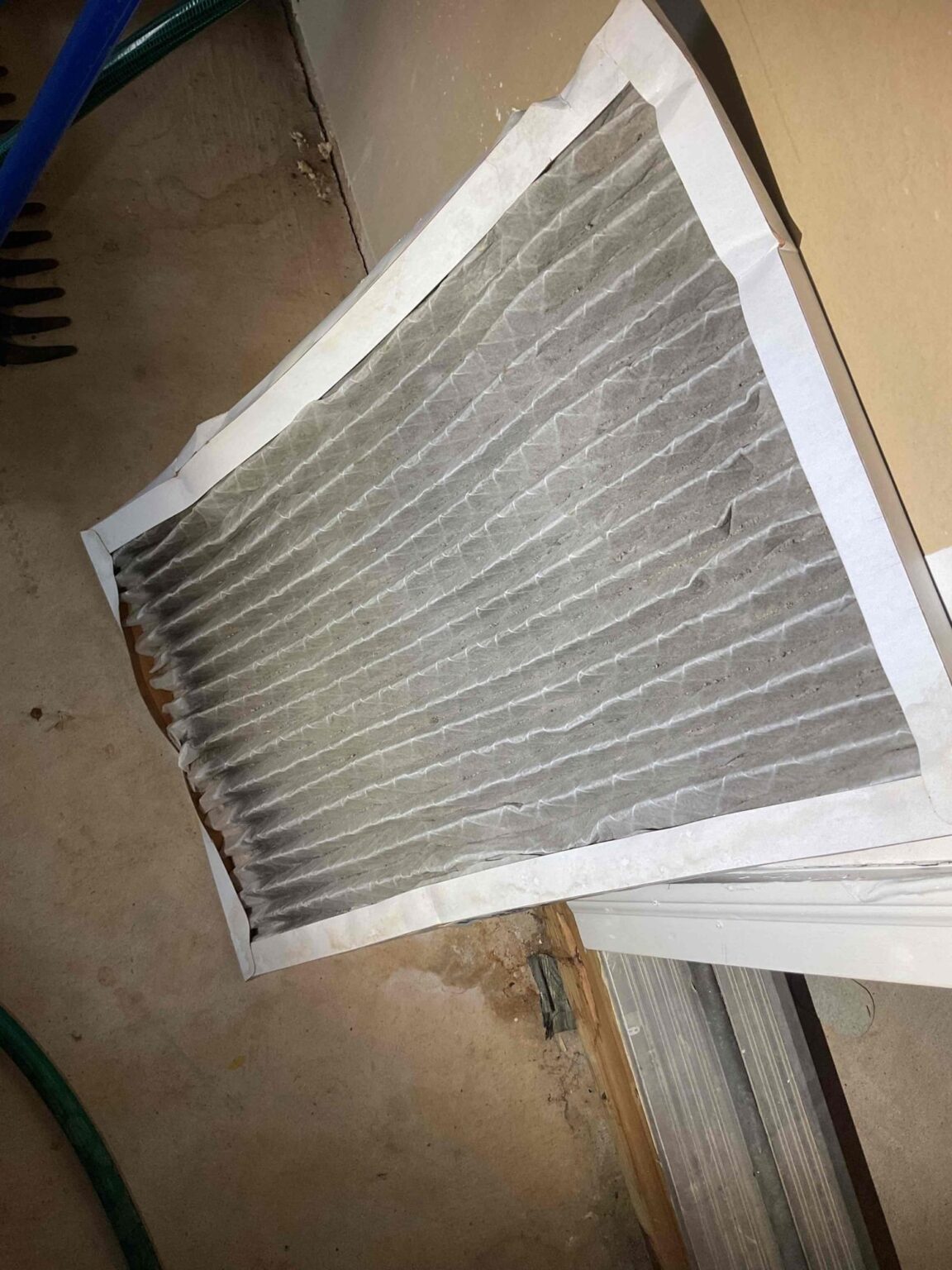
A furnace generates a fixed amount of heat and relies on moving air to carry it away. When it cannot move enough air, the heat builds inside the cabinet, a limit switch opens, and the burners shut off to protect the heat exchanger. The blower keeps running, the cabinet cools, the limit closes, and the burners fire again. That loop is short cycling.
Check, in order:
- The filter. Pull it and hold it to a light. No light through it means that is your answer. ENERGY STAR’s guidance is to check monthly and change at least every three months.
- Closed or blocked registers. Somebody closed vents in unused rooms to save money, which does not save money and does restrict the system. Open them. Also check that furniture and rugs are not sitting on any.
- The return. A return grille behind a sofa or blocked by a bookcase starves the system just as effectively as a dirty filter.
- The blower wheel. If the filter is clean and the vents are open and it still overheats, the blower wheel may be packed with a felt of dust, which cuts airflow badly. Pulling and cleaning it runs $300 to $440.
One thing worth naming: if you recently installed a much higher MERV filter in a one inch slot, that alone can cause this. The better filter restricts more, and on a system without spare capacity it tips into the same overheating loop. The filter and MERV tradeoff is here.
Cause two: the thermostat, and where it is
A thermostat in the wrong place reads its own microclimate rather than the house, and it satisfies early.
In direct sun, above a lamp or a television, on an exterior wall, near a supply register, or in a drafty hallway, it warms up faster than the rooms do, shuts the furnace off, cools quickly, and calls again. The house never gets there and the furnace never rests.
If yours is in one of those spots and has been since the house was built, that is your explanation. Moving it is real work and it permanently fixes a complaint no equipment change will.
Two smaller thermostat causes: dying batteries can produce erratic behavior before the screen goes blank, and on a heat pump a thermostat that was never configured for a heat pump can behave strangely in ways that look like short cycling. Replacing a thermostat runs $300 to $640.
Cause three: an oversized furnace
This one is not a fault and no repair fixes it.
A furnace two sizes larger than the house needs dumps its heat fast, satisfies the thermostat quickly, and shuts off, over and over. It heats the air near the thermostat long before it heats the far bedroom, which is why an oversized system and a cold back room so often come together.
It is extremely common in Northern Virginia, for a simple reason: when the old furnace was replaced, somebody matched the BTU rating on the outgoing unit instead of measuring the house. That old unit may itself have been oversized, and the error carries forward through every replacement.
If your furnace short cycles in mild weather, runs fine when it is genuinely cold, and the filter and thermostat are ruled out, oversizing is the likely explanation. The fix is sizing the next one to a measurement rather than a sticker, which is worth insisting on when that day comes. What a new furnace costs, and what drives the number, is here.
Cause four: the flame sensor or a failing component
Covered above, but to be precise about the difference. A flame sensor problem produces a short burst of flame, then shutdown, then a retry within a minute, often three times before a lockout. That is not a heat-related limit trip; it is the board not being told the flame is there.
Other components that produce cycling: a failing pressure switch that drops out mid-run, a partially blocked flue or intake that trips the pressure switch, a cracked heat exchanger causing the flame to roll and trip a rollout switch, and on a high efficiency unit a condensate drain that backs up and trips a float. That last one runs $175 to $420 to clear.
The flue and intake are worth a homeowner glance: go outside and look at the PVC pipes coming out of the wall. Leaves, a bird’s nest, snow drifted against them, or a dryer vent blowing into them all cause exactly this.
Cause five: a control board or wiring fault
Least common and diagnosed last, after the above are ruled out. A control board runs $550 to $1,180. A loose low voltage connection or a chafed thermostat wire produces intermittent behavior that looks like almost anything, and it is genuinely hard to find, which is why a good technician checks the cheap causes first.
Why not to live with it
Short cycling burns more gas than steady running, because every start has a purge cycle and a warm-up before useful heat reaches you. It wears the igniter, the inducer and the blower motor at several times the normal rate. It leaves the house unevenly heated. And when the cause is overheating, it means the heat exchanger is being cycled through thermal stress it was not designed for, which is the component you least want to shorten the life of.
ASHRAE puts a gas furnace’s median service life at eighteen years. A furnace that has been short cycling for three winters is not going to see it.
The ten minute version
Change the filter. Open every register and clear the return. Look at the flue and intake pipes outside. Check the thermostat is not in the sun or over a lamp. Run it for an hour and time the cycles.
If it still cycles in under five minutes, book a visit and tell us what you already checked, because that genuinely shortens the diagnosis. What each repair costs is here.
SwiftPro services every brand of furnace across Northern Virginia. Call (703) 997-9757, book online, or read about the Family Care Plan, which includes the fall tune-up where most of this gets caught.