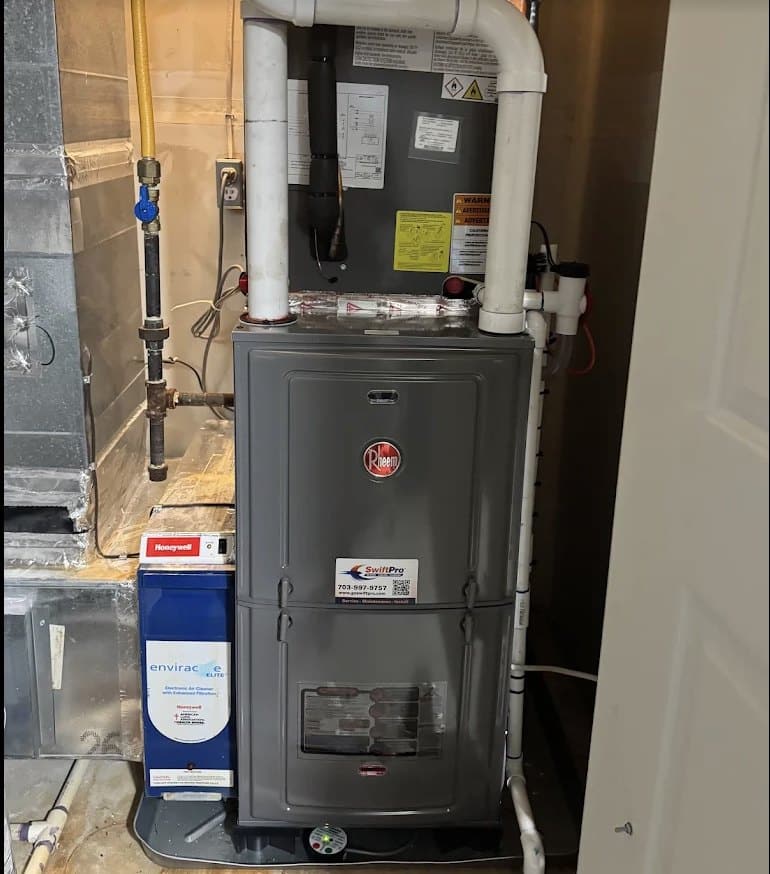


The filter is the cheapest thing in your heating system and the one most likely to cause an expensive problem. The Department of Energy’s own figure is that keeping it clean lowers the energy your system uses by 5 to 15 percent, which is a better return than almost anything else you can do for $12.
Here is what to buy, how often to change it, and the one place where buying the better filter makes things worse.
What a filter is actually for
Mostly, protecting the equipment. A furnace filter exists to keep dust off the blower wheel and the coil, because a loaded blower wheel moves less air and a dirty coil transfers less heat. Cleaning air you breathe is a secondary benefit that a basic filter barely delivers.
That framing matters, because it explains the failure mode. When a filter clogs, the system cannot move enough air through itself, and a furnace that cannot move air overheats and shuts itself off on a limit switch. You experience that as “the furnace runs for fifteen minutes and quits,” which is one of our most common winter calls and is very often a $12 problem.
Let it go long enough and the dust goes around the filter instead of through it, coating the blower wheel in a felt that has to be pulled and cleaned. That is $300 to $440, to fix something a filter change would have prevented.
How often
ENERGY STAR’s guidance is to check it every month and change it at least every three. In practice, in Northern Virginia:
- One inch filters: every one to three months. Monthly when the system is running hard, which here means July and January.
- Four or five inch media filters in a proper cabinet: every six to twelve months.
- With shedding pets, a renovation, or serious allergies: shorter than whatever the above says.
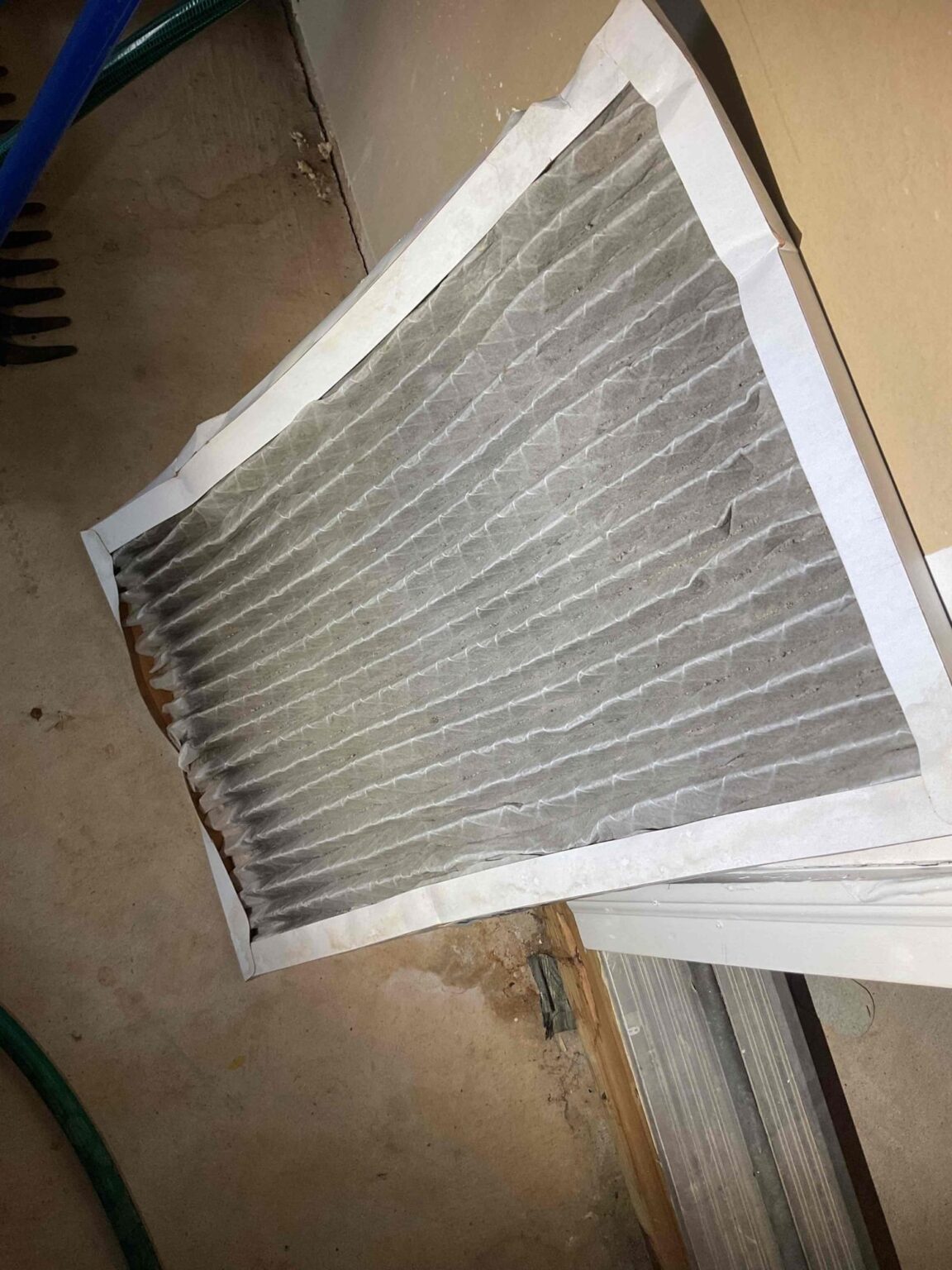
The honest test beats any schedule: pull it and hold it up to a light. If you cannot see light through it, it is done, whatever the calendar says.
Does MERV matter, and how high should you go
MERV rates how small a particle a filter captures. Higher numbers catch more. The complication is that higher numbers also resist airflow more, and residential systems are not built with much spare capacity to push against.
The rough map:
- MERV 1 to 4. The cheap blue fiberglass panel. It protects the equipment from lint and not much else. It is better than no filter and worse than almost anything else.
- MERV 5 to 8. Basic pleated. Catches dust, pollen and lint. This is the sensible default for most systems and most houses.
- MERV 9 to 12. Better pleated. Catches finer dust and some of what bothers allergy sufferers. Fine on most systems in a one inch size, and genuinely good in a four inch media cabinet.
- MERV 13 and up. Captures very fine particles. This is where the tradeoff bites: in a one inch slot on a system that was already marginal, a MERV 13 filter can restrict airflow enough to cause the exact overheating and coil icing problems the filter was supposed to prevent.
The rule we give people: if you want MERV 13, get a four or five inch media cabinet to put it in. The larger filter has many times the surface area, so it catches more while resisting airflow less. Trying to get MERV 13 performance out of a one inch slot is where people create problems.
If you are unsure what your system can take, ask for the static pressure to be measured at the next tune-up. It takes a few minutes and it turns the whole question from an argument into a number.
Getting the size right
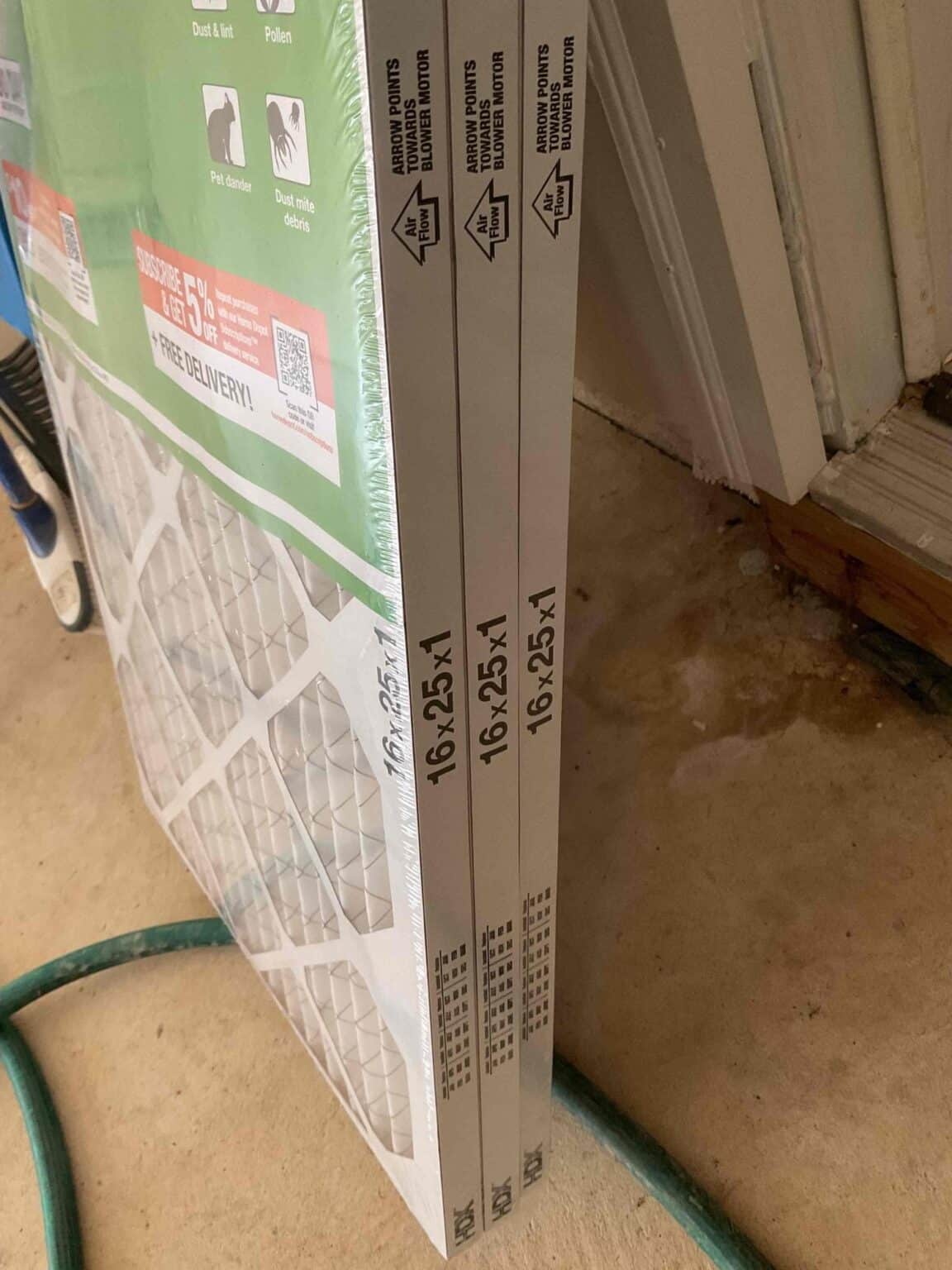
The size is printed on the edge of the filter you are replacing, and it is a nominal size: a “16x25x1” actually measures slightly under that so it slides in. Buy the nominal size.
If your filter rattles, or you can see gaps around it, air is bypassing it entirely and it is doing nothing. That is worth fixing, because an ill-fitting filter is the same as no filter for the blower wheel and worse for your confidence.
Which way does it go in? There is an arrow on the frame, and it points in the direction the air moves, which is toward the furnace or the air handler. In a return duct that means toward the equipment; in a return grille in the ceiling or wall, it means into the duct. Backwards, the filter still catches some dust and loses its structure faster.
The upgrade worth asking about
If your filter is a one inch panel in a slot you can barely reach, and you have ever complained about airflow or dust, ask about a four or five inch media cabinet at your next visit. It is a modest add. It holds more dust, gets changed once or twice a year instead of monthly, and it lets you run a better filter without choking the system.
In older houses with one undersized hallway return, this single change fixes more comfort complaints than any part we replace.
What a filter will not do
It will not fix a room that has always been cold, because that is duct design. It will not fix a house that is dusty because the ducts leak, since air pulled in through a leaky return never passes a filter. It will not make a fifteen year old furnace young. And it is not a substitute for the annual visit where somebody actually measures the system.
What it will do is prevent the single most common avoidable no-heat call we run, for about the cost of lunch.
Recommended Filter Replacement Schedule for Your HVAC System
Pull the filter. Hold it to a light. Write the size on the furnace in marker so you never have to guess again, and put a reminder in your phone for the first of the month. That is it.
If it is filthy and the furnace has been shutting off on its own, change it and see whether the problem goes away before booking anything. If it does not, here is what the actual repairs cost.
SwiftPro services heating and cooling systems across Northern Virginia, and the fall tune-up includes the filter and the airflow check. Call (703) 997-9757, book online, or read about the Family Care Plan.