

Every fall the air quality upsells come out, and most of them are sold with claims nobody can support. Here is the honest version of what actually changes indoor air in a Northern Virginia winter, in the order the change is worth the money.
Why winter is different
From about November you close the windows and stop exchanging air with outside. The heating system recirculates the same air continuously, so anything generated indoors accumulates: dust, pet dander, cooking particulate, off-gassing from furnishings, and whatever the system itself is shedding.
At the same time, heated air is dry. The EPA’s guidance is to keep indoor relative humidity between 30 and 50 percent, and plenty of heated houses here read in the teens in January.
So the winter air problem is really three problems: particles, dryness, and no fresh air. They have different solutions and the marketing tends to blur them.
Start with the filter, because it is nearly free
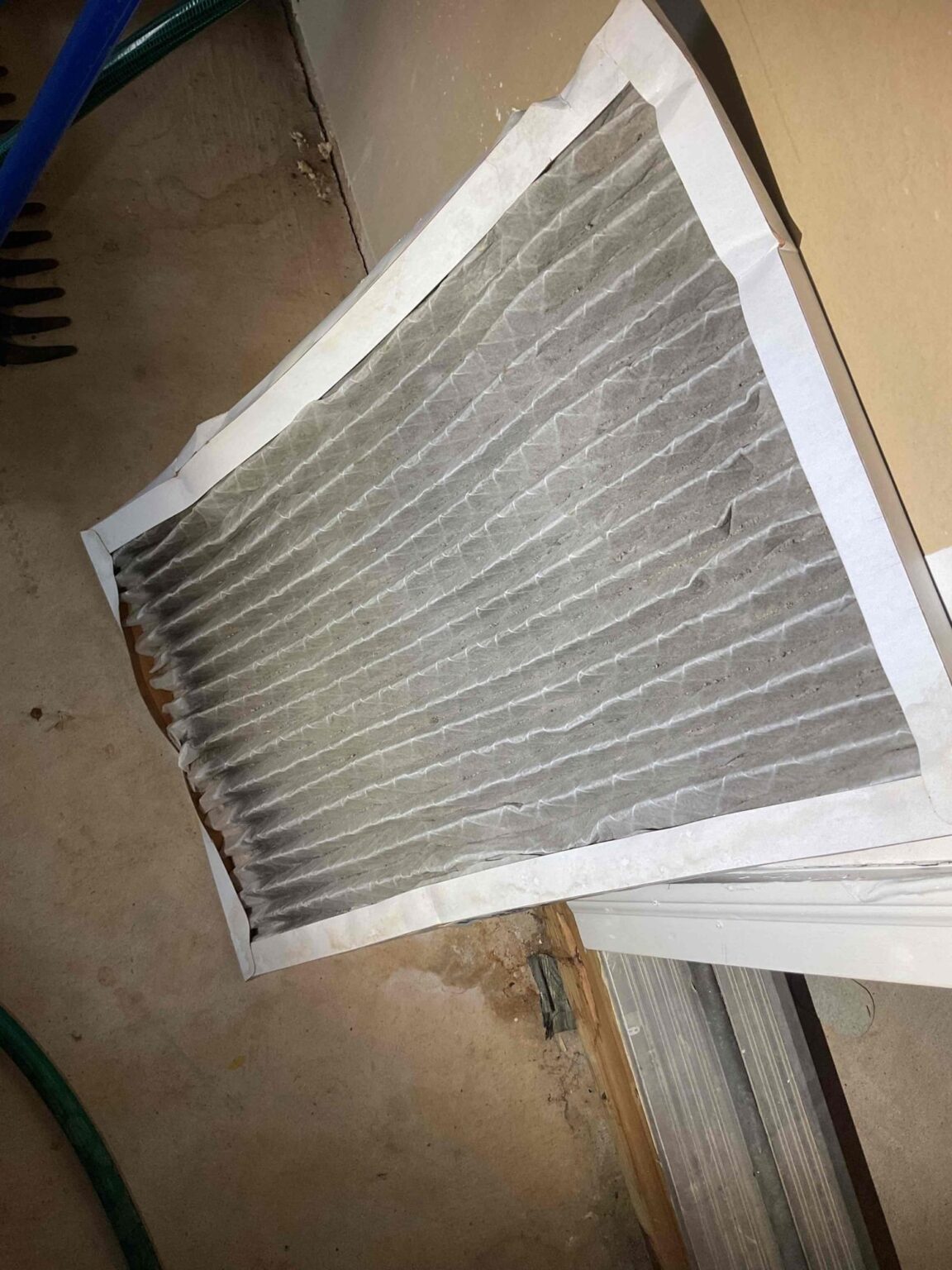
Before anything else, look at what is in the filter slot. A basic fiberglass panel catches lint and essentially nothing else. Moving to a decent pleated filter costs a few dollars more and makes a larger difference than most add-on products.
The catch, and it matters: a very high MERV filter in a one inch slot can restrict airflow enough to cause the furnace to overheat and shut down. If you want high filtration, the right way is a four or five inch media cabinet, which has many times the surface area so it filters more while resisting less. The whole MERV tradeoff is here.
ENERGY STAR’s guidance is to check the filter monthly and change it at least every three months. In a house with pets, monthly.
What an air scrubber actually is
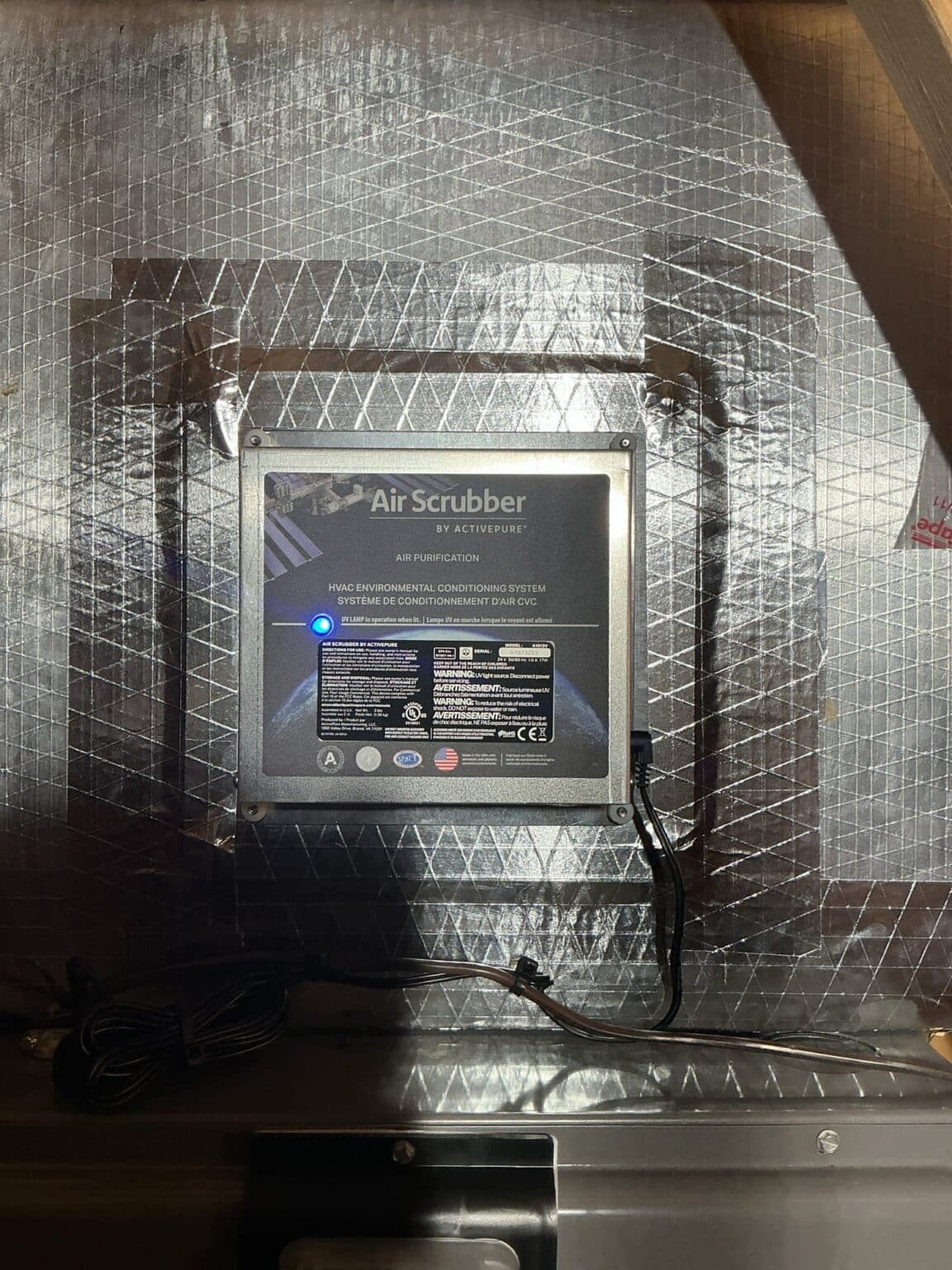
An air scrubber, sometimes sold as an air purifier or a UV sanitizer, mounts in the ductwork and treats air as it passes. Most of the units we install run $1,200 to $2,000 fitted, with the middle around $1,600, and there is a combined tier where it goes in alongside a whole-home duct cleaning at $1,798.
What it is genuinely good for: households where somebody has real allergies or asthma, houses with multiple pets, houses where cooking odors linger, and situations where the air has an ongoing source of something you want treated rather than just captured. In those houses, people notice.
What it is not: a substitute for a filter, a fix for a dust problem caused by leaky ducts, or a cure for allergies. It also only treats air while the system is running, which in the mild shoulder weeks can be a small fraction of the day. That last point is worth asking about, because a unit that treats air for two hours a day is doing a fraction of what the brochure implies.
One thing to refuse: routine chemical fogging of your ductwork as an add-on. The EPA’s position is that no chemical biocides are currently registered for use in internally insulated air duct systems. If somebody proposes treating your ducts with a product, ask what it is and whether it is registered for that use.
When duct cleaning is the answer, and when it is not
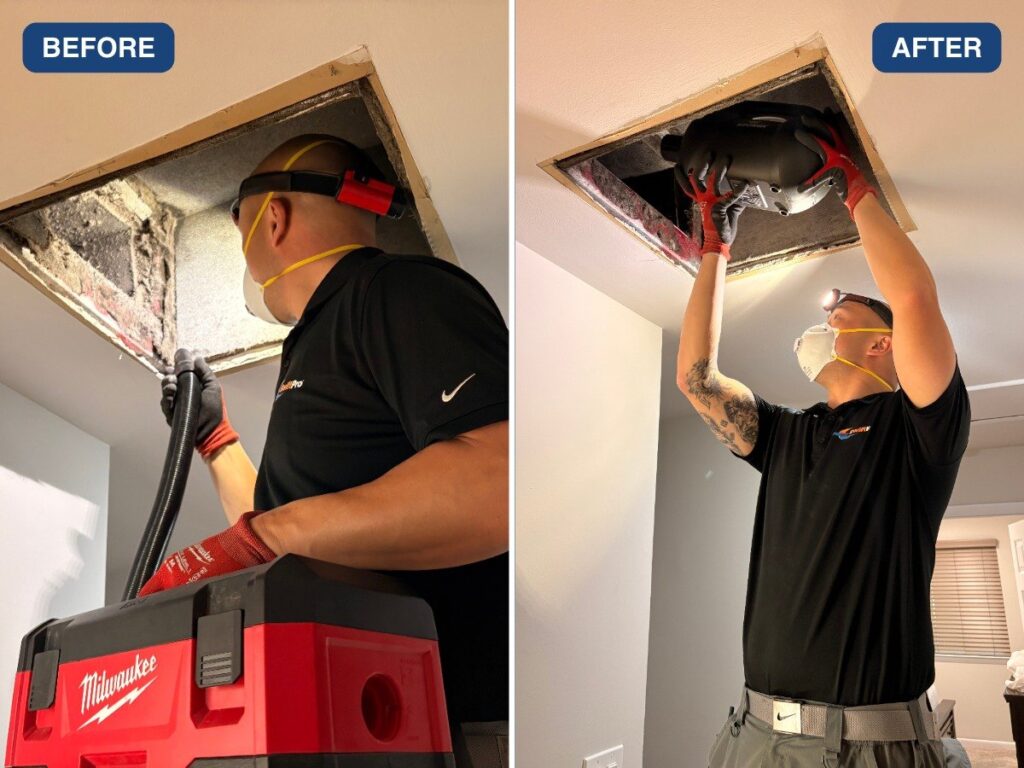
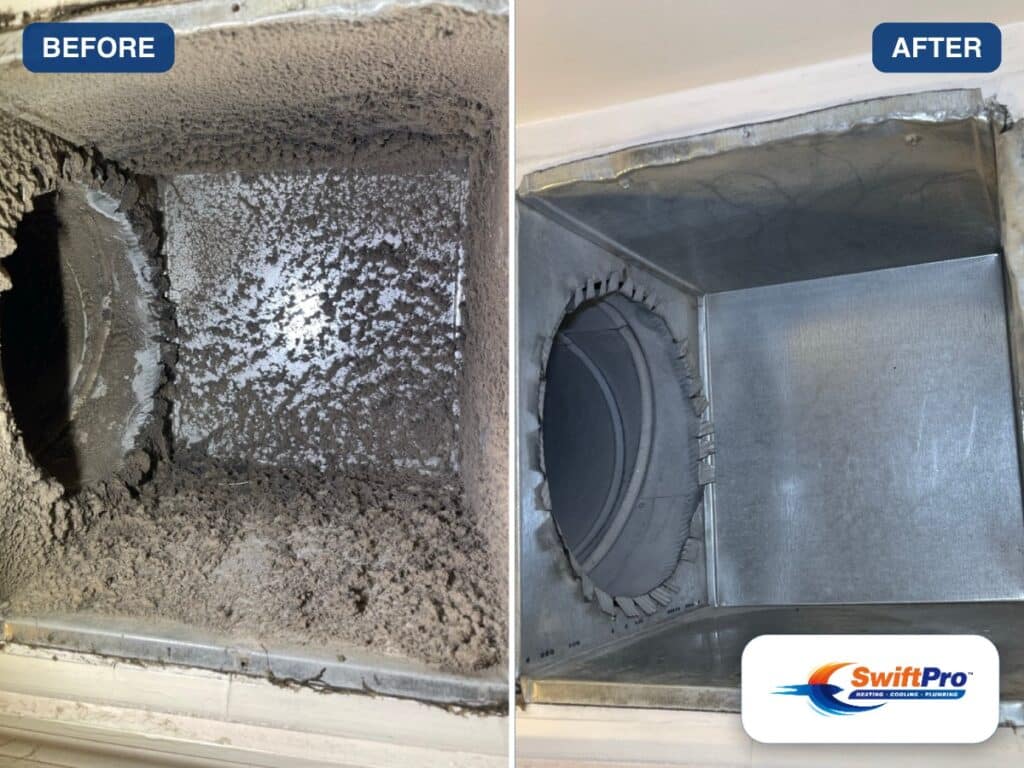
The EPA names three situations that justify duct cleaning: substantial visible biological growth on the hard surfaces inside, vermin infestation, or ducts so clogged with dust and debris that particles are actually being released into the house from the registers. It also says plainly that duct cleaning has never been shown to prevent health problems.
That is a more honest frame than most of the industry uses. Pull a supply register and look inside with a flashlight. If you see a fur of dust on the metal, or evidence something has lived in there, that is your answer. If it looks like metal, put it back.
Pricing, if you do need it: $298 for a return-only cleaning, $598 for a whole home on a single system, $1,798 with an air scrubber installed. The longer version, including how to spot the version that is not real, is here.
The two things that actually change winter air, and get skipped
Humidity, if yours is low. Buy a $10 hygrometer and read it on a cold day. If you are at 18 percent, that is the single biggest lever on how the house feels, and on the static, the dry throats and the gapping wood floors. A whole-house humidifier runs $1,000 to $1,500 installed for a bypass or fan-powered unit. The three types and when each is right are here.
Duct leakage, if you have it. This is the one nobody sells because it is not a product. Return ducts running through an attic, a crawlspace or a garage pull unfiltered air straight from those spaces into your house, every minute the system runs. No filter catches it, because it enters downstream of the filter. In a dusty house with a clean filter, this is very often the actual cause, and sealing the return side is the fix.
If your house is dustier than it should be, ask for the return side to be looked at before you buy an air purifier. It is a less exciting recommendation and it is usually the right one.
The order we would spend money in
- A decent pleated filter, changed on schedule. Tens of dollars a year.
- A hygrometer, to find out whether you have a humidity problem at all. About $10.
- Seal the return ducts if any run through unconditioned space. This is the invisible one.
- A media filter cabinet, if you want better filtration without choking the system.
- A humidifier, if the number came back low.
- Duct cleaning, if the flashlight test says so.
- An air scrubber, if there is a real ongoing source and somebody in the house is genuinely affected.
Anyone selling you item seven before checking items one through three is not doing the job properly.
SwiftPro handles indoor air quality, duct work and heating across Northern Virginia. Call (703) 997-9757, book online, or see the air duct cleaning page.