
If your house is dustier than it should be with a clean filter, or one room has never been comfortable no matter what equipment went in, the ductwork is the most likely explanation and the least likely thing anyone has looked at.
The numbers are worth stating up front. The Department of Energy puts duct air loss at about 30 percent of a cooling system’s energy use. ENERGY STAR’s figure is that 20 to 30 percent of the air moving through a typical duct system is lost to leaks. That is a third of what you pay for, going into an attic, a crawlspace or a wall cavity.
Supply leaks and return leaks do different damage
A supply leak loses conditioned air before it reaches the room. The symptom is a room at the end of a run that never warms up or cools down, and a system that runs longer than it should. You are paying to heat an attic.
A return leak is the one that causes the dust, and it is the one almost nobody diagnoses. The return side is under negative pressure, so a gap in a return duct running through an attic, a crawlspace or a garage pulls air straight out of that space and delivers it into your house. Every minute the system runs.
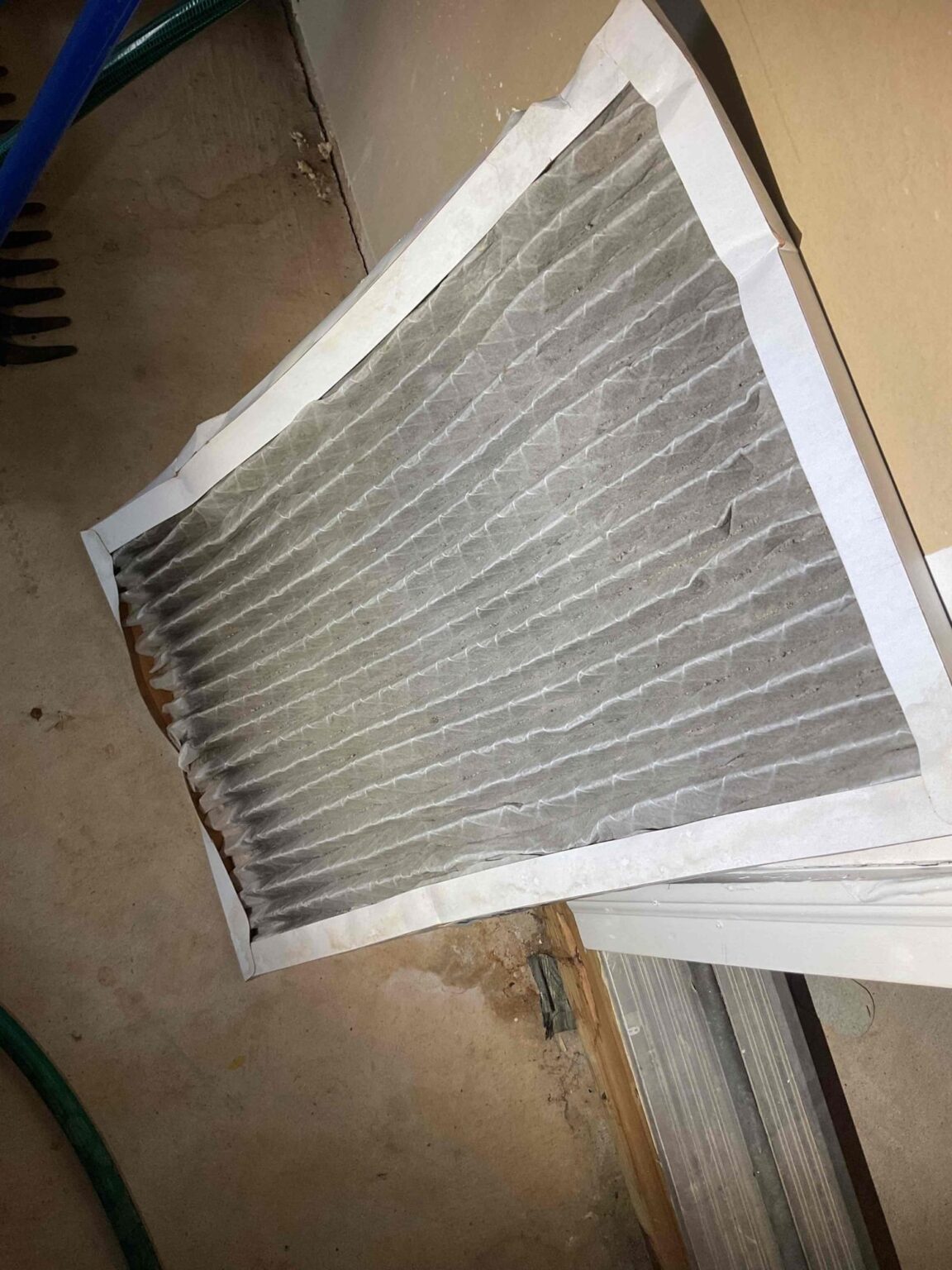
Here is why that matters more than it sounds: that air enters the system downstream of the filter, or bypasses it entirely. No filter upgrade catches it. No air purifier fixes the source. People spend real money on filtration to solve a problem that is actually a hole in a return duct in a dirty crawlspace.
If your house is dusty and the filter is clean, ask about the return side before buying anything else.
How to spot it yourself
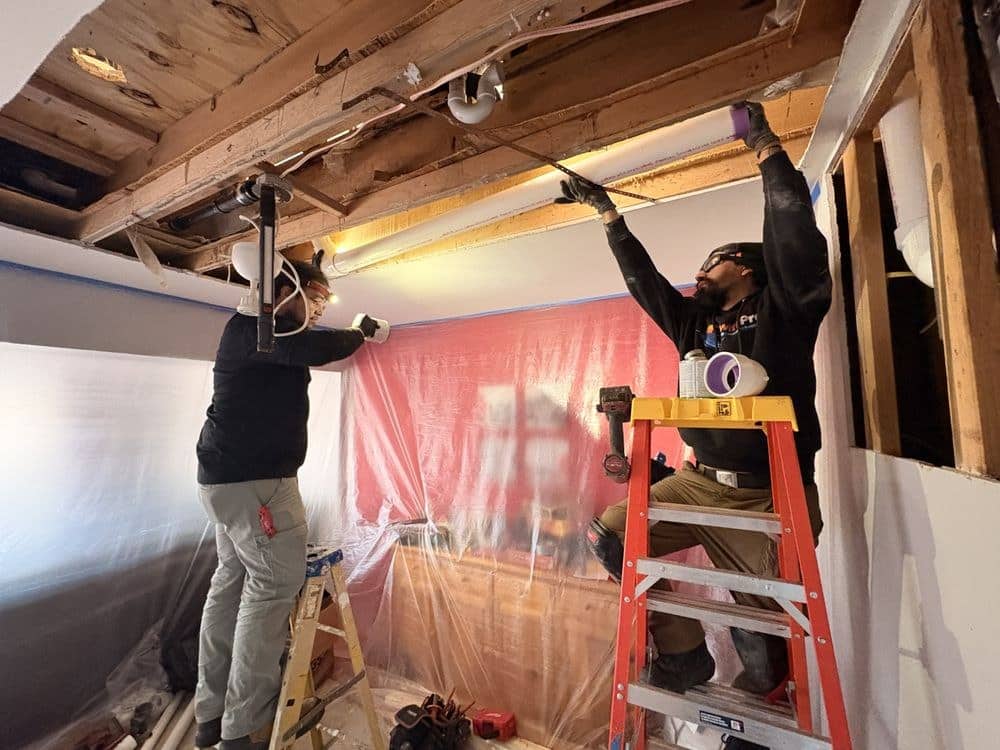
Look at the ductwork you can reach. Attic, crawlspace, basement, garage. You are looking for joints held together with cloth duct tape that has dried and let go, disconnected flex duct hanging loose, crushed or kinked flex runs, and gaps at plenum connections. It is remarkable how often a duct is simply disconnected and has been for years.
Feel around the register while the system runs. Air should come out of the vent and nowhere else. Air leaking around the boot, the metal box behind the register, is common in older houses.
Compare rooms. Hold a hand at each register. If the far bedroom delivers noticeably less than rooms near the furnace, there is either a leak or a design problem between them.
Check whether one room is worse in both seasons. A room that is cold in winter and hot in summer has an airflow problem. A room that is only wrong in one season is more likely a load problem, like a west-facing wall of glass.
Look at the garage and the crawlspace specifically. A return leak in a garage is the one to fix first, for reasons that go beyond dust: a garage contains vehicle exhaust, stored chemicals and paint.
What sealing actually involves
Not cloth duct tape, which is the one thing that reliably fails at it. Proper sealing uses mastic, a thick paste applied to the joint, or foil-backed tape rated for the job, or in some cases an internal aerosol sealing process for systems that cannot be reached.
A real duct job looks at four things: sealing accessible joints and connections, reconnecting or replacing damaged flex runs, insulating ducts that pass through unconditioned space, and correcting the return, which is the part most often undersized as well as leaky.
We do not publish a price for this because there is not an honest one to publish. What it costs depends on how much of your duct system anyone can physically reach, and a house with an open basement is a completely different job from a house with ducts buried in finished ceilings. Any quote worth taking follows an inspection, not a phone call.
The return problem, which is usually design rather than damage
A lot of Northern Virginia houses from the 1950s through the 1980s were built with one large return grille in a hallway, sized for the original furnace and the original floor plan. Then somebody finished a basement, added a room, or replaced the furnace with a modern one that moves air differently.
The result is a system that cannot get enough air back to itself, which shows up as: the furnace overheating and shutting off after fifteen minutes, weak airflow everywhere, the coil icing in summer, and bedroom doors that thump when the system starts because closing them starves the return further.
That last one is a genuinely useful test. If closing interior doors changes how the system sounds or performs, the return is undersized. Adding return capacity, or a transfer grille between rooms, fixes more comfort complaints in houses of that era than any part we replace.
When to replace rather than seal
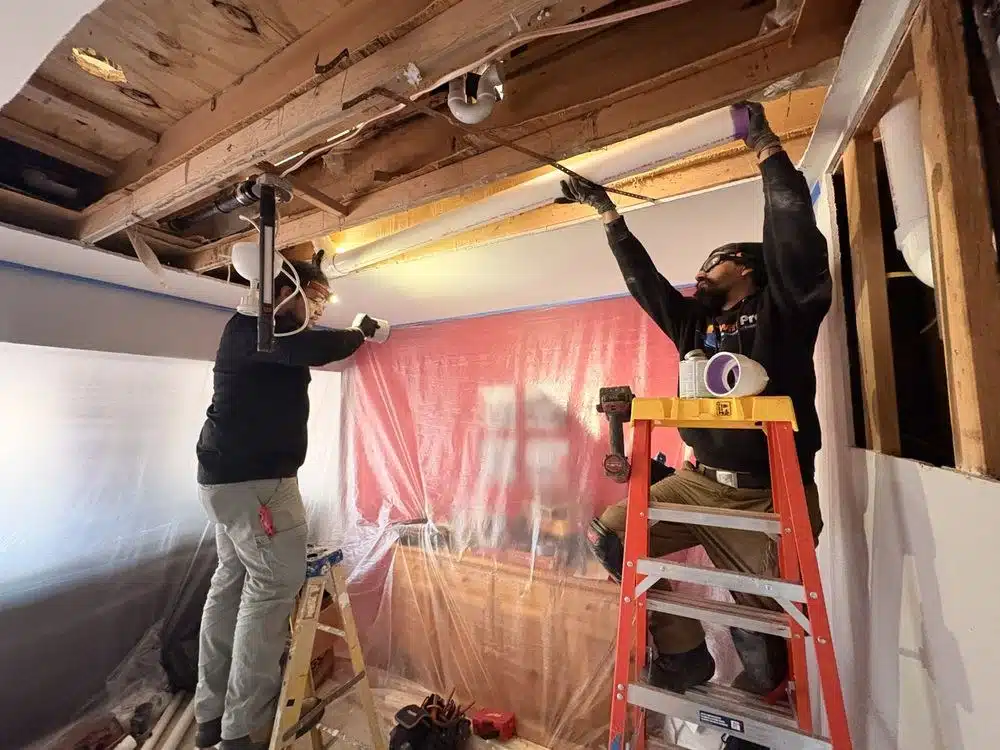
Flex duct that has been crushed, kinked, chewed, or has lost its insulation is not worth sealing; it needs replacing. Same for any run that has been disconnected long enough to fill with debris. And in a house where ducts were added into a structure never designed for them, there is a point where a redesign beats another round of patching.
The honest test: if somebody has adjusted dampers and replaced equipment twice and one room still is not right, stop buying equipment. Ask for airflow to be measured at the registers and at the return. That turns an argument into a number, and the number usually points at the ducts.
Where duct cleaning fits, which is not here
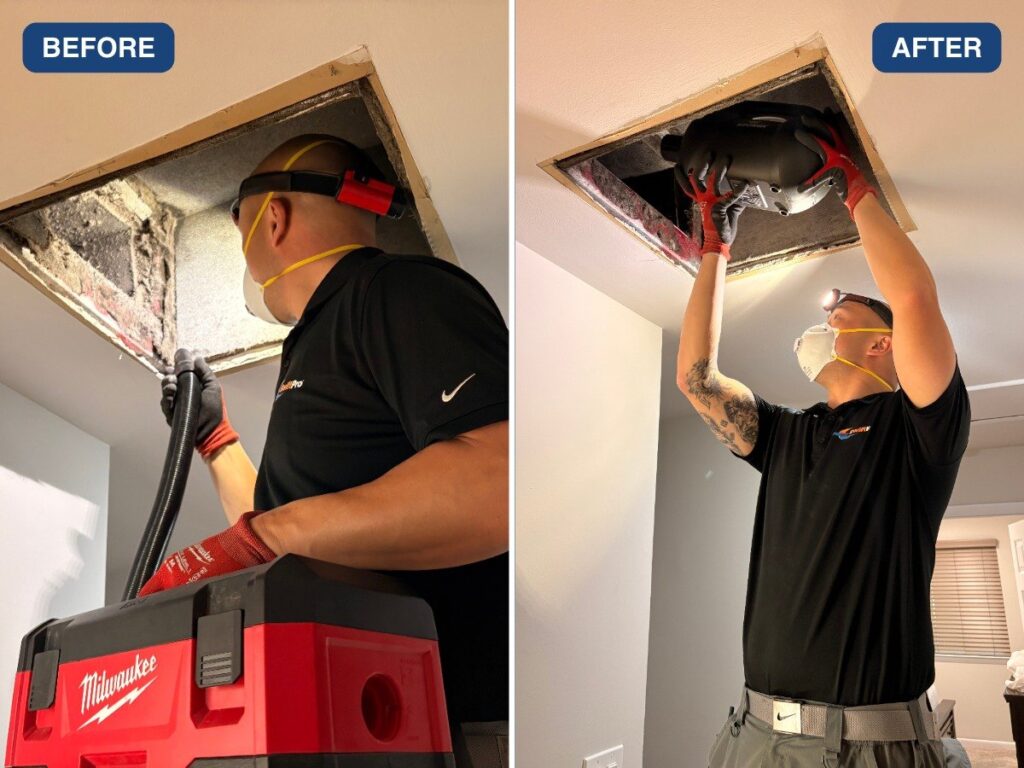
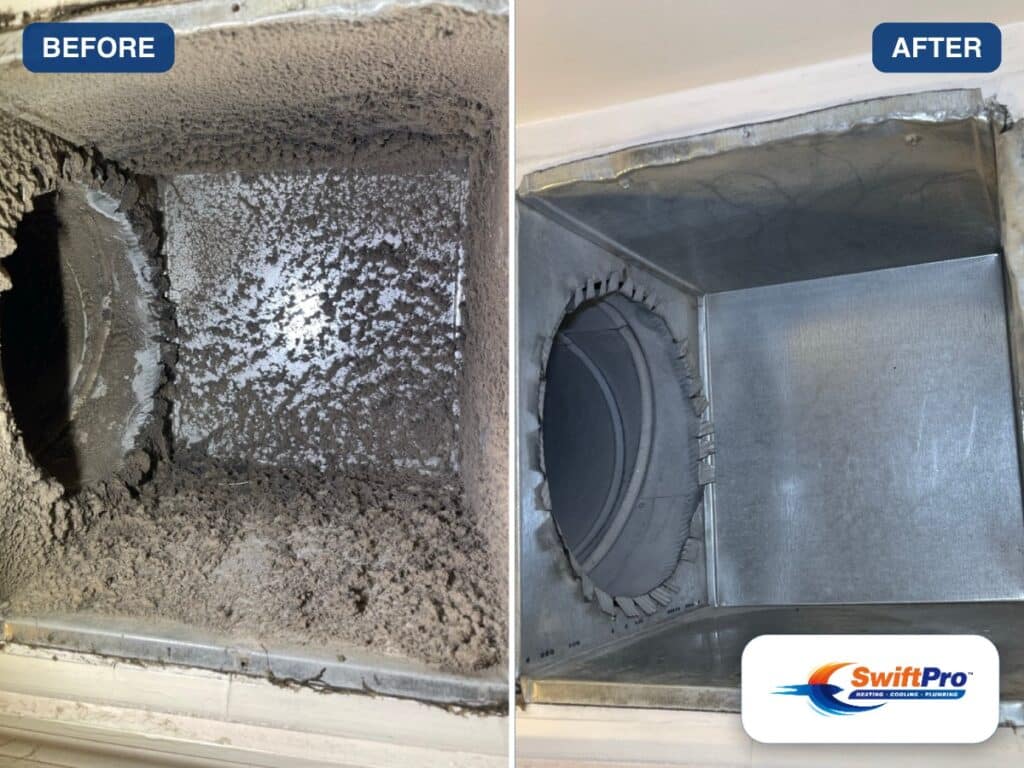
Cleaning and sealing are different jobs. Cleaning removes debris from inside the ducts; sealing stops air going where it should not. Cleaning a leaky duct system does not reduce the dust entering through the leaks. When cleaning is genuinely worth it, per the EPA’s own position, is here.
If you are considering both, seal first. Then decide whether cleaning is still needed.
SwiftPro inspects, seals and replaces ductwork across Northern Virginia. Call (703) 997-9757, book online, or read why one room is so cold, which is where most duct conversations start.