

What AC repairs actually cost at SwiftPro in Northern Virginia, rather than a national average:
- Diagnostic visit: about $99.
- Run capacitor: $240 to $370. The most common AC repair there is.
- Contactor: $290 to $425.
- Refrigerant added, one to three pounds: $190 to $740, most between $250 and $580. Read the section on this one before you buy it.
- Condensate drain cleared, trap and overflow switch added: $175 to $420.
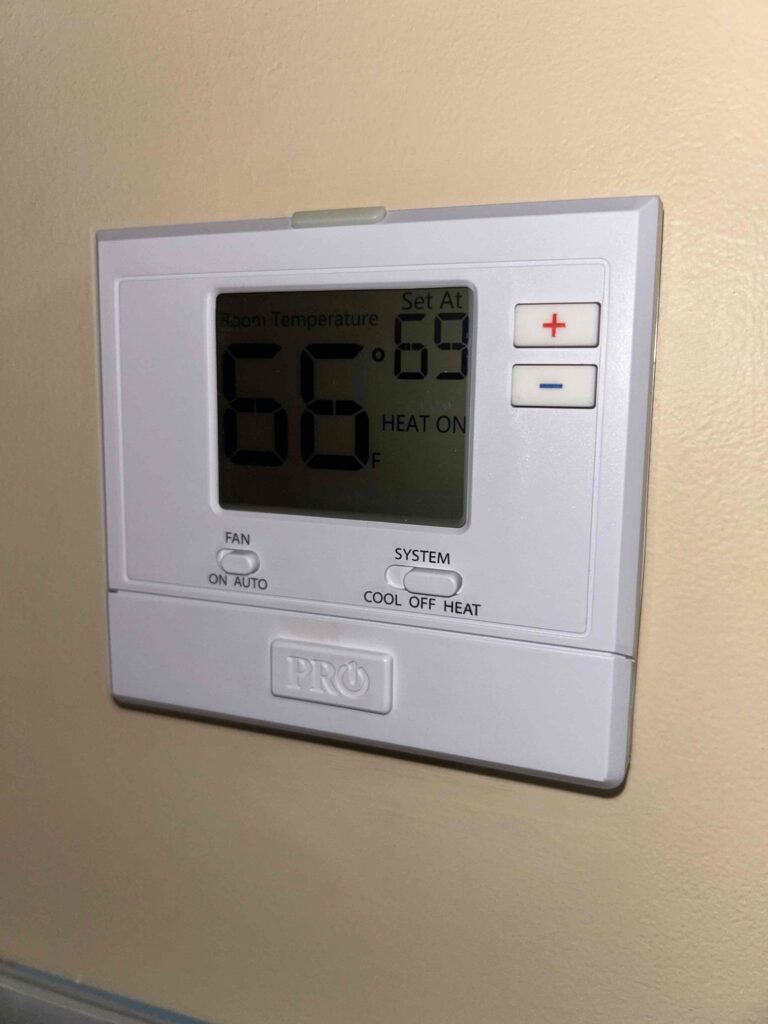
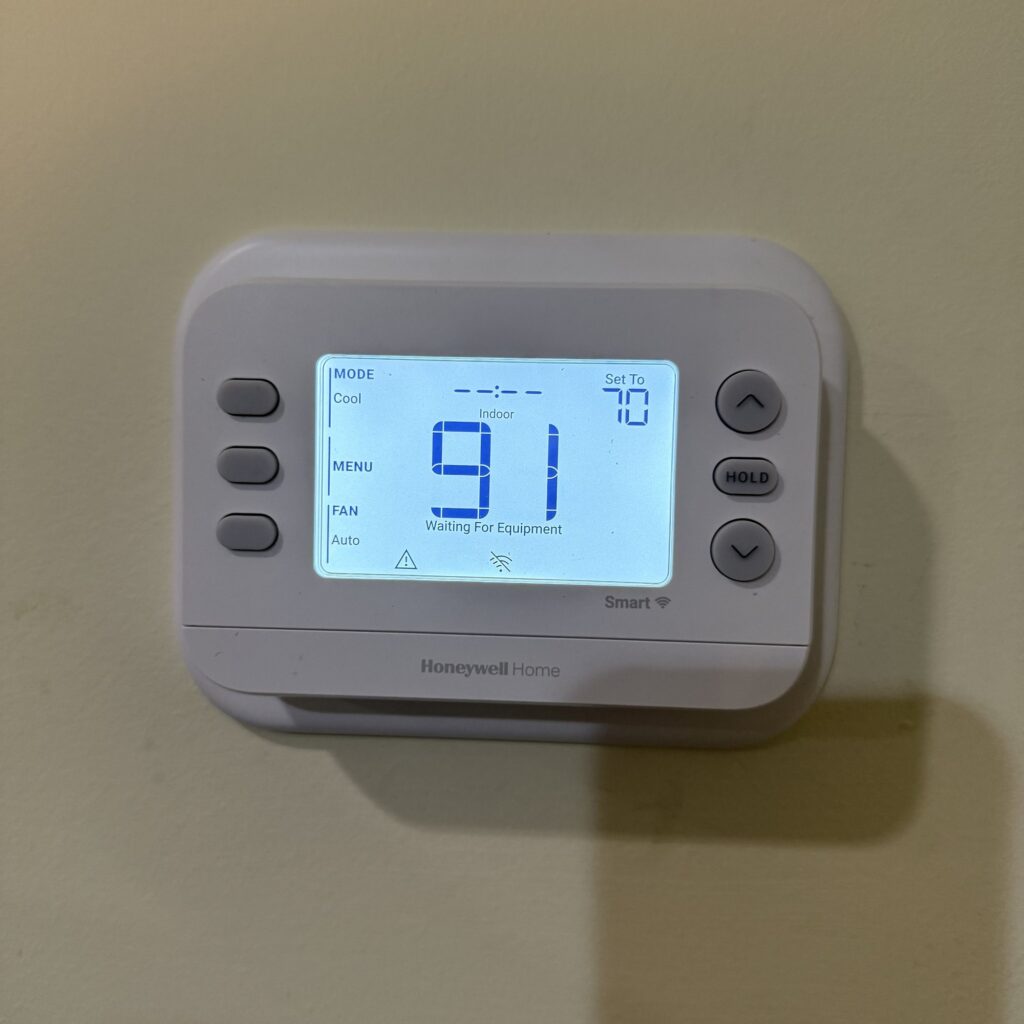
- Thermostat replaced: $300 to $640.
- Condenser fan motor: $1,100 to $1,500 typical.
- Blower motor: $670 to $2,400, with most around $1,500.
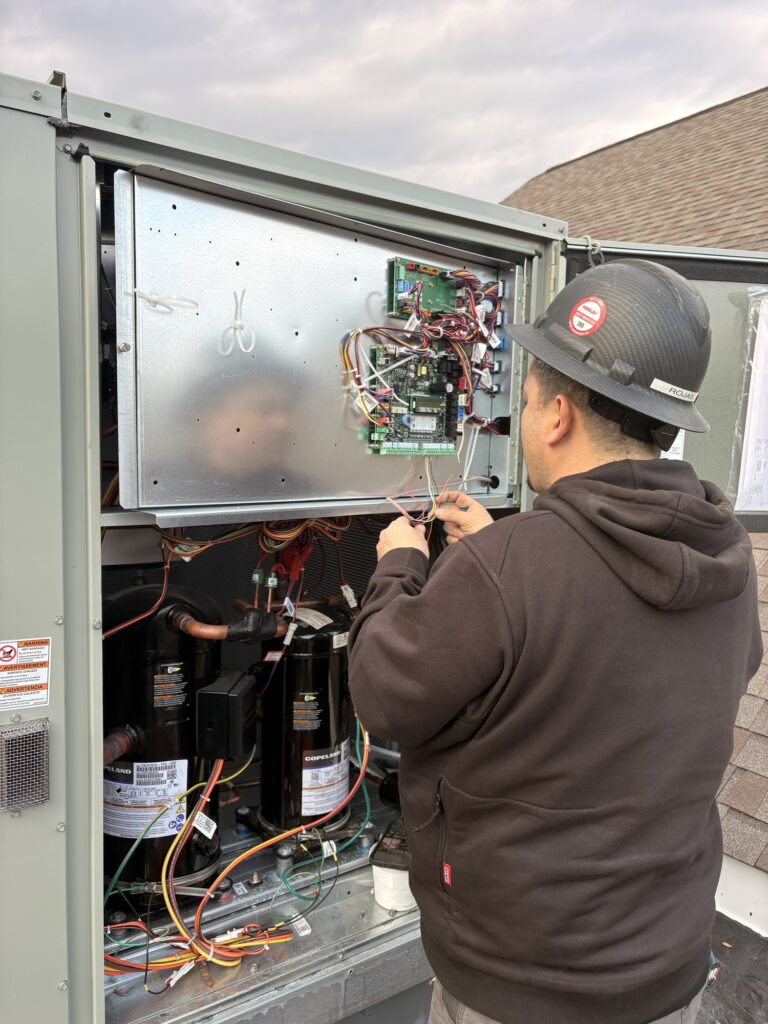
- Control board: $550 to $1,180.
- Compressor, out of warranty: $2,200 to $5,100.
- Compressor, part under warranty (labor and refrigerant): $1,900 to $2,500.
- Refrigerant leak found, repaired and recharged: roughly $1,850 to $2,700. It depends entirely on where the leak is.
Now the useful part: which line your symptom points at.
AC not cooling but still running
Go outside and look at the condenser, the box with the fan on top. What you see there splits the diagnosis three ways.
The fan is not spinning and you hear a hum. Capacitor, nine times out of ten. It is a small can that gives the motors their starting kick, and Trane’s own troubleshooting says the biggest reason one fails is overheating, which is exactly what a Virginia July does to it. Cheap part, quick swap, and the reason we keep a box of them on every van. Do not poke the fan with a stick to start it. That works once and you are back here next week.
The outdoor unit is completely silent while the indoor fan runs. Contactor, a blown fuse at the disconnect, or a tripped breaker. Check the breaker first. If it trips again when you reset it, stop resetting it and call.
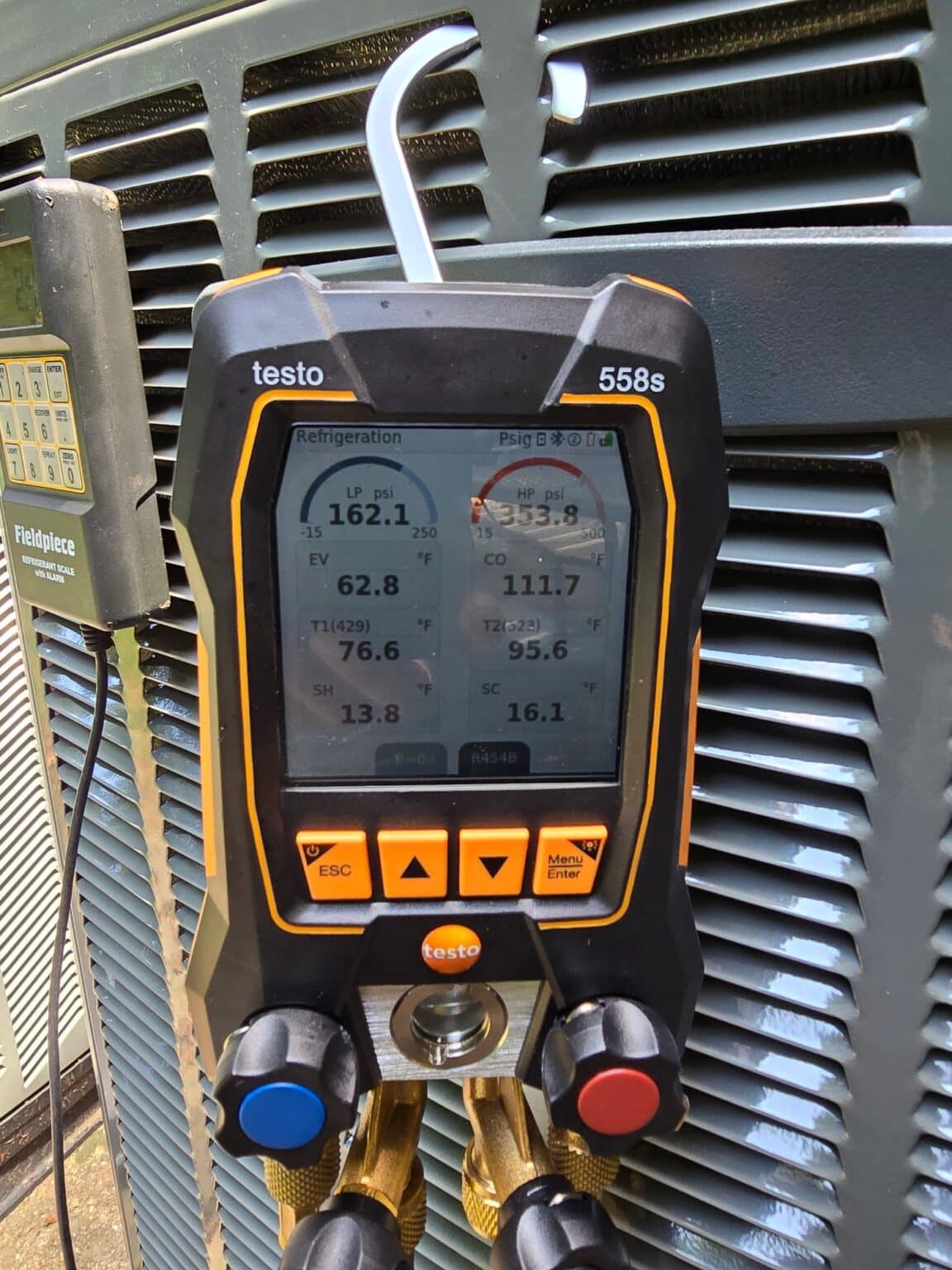
Everything runs, the air just is not cold. Low refrigerant, a dirty or frozen coil, a failing compressor, or a system that was never big enough for the house. This one needs gauges, not a guess.
Other symptoms, decoded
Water on the floor by the furnace, or a stain on a ceiling under an attic unit. The condensate drain is clogged. In July this is a daily call for us. The fix is clearing the line; the upgrade is a trap with a float switch that shuts the system down before the pan overflows, which is why that pair lands at $175 to $420 rather than the cost of a ceiling.
Ice on the copper line or the indoor coil. Turn cooling off, set the fan to On, and leave it. Carrier’s instruction is at least three to four hours for the ice to clear, and Trane’s is do not chip at it. Then check the filter. If a new filter and a thaw fix it, you are done. If it re-ices within a day, it is a leak.
It cools fine but the bill jumped. Usually a dirty condenser coil or low charge, both of which make the system run far longer for the same result.

Why “just add refrigerant” is the repair to be careful with
An air conditioner does not consume refrigerant. If it is low, it leaked, and topping it up buys time rather than fixing anything. Sometimes time is exactly what you want: a fifteen year old system with a slow leak in August is a fine candidate for a top-off and a plan to replace it in the fall. Paying $500 a summer for the same pound of gas on a ten year old system is money that should have gone to a leak search.
Two things have changed about that math, and they are worth knowing because a lot of what you will read online is out of date.
R-410A is being phased down, not banned. It is the refrigerant in almost every system installed from about 2010 through 2024. Under federal law the supply is capped at 60 percent of the old baseline through 2028 and drops again after that. The EPA is explicit that there is no requirement to stop using equipment you already own, and that you can keep repairing it, including replacing a major component like a compressor or condensing unit. What has moved is the price: one supply house quoted $45 a pound early this year against about $22 two years before.
New systems use R-454B, and it is not a drop-in. New residential equipment has had to meet a much lower global warming limit since the start of 2025, which is why R-454B replaced R-410A. Its rating is 466 against R-410A’s 2,088. It is classified A2L, mildly flammable with a low burning velocity, and it requires equipment and tools built for it. You cannot put it into an R-410A system. The 2025 shortage that made those cylinders hard to get is over, and the EPA’s May 2026 rule also allows pre-2025 R-410A equipment already in inventory to keep being installed.
The practical upshot: a refrigerant-heavy repair on an older system leans toward replacement more than it did three years ago, and a system that needs gas twice has a leak that should be found.
Check the warranty before you pay for a compressor
This is the single biggest money item on the page. Most major brands cover the compressor for ten years, but only if the unit was registered within a short window after installation: Carrier and Rheem want 90 days, Trane and Goodman 60. Unregistered, the same unit usually drops to five years. None of those standard warranties cover labor, which is why the two compressor lines at the top of this page differ by about $1,000: one is the whole job, the other is labor and refrigerant with the part supplied free.
If a technician quotes a compressor without checking registration and coverage first, get a second opinion. Ours is free.
Repair it or replace it
Three questions: how old, what failed, and what is the repair against a new system. DOE puts a central air conditioner’s life at 15 to 20 years and ENERGY STAR’s threshold for even considering replacement at 10.
A capacitor on a fourteen year old unit is a repair. A compressor on the same unit is not, because $3,000 into a system with two or three summers left is a bad bet when a furnace and air conditioner together start under $9,000 installed. Somewhere between those two is a conversation, and here is how we have it.
If you want the replacement number before deciding, the furnace and AC estimator gives you the installed range for your system size in about two minutes with no phone number, so you can compare a $3,000 repair against a real figure rather than a feeling.
What lowers the bill
Change the filter. A third of our “AC not cooling” calls in a heat wave are a filter nobody has touched since spring, and we would rather you spend $12 than $99 and a Saturday. Keep the outdoor unit clear: two feet on every side, no mulch against it, no cottonwood packed into the fins. And run the system in May, before the first 90 degree day, when a weak capacitor can be replaced on a Tuesday afternoon instead of at 9 pm in July with everyone else’s. What a real tune-up includes is here.
Members on our Family Care Plan take 15 percent off every repair above. On one blower motor that pays for the plan several times over.
Frequently Asked Questions About AC Repair Services
Is the diagnostic fee applied to the repair? Ask when you book. Policies vary by company and by promotion, and you should hear it from the person scheduling rather than read a rule here that changes next month.
Can you tell me the price over the phone? We can tell you which range above your symptom is likely to be. The number firms up when a technician has the panel off.
It is 95 degrees and the AC just died. Here is the first hour, step by step.
SwiftPro repairs every brand of central air conditioner and heat pump across Northern Virginia. Call (703) 997-9757, book online, or see the AC repair page.