

Falls Church is two places sharing a name, and heating works differently in each.
The City of Falls Church is about two square miles, an independent jurisdiction with its own building department, centered on 22046. Everything else with a Falls Church mailing address, which is most of 22041, 22042 and 22043, is Fairfax County. The houses overlap in age, but the permit office does not, and neither does the housing density.
What both halves share is age. This is some of the oldest continuously occupied residential ground in Northern Virginia, and it is one of the few places we still work on boilers and radiators as a routine part of the week rather than as an exception.
What is actually heating these houses
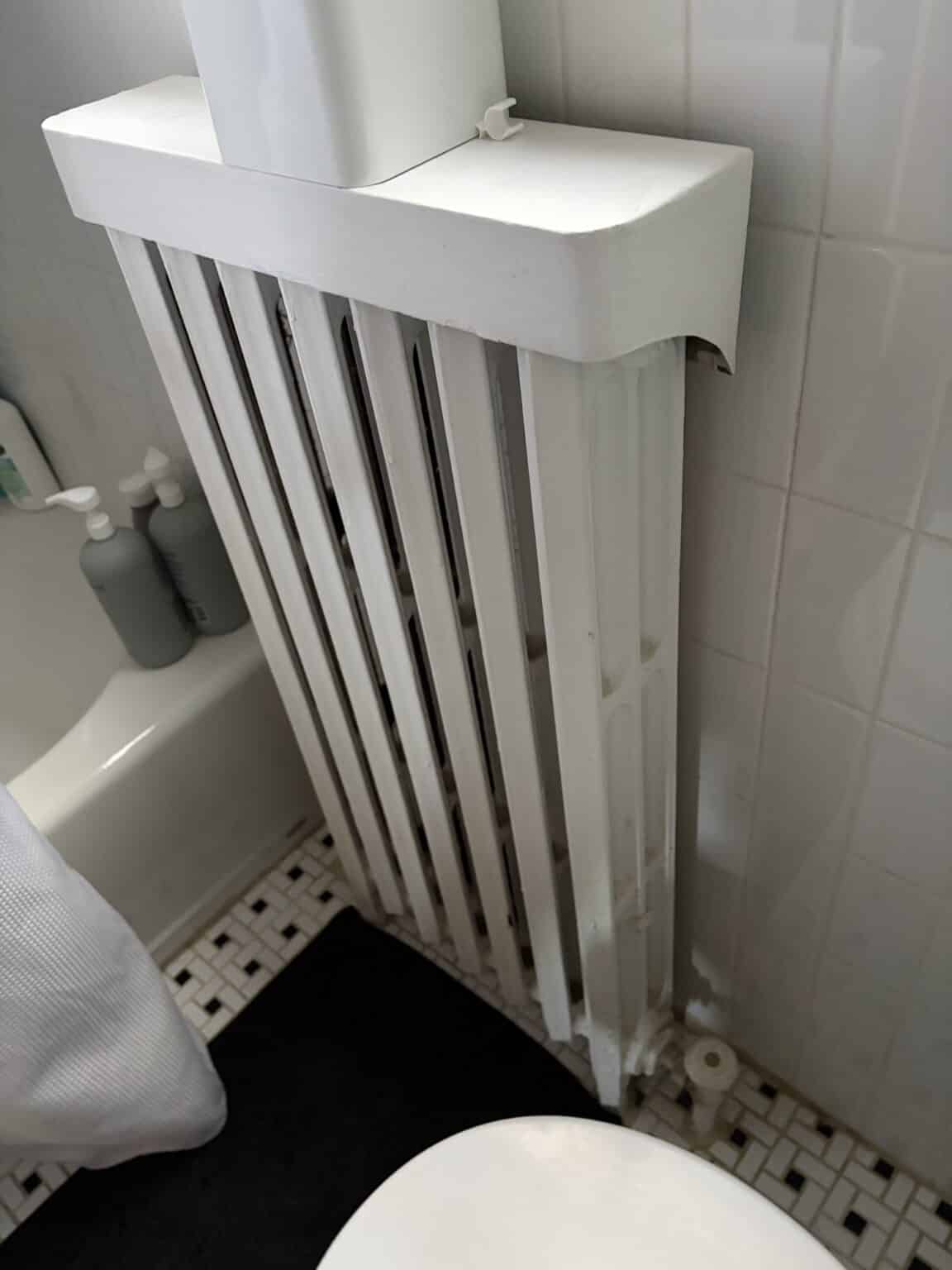
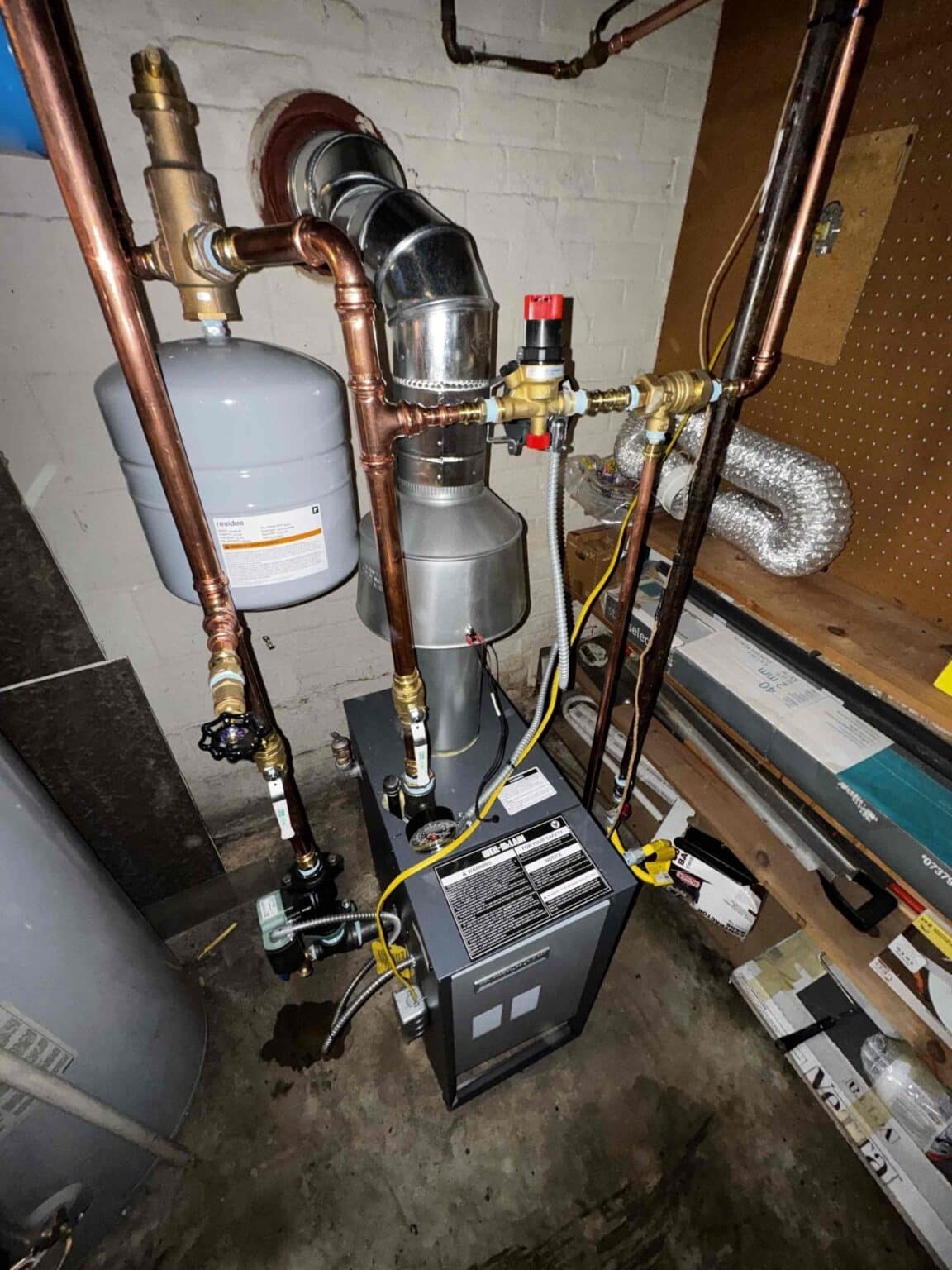
Boilers with cast iron radiators or baseboard. Common in the older city streets and the pre-war county neighborhoods, frequently converted from oil decades ago. A well maintained boiler outlives two furnaces, and a neglected one gets expensive quickly.
Gas furnaces in 1940s through 1960s houses. Capes and colonials where the furnace has been replaced two or three times inside the same basement corner, connected to the original ductwork.
Heat pumps in the townhouses, the condos along the Route 7 and Seven Corners corridors, and the all-electric pockets.
Ductless heads in additions, sunrooms and converted attics, which in houses with no room for new ducts is usually the right answer rather than a compromise.
Boiler symptoms in plain language
One radiator cold, the rest fine. Air trapped in it, or a stuck valve. Bleeding is routine maintenance. This is not a dying boiler and you should not be quoted one for it.
Banging or clanking when it fires. Air, or water sitting where it should not. On steam systems usually a pitch or vent problem. Worth fixing, because it is hard on the piping.
It runs constantly and the house never gets there. Circulator, zone valve, or a control problem. On an older system, also check whether somebody closed off zones years ago and nobody reopened them.
Pressure dropping, or water on the floor. A leak in the loop or a failing section. Deal with this now rather than in January, because a boiler that loses water and keeps firing damages itself fast.
What a boiler replacement costs in Northern Virginia is here.
Furnace and heat pump symptoms
Lights and dies in seconds, repeatedly. Flame sensor, $95 to $180.
Clicking, no flame. Igniter, $240 to $410.
Runs fifteen minutes and shuts down. Overheating on restricted airflow. Filter, then the blower wheel at $300 to $440.
Heat pump blowing cool air. Often normal. Heat pump supply air runs meaningfully cooler than a furnace, warmer than the room and cooler than your hand. If the house holds temperature, nothing is wrong. The symptoms that are not normal are here.
Water stain on a ceiling under an attic air handler. Condensate drain, $175 to $420, and cheap against the drywall it saves.
The combustion air problem in a finished basement
This is the Falls Church issue worth flagging, and we see it in both jurisdictions. A furnace or boiler that used to sit in an open unfinished basement is now behind a door in a small finished room, because somebody built out the basement in 2004. A gas appliance needs air to burn, and a sealed closet does not supply it.
The symptoms are soot around the burner, a pilot that will not stay lit, or an appliance that runs badly when the dryer is running. The fix is a proper combustion air path. It is a safety item rather than a comfort one, and it is the kind of thing that only gets found when somebody has the panel off and is paying attention.
While we are on safety: Virginia requires carbon monoxide alarms in new construction with fuel burning appliances and has no retrofit rule for existing houses. In a town with this much pre-war housing, that means a lot of homes have never had one. The Consumer Product Safety Commission’s most recent count puts heating systems second among the causes of non-fire carbon monoxide deaths, and most of those happen between November and February.
Typical Heating Repair Costs in Falls Church, VA
- Diagnostic visit: about $99.
- Flame sensor cleaned $95 to $180; igniter $240 to $410.
- Condensate drain or trap $175 to $420. Thermostat $300 to $640.
- Blower wheel cleaned $300 to $440. Blower motor $670 to $2,400.
- Control board $550 to $1,180. Heat pump defrost board $450 to $1,150.
Replacing in a tight house
A furnace alone runs $4,498 to $12,300 installed; a furnace and air conditioner together $8,898 to $23,000 by size. Two Falls Church specifics belong in any quote: access, because getting equipment into a 1940s basement with a turn at the bottom of the stairs is real labor, and venting, because a high efficiency furnace needs a path to an exterior wall that older houses do not always offer.
If your furnace and water heater share a masonry chimney and the new furnace vents out the side wall in PVC, the water heater is left alone on a flue sized for two appliances. Code requires the chimney to be examined before the new appliance goes in, and the fix is usually a liner or a power vent water heater. A quote that does not mention it has not been in the basement.
The estimator gives you your installed range in two minutes. For an addition or a room that has never been comfortable, the ductless estimator is often the more honest tool.
Before the first freeze
Bleed the radiators now rather than during the first cold snap. Run the heat for an hour and listen. Change the filter. And if the basement has been finished since the furnace went in, have someone check combustion air this fall.
SwiftPro services furnaces, boilers and heat pumps in the City of Falls Church and the surrounding Fairfax County neighborhoods. Call (703) 997-9757, book online, or see the boiler service page.