

Falls Church has some of the oldest continuously occupied housing we work in, and the plumbing shows it. In one town we find galvanized steel supply, cast iron drains, pre-1970 copper in the pinhole era, and modern PEX in the renovated half, sometimes all in the same house.
As with the heating, the town is two jurisdictions: the independent City of Falls Church, centred on 22046 with its own permit office, and the much larger Fairfax County area that uses the Falls Church mailing address across 22041, 22042 and 22043.
Find out what you have
Look at the main water entry, usually a basement wall on the street side, and under a bathroom sink.
Dull grey threaded metal that a magnet sticks to. Galvanized steel, which corrodes from the inside and narrows over decades. It does not fail dramatically; flow just declines so gradually that nobody notices until a new shower disappoints. If the pressure has always been mediocre in an older Falls Church house, this is usually why, and no fixture or valve change fixes it.
Copper. The most common find. Sound copper lasts generations, but copper in pre-1970 houses in this region develops pinhole leaks, and it is a documented regional pattern rather than bad luck: across the Potomac the regional utility logged thousands of pinhole reports and found nearly 80 percent of them in homes built before 1970, concentrated in cold water horizontal runs.
One pinhole is a repair. Three in two years, in different parts of the house, is a system reaching the end. When repiping stops being an upsell and starts being arithmetic is here.
Grey plastic with crimped rings is polybutylene, from the 1978 to mid-1995 window, which shows up in the later additions and renovations rather than the original housing.
The drains are the other half
Cast iron was the standard drain material for most of the twentieth century. It rusts from the inside and thins along the bottom of horizontal runs until a section finally fails.
The symptoms: slow drains that keep coming back after clearing, a sewer smell nobody can locate, and staining on a basement ceiling under a bathroom. Clearing a scaled or broken cast iron line again is buying weeks rather than fixing anything.
A camera settles it, and in a house of this age it is the most informative few hundred dollars available before you buy, renovate, or argue with anyone about repeated backups. When it is worth it is here.
The lateral, and the trees
The sewer pipe from your house to the public main is yours to maintain, and in these neighborhoods it runs under mature trees between the house and the street. Older clay and cast iron laterals come in short sections with a joint at every one, and roots find joints.
Small lots also mean very little room to open a trench, which is why trenchless repair and lining come up so often here. It frequently costs more on the invoice and less overall once you count restoring a front walk or losing a tree. The comparison is here.
What repairs cost
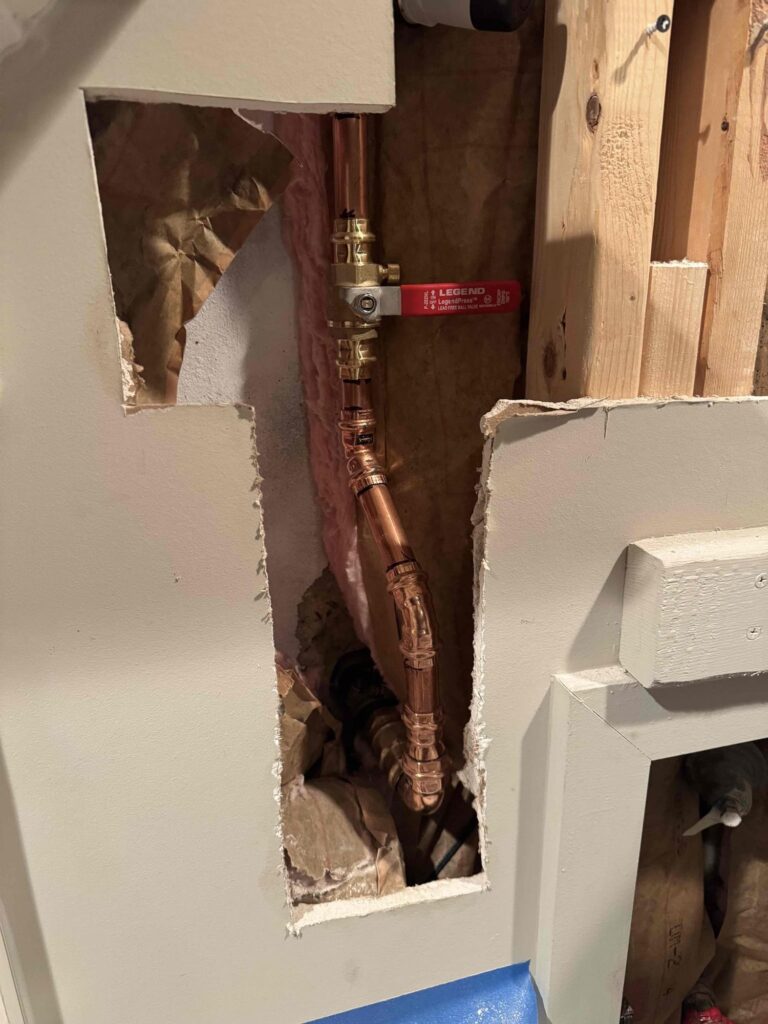
- Hidden leak search: $200 to $470, middle around $330, including opening the wall where the evidence points. Do the meter test first: everything off for fifteen minutes, then read the meter again.
- Drain clearing: $200 to $800 for one fixture, middle around $430; main line $860 to $1,600.
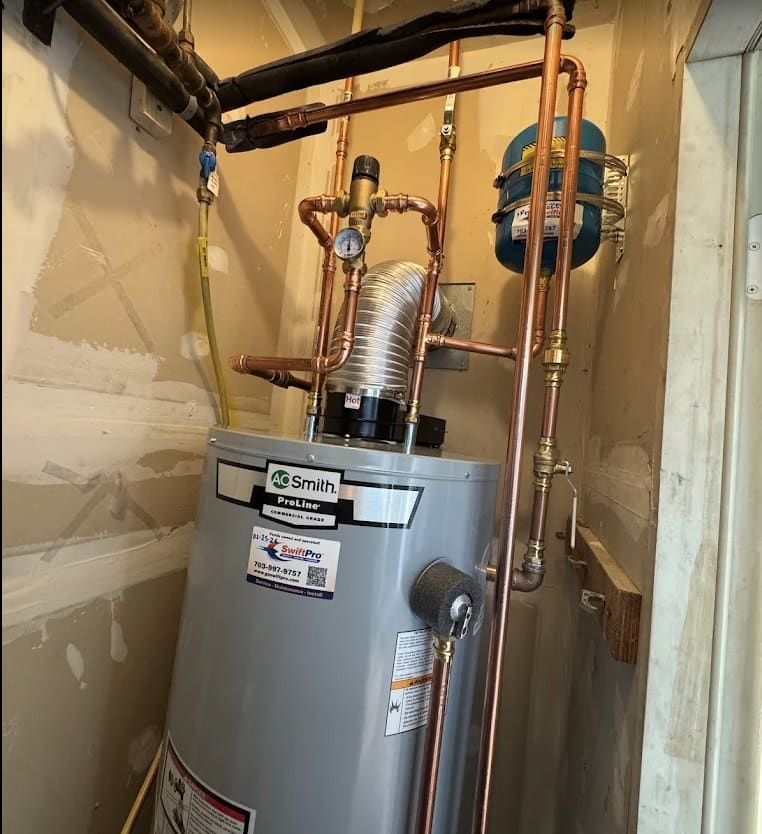
- Water heater: $2,800 to $5,800 installed for a tank, most at $3,400 to $4,200. In a 1940s basement with a turn at the bottom of the stairs, access is a real part of the job and belongs in the quote.
- Pressure reducing valve: $500 to $994.
- Toilet: $430 to $500 to install one you supply; $840 to $1,300 supplied and installed.
- Garbage disposal: about $180 to free a jam, $570 to $870 to replace.
Check the pressure before you conclude anything
Code requires a pressure reducing valve where static pressure exceeds 80 psi, and parts of this region come off the main well over 100. Those valves wear out in ten to fifteen years, and a failed one puts the whole house at street pressure, which is a genuine cause of repeated pinholes, running toilets and banging pipes.
People occasionally repipe a house when what they needed was the valve. A $12 gauge on an outdoor spigot settles it in five minutes.
Old houses, honestly
Plaster is not drywall, the mechanical spaces were never sized for modern equipment, and in the city’s historic areas exterior work carries its own constraints. All of that is real, and it shows up as access time in an honest quote rather than as surprises after the work starts. It is why we would rather look before quoting anything that involves opening a wall.
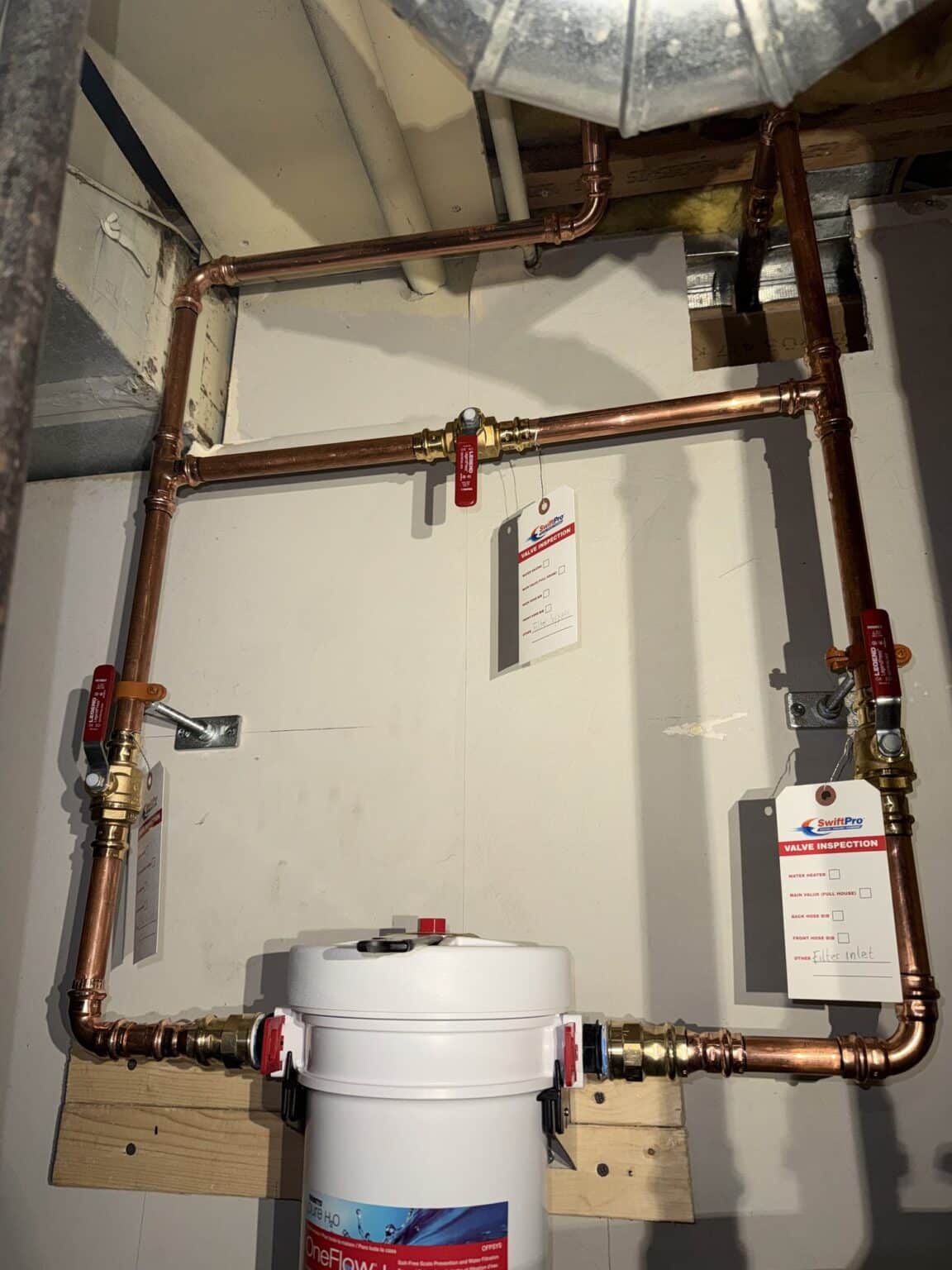
Three things worth doing this month: identify your supply pipe, read the static pressure, and find your main shutoff and confirm it turns. A seized main valve in a 1940s house is common, and it is the valve you will want in a hurry one day. The rest of the shutoffs are here.
SwiftPro handles plumbing in the City of Falls Church and the surrounding Fairfax County neighborhoods under Virginia Class A contractor license 2705192276. Call (703) 997-9757, book online, or see our plumbing services.