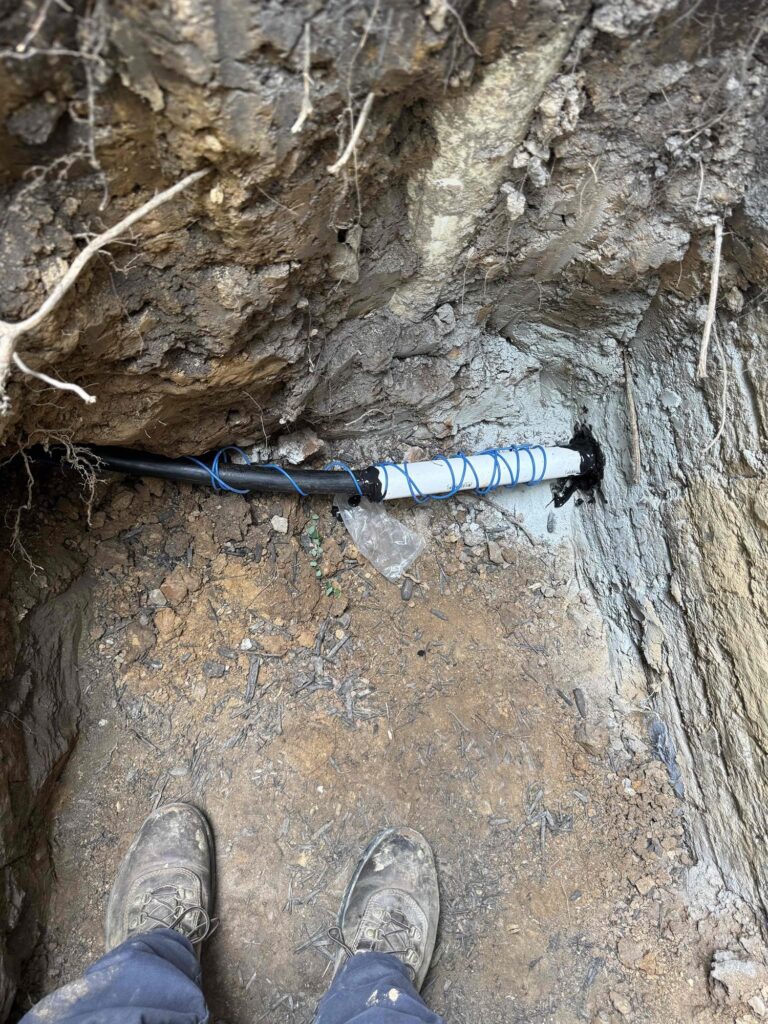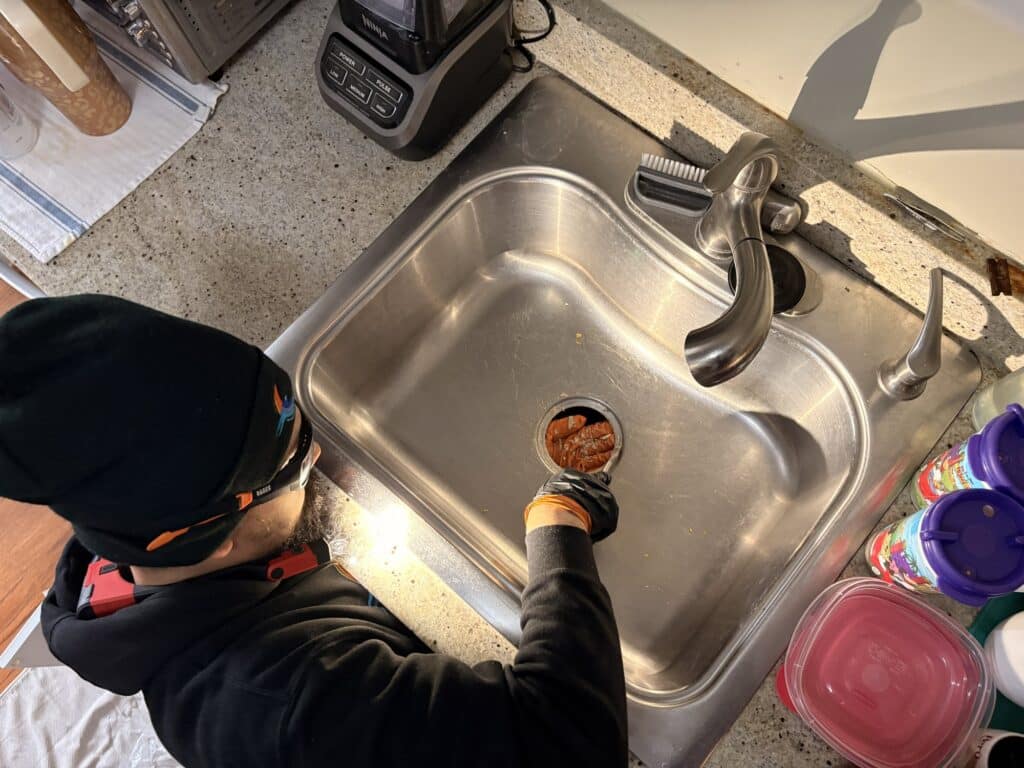


A sewer camera turns a guess into a picture, and in a few specific situations it is the best few hundred dollars a homeowner can spend. In most situations it is an upsell. Here is the difference.
When it is genuinely worth it
You are buying a house built before about 1980. This is the strongest case on the list. A standard home inspection does not include the sewer lateral, the pipe running from the house to the public main. That pipe is yours: Fairfax County states plainly that the resident or building owner is responsible for maintaining the private sewer line from the property to the county sewer, and the same principle applies across the region. A camera inspection before closing costs a few hundred dollars against a repair that can run into five figures. It is not a close call.
The same drain has backed up more than once in a year. If clearing it keeps working and keeps not lasting, you are buying clearings rather than a fix. The camera tells you whether the pipe is intact and just gets clogged, or whether there is a break, a belly or roots that will keep catching.
More than one fixture is slow at the same time. That points at the main line rather than a branch, and a main line problem is worth seeing before spending anything.
There are mature trees between the house and the street. In most Northern Virginia neighborhoods built before 1990, that describes the front yard. Roots find joints in older clay and cast iron pipe and they come back.
The technician felt the cable catch at the same spot going in. That is the pipe telling you something and the camera confirms what.
You are about to spend real money on the yard. New driveway, patio, hardscaping or landscaping over the line. Find out what is under it before you pave it.
When it is not worth it
A kitchen sink that backs up once in five years is a grease clog. Clear it and get on with your day. A single fixture with a single history of trouble does not need a camera, and a company that recommends one for every clog is selling a service rather than diagnosing a problem.
Newer houses on newer PVC laterals with no history of backups: usually no. The exception is the pre-purchase case above, where you are paying for certainty rather than for a diagnosis.
What the camera actually tells you
Four things, and they lead to four very different conversations.
The pipe material. Clay, cast iron, Orangeburg, PVC. Older clay comes in short sections with joints at every one, which is where roots get in. Orangeburg, a bituminous fibre pipe used mid-century, deforms and collapses and is effectively a replacement whenever it is found.
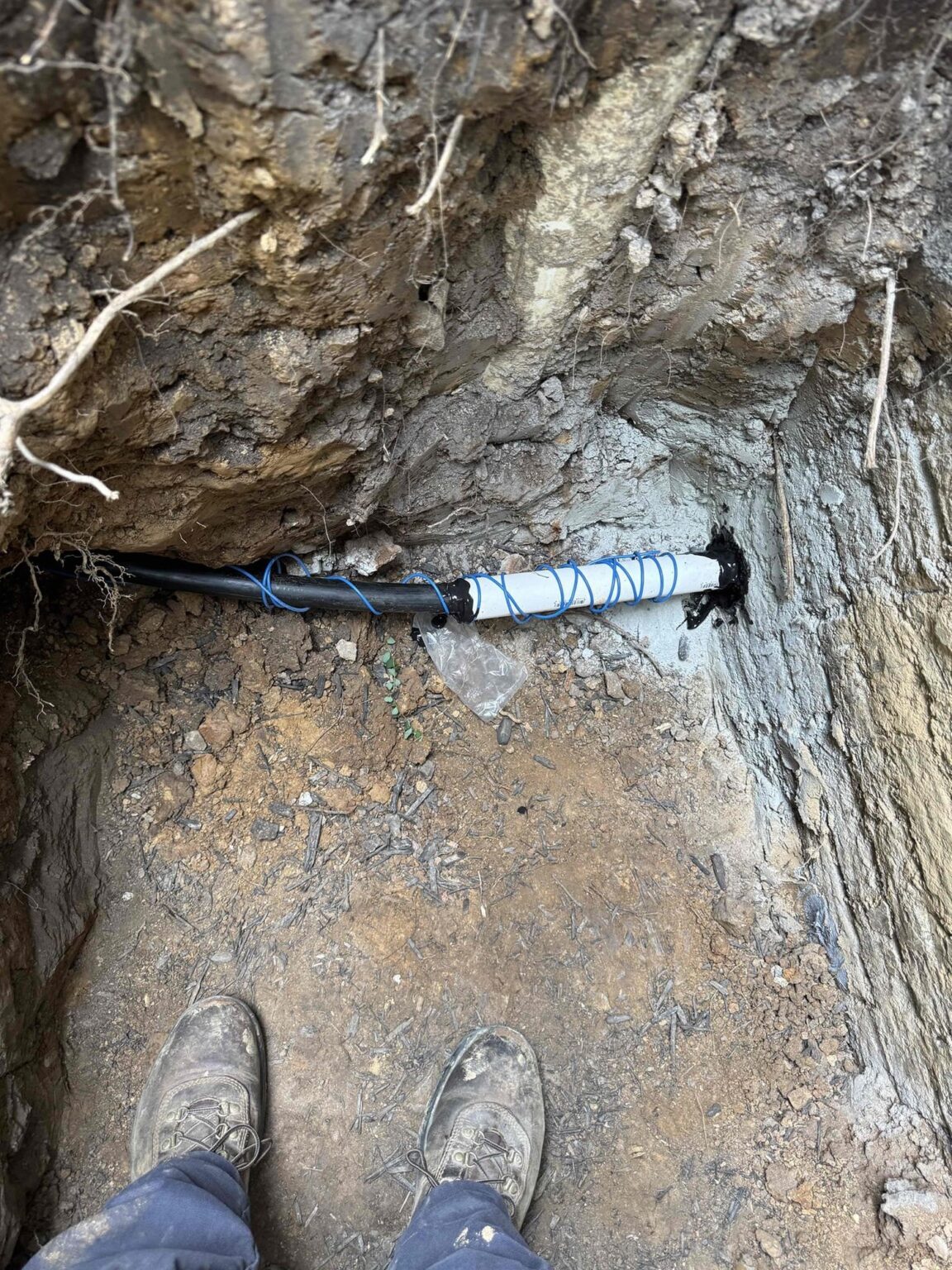
Where the problem is, and how deep. This is the number that decides the price of everything afterwards. A break eight feet down under a driveway is a different job from one three feet down in a lawn.
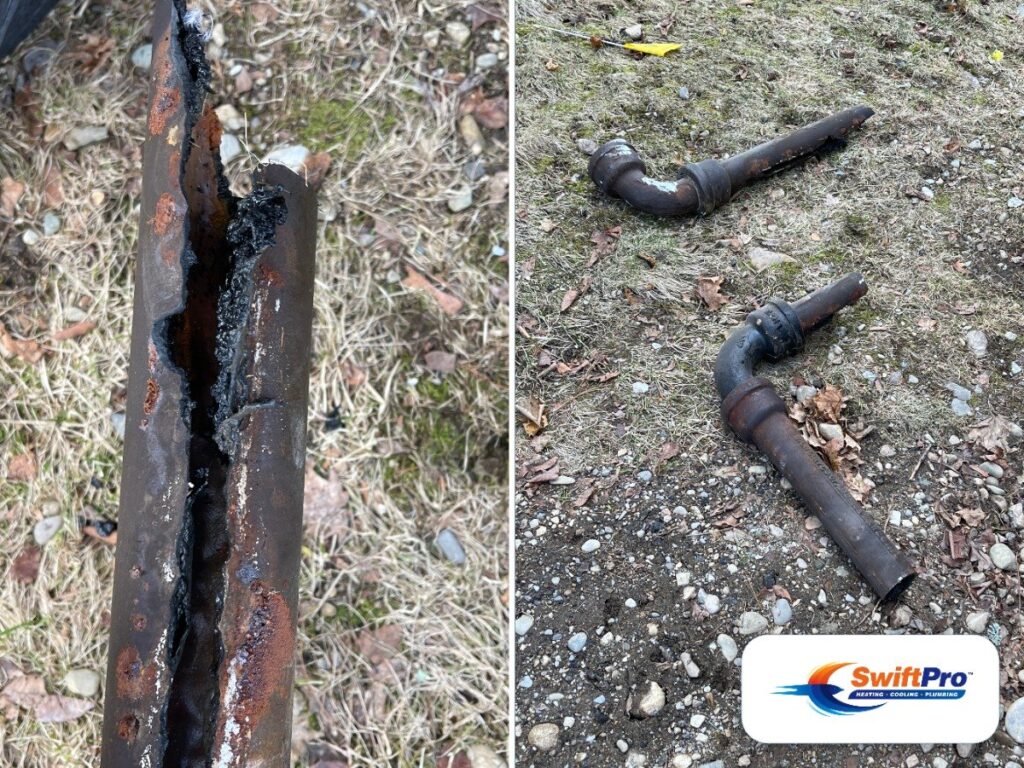
What kind of problem. Roots, which can often be cut and the pipe lined. A belly, which is a low section holding water and will keep collecting. A crack or an offset joint. A collapse, which is not clearable at any price because there is nothing to clear.
Whether it is your problem at all. If the trouble is past your property line in the public main, that is the county’s or the authority’s to fix. Having it on video is how that conversation goes quickly instead of slowly.
Essential Standards for Sewer Camera Inspections
A copy of the video. Not a verbal summary, not a still photo. If you are being told the line needs replacing, you should see it, and you should be able to show it to someone else.
A located distance. A good inspection tells you how many feet from the cleanout the problem is, and most cameras have a locator that marks the spot on the ground. Without that, any excavation quote is a guess.
Honesty about what is normal. Older pipe does not look like new pipe. Some scale, some minor root intrusion at a joint, and some standing water at a slight dip are common in a forty year old line and are not by themselves a reason to replace it. Ask specifically: is this a condition to monitor, or a condition to fix?
Cost, plainly
Adding a camera to a service call, where a technician is already at the house and there is an accessible cleanout, is a couple hundred dollars. A standalone inspection, or one where there is no cleanout and access has to be made, is quoted after we see the property, because pulling a toilet or going through a roof vent to get a camera into the line is real work and it should be priced honestly rather than guessed.
What we will not do is quote a camera inspection over the phone and then discover the access problem on site.
If the camera finds something
The options run from cheapest to most expensive: cutting roots and monitoring, spot repair of one section, lining the existing pipe from the inside, or full replacement. Which one applies depends on what the camera showed and how much of the line is affected.
The one thing worth knowing before you get quotes: trenchless methods, where the line is repaired or replaced from access pits rather than by opening the whole run, frequently cost more on the invoice and less overall once you count restoring a driveway, a walkway or a mature tree. The full comparison, including what it costs here, is in the sewer line guide.
And if you are still at the stage of not knowing whether the problem is one fixture or the whole house, the five minute test comes before any of this.
SwiftPro cameras and repairs sewer lines across Northern Virginia. Call (703) 997-9757 or book online.