

Arlington plumbing splits the same way Arlington heating does: the older single family streets and the condo corridor, with almost nothing in common between them.
If you are in a house, your problems are pinhole leaks, cast iron drains and a lot that is too small to dig. If you are in a condo, your first question is what you actually own, and the answer is less than most people assume.
If you are in a house
North Arlington’s capes, colonials and bungalows from the 1930s through the 1950s sit squarely in the era where copper develops pinhole leaks. Across the Potomac the regional utility investigated thousands of pinhole reports and found nearly 80 percent of them in homes built before 1970, concentrated in cold water horizontal runs. Nobody on this side publishes the equivalent study, but the copper and the vintage are identical and so is what we find.
One pinhole is a repair. Three in two years, in different parts of the house, is a system reaching the end. That is the threshold where repiping stops being an upsell and starts being arithmetic, because each repair costs drywall as well as pipe. When a house genuinely needs repiping is here.
Before you conclude anything, check the pressure. Code requires a pressure reducing valve above 80 psi and parts of this region run well over 100. A failed valve puts the whole house at street pressure, which is a genuine cause of repeated pinholes. A $12 gauge on a hose bib answers it. Replacing the valve runs $500 to $994.
The drains are cast iron. It rusts from the inside and thins along the bottom of horizontal runs. Slow drains that keep returning after clearing, an unlocatable sewer smell, or a stain on a basement ceiling are the signs. A camera settles it, and clearing a scaled or broken line again is buying weeks rather than fixing anything.
The lot problem
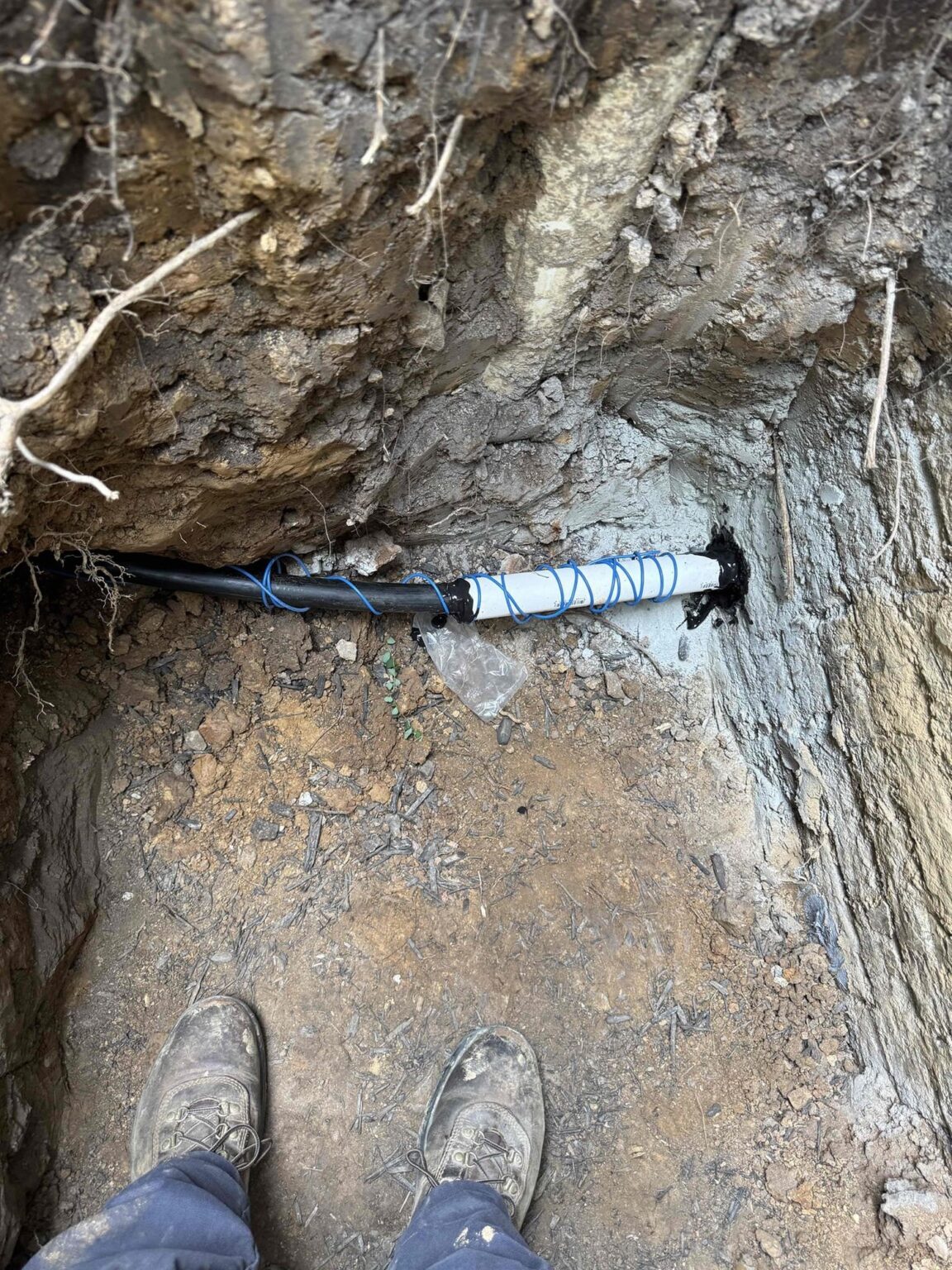
Arlington lots are small, mature trees sit between the house and the street, and driveways, patios and neighbors’ fences leave very little room to open a trench. That changes the sewer and water service conversation more than anything technical does.
It is the reason trenchless methods come up constantly here. Lining or bursting a lateral from access pits at each end, rather than opening the whole run, is often the difference between a project that touches a front walk and one that removes it. It is not always cheaper on the invoice, and it is frequently cheaper once restoration is counted. The trenchless versus dig comparison is here.
The other lot consequence: when a water service line fails under a small front yard with a mature tree on it, the honest quote includes what happens to the tree and the walk. Ask for that in writing.
If you are in a condo
The line between your plumbing and the building’s is in the condo documents, and it is not where most people guess. In general terms you own the fixtures and the branch lines inside your unit, and the association owns the risers, the stacks and the mains. The practical consequences:
A leak from above is not your repair, but it is your ceiling. Document it immediately, notify management in writing, and photograph everything before anyone dries it out.
Shutoffs matter enormously. Many units have no individual shutoff, which means a burst supply line under a sink requires building staff to shut a riser. Find out now, before it matters, and if there is no unit shutoff, ask whether one can be added.
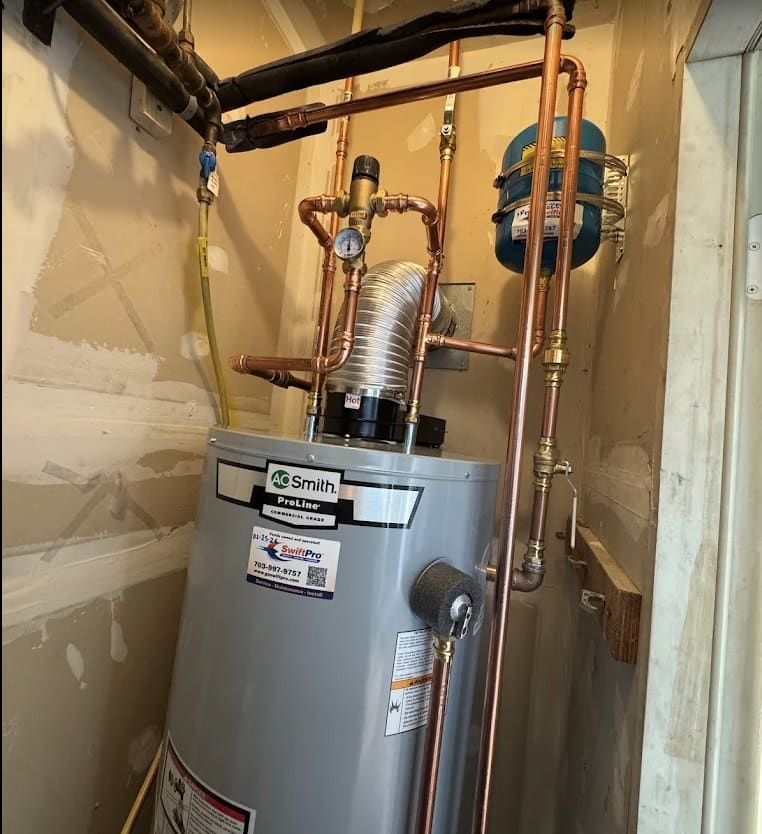
Water heater replacement in a condo is often constrained by the closet, the pan and drain requirements, and building rules about when work can happen. It is a normal job that needs an abnormal amount of scheduling.
What we get called for, and what it costs
- Hidden leak search: $200 to $470, median about $330, including opening the wall where the evidence points. The meter test to do first is here.
- Drain clearing: $200 to $800 for a single fixture, middle around $430; main line $860 to $1,600.
- Pressure reducing valve: $500 to $994.
- Water heater: $2,000 to $4,800 installed for a tank.
- Sump pump replacement: $700 to $1,200 with a new check valve.
- Garbage disposal: $570 to $870 replaced, about $180 to free a jam. The four minute fix is here.
Limited Lot Space and Trenchless Plumbing Solutions
Arlington’s older houses have plumbing in exterior walls, in crawlspaces and behind knee walls, which is exactly where pipes freeze. Disconnect every hose in November, including from frost-free spigots, because a hose attached defeats the frost-free design entirely. The rest of the list is here.
Before you buy in Arlington
Identify the supply pipe material. Camera the sewer lateral on anything pre-1970, especially with a mature tree out front. Check the static pressure. And find the main shutoff and turn it, because a seized main valve in a 1948 house is common and is far better discovered on a Tuesday.
SwiftPro handles plumbing across Arlington County. Call (703) 997-9757, book online, or see our plumbing services.