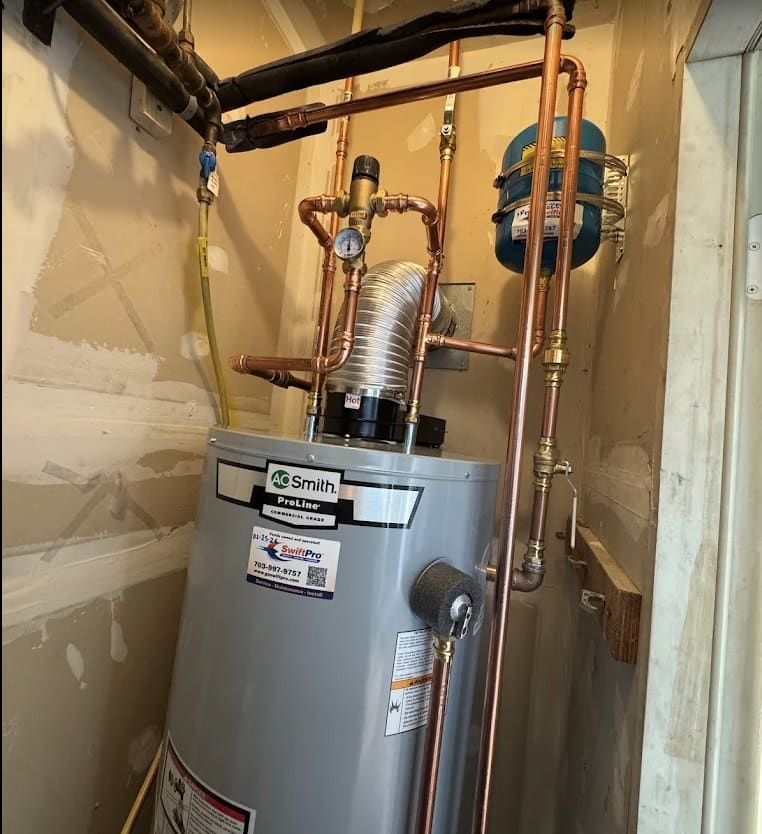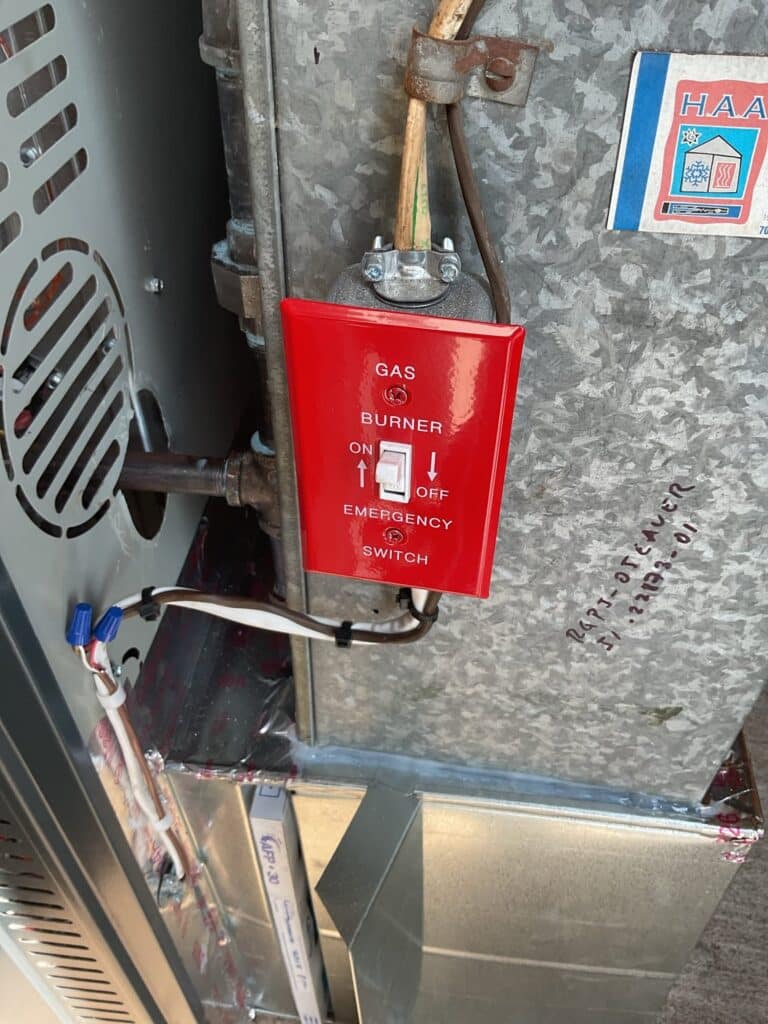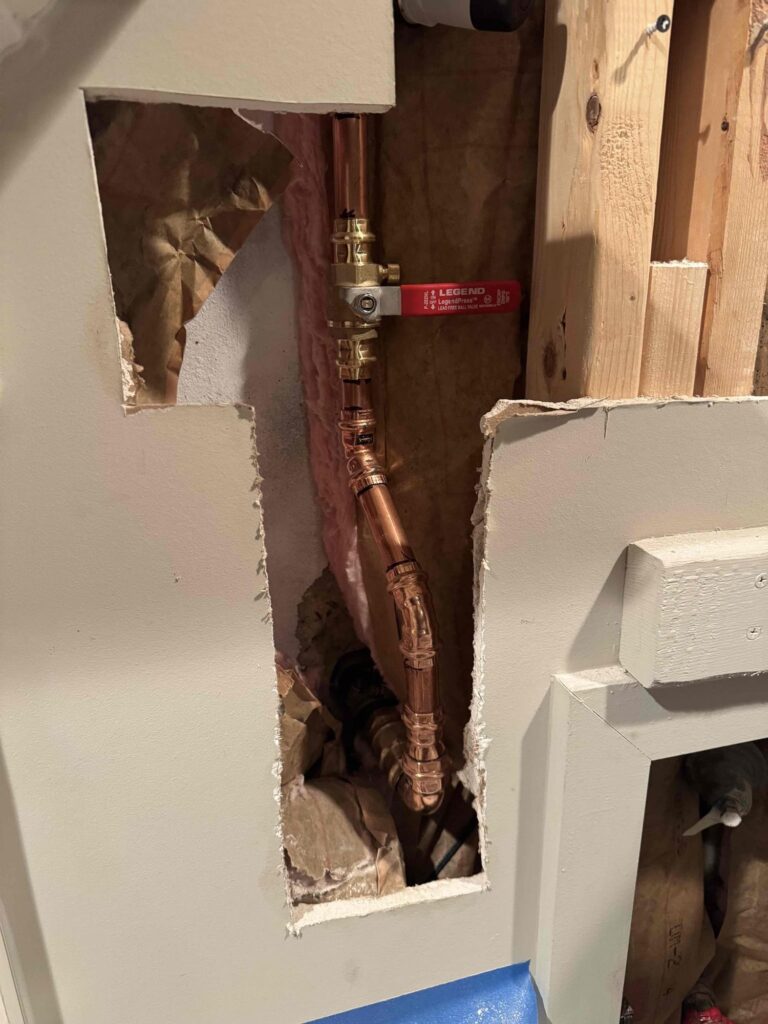


A burst pipe is the most expensive thing that happens to a Northern Virginia house in winter, and it is nearly always preventable with an hour of work in November.
Here is what actually matters, in the order it matters, plus the thing to do in the moment when a hard freeze is forecast.
Know where your main shutoff is, today
Before anything else. If a pipe lets go at 2am, the difference between a wet floor and a destroyed ceiling is how fast somebody gets the water off, and that is not the moment to be learning where the valve is.
In most Northern Virginia houses it is where the water line enters, usually a basement wall on the street side, sometimes in a utility closet or a crawlspace. Find it, turn it to be sure it turns, and show everyone in the house. If it is seized, that is a repair to make now rather than to discover later.
While you are there, find the water heater shutoff too, and know where the outdoor spigot valves are if they have separate indoor shutoffs.
The pipes that actually freeze
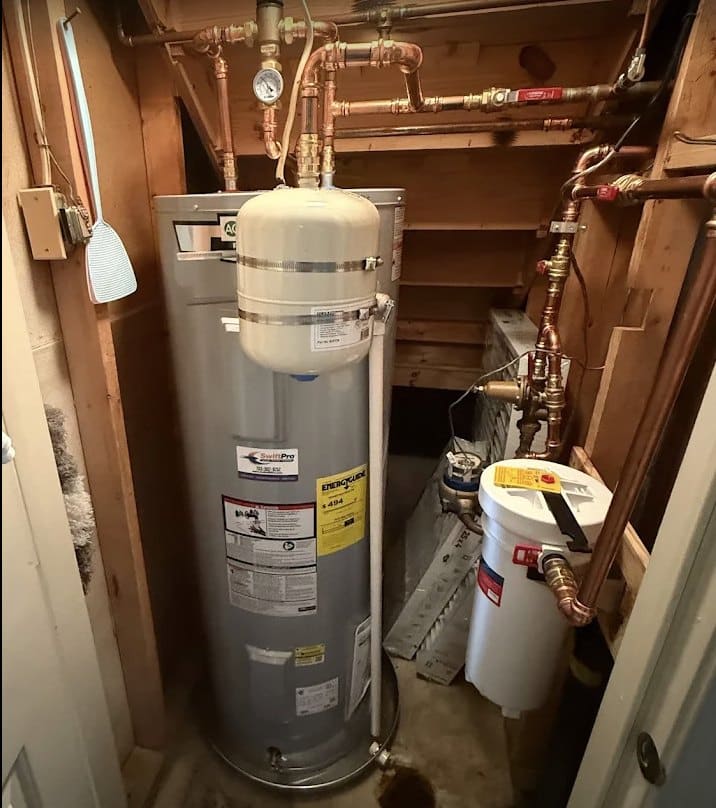
Not the ones in heated space. The ones that freeze are in places nobody heats and nobody looks at.
Outdoor spigots and the pipe behind them. The single most common winter burst we see. Water sits in the spigot, freezes, expands, and splits the pipe inside the wall. You do not find out in January; you find out in April when you turn the hose on and water pours into the basement.
Crawlspace and unheated basement runs. Very common in older Fairfax and Arlington houses, where supply lines run through a vented crawlspace with no insulation.
Garage walls. Any plumbing in an exterior garage wall, especially a utility sink or a refrigerator line.
Kitchen and bath sinks on outside walls. The pipes run in an uninsulated cavity a few inches from the cold, and the cabinet door keeps the room’s warm air out.
Attic runs. Rare but catastrophic, because when an attic pipe goes it goes through every ceiling below it.
Do this in November, once
Disconnect every hose. This is the highest-value five minutes on the page. A hose left attached traps water in the spigot, and that is what splits the pipe. Do it even if the spigot is frost-free, because a frost-free spigot only works with the hose off.
Shut off and drain the outdoor spigots if they have interior shutoff valves. Close the valve, open the spigot outside, let it drain, leave it open.
Insulate the pipes you can reach in the crawlspace, garage and unheated basement. Foam sleeves cost a few dollars a length at any hardware store and go on in minutes. Cover the whole run, including the elbows, which is where people stop and where the freeze starts.
Seal the air leaks near the pipes. Insulation slows heat loss; it does not stop a draft blowing directly on a pipe. A can of foam around the rim joist and where lines enter the house does more than the sleeve does.
Blow out the irrigation system and winterize the backflow preventer, which is the device that fails first and is expensive to replace. The details on that are here.
Check the crawlspace vents. Closing them for winter is standard practice in this region and it raises the temperature around the pipes meaningfully.
Do this when a hard freeze is forecast
Let the vulnerable faucets drip. A slow, steady trickle from the fixtures on outside walls and at the far end of the run. Moving water is much harder to freeze, and the open tap relieves the pressure that actually bursts pipes. It does not have to be much; a thin stream from the cold side is enough. The water it wastes over three cold nights costs a small fraction of one drywall repair.
Open the cabinet doors under kitchen and bathroom sinks on exterior walls, so room air reaches the pipes. If small children or pets are in the house, put the cleaning chemicals somewhere else first.
Keep the heat on, and not too low. If you are away, do not set the thermostat below about 55. The saving is small and the risk is not.
Open the garage door only when you need it. If there is plumbing in that wall, every hour the door is up is an hour the pipes are outdoors.
If you are leaving town for a week in January
Thermostat at 55 or higher. Main shutoff off, if nothing in the house needs water while you are gone, which is the single most effective thing you can do. If you do shut it off, open a couple of taps afterwards to drain the pressure out of the lines.
And ask somebody to look in on the house. A pipe that lets go on day two of a ten day trip is a different event from one found the same morning.
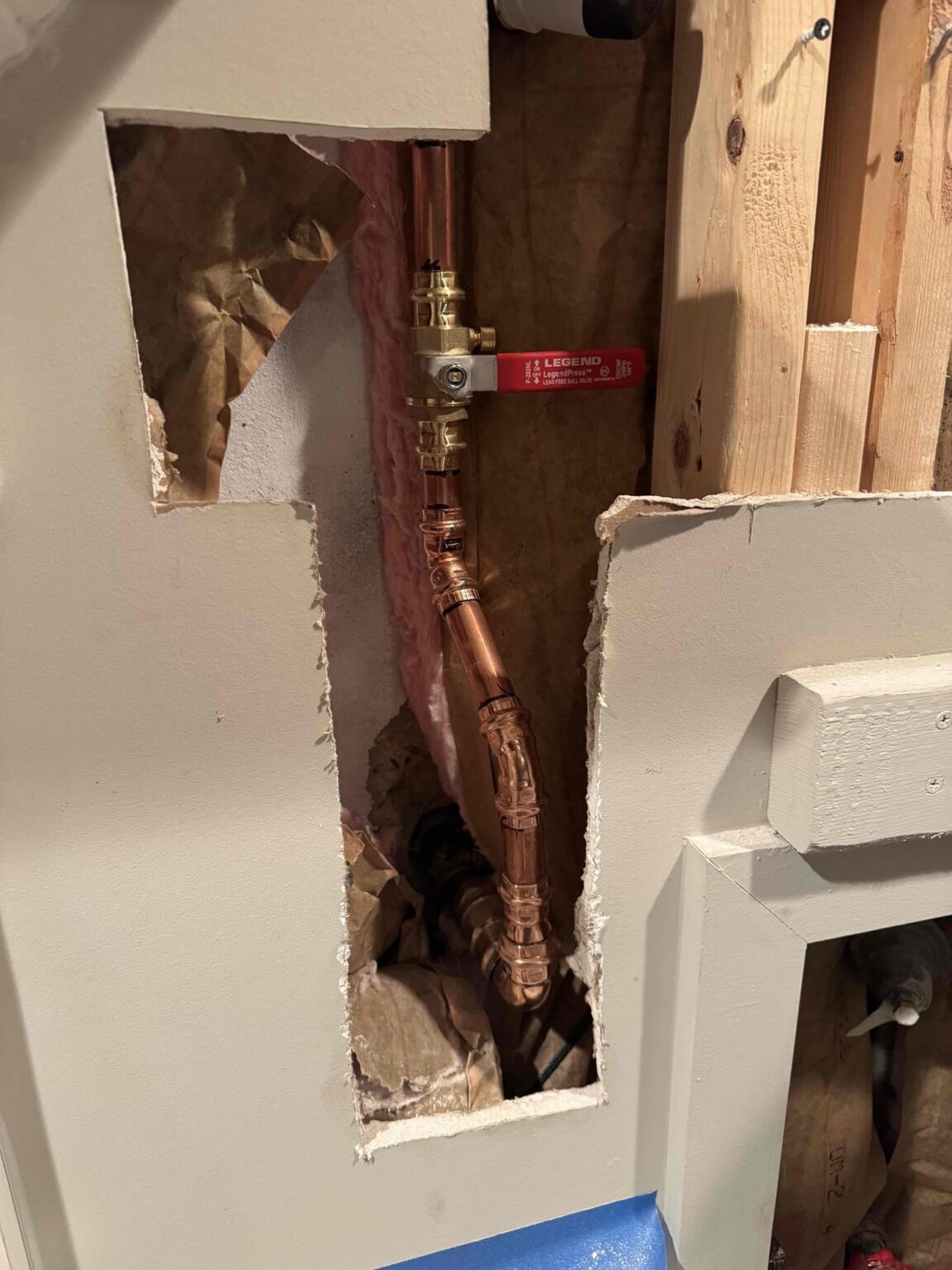
If a pipe freezes but has not burst yet
You turn a tap and nothing comes out, or a trickle. Somewhere between the tap and the main there is ice.
Leave the tap open, so that when it thaws the water has somewhere to go and the pressure has somewhere to escape. Warm the pipe from the tap end backwards with a hair dryer or a space heater kept a safe distance away, working toward the cold section. Never use a torch or an open flame, which is how frozen pipe calls become house fire calls.
If you cannot reach the frozen section, or you do not know where it is, shut the water off at the main and call. A frozen pipe that has already split will announce itself the second it thaws, and it is far better to have somebody there when it does.
If it has already burst, here is the first four minutes, starting with that main shutoff.
The two things worth having a plumber do before winter
Check your water pressure. Plumbing code requires a pressure reducing valve where the incoming pressure is over 80 psi, and those valves wear out in ten to fifteen years. A house running at street pressure stresses every joint in it, which matters more when pipes are also contracting in the cold. A gauge on a hose bib is about $12 if you want to check it yourself. Replacing a failed pressure reducing valve runs $500 to $994.
Look at anything that leaked last winter. A joint that wept once and dried up is a joint that is going to do it again, usually worse. Finding where water is coming from runs $200 to $470 and the repair depends on what is behind the wall, which is the honest reason nobody can quote it over the phone. How that search actually works is here.
SwiftPro handles plumbing across Northern Virginia, and winterizing is a short visit in November rather than an emergency in January. Call (703) 997-9757 or book online. Water coming in right now is what the 24 hour line is for.