Six things people describe on the phone, and what they usually turn out to be.
None of this replaces a technician putting gauges on it. All of it means you walk into the
conversation knowing roughly what you are looking at.
The air coming out is warm
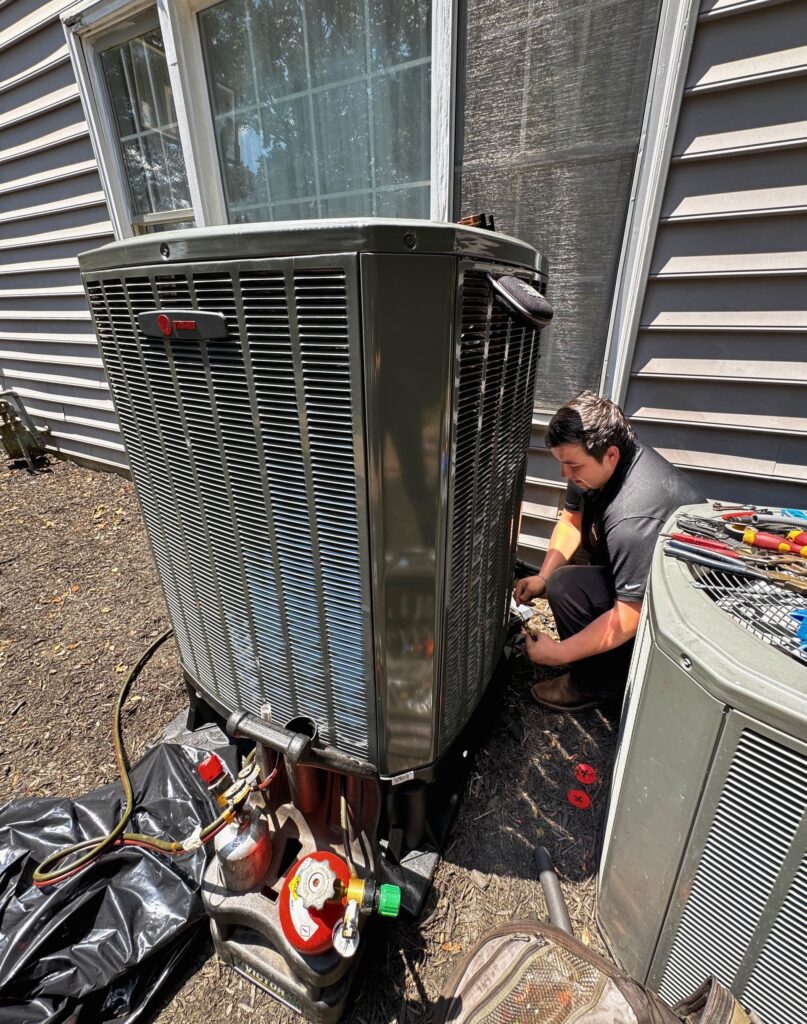
Usually the outdoor unit has stopped running, and the two usual reasons are a failed run capacitor and a burnt contactor.
Go outside and listen. A hum with no fan turning is almost always the capacitor. Silence with the thermostat calling is usually the contactor. Both are same-visit parts we carry, and both sit at the cheap end of the table above. If the outdoor unit is running fine and the air is still warm, the system is low on refrigerant, and low means leaking.
It will not turn on at all
Check the breaker, the condensate safety switch and the furnace door switch before you call anybody, because all three shut a system off on purpose.
A tripped condensate switch is the one people miss: the drain backs up, a float rises, and the system refuses to run so it does not put water through your ceiling. If the breaker trips again the moment you reset it, stop resetting it and call. Something is drawing more current than it should and the next thing to fail is the compressor.
It runs all day and never cools
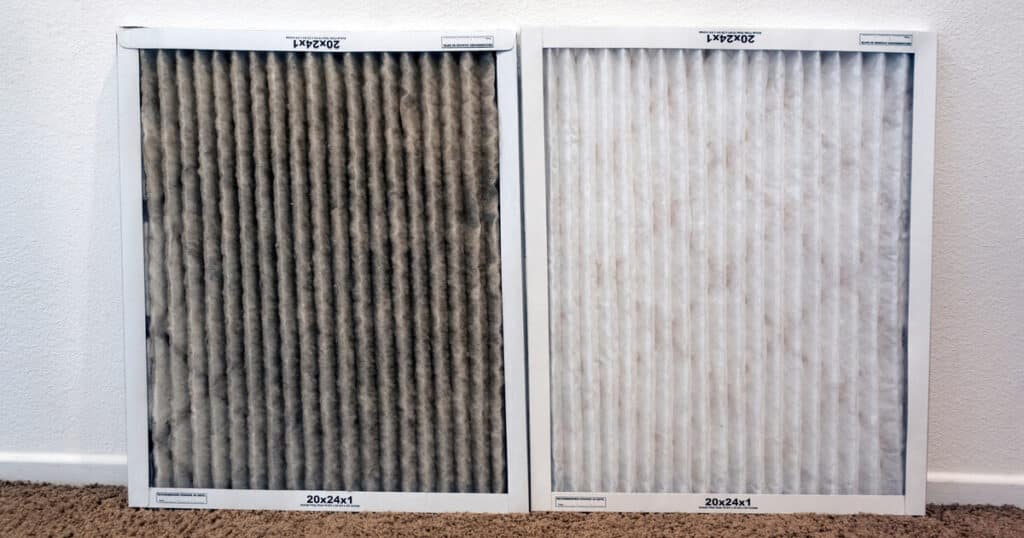
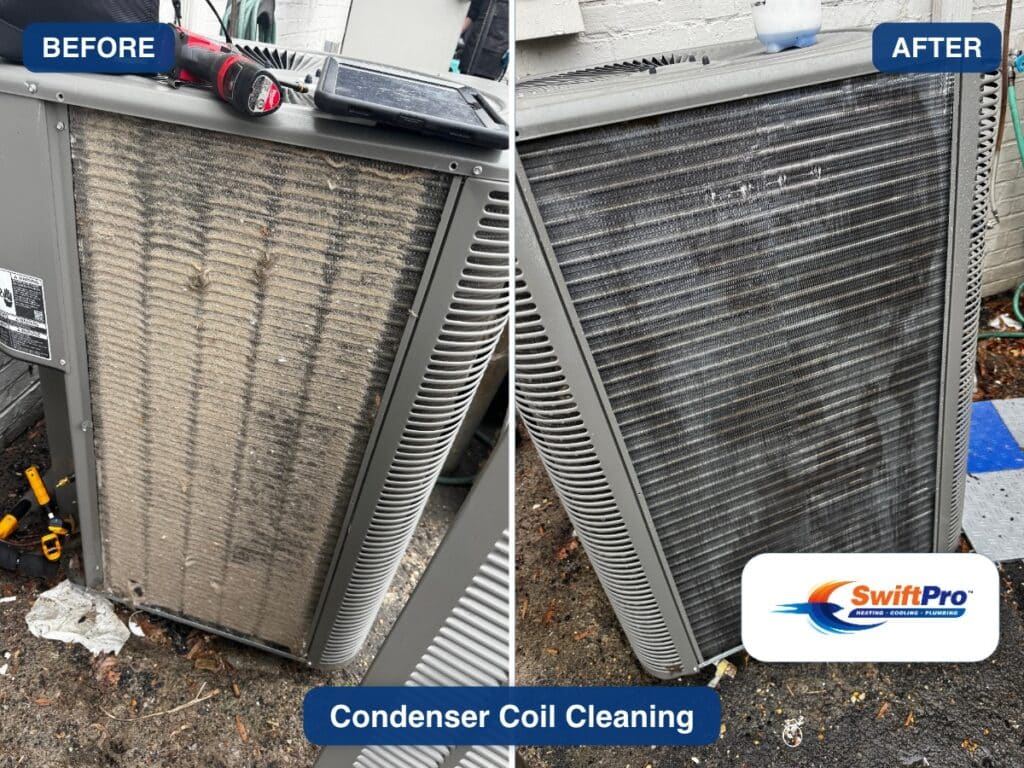
That is an airflow problem far more often than a refrigerant problem: a clogged filter, a matted coil, or a blower wheel packed with dust.
We measure the temperature drop across the indoor coil before recommending anything. Somewhere around 16 to 22 degrees between the return and the supply is healthy. Much less and we go looking for why, which is a very different conversation from selling you refrigerant.
There is water around the indoor unit
Shut the system off and call. A blocked condensate drain is a cheap repair and an expensive flood.
The indoor coil pulls gallons of water out of Northern Virginia summer air every day, and all of it leaves down one small drain line. When that line clogs, the water finds the ceiling below. Clearing it, adding a trap and fitting an overflow switch runs $175 to $420.
The refrigerant line is iced over
Turn the system off, switch the fan to ON, and let it thaw before anyone looks at it.
Ice means either low airflow or low refrigerant, and you cannot tell which while it is frozen. Change the filter while it thaws. If it ices up again inside the same week, it needs a technician, and running it iced is how a compressor dies.
It is making a noise it never made
Shut it off. A screaming compressor or a seized fan motor gets more expensive every minute it keeps running.
A hard click and then nothing is the capacitor. A screech on start-up is usually the fan motor. A grinding that follows the blower is bearings. A loud hum from the outdoor unit that never becomes a fan is, again, the capacitor.