The eleven things people describe on the phone, and what they usually turn out to be. The first one
is a get-out-of-the-house call, and it says so first.
Gas smell, or the CO alarm went off
Get everyone out now, then call 911 from outside, and the gas company if you smell gas.
Don’t flip switches or go back in to look at the boiler. Once the fire department clears the house, call us and we’ll find out why it happened.
The boiler’s running, but there’s no heat
When the boiler fires and the radiators stay cold, the hot water isn’t moving: usually a stuck circulator pump, a zone valve that won’t open, or air locked in the loop.
Check that the thermostat is calling for heat and the pressure gauge reads above about 12 psi. If both look right, it’s a repair, and the $99 diagnostic finds which part.
It won’t turn on, or it locked out
A boiler that won’t fire is usually its safeties doing their job: low water, a flame sensor that can’t see the flame, or a lockout after a few failed starts.
Press the reset button once. If it locks out again, leave it off and call: a boiler that keeps locking out is telling you something a reset won’t fix.
Kettling: a rumble like a kettle
Kettling is water flashing to steam inside the heat exchanger, usually because scale or sludge has built up and the water can’t carry the heat away fast enough.
It won’t fix itself, and it gets louder. A flush and a look at the water flow usually sort it out; a badly scaled heat exchanger can mean the boiler is near the end.
Banging or knocking in the pipes
Banging is usually air in the system, low water, or a pump pushing against a valve as it shuts. A tick as the heat comes on is usually just pipes growing against the framing as they warm.
Air and low water are worth fixing before the cold week. Ticking is mostly harmless.
Gurgling, hissing or whistling
Gurgling is air moving through the pipes. Whistling usually means water isn’t flowing through the boiler fast enough, which is close kin to kettling.
Bleed the radiators (how, below). If the gurgle is back within days, something is letting air in, and that’s the repair.
Pressure too high, or the relief valve is dripping
Most home hot water boilers are filled to about 12 psi cold, a little more in a tall house, and should stay under about 24 psi hot. The relief valve opens at 30 to protect the boiler, so a drip means the pressure is climbing.
The usual cause is a waterlogged expansion tank or a fill valve that won’t shut off. Never cap or plug the relief valve. Call us.
Pressure too low, or the gauge reads zero
Low pressure means water is leaving the system: a leak somewhere, a relief valve that’s been dripping, or air bled out without the water topped back up.
A boiler that keeps losing pressure has a leak, even one you can’t see. Find it before the low water safety shuts the heat off on a cold night.
Radiators cold at the top, or one room cold
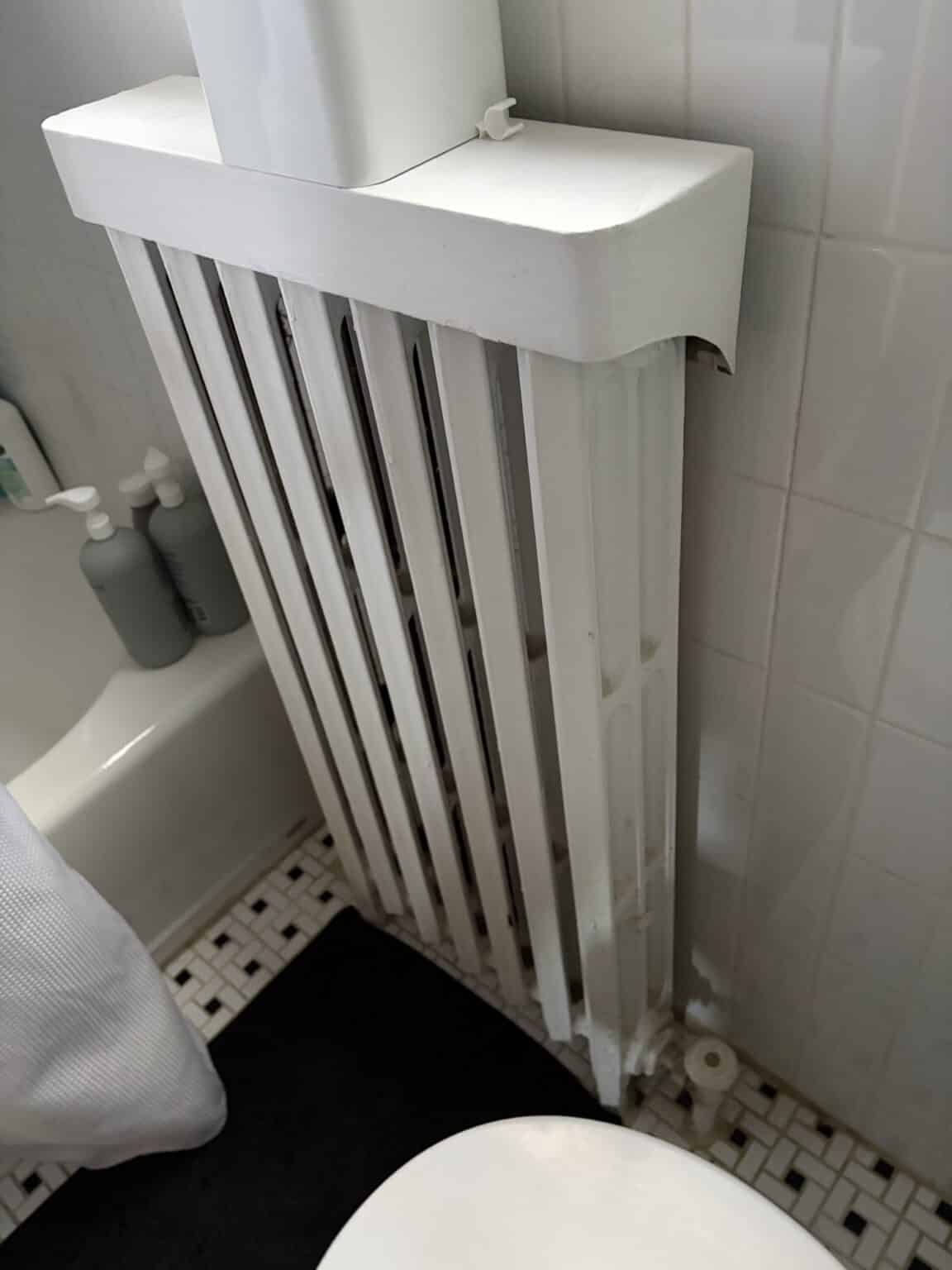
Cold at the top and warm at the bottom is trapped air: bleed that radiator. A whole radiator or a whole zone cold is usually a stuck valve or zone valve.
Upstairs cold and downstairs fine is usually air collecting at the high point, or a circulator that can’t push the water up there.
Water on the floor under the boiler
Water under a boiler comes from the relief valve, a fitting or pump seal, or the boiler itself. The first three are repairs.
If it’s coming out of the boiler’s own cast iron sections or heat exchanger, that’s the leak that ends a boiler. Turn it off, put a pan down and call.
It turns on and off every few minutes
Short cycling usually means the boiler is too big for the house, the thermostat sits too close to a radiator, or a sensor is reading wrong.
It wears a boiler out early. The diagnostic tells you which, and an oversized old boiler is a good reason to size the next one to the house, not to the old nameplate.