


The short answer
If your water bill in Northern Virginia jumped, look at the gallons before the dollars. If the gallons went up, water really went through the meter: a running toilet, an irrigation leak, a softener stuck in its rinse cycle, or a pipe leaking where you can’t see it. If the gallons look normal and the bill is still higher, it’s the rates, an estimated read, or a billing mistake, and a phone call to the utility sorts that out. Most of the time it’s the first one, and a two-hour meter test tells you which in an afternoon.
Am I being overbilled?
Sometimes, but less often than people think. Here’s what does happen:
- An estimated read. If the reader couldn’t get to the meter, the bill is a guess. Loudoun Water estimates from your average for the same period over the last three years, and the next real read settles it up, so one low bill can be followed by a big one.
- A misread. Fairfax Water says it plainly on its questions page: they read meters accurately, but mistakes happen, and they’ll check the reading and fix the bill if you ask.
- A rate change. Fairfax County’s sewer rate went from $9.33 to $9.88 per 1,000 gallons, and the quarterly sewer base from $52.62 to $55.78, on bills for reads from October 2026 on. Same gallons, bigger bill. That one isn’t a mistake.
- A bad meter. Rare, and when a meter wears it usually reads low, not high. You can still ask for a test: Loudoun Water charges $60 and refunds it if the meter is off, and Arlington charges $75.
Pull up your bills for the same quarter last year, not last quarter. Summer usually runs higher than winter. If the gallons this quarter are well over the same quarter last year and nobody moved in, something is using water.
$29 Water Test and Plumbing Safety Check
A licensed plumber tests your water's hardness at your kitchen table, in grains per gallon, checks your water heater's age and health and walks the plumbing with photos. Book the $29 test
The two-hour meter test
This is the test the EPA recommends, and it’s the one we’d run first too. Pick a two-hour stretch when nobody needs water. Turn off every faucet, don’t flush, and make sure the dishwasher, washer, ice maker, softener and sprinklers aren’t running. Read the meter and write the number down or take a photo. Two hours later, read it again. In the EPA’s words, if the meter changes at all, you probably have a leak.
Most Northern Virginia meters sit in a pit near the curb or the sidewalk under a metal or plastic lid. Some older houses have it in the basement where the water line comes in. Many meters also have a small triangle or star dial that spins with any flow at all. If it’s turning with everything off, water is going somewhere right now.
If the meter moved, shut off the main valve where the line enters the house and watch it again. Still moving with the house shut off? The leak is outside, in the line between the meter and your house. Stopped? It’s inside.
Where the water goes when nothing looks wet
Swipe to see all columns →
Swipe to see all columns →
| Where it hides | The sign |
|---|---|
| A toilet with a worn flapper or a fill valve set too high | It refills by itself, hisses, or water trickles into the bowl. The usual one. |
| Irrigation: a broken head or a valve stuck open | A soggy patch, a zone that won’t shut off, a timer reset after a power outage. |
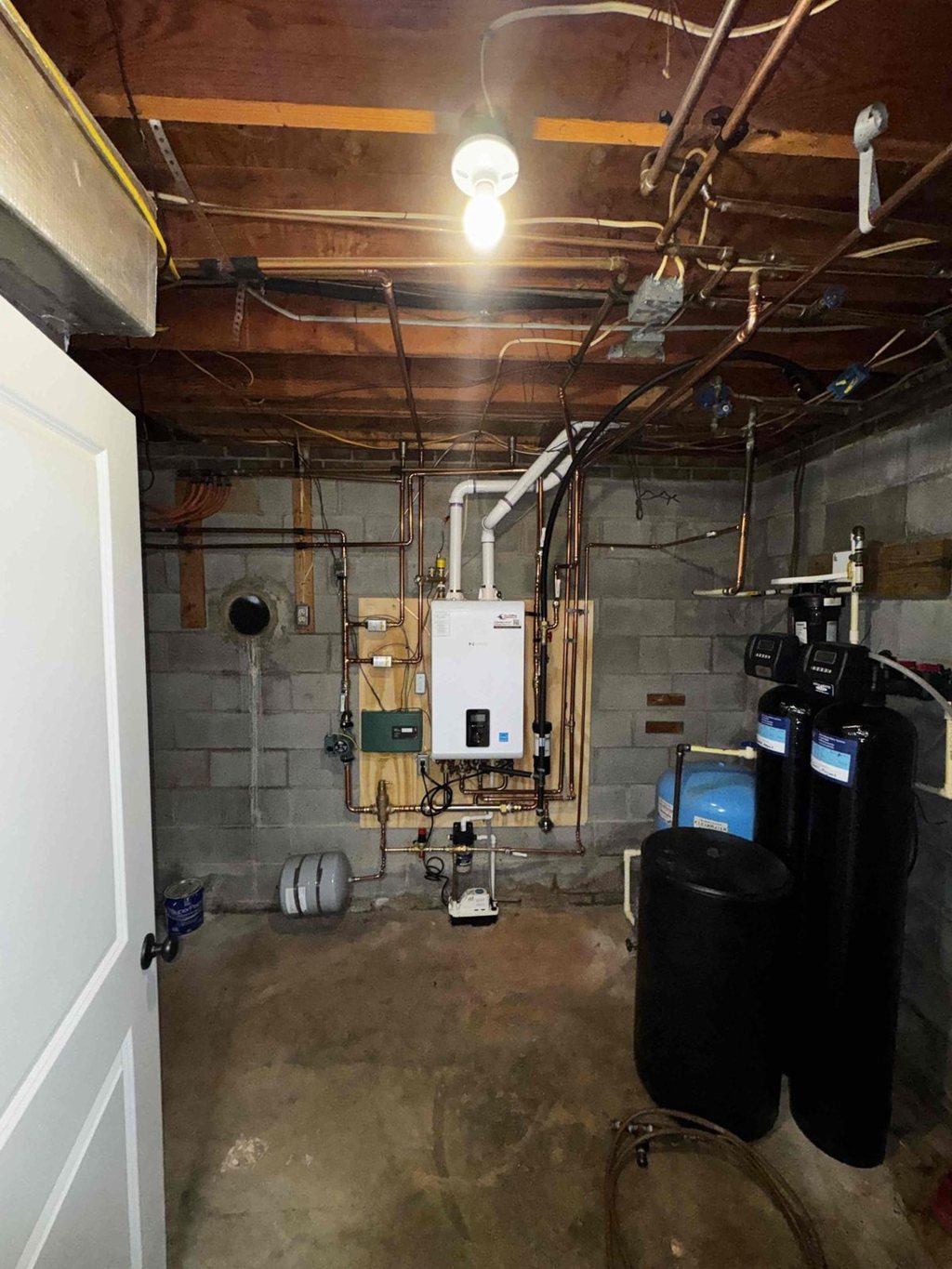
| A water softener stuck in regeneration | Water running to the drain with nothing on, salt going fast. |
| A furnace humidifier that drains as it runs | Water running into the floor drain whenever the heat is on, or all the time if its valve sticks. |
| The water heater relief valve | A drip from the pipe on the side, or water by the drain. Water heater leaking covers the rest. |
| Pressure that’s too high | Toilets that run, relief valves that drip. A pressure-reducing valve fixes the cause. |
| An outdoor faucet cracked by a freeze | It only leaks inside the wall when the hose is on, so you never see it. |
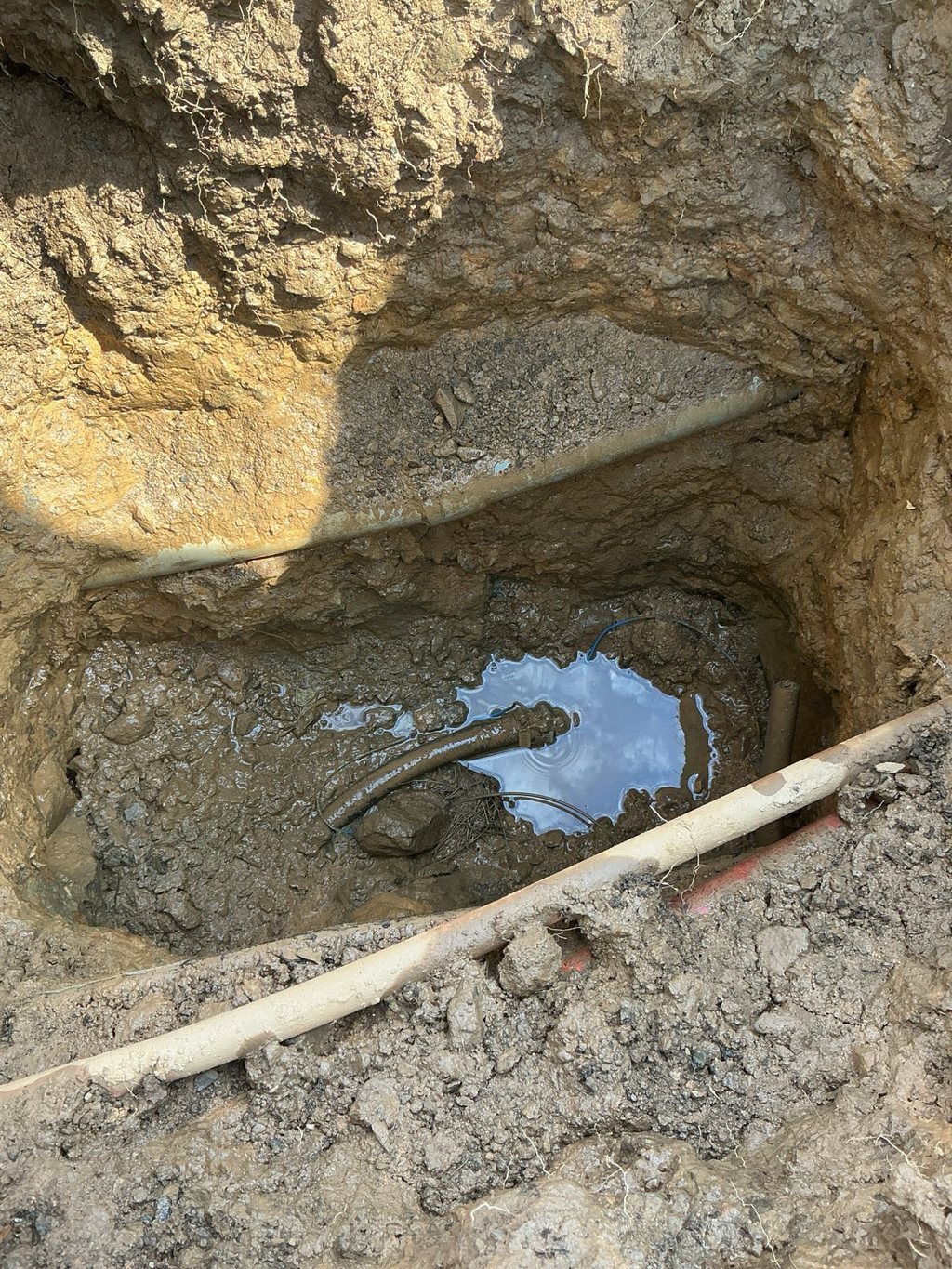
| The underground service line | A wet spot or a green stripe in the yard in dry weather, low pressure, water standing in the meter pit. |
| A pipe in a wall, ceiling or slab | A stain, bubbling paint, a warm spot on the floor, the sound of water at night. That’s a leak search. |
Symptoms to watch for
Besides the bill: the sound of water running when nothing is on, a toilet that refills on its own in the middle of the night, water pressure that dropped for no reason, a musty smell or a soft spot in a floor, a gas or electric bill that climbed along with the water (a hot water leak costs you twice), and a spot in the lawn that stays green and wet when everything else is dry. Any one of those plus a high bill is worth a call.
The winter quarter matters more than you’d think
In Fairfax County, Loudoun and Arlington, the sewer side of the bill is capped at what you used in the winter quarter. Fairfax Water and Loudoun Water count the reads from February through April. That cap is what keeps summer lawn watering from being billed as sewer. A leak that runs through those winter reads gets charged both water and sewer, and it raises the cap for the next twelve months.
In Fairfax County that’s $4.35 water plus $9.88 sewer, $14.23 for every 1,000 gallons, against $4.35 for the same gallons in summer when sewer is capped. Summer has its own catch: Fairfax Water adds a $4.20 peak charge per 1,000 gallons on use well over your winter level. So the best time to find a leak is now, before the February reads. What a running toilet adds to your water bill puts numbers on it.
What to do now
Run the meter test. Do the dye test on every toilet: a few drops of food coloring in the tank, no flushing for ten minutes, and color in the bowl means the flapper is leaking. Walk the irrigation zones one at a time. Look at the softener, the humidifier drain and the water heater. If you find it and fix it, keep the receipt, because most utilities want proof of repair for a leak adjustment on the bill.
If the meter’s moving and you can’t find why, that’s ours. Our Water Test and Plumbing Safety Check is $29: a licensed plumber walks your plumbing with photos, checks the water heater and tests your water’s hardness at the kitchen table. Hand them the bill and tell them what’s been running. If you already know something’s leaking, a plumbing visit is $49 in regular hours, and the price of the fix is in writing before we start. Booking a plumbing repair? The whole-house plumbing inspection comes with it, so the next drip gets caught too.
Get a plumber on it
Book a plumber online, call (703) 997-9757, or book the $29 plumbing safety check. We answer day or night. Rated 5.0 stars across 1,138 reviews on Google, Angi, Yelp, the BBB and Facebook, Virginia Class A license 2705192276.
Questions people ask
Why is my water bill so high all of a sudden?
Usually a leak: a running toilet, an irrigation leak, a water softener stuck in its cycle, or a hidden pipe leak. Compare the gallons on this bill to the same quarter last year. If the gallons are normal, it’s a rate change, an estimated read or a billing error.
Can the water company overbill me?
It happens, most often from an estimated read or a misread meter. Call the utility and ask them to check the reading. Meters rarely read high; a worn meter usually reads low. You can ask for a meter test, which some utilities charge for and refund if the meter is off.
How do I check for a water leak with my meter?
Turn off all water in the house for two hours and read the meter at the start and the end. If the number changes at all, you probably have a leak. Then shut the main valve and watch again: still moving means the leak is in the line outside.
Is a high water bill in winter worse?
In Fairfax County, Loudoun and Arlington, yes. Sewer is capped at your winter quarter use, so a leak during the February to April reads is charged water and sewer and raises that cap for the year.


