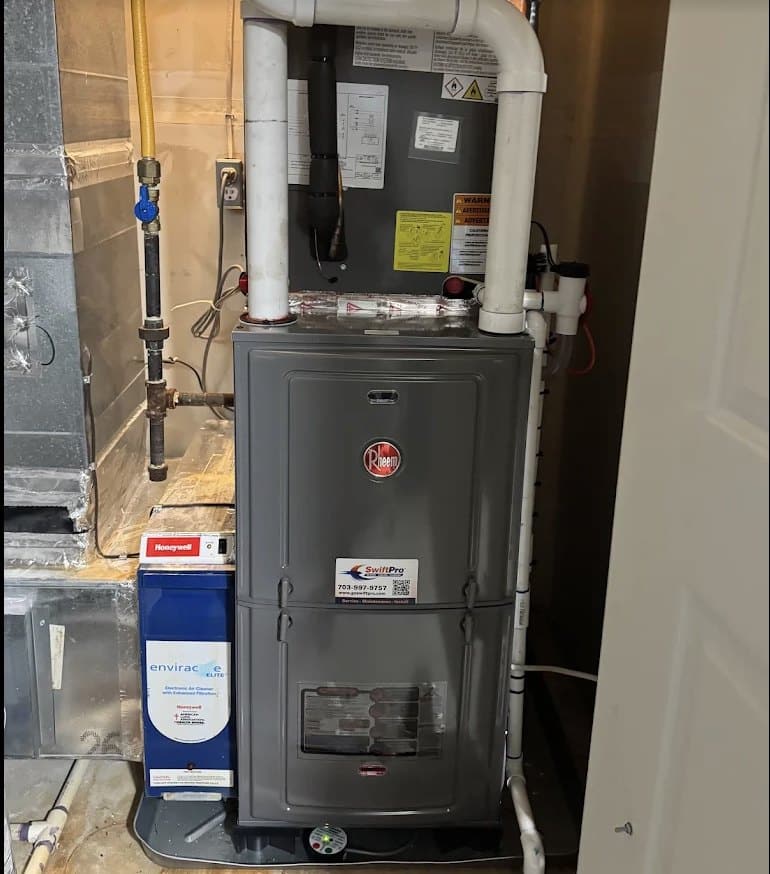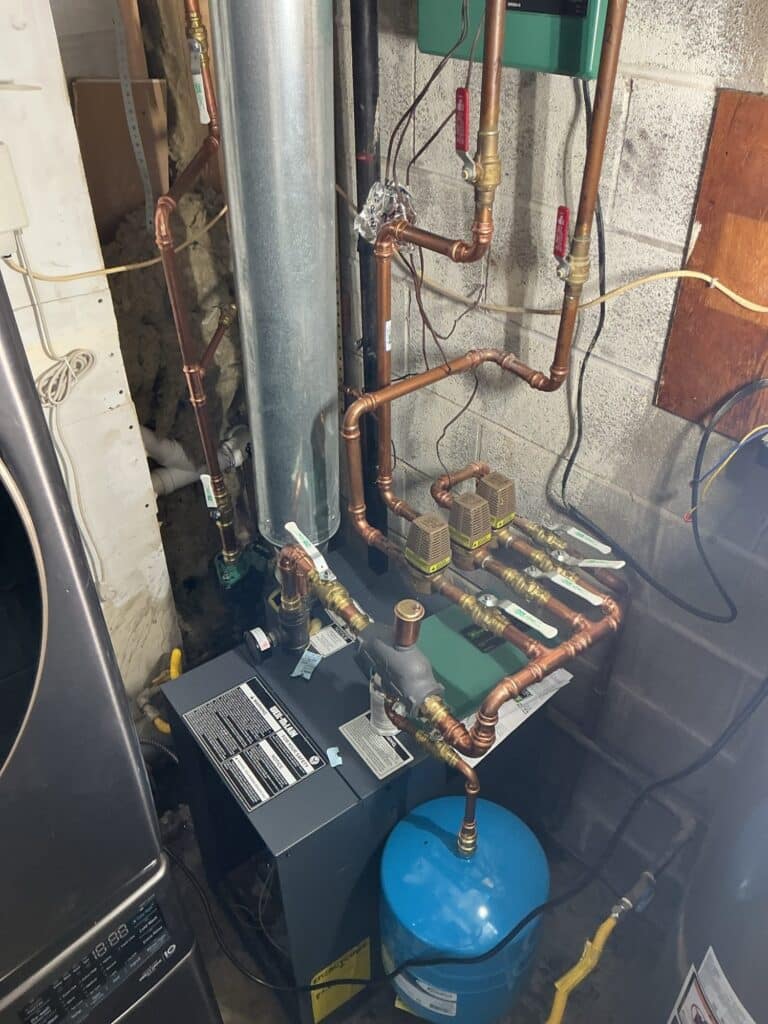


The first cold morning of the year, you turn the heat on, and the house smells like something burning. This is the most common call we get in October, and the good news is that most of the time it is nothing.
But not always, and the difference matters. Here is how to tell in about five minutes which one you have.
The normal one: dust burning off
Your furnace sat unused all summer. Dust settled on the heat exchanger and the burners. The first time it fires, that dust burns off, and it smells exactly like dust on a hot radiator, which is what it is.
What it should be like: noticeable for the first ten to thirty minutes of the first one or two runs, then gone and not back. Slightly acrid, like a hot toaster. No smoke, no soot, nobody’s eyes stinging.
What to do: open a couple of windows for twenty minutes and let it clear. Change the filter first if you have not, because a dirty filter adds its own smell. If it is gone by that afternoon and does not return, you are done.
The ones that are not normal
The smell keeps coming back, every cycle, for days. Dust burns off once. If it is still there on day three, something is being heated that should not be. Most often that is dust and debris packed onto the blower wheel or inside the cabinet, which does not burn off because there is far more of it. Pulling and cleaning the blower wheel runs $300 to $440. Sometimes it is a component running hotter than it should, and that is worth finding before it fails.
It smells electrical, like hot plastic or fish. Overheating wiring, a failing motor, or a capacitor cooking. That is not a wait-and-see smell. Shut the system off at the thermostat and the breaker, and call.
It smells like burning oil or rubber. A belt, a bearing, or a motor. Same answer: off, and call.
It smells like smoke and you can see any. Off at the breaker, out of the house, call the fire department. Nothing on this page is worth debating with smoke in the room.
It smells like rotten eggs or sulfur. That is the additive in natural gas, and it means a gas leak. Leave the house without touching a light switch, and call Washington Gas at 844-927-4427 or 911 from outside. Do not go looking for it, and do not call us first.
It smells like exhaust, or vaguely sweet and chemical, and people feel unwell. Turn the furnace off, open windows, get everyone out, and call from outside. This is the one below.
The one that matters most
Carbon monoxide has no smell. What people describe as an exhaust smell is the other combustion byproducts riding along with it, which is why “the furnace smells funny and I have a headache” is a combination to take seriously rather than air out.
The numbers are worth knowing. The CDC counts more than 400 unintentional carbon monoxide deaths a year in this country that are not fire related, plus over 100,000 emergency room visits. The Consumer Product Safety Commission’s most recent tally puts heating systems second among the causes, and most of those deaths happen between November and February. Symptoms are headache, dizziness, nausea, weakness and confusion, which is why people mistake it for the flu, and why someone asleep can be in trouble before noticing anything.
The usual mechanical cause is a cracked heat exchanger, which is the metal wall between the flame and the air you breathe. There is no repair for it at any age: the industry guideline says any split, crack or hole means the exchanger or the furnace gets replaced. How to know that diagnosis is real, and how to tell an honest one from a sales pitch, is here.
Buy an alarm. Virginia requires carbon monoxide alarms in new construction with fuel burning appliances, but there is no retrofit requirement for existing houses, so a great many Northern Virginia homes have never had one. A plug-in alarm on each sleeping floor costs less than a diagnostic visit, and the existing ones have a service life of about ten years, so if yours came with the house in 2009 it is not protecting anybody.
Other first-cold-day complaints, while we are here
It lights, runs a few seconds, shuts off, tries again. Flame sensor, coated over the summer. $95 to $180 to clean, and our most common no-heat call.
Clicking with no flame. Hot surface igniter, $240 to $410.
It runs but the air is barely warm. If you have a heat pump, that is normal: heat pump supply air is warmer than the room and cooler than your hand. If you have a gas furnace, it is not. Here is how to tell them apart.
A bang or whoosh when it lights. Delayed ignition from dirty burners, where gas builds for a second before catching. It is not harmless and it gets looked at soon rather than in January.
The five minute version
Smell is faint, fades within half an hour, does not come back: dust. Carry on.
Smell is electrical, oily, smoky, or persists for days: shut it off and call.
Smell is rotten eggs: leave the house, then call the gas utility.
Smell comes with headaches or nausea in more than one person: leave the house, then call.
SwiftPro services every brand of furnace across Northern Virginia, and October is a much better month for this than January. Call (703) 997-9757, book online, or read what furnace repairs cost.