

Northern Virginia water is moderately hard to hard, and the exact number depends on which utility serves you. Here is what each one publishes, because this is one of the few plumbing questions with a real published answer rather than an opinion.
- Fairfax Water: moderately hard to hard, 5 to 10 grains per gallon, which is 84 to 170 milligrams per litre.
- Arlington: 142 milligrams per litre, which the county states as 8 grains per gallon.
- Alexandria (Virginia American Water, which buys from Fairfax Water): 191 parts per million in its most recent report, roughly 11 grains.
- Prince William Water: 3.5 to 7 grains in the main east and west systems, and 7 to 10.5 grains in the Bull Run Mountain, Evergreen and Hoadly Manor systems.
- Loudoun Water central system: 84 to 170 parts per million for water supplied from Fairfax Water.
For context, water under about 3.5 grains is considered soft, 7 to 10.5 is hard, and above 10.5 is very hard. Most of this region sits in the moderately hard to hard band, and Alexandria’s number sits at the top of it.
If you are on a private well rather than a utility, none of these apply to you and the only way to know is a test.
What hardness actually is, and what it is not
Hardness is dissolved calcium and magnesium. It is not a contaminant and it is not a health concern. Hard water is safe to drink, and in this region it comes out of a treatment plant that tests it constantly.
What it does is come out of solution when water is heated or when it evaporates, and stick to whatever it was touching. That is the entire mechanism behind every symptom below.
The symptoms, in order of cost
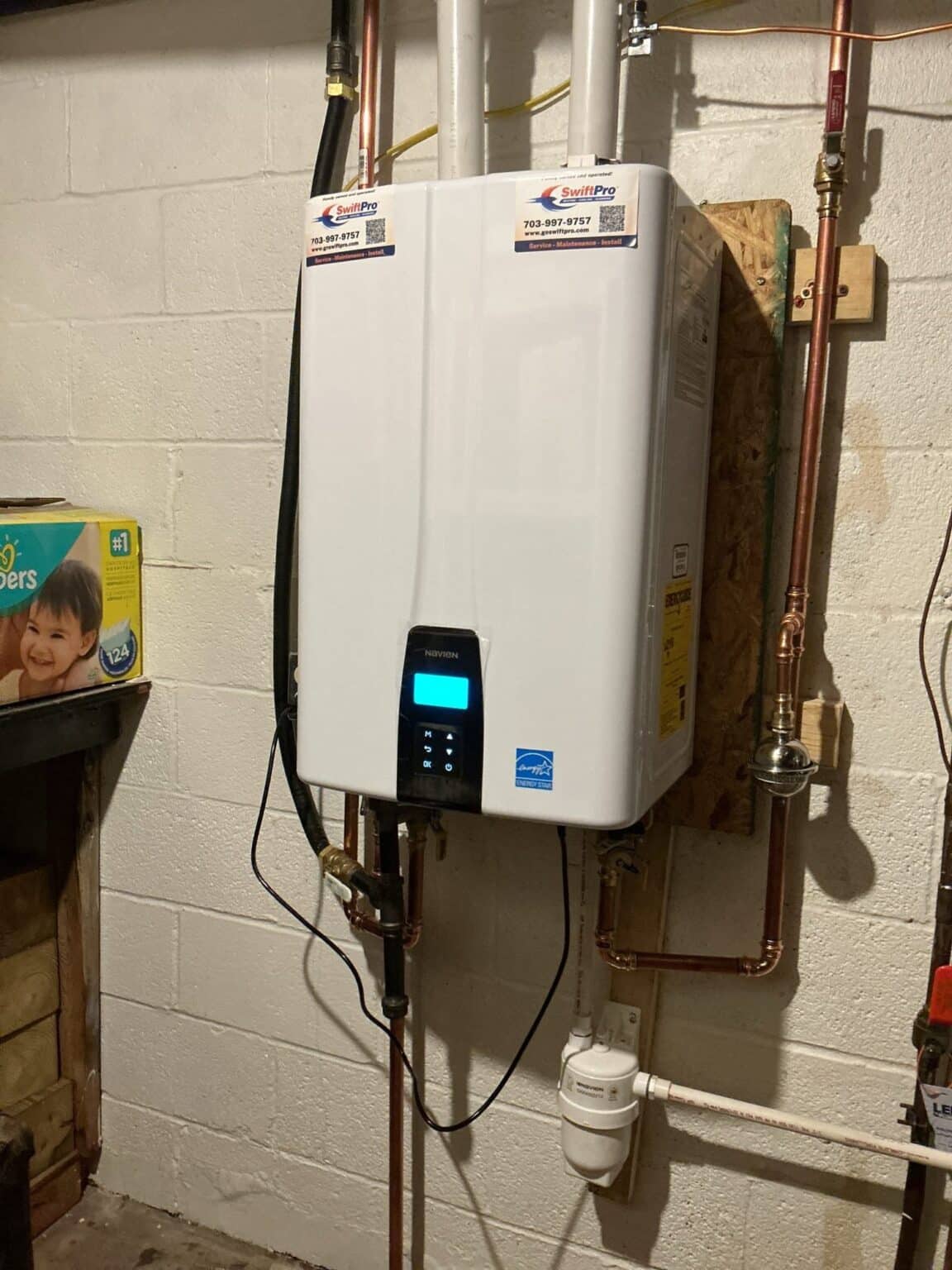
Your tankless water heater. This is the expensive one and the one people do not see coming. A tankless unit heats water in a narrow passage that gets very hot, which is exactly where minerals precipitate and stick. As it scales, the unit throttles flow to hold temperature, which you notice as pressure loss, or gives up and delivers warm water.
Both Navien and Rinnai require annual descaling in writing, and both exclude scale and mineral build-up from their warranties; Rinnai’s also excludes damage from poor water quality. A unit arriving at a fifteen year warranty claim with a scaled heat exchanger and no service history generally gets declined. A flush runs $79 to $365, most between $100 and $200.
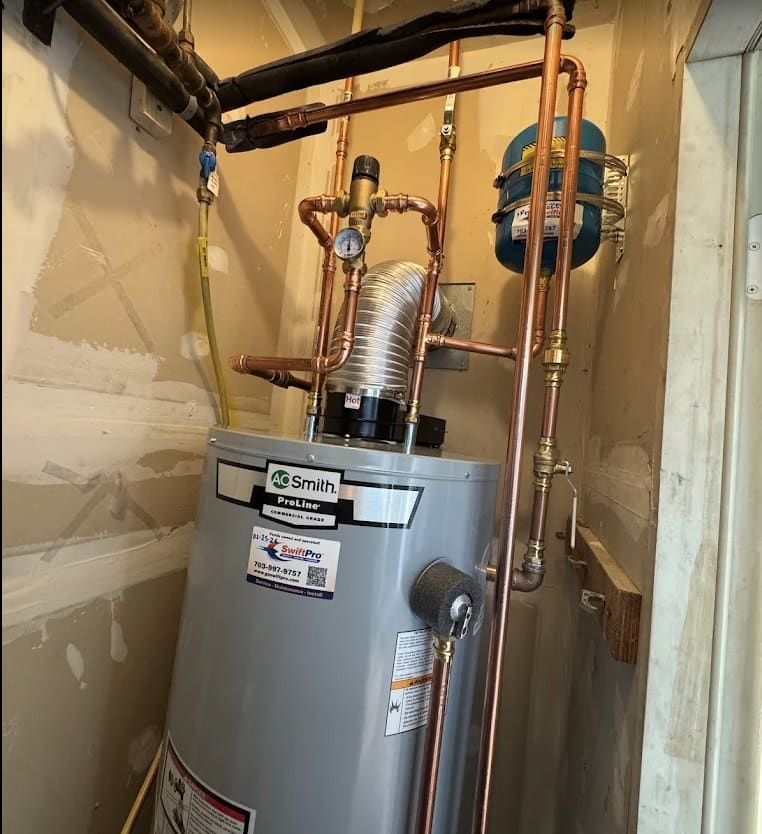
Your tank water heater. Sediment settles on the bottom, insulating the burner from the water, so it runs longer and hotter for the same result. It also occupies volume that used to hold hot water, which is why an older tank seems to run out faster. The popping and rumbling you hear is steam forcing its way up through it. The annual flush and the anode rod are here.
Fixtures and appliances. Scale on aerators and shower heads, which is why flow at one tap slowly declines. Scale on dishwasher and washing machine heating elements. Spotting on glassware that no rinse aid fixes.
Soap and skin. Hard water reacts with soap to make the film people call soap scum, so you use more detergent, laundry comes out stiffer, and skin and hair feel different. This is the symptom people notice first and rank last in importance, which is roughly backwards from the cost order.
What to do about it, in ascending order of commitment
Nothing, plus maintenance. Entirely reasonable if you have a tank water heater and no tankless unit. Flush the tank annually, clean the aerators, and accept the soap scum. In the 5 to 8 grain range, this is what most households do and it is not wrong.
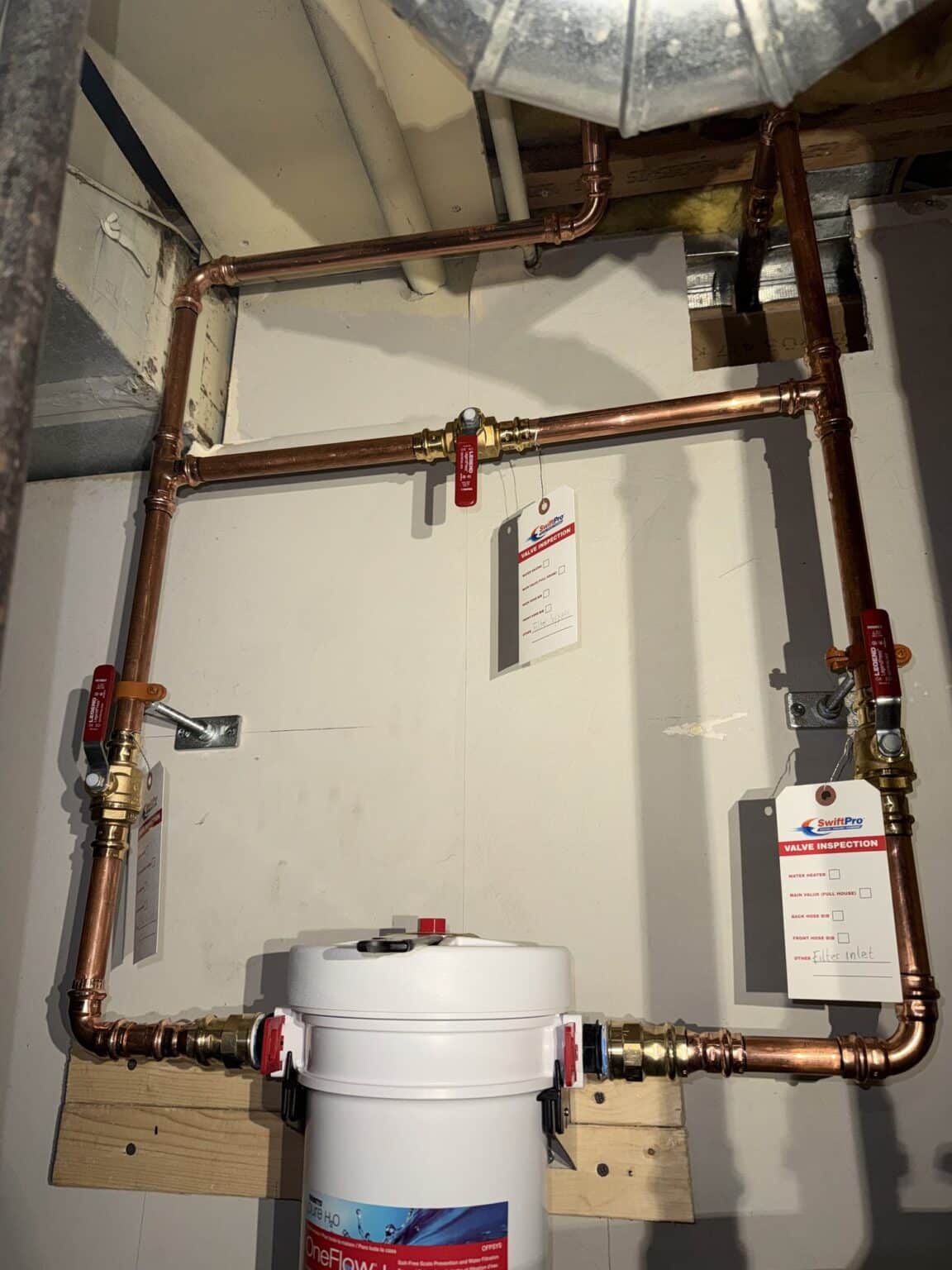
A scale inhibitor on the cold side. A salt-free unit that conditions the water so minerals stay in suspension rather than sticking to hot surfaces. It does not remove hardness, so your soap and spotting will not change. What it does is protect the equipment, which is why we install one on nearly every tankless water heater we put in here. About $800 installed, and on a tankless unit it materially reduces how hard the annual flush has to work.
A water softener. Ion exchange, using salt, which genuinely removes the hardness. Your soap works, glassware stops spotting, skin feels different, and the appliances stop scaling. The trade-offs are real and worth knowing: it needs a drain and a power outlet, you carry salt, it uses water to regenerate, and it adds sodium to the softened water, which matters if anyone in the house is on a restricted sodium diet. Most installations leave the kitchen cold tap unsoftened for drinking and cooking.
A whole-house filter, which is a different thing entirely. Filters handle sediment, chlorine taste and particulates. They do not soften. People conflate the two constantly and then wonder why the spotting did not stop.
How to decide
Three questions settle it for most households.
Do you have a tankless water heater? If yes, do something, because that is where hardness costs real money and voids a warranty. At minimum, flush it annually. Better, add scale protection and flush it annually anyway.
Are you bothered by the soap and the spotting? If yes, only a softener fixes that. Nothing else will.
What is your actual number? If you are on Prince William Water’s Bull Run Mountain, Evergreen or Hoadly Manor systems, or in Alexandria, you are at the harder end and the case is stronger. If you are on a well, test before buying anything, because well water varies enormously and can carry iron and other issues that need a different unit entirely.
Selecting the Right Water Treatment Strategy for Your Home
Be skeptical of anything sold as a magnetic or electronic descaler with dramatic claims and no serviceable parts. If a device promises softening without salt and without ion exchange, what it is actually doing is conditioning at best, which protects equipment without changing how your soap behaves. That can be a fine thing to buy, so long as you buy it for what it does rather than what the box implies.
And be skeptical of anyone who quotes a whole-house treatment system without first asking what your water actually measures or looking at your water heater.
Things people ask
Is hard water bad for me? No. It is a nuisance and an equipment issue, not a health one.
Will a softener fix my water pressure? Only if the pressure loss is from scaled aerators or a scaled tankless unit. If the whole house is low, that is usually a pressure reducing valve or the service line. The causes in order are here.
Do I need one if I have a tank heater? Not necessarily. Flush the tank, check the anode rod, and decide based on whether the soap and spotting bother you.
SwiftPro handles water heaters, treatment and plumbing across Northern Virginia. Call (703) 997-9757 or book online.