


The short answer
Most clogged bathtub drains in Northern Virginia houses are hair and soap tangled on the stopper or just past it, inside the first foot of pipe. Get the stopper out and clean it, pull what’s left with a plastic hair grabber, then plunge with the overflow covered. A small hand snake handles the rest. If the water still sits, or the tub fills when the toilet flushes or the washer drains, the clog is further down and it’s a job for a drain machine.
Why tubs clog
Hair is the main thing, and soap is what holds it together. Bar soap leaves a film inside the pipe, hair catches on it, and every shower adds a little more. Conditioner, bath oil, shaving cream and sand from the kids’ bath all help. The stopper and its linkage are the first thing the hair wraps around, and the trap just under the tub is the second. That’s why most tub clogs are close enough to fix from the tub.
$99 Drain Clearing
This offer focuses on clearing a blockage up to the P-trap, the curved section of drainpipe beneath the sink where debris can collect. See the drain clearing
Step 1: Get the stopper out
Every tub has one of a few stopper types, and each comes out a different way. You need a flathead screwdriver and maybe needle-nose pliers, nothing more.
- Lift-and-turn or toe-touch. Hold the cap and turn it counterclockwise. Some have a small set screw under the cap. The post under it unscrews too.
- Push-pull. Unscrew the knob on top, then the post it sits on.
- Pop-up with a lever on the overflow plate. Wiggle the stopper up and out of the drain. Then take the two screws out of the overflow plate and pull the linkage out through that opening.
- Lever with only a strainer in the drain. There’s no stopper to pull. A brass plunger on the linkage closes the drain from inside the overflow pipe, and hair wraps around it. Take the overflow plate off and pull the whole linkage out.
- A plain grid strainer. Take out the center screw and lift it off.
Leave the drain flange, the chrome ring the stopper sits in, alone. It’s sealed to the tub, and turning it can break the seal under it and start a slow leak into the ceiling.
Step 2: Pull the hair out
Wear gloves. Clean the stopper or the linkage plunger first, which is often most of the clog. Then push a plastic barbed drain strip, the kind sold at every hardware store for a few dollars, straight down the drain, twist it, and pull it up slowly. Do it four or five times. Run hot tap water for a minute and watch it drain.
Step 3: Plunge it the right way
Use a cup plunger, the flat one, not the toilet plunger with the flange. Stuff a wet rag into the overflow opening or tape over it. If you don’t, the push goes out the overflow instead of into the clog. Leave a few inches of water in the tub so the cup is covered, then give it ten or fifteen firm strokes and pull it off sharply on the last one.
Step 4: A small snake
A quarter-inch hand snake, the drum kind, reaches the trap and a few feet past it. On a tub with an overflow lever, feed it in through the overflow opening, not the drain: that’s the straighter path down to the trap. Crank it in until it stops, turn it through the clog, and pull it back slowly with whatever it caught. Don’t force it. A stuck cable can kink in the trap or scratch the tub. How to use a drain snake walks through it.
What not to pour in
Skip the chemical drain cleaner. It sits on top of a hair clog, heats up and rarely gets through, and then you’re bailing a tub of caustic water. On older metal drain pipe it eats the pipe too. Is Drano bad for pipes has the details. Baking soda and vinegar freshens a drain but doesn’t move a wad of hair (what baking soda and vinegar can and can’t do). And skip the kettle of boiling water. It isn’t good for PVC fittings or an acrylic tub, and hot tap water does the same job.
When it isn’t the tub
Some tub clogs aren’t in the tub’s drain at all. These are the signs the problem is further down:
- The tub and the bathroom sink are both slow. They share a drain line, and the clog is past where they meet.
- Water comes up in the tub when the toilet flushes or the washer drains. That’s the main line.
- A toilet gurgles while the tub empties. Why a toilet gurgles.
- You pulled the hair, it drained great, and it’s slow again in a week.

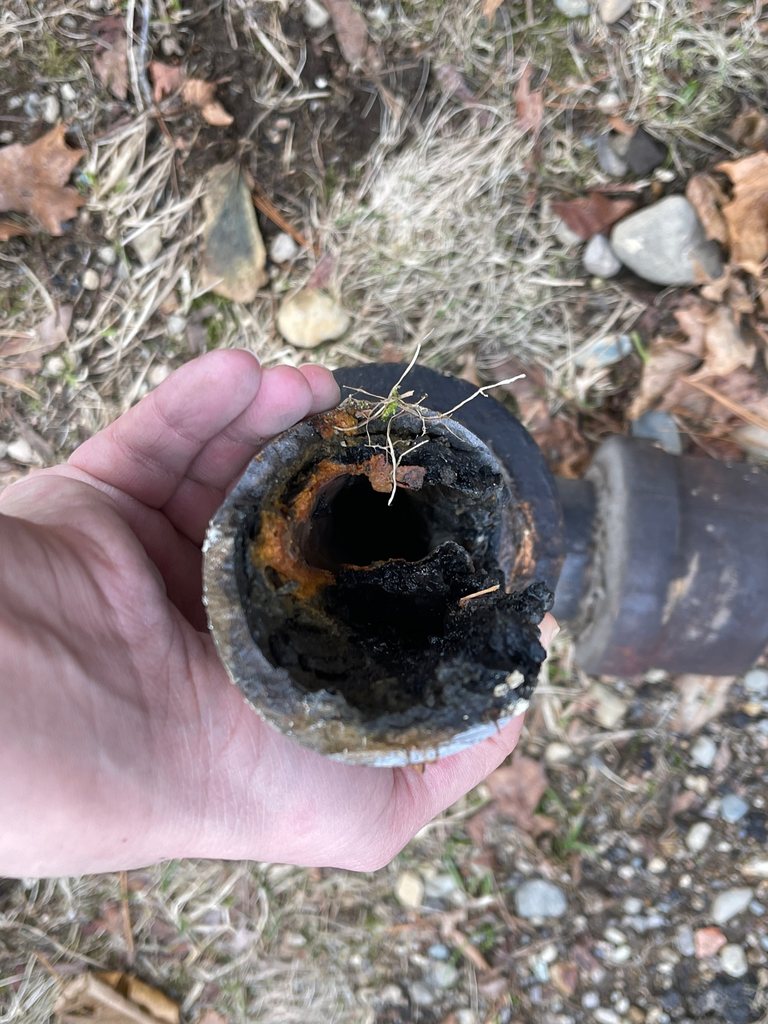
That last one is common in older Northern Virginia houses. Tub drains there were often metal pipe, and metal pipe closes up from the inside with rust and scale. A snake pokes a hole through the buildup and the tub drains for a while. It doesn’t make the pipe any bigger. One clogged drain or the main line helps you tell which you have, and cast iron drain pipe covers what old metal drains do with age.
Keep it from coming back
- Put a hair catcher over the drain. It’s the single thing that does the most.
- Pull the stopper or the linkage and clean it every few weeks, before it’s a clog.
- Rinse the tub with hot water after a dog bath or a haircut.
- Same steps work for a stall shower. How to unclog a shower drain covers the differences, and a slow bathroom sink is usually the same hair and soap.
A slow tub is one of the small signals your house gives you before a bigger problem. Error codes and warning lights at home covers the rest of them.
When you’d rather we do it
A sink clogged at the trap is $99 with our sink clearing offer, up to the P-trap. A toilet, tub, shower or any drain past the trap is drain cleaning, $200 to $800. The main line to the street runs $550 to $1,650, and when grease or roots keep coming back, hydro jetting clears the pipe wall. You get the price before we start. A plumbing diagnosis visit is $49, or $250 after hours.
Call (703) 997-9757, day or night, or see every current deal on our offers page. Rated 5.0 stars across 1,138 reviews on Google, Angi, Yelp, the BBB and Facebook, Virginia Class A license 2705192276.
Questions people ask
What is the fastest way to unclog a bathtub drain?
Take the stopper out and clean it, then pull the hair with a plastic barbed drain strip. That clears most tub clogs in a few minutes, no chemicals.
How do I get the stopper out of my bathtub?
Most lift-and-turn and toe-touch stoppers unscrew counterclockwise. Push-pull stoppers have a knob that unscrews. Lever tubs have a linkage that comes out through the overflow plate after you take its two screws out.
Can you plunge a bathtub?
Yes, with a flat cup plunger. Cover the overflow opening with a wet rag first and leave enough water in the tub to cover the cup.
Should I snake a tub through the drain or the overflow?
On a tub with an overflow lever, the overflow opening is the straighter path to the trap, so the snake goes in there.
Why does my tub keep clogging?
Usually hair and soap, and a hair catcher fixes that. If it keeps clogging after the hair is out, the pipe may be closing up with buildup or the clog is in a shared line.


