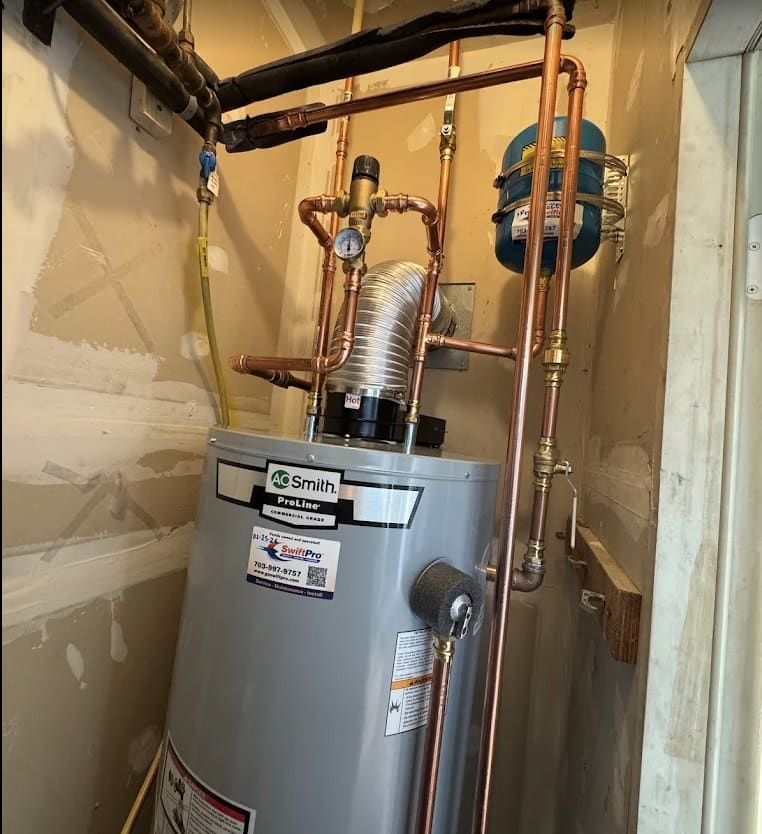


The outdoor spigot is the most commonly burst pipe in Northern Virginia, and the cruelty of it is that you almost never find out in winter. It splits in January while nothing is running, sits there frozen and quiet for three months, and then you hook up a hose on the first warm Saturday in April and water pours into the wall.
Five minutes in November prevents it. Here is the whole thing.
The Mechanics Behind Frozen Outdoor Spigots
Water sits in the spigot and in the few inches of pipe behind it. That pipe runs through an exterior wall, which is the coldest place plumbing goes. Water expands as it freezes, and it is not the ice pushing outward at the spigot that splits the pipe; it is the pressure trapped between the ice plug and the closed valve inside. Copper splits along a seam, and the split can be an inch long and invisible because it is inside the wall.
The spigot itself often survives. That is why turning the handle in April feels normal right up to the moment somebody downstairs starts shouting.
The five minutes in November
Disconnect every hose. This is the single highest-value thing on this page, and it matters even if your spigot is the frost-free kind. A frost-free spigot works by keeping the actual valve twelve inches back inside the heated wall and letting the exposed section drain out when you shut it off. A hose attached to the end blocks that drainage, water stays in the barrel, and a frost-free spigot freezes and splits exactly like an ordinary one. Every plumber in this region has seen it a hundred times.
Drain the spigot. Open it fully for a few seconds after the hose is off, then close it.
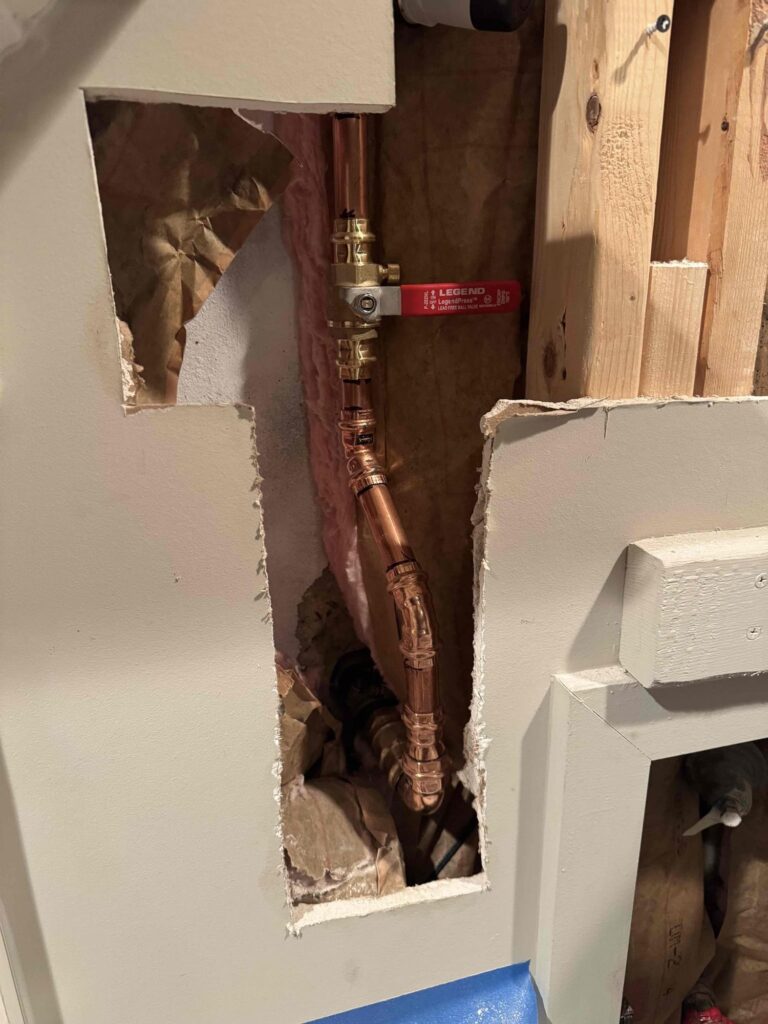
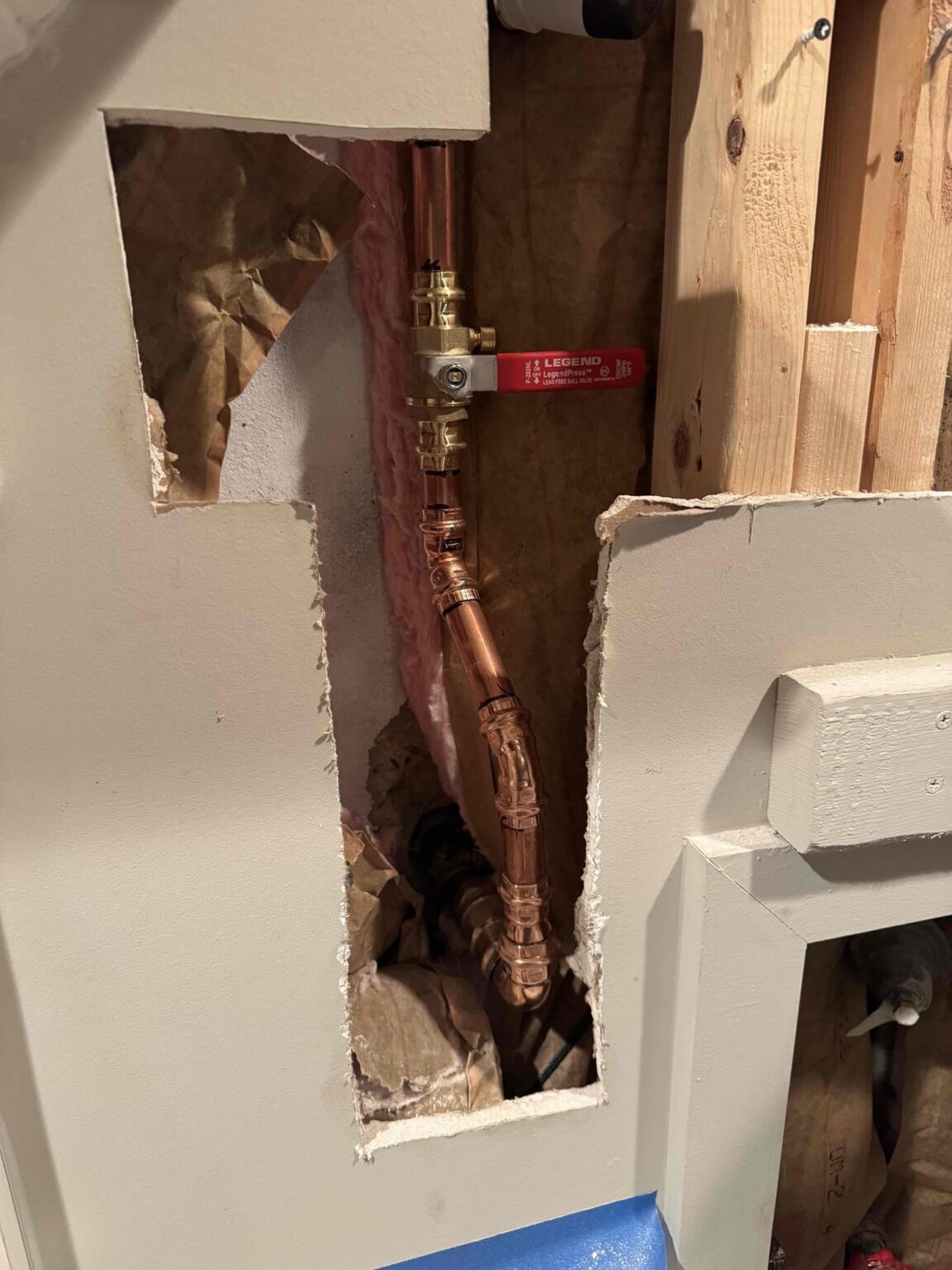
If there is an interior shutoff, use it. In a lot of older houses there is a small valve on the pipe feeding each outdoor spigot, usually in the basement or crawlspace near where the pipe leaves the house, sometimes with a small bleeder cap on it. Close the valve, then go outside and open the spigot and leave it open all winter. If the valve has a bleeder, open that to let the trapped section drain. This is the belt-and-braces version and it is genuinely effective.
An insulated cover is optional and not a substitute. The foam domes sold at hardware stores help a little. They do not help at all if a hose is still attached, and they are not a reason to skip the steps above.
Drain the irrigation system too, and winterize the backflow preventer, which is the expensive part that fails first. That is covered here.
How to tell whether yours is frost-free
Look at the spigot from the side. A frost-free (also called a frost-proof or sillcock) has a longer body, generally six to twelve inches of pipe between the handle and the wall, and the handle turns a stem that reaches back inside. An ordinary hose bib is short and stubby, with the valve right at the wall.
Frost-free is better. It is not immune, for the hose reason above, and it can also fail if it was installed without the slight downward pitch it needs to drain.
What to do in April if you suspect the worst
Before you connect a hose, have somebody stand at the pipe inside, in the basement or crawlspace, where it passes through the wall. Turn the spigot on slowly for ten seconds and have them watch and listen.
If water appears inside, shut it off immediately and leave it off. You have found a split, and you have found it with a bucket’s worth of water on the floor instead of an afternoon’s worth in the ceiling.
If nothing happens inside and the spigot runs normally, you are fine.
Also worth checking: if you have an interior shutoff for that spigot and it has been closed all winter, open it slowly and watch the same spot.
If it did split
Replacing a hose bib and the damaged section behind it is a routine job, and the price depends almost entirely on access. A spigot on an unfinished basement wall where the pipe is visible is straightforward. A spigot above a finished room, or one fed by a pipe buried in a wall with no access, means opening drywall to reach it, and that is the variable. Any quote worth taking will say which situation you are in, and we will not guess at it over the phone.
If water appeared somewhere and you cannot tell where it came from, that is a leak search, which runs $200 to $470 and includes opening the wall in the one spot the evidence points at. How that works is here.
While somebody is out there
Two upgrades worth asking about if you are already having a spigot replaced.
A frost-free replacement, if yours is the short kind. Marginal extra cost at the time of a job that has to happen anyway, and it removes most of the risk permanently.
An interior shutoff with a bleeder, if there is not one, on any spigot that is reachable from inside. That makes winterizing a thirty second job every year instead of a hope.
The rest of the winter list
The spigot is one item. The full set, including which interior pipes actually freeze and what to do when a hard freeze is forecast, is in how to keep your pipes from freezing. And if one has already let go, the first four minutes start with the main shutoff.
SwiftPro handles plumbing across Northern Virginia. Call (703) 997-9757 or book online. Water coming in right now is what the 24 hour line is for.