


The short answer
A water heater relief valve that drips is doing its job: it opens when the pressure in the tank passes 150 psi or the water passes 210°F. In Northern Virginia, the usual cause is thermal expansion, water growing as it heats in a house with no room for it. After that come house water pressure over 80 psi and a worn valve that won’t reseat. Find the cause and fix that. Never cap or plug the pipe.
What the valve is
It’s the brass valve with a lever on the top or upper side of the tank, called the T&P valve, for temperature and pressure. A pipe runs from it down the side of the tank toward the floor. If a tank ever overheated with that valve stuck shut, the tank could fail violently. So a valve that drips is annoying, and a valve that’s been capped or plugged is dangerous.
$99 Water Heater Flush
We drain and flush the tank, check the anode rod and test the relief valve, then go through the house's plumbing with photos, included. See the flush
Want your own number before anyone comes out? The water heater estimator prices your house in a few questions.
The four usual causes
Swipe to see all columns →
Swipe to see all columns →
| Cause | The clue | The fix |
|---|---|---|
| Thermal expansion | It drips while the burner runs or right after, then stops | An expansion tank, or a new one if yours is waterlogged |
| House pressure over 80 psi | It drips at random, faucets spray hard, toilets run | A new or reset pressure reducing valve |
| A worn or dirty valve seat | It drips all the time, even with normal pressure | A new relief valve |
| Water set too hot, or a stuck thermostat | The water from the pipe is very hot, or there’s steam | Shut it down and call |
Thermal expansion
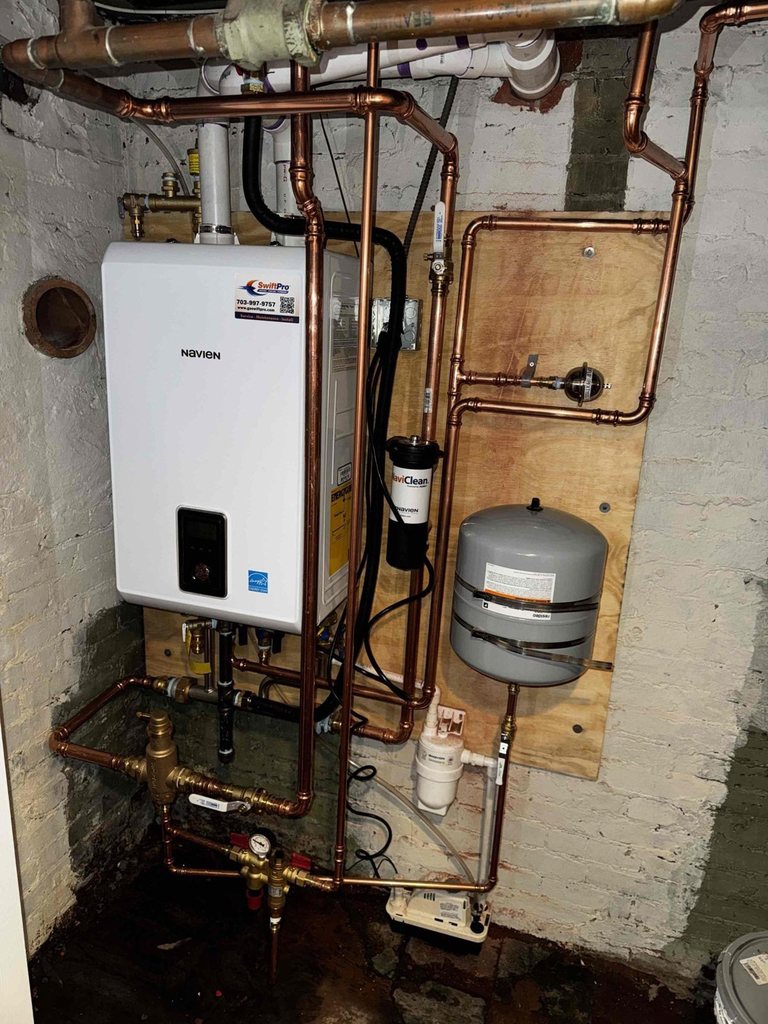
Water grows as it heats, roughly half a gallon or more in a 50-gallon tank. In an older house, that extra water pushed back out to the street. Most houses now have a check valve, a pressure reducing valve or a backflow preventer on the main, which closes that door. The water has nowhere to go, the pressure spikes every time the tank heats, and the relief valve lets some out. An expansion tank on the cold line gives it somewhere to go.
If you already have one and it still drips, the expansion tank may be waterlogged. Tap it: the top half should sound hollow. Or press the little air valve on the end, like a tire valve. Air is good. Water means the bladder inside has failed, and the expansion tank gets replaced.

High house pressure
Many houses here have a pressure reducing valve where the water comes in, usually set around 50 to 60 psi. They wear out, and when one does, the house sees whatever the street sends. Over 80 psi, a relief valve drips, faucets spray and toilets refill on their own. Here’s how a pressure reducing valve works, and water hammer is often the same problem showing up as banging pipes.
Test it yourself
A hose bib pressure gauge from a hardware store screws onto an outdoor spigot or the washer hookup. Get one with a red max needle, the second needle that stays at the highest reading. Leave it on overnight. If the max needle reads over 80 psi in the morning, you have a pressure problem, even if the regular needle reads fine. That’s thermal expansion or street pressure showing up while nobody’s using water.
The discharge pipe rules
The pipe from the relief valve has rules, and plenty of the ones we see break them:
- Full size, the same as the valve outlet, usually 3/4 inch, all the way down.
- It ends 6 inches or less from the floor, or over a drain, so hot water doesn’t spray anyone.
- No cap, no valve, and no threads on the end.
- It runs downhill the whole way, with nothing that could trap water.
- Never plugged. A capped relief valve is how tanks fail violently.
A bucket under the pipe is fine for a day. Then find out why it’s dripping.
When it’s an emergency
If the pipe is spitting very hot water or steam, turn the gas control to OFF (or the breaker off on an electric tank), shut the cold water valve on top, and call. That’s an overheating tank, not a pressure blip.
The lever trap
Lifting the test lever on a valve that’s never been opened can leave it dripping, because mineral grit settles on the seat and won’t let it close. That’s not a reason to never test it. It’s a reason to test it on a schedule, so it’s a quick check and not a surprise. The water heater flush is $99 (normally $199): we drain and flush the tank, check the anode rod and test the relief valve. If the valve won’t reseat, you get the price for a new one before we start.
If the tank itself is old and the valve is crusty, check the age before you put money into it. Here’s how to tell how old your tank is, and if it’s time, the water heater estimator shows your installed price first, and $500 comes off it.
Book it
A plumbing diagnosis visit is $49, or $250 after hours, and you get the price of the fix before we start. Call (703) 997-9757, day or night, or book the water heater flush from goswiftpro.com/cookiesoffer by November 30 and a box of warm MOLTN cookies comes with it. Every current deal is on our offers page. Rated 5.0 stars across 1,138 reviews on Google, Angi, Yelp, the BBB and Facebook, Virginia Class A license 2705192276.
Questions people ask
Is it normal for a water heater relief valve to drip?
No. A little water right after a test is fine. Regular dripping means the pressure or temperature is getting too high, or the valve is worn.
Why does my relief valve drip after the water heater runs?
Thermal expansion. Heated water has nowhere to go in a closed system, so pressure spikes until the valve lets some out. An expansion tank fixes it.
What pressure should my house water be?
Under 80 psi, and most houses run around 50 to 60. A gauge with a max needle left on overnight shows the spikes.
Can I cap a dripping relief valve pipe?
Never. The relief valve is what keeps an overheated tank from failing. Fix the cause of the drip instead.
Should I replace the relief valve or the water heater?
On a tank under about 10 years old, replace the valve. On an old tank with a crusty valve, weigh it against a new tank first.


