

Sewer line repair in Woodbridge, starting with the camera.
Woodbridge, Dale City and Lake Ridge are full of houses built between the 1960s and the 1980s, which is exactly the window when clay gave way to early plastic and Orangeburg was still in the ground. What’s under your yard decides the repair, so we look before we quote.
Family owned
Not corporate.
Local and accountable.
We line pipe
In house, not subbed
out to someone else.
You see the footage
Every job, and you
keep a copy.
Get Your FREE Quote Today
Tell us what the line is doing. We’ll come look before anyone talks price.
The age of the house tells you a lot before the camera does.
Prince William County grew fast in a particular set of decades, and the sewer pipe in the ground tracks that history closely. Three materials, three different failures.
Orangeburg, and why you never snake it
Tar paper pipe went in from the 1940s into the early 1970s and plenty of it’s still buried here. It doesn’t crack, it deforms, going oval and then flat. The critical part: a rooter run down an Orangeburg line tears pieces out of the pipe wall while it cleans and brings on the collapse. If your house is from that era, camera first isn’t an upsell, it’s the only safe order.
Clay joints and roots
Clay pipe comes in short lengths, so the line is a chain of joints, and every joint is a way in for a root looking for water. Clearing it works until the roots come back, which is why a lined, jointless pipe ends the cycle instead of resetting it.
Early plastic and the belly
The lighter sewer pipe used through the 1970s and 1980s holds up well as a material and poorly against bad backfill. Ground settles under a section, the line sags, waste stops running through the low spot, and the same clog returns for years.
How a Woodbridge sewer call runs
The camera goes in first
Nobody quotes a sewer line they haven’t seen. A self-leveling camera runs the lateral from the cleanout, and a locator marks the fault on the ground in your yard, so you know the depth and the spot before anyone talks about money.
You watch the footage
Roots at a joint, a belly holding water, a crushed section, a separated clay hub. You see which one it is on the screen, at your house, and you keep a copy.
Line it, or dig it
If the host pipe is intact enough to line, we cure a new pipe inside the old one and the yard stays shut. If the line is collapsed, badly bellied or offset past the point a liner can bridge, we say so and we dig that section.
Permit, inspection, restore
The county plumbing permit is pulled, the work is inspected before it gets covered (Virginia USBC 113.3(5) requires that), and the ground goes back the way we found it.
Ask who owns which part before the work starts. Prince William Water’s published position is that lines and connections on private property belong to the owner, but its material doesn’t spell out the exact boundary at the right of way the way Fairfax and Arlington do. That matters on a line that fails out near the street, so we get it confirmed in writing before anyone digs rather than after.
What lining leaves behind
The reason we ask what your pipe is made of before we quote: the repair depends entirely on whether the host pipe still holds its shape.

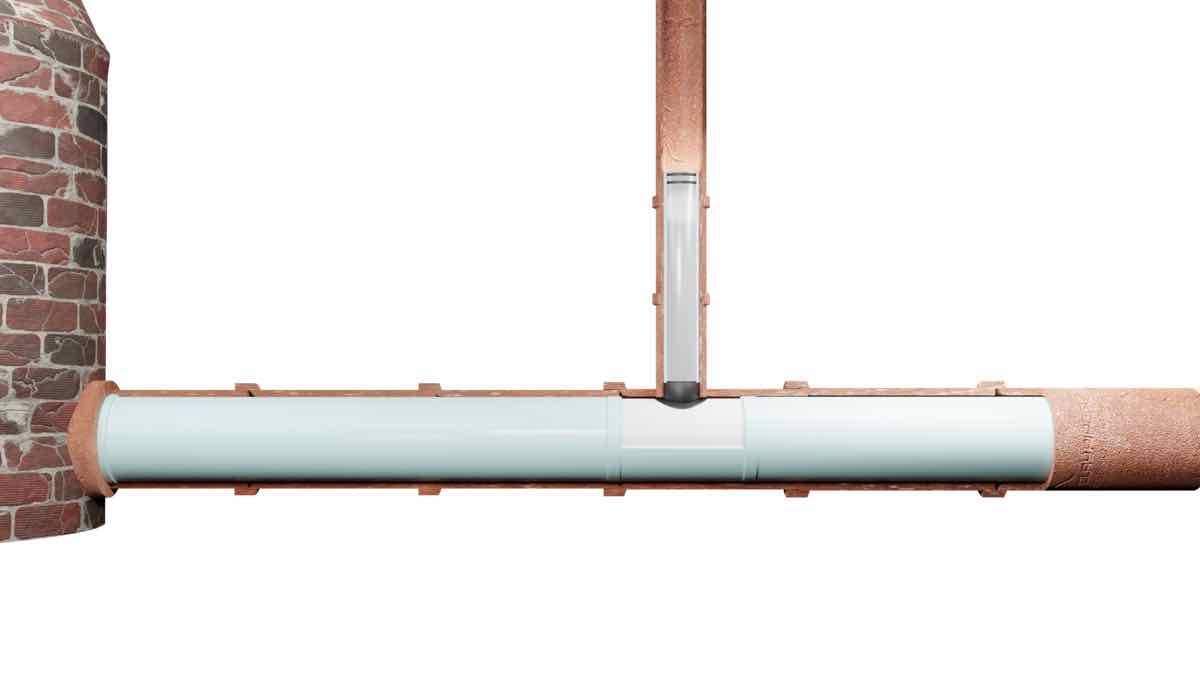
Cutaway illustrations from In-Line Renewal Solutions, who make the lining system we run.
Does insurance cover any of this?
Second thing every homeowner asks after a sewer quote. The base policy almost certainly won’t pay to replace a worn-out lateral. Two endorsements can, and one of them Virginia law requires your insurer to offer you.
The base policy usually won’t pay for the pipe
A standard homeowners policy covers the house against sudden accidents, and then names the things it won’t pay for. On the ISO HO-3 form, the standard most policies here are built from, that list includes wear and tear, deterioration, rust and corrosion, and settling. Those four are exactly how a sewer lateral dies. So a line that failed because it got old is generally denied, and not because your carrier is being difficult.
Virginia makes them offer you backup coverage. You have to say yes.
This is the one most homeowners here don’t know. Virginia Code 38.2-2120 requires insurers to offer coverage for water that backs up through sewers or drains, and the State Corporation Commission’s own consumer guide tells you to make sure you get it. It isn’t in the base policy. The endorsement covers the mess a backup makes inside the house, and the standard version starts at $5,000 of back-up coverage with steps up to $25,000.
Service line coverage is the one that pays for the pipe
A separate endorsement, and the useful part is what it covers: carriers writing it in Virginia list wear and tear, rust, freezing and tree root invasion as covered causes, which is precisely what the base policy excludes. It typically pays for the excavation and putting the yard back, too. Verified limits: Erie writes $10,000 or $25,000, Liberty Mutual writes $12,000 with a $500 deductible. Ask your agent what yours is, because the number moves by carrier.
The catch nobody reads until they need it
Two of them, both in the carriers’ own footnotes. A blockage with no physical damage to the line isn’t a claim, so roots that have cracked the pipe are covered and a grease clog isn’t. And the pipe running under your house is usually excluded, because the endorsement covers the buried line outside the building. Worth knowing before you assume you’re covered.
Where your responsibility ends and where your coverage ends are two different lines on the map. The standard endorsement covers the buried line on your own property. Your responsibility, in most of Northern Virginia, runs all the way to the main, including the part under the street. Read the endorsement rather than assuming the two match. We don’t file or negotiate insurance claims, and anyone in this trade who offers to is doing you no favors. You get the camera footage, a written scope of what failed and why, and dated photos. That’s what an adjuster wants, and it is yours whichever way the claim goes.
Lining is one option. It isn’t the only pipe we replace.
A sewer lateral is the pipe that gets the attention, because when it fails the whole house stops. It’s one of several we work on, and on a lot of jobs it isn’t even the one that turns out to be worst.
Sewer lining is one job on the truck, not the whole truck
The lateral is the pipe everybody notices, because when it fails the whole house stops. It’s not the only pipe we replace. Drain and waste repipes, water service lines from the meter to the house, and the supply piping inside the walls are all the same crew and the same license.
Copper, PEX, PVC and cast iron
We repipe in copper where a homeowner wants copper, and in PEX where it’s the better answer for the run, the budget or the walls we would otherwise have to open. On the drain side that usually means replacing failed cast iron or galvanized with PVC. What we won’t do is decide it for you off a price sheet: the right material depends on the run, the water and how much of the house has to come apart.
What we’ve actually charged for repiping
Most repipe work runs somewhere between $1,000 and $12,000, depending on how much of the house has to come apart. A section under a fixture sits at the bottom. Repiping the horizontal runs through a basement or crawl space sits at the top. Water service line work, meter to house, generally runs $3,500 to $8,000.
When repiping and sewer work land on the same visit
More often than you’d think. A camera call for a slow drain finds cast iron that’s scaled shut inside the house as well as roots in the lateral outside it. You get told about both, and you get to decide what gets done now and what waits.
What digging costs you above ground.
Most of what gets said about permits and protected trees in Northern Virginia is wrong in the homeowner’s favor. The one situation where it genuinely matters is a stream.
Nobody needs a permit to take down their own tree. Almost.
Fairfax County puts it plainly: in general there are no laws or regulations in Virginia that stop you removing individual trees on your own property. Arlington says no permit is required on private property in most cases. So the tree in the way of a trench is usually your call, not the county’s. There’s one exception that catches people out, and it’s below.
Resource Protection Areas are the real tripwire
If any part of your yard sits within 100 feet of a stream, you’re probably in a Resource Protection Area, and the rules invert. Fairfax County’s own wording is that removal of trees or any type of vegetation there’s prohibited without a waiver. Arlington counts taking out a tree as small as three inches across in an RPA as land disturbance. Alexandria reviews work in an RPA no matter how small the job. This is Chesapeake Bay law, not tree law, and it doesn’t care that the tree is healthy.
Which side of the line you’re on
RPAs exist in Arlington, Fairfax County, Prince William, Alexandria, the City of Fairfax and Falls Church, plus the towns inside those counties. Loudoun County isn’t in Tidewater Virginia, so Ashburn, Sterling and Leesburg have no RPAs at all. If you’re near a stream in Fairfax, the waiver is free and usually turns around in about a week. It’s a phone call, not a crisis, as long as somebody makes it before the machine shows up.
A trench beside a big tree can kill it a year later
Fairfax County’s own engineering manual treats a tree with 40 percent or more of its critical root zone disturbed as not worth trying to preserve. That’s the number behind a thing we see constantly: the oak survives the job, looks fine all summer, and dies the following season. Roots cut cleanly do better than roots torn, which is why an open trench past a mature tree is the part of the plan worth arguing about.
If your trench line runs through an RPA, start with a phone call. The Chesapeake Bay rules exempt water and sewer lines owned or permitted by a local government. Your lateral is privately owned, but the repair does pull a county permit, and no locality has published which way that cuts for a homeowner. Fairfax Land Development Services is 703-324-1720. Arlington takes RPA questions at rpareview@arlingtonva.us. The reason we lead with lining: a repair that never opens the ground doesn’t start any of these conversations.
What this work costs
Ranges for sewer work in Northern Virginia. Your line gets priced off its own camera footage. More detail in our sewer cost guide.
Camera down the main, added to a visit
$89 when we’re already at the house.
Camera or scope visit on its own
Generally $500 to $1,700, because a standalone scope often includes clearing the line far enough to get the camera through.
Main line cleared
Generally $550 to $1,650, whether it takes a snake, an auger or a jetter.
Line dug up and replaced
Generally $7,500 to $9,000.
Lined instead of dug
Quoted from the footage. Length, diameter and bends decide it, so a flat published price would be a guess and we don’t publish guesses.
Woodbridge, Dale City and the rest of Prince William
Chantilly based, Prince William is a standard run. Homes, townhouses and HOA lines in:
Woodbridge sewer FAQ
How do I know if I have Orangeburg pipe in Woodbridge?
Age is the first clue: houses built here from the 1940s into the early 1970s are candidates. The camera is the answer, and it’s the only safe way to find out. Do not let anyone put a cutting head down a line that might be Orangeburg.
Can a sewer line in Woodbridge be lined instead of dug?
Often, yes. Lining needs a host pipe that still holds its shape, so a root-blocked clay line or a cracked but round pipe is a good candidate, while a collapsed line or a real belly is not. The camera settles it in an hour.
Do you serve Dale City and Lake Ridge as well?
Yes, along with Montclair, Dumfries, Occoquan, Manassas and Manassas Park. Same crew, same camera-first order.
My yard smells like sewage but nothing is backing up. What’s that?
A cracked or separated lateral can leak into the soil without ever slowing the fixtures down, so the smell shows up long before a backup does. That’s a camera call, and finding it at the smell stage is much cheaper than finding it at the backup stage.
How much does trenchless sewer lining cost?
We quote lining off the camera footage, because the price follows the length of the run, the diameter and how many bends are in it. What we won’t do is print a lining number we can’t stand behind: the trade benchmark published by In-Line Renewal Solutions, the lining system manufacturer, averages about $3,800 for a four to eight-foot spot repair, and that’s a contractor average across the country, not a SwiftPro quote. Digging and replacing a sewer line in Northern Virginia generally runs $7,500 to $9,000.
What does a sewer camera inspection cost?
$89 as an add-on when we’re already at your house on another call. Booked on its own, a scope visit generally runs $500 to $1,700, because a standalone visit often includes clearing the line far enough to get the camera through.
Is my sewer lateral my responsibility or the county’s?
In most of Northern Virginia it’s yours, from the building all the way to the main, including the part under the street. Fairfax County and Arlington both put it that way in writing. There are real exceptions: the Town of Herndon draws the private portion from the property line to the house only, and the City of Fairfax reimburses part of a lateral repair. Ask us and we’ll tell you which rule your address falls under.
How long does the work take?
A camera inspection is an hour or so. A lining job on a residential lateral is usually a single day, with the cure itself measured in minutes. An excavation and replacement depends on depth, what’s on top of it, and how fast the permit and inspection move.
Do you’ve to dig up my whole yard?
That’s the point of lining: the line is renewed through existing access, so the lawn, the driveway and the mature trees stay where they’re. Even when we do have to dig, it’s the failed section, located first with the camera, not a trench down the length of the property.
Do you only do trenchless lining, or full pipe replacement too?
Both, plus everything either side of them. Sewer lining, sewer excavation and replacement, drain and waste repipes, water service lines from the meter to the house, and supply repiping in copper or PEX. Lining is the option we lead with on a sewer lateral because it saves the yard when the pipe allows it, not because it’s the only tool we own.
Will homeowners insurance pay for my sewer line?
For the pipe itself, usually not on the base policy. The ISO HO-3 form that most policies here are built from excludes wear and tear, deterioration, rust and settling, which is how laterals actually fail. Two endorsements change the answer: water backup coverage, which Virginia law requires your insurer to offer you, pays for the damage a backup does inside the house, and service line coverage pays to repair or replace the buried line and put the yard back. Neither is automatic. Both have to be on the policy before anything goes wrong.
What should I ask my insurance agent?
Four questions. Do I have water backup coverage, and at what limit. Do I have service line or buried utility line coverage. Where does that coverage stop, at my property line or at the main. And is a root intrusion that’s cracked the pipe treated as physical damage, since a blockage on its own generally isn’t. We don’t file claims and we won’t pretend to, but we will hand you the camera footage and a written scope so you’re asking with evidence in hand.
Should I get the sewer scoped before I buy a house?
Yes, and know that a standard home inspection doesn’t include it. InterNACHI’s standards of practice don’t require an inspector to scope the sewer, so on a 1960s or 1970s Northern Virginia house it’s a separate call and a cheap one against what a failed lateral costs.
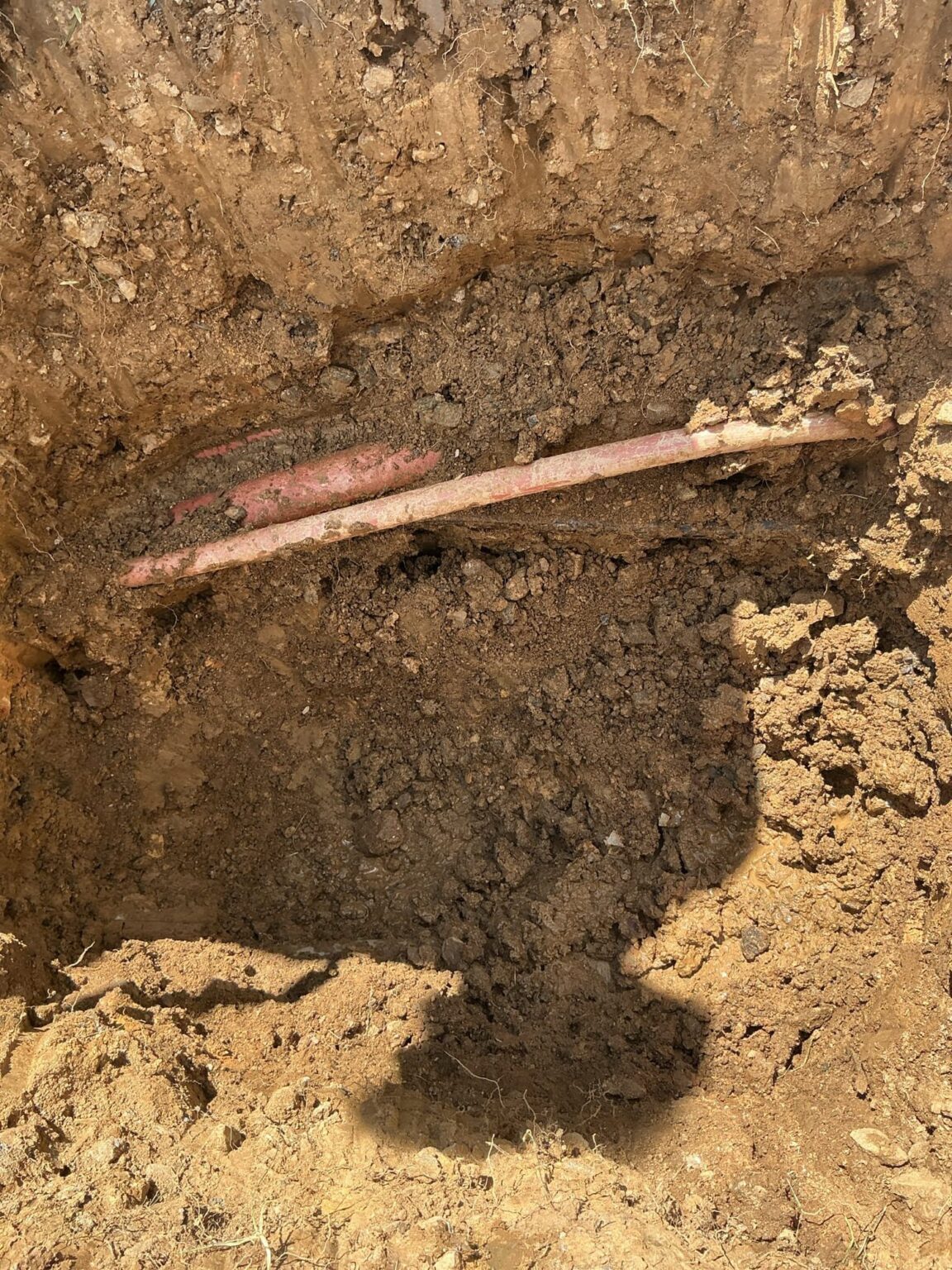
More on sewer lines, in plain English
Woodbridge sewer line, seen before it’s sold.
Recurring backups, a soggy patch in the yard, or a 1960s house you’re about to buy. Book the camera, watch the footage with us, and get both repair answers before you choose one.
Licensed Class A #2705192276 · Based in Chantilly, serving all of Northern Virginia