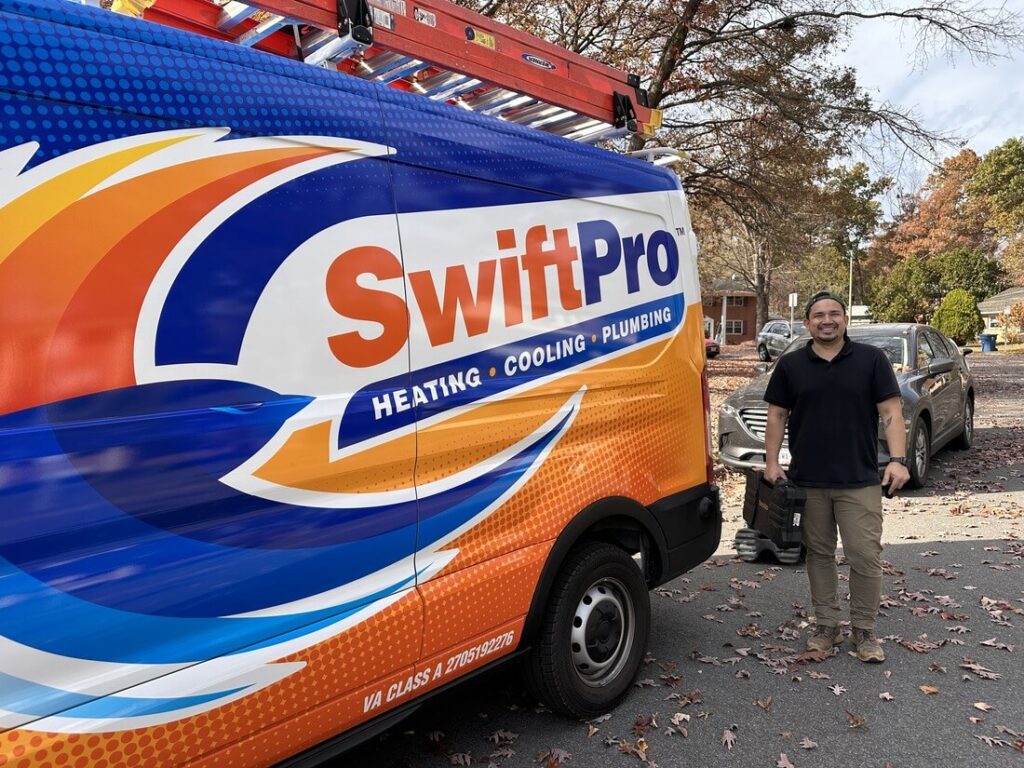
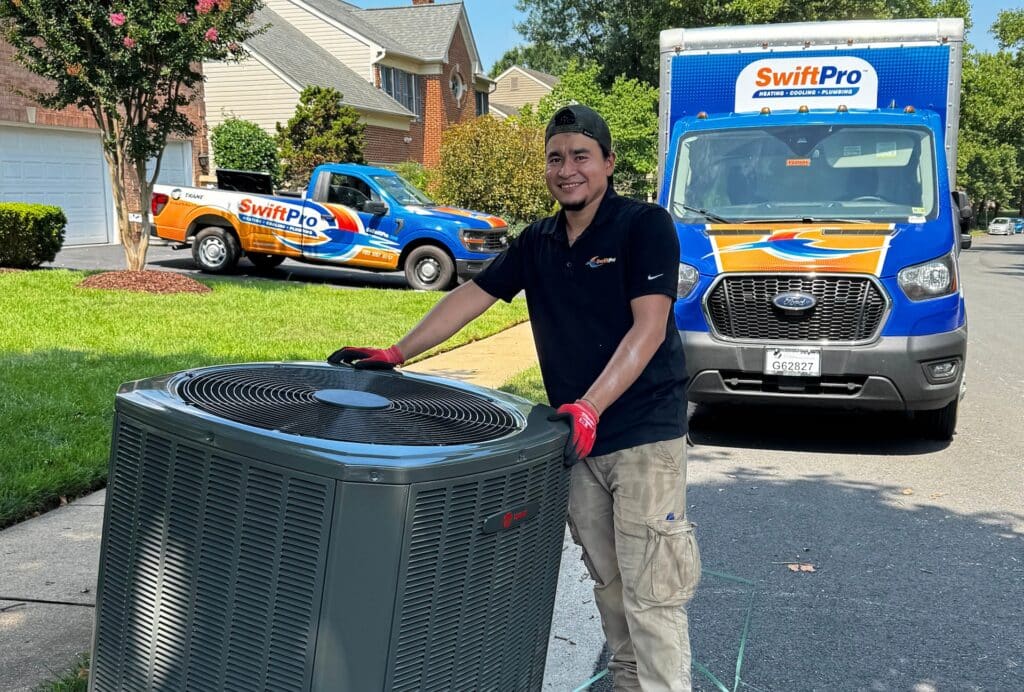
October 2026: this year’s models and warranty terms, and our current installed prices.
Our first pick is Mitsubishi Electric. Installed in Northern Virginia, a one-zone mini split runs $7,000 to $10,000 in our price book. From about $117 a month at 0% APR for 60 months, the whole price financed, on approved credit. How financing works
Fujitsu and Daikin are close behind. LG and Carrier are solid. Trane’s mini splits are Mitsubishi Electric equipment sold through Trane’s dealers, Gree and Samsung each fit somebody, and the do-it-yourself kits fit a different buyer altogether. The ranked list is right below. After it: why each brand lands where it does, who makes what, the warranties side by side, and what one costs installed here.
One thing before the list. With a mini split, the install decides more than the badge does. The refrigerant lines, the vacuum, where the head hangs on the wall: get those wrong and the best brand on this page will still let you down.
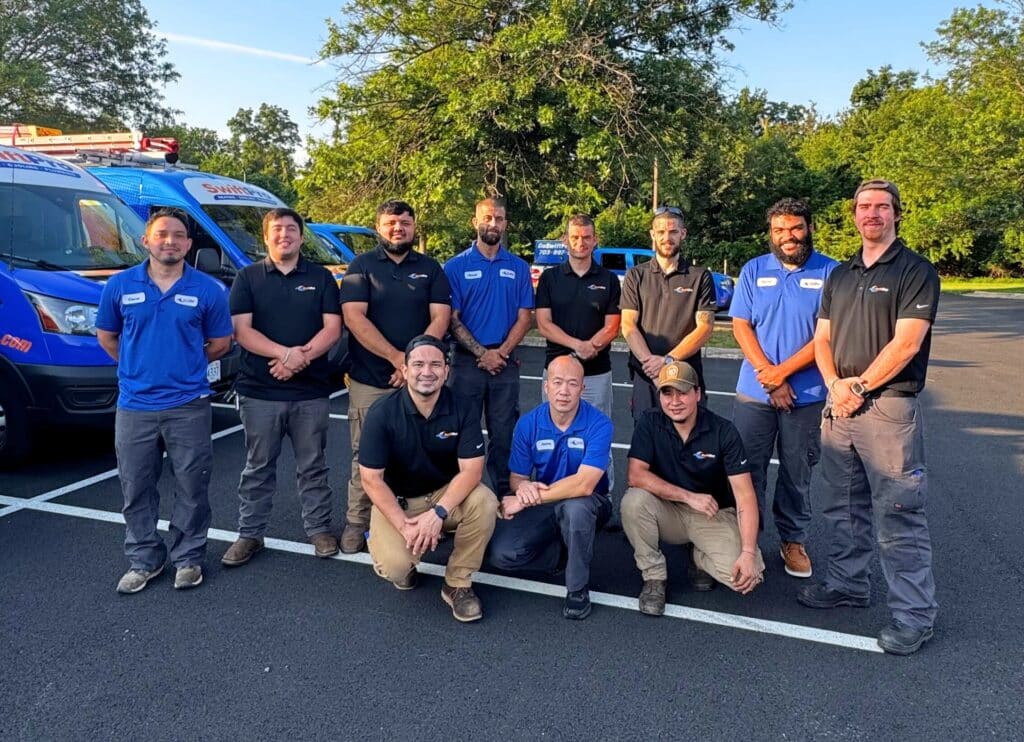
The best mini split brands, ranked
| Brand | Best at | Good fit for |
|---|---|---|
| 1. Mitsubishi Electric | Heat in real cold, and a head for every kind of room | The cold room, an addition, a whole house without ducts |
| 2. Fujitsu (now sold as Fujitsu AIRSTAGE) | Cold weather: its top wall unit heats down to -22°F | The same jobs as Mitsubishi, from a second top maker |
| 3. Daikin | Twelve years on parts just for registering on time | Owners who’ll keep the paperwork |
| 4. LG | The deepest cold rating on paper: full heat at -13°F | A cold room, with an LG-trained installer |
| 5. Carrier | A strong top tier, Infinity | A house already on Carrier, or a buyer who wants three price levels |
| Trane and American Standard (same as 1) | Mitsubishi Electric equipment, sold through their dealers | Anyone holding a Trane quote for ductless |
| 6. Gree | Value, with cold-climate models rated to -22°F | A tighter budget with a pro install |
| 7. Samsung | A registered warranty that includes a year of labor | Owners who want some labor covered |
| For DIY: MrCool, Senville, Pioneer | Low prices online; MrCool goes in without a vacuum pump | A garage, a workshop, a handy owner |
1. Mitsubishi Electric: our first pick
Mitsubishi Electric is the brand we’d hang on our own wall. Three reasons, and you can check every one.
It keeps heating when it’s cold. Mitsubishi’s Hyper-Heat outdoor units hold 100% of their rated heat at 5°F. The FX and GX Hyper-Heat units keep heating down to -22°F, and the rest of the Hyper-Heat line is rated to -13°F. That’s far colder than a typical Northern Virginia winter night, which is why a Mitsubishi can be the only heat in an addition or a finished attic.
There’s a head for every room. Wall heads run from the JX, which plugs into a standard outlet, up to the FX, which Mitsubishi rates at up to 35 SEER2 and 13.3 HSPF2 in its smallest size. Beyond the wall units there are floor units that take the place of a baseboard heater or radiator, ceiling cassettes that fit between standard joists, and small ducted units that serve one or two rooms through a short duct run. One multi-zone outdoor unit can run up to eight indoor units.
The warranty goes furthest through a Diamond Contractor. Out of the box, Mitsubishi covers parts for five years and the compressor for seven. Register it within 90 days in a home you own and live in, and both go to ten. Have a Diamond Contractor install and register it, and both go to twelve. We’re a Mitsubishi Electric Diamond Contractor, so a system we install and register gets the twelve. Two of the value lines, the WX and HX, top out at ten. It covers parts, not labor, and it stays with the original owner. You can look us up on Mitsubishi Electric’s contractor locator by searching ZIP code 20151.
Mitsubishi’s newest lines, starting with the FX and GX, run on R-454B, the lower-impact refrigerant. In the US, Mitsubishi Electric’s heating and cooling is sold by Mitsubishi Electric Trane HVAC US, a 50/50 joint venture with Trane Technologies formed in 2018. That’s why Trane’s name comes up below.
It isn’t the budget pick. If the budget is the budget, keep reading: there are fair choices further down the list.
2. Fujitsu
Fujitsu is the brand we’d put closest to Mitsubishi Electric. Its top wall unit, the Orion XLTH+, is rated to keep heating down to -22°F with no low-temperature cutout, and the Orion XLTH and the Aquila XLTH multi-zone units are rated to -15°F. The Altair line below them heats down to 5°F, so check which tier a quote names. Fujitsu’s newer units run on R-32.
The name on the box is changing. Fujitsu General joined the Paloma Rheem Holdings group in 2025 and renamed itself GENERAL Inc. on January 1, 2026. In the US the equipment is sold as Fujitsu AIRSTAGE by GENERAL HVAC Solutions America, and the company says it will move away from the Fujitsu brand gradually. If a quote says AIRSTAGE, it’s Fujitsu.
The warranty mirrors Mitsubishi’s: five years on parts and seven on the compressor out of the box, ten and ten when it’s registered within 60 days, twelve and twelve when it’s also installed by a contractor in Fujitsu’s own installer program. It has to go in through a licensed contractor, and labor isn’t covered.
3. Daikin
Daikin calls itself one of the largest heating and cooling makers in the world, and it owns Goodman and Amana here in the US. Its single-zone lines today are ATMOSPHERA, AURORA, OTERRA, ENTRA, POLARA and VISTA, a ceiling cassette. ATMOSPHERA and AURORA hold up to 100% of their rated heat at 5°F and keep running down to -13°F. Daikin’s new ductless runs on R-32, and OTERRA comes in either R-410A or R-32.
Daikin has the simplest warranty here. Register within 60 days and the top lines get twelve years on parts, no special installer needed; ENTRA and POLARA get ten. Skip the registration and it’s five. Parts only, no labor, and it stays with the original registered owner while they live in the house. One naming trap: Daikin FIT on a quote is a ducted, whole-house system, not a mini split.
4. LG
LG’s headline is cold. Its ARTCOOL Deluxe wall unit with LGRED° Core is rated to give 100% of its heat at -13°F and keep running down to -31°F, the deepest rating on this page, and LG’s spec sheet backs it up. LG is moving its split systems to R-32, and one LG multi-zone outdoor unit runs up to four heads, or up to eight on the Multi F MAX.
LG’s warranty asks the most of the installer. Even the base five years on parts and seven on the compressor needs a licensed installer who has finished LG’s product training. Register within 60 days of startup and it goes to ten. Through an LG Pro Dealer, up to twelve. No labor.
5. Carrier
Carrier sells ductless in three tiers: Comfort, Performance and Infinity at the top. The best of them is strong. Carrier rates its Infinity 35 single-zone heat pump at up to 35.1 SEER2 with heating down to -22°F, and says its Infinity wall head keeps 100% of its heating capacity at 5°F when paired with it. Carrier’s ductless runs on Puron Advance, Carrier’s name for R-454B.
The warranty is Carrier’s usual deal: ten years on parts if it’s registered within 90 days, five if it isn’t. A participating dealer can swap that for five years of parts plus three years of labor. Carrier’s ductless certificate lists parts only, with no longer term for the compressor.
Before Carrier became its own company in 2020, it described Midea as a long-time supplier of its ductless systems. We’re Carrier experts, and you’ll find us on Carrier’s dealer locator.
Trane and American Standard: the same as number one
Trane doesn’t sell a mini split of its own in the US. Its ductless page sends you to Mitsubishi Electric, and Trane says each of those mini splits is made by Mitsubishi Electric Trane HVAC US, the joint venture Trane’s parent company co-owns. American Standard, Trane’s sister brand, works the same way. Their own-brand ductless models are listed as sold in Canada only.
So if one quote says Trane and another says Mitsubishi Electric, you’re comparing the same maker’s equipment. Line up the model numbers, then compare the installers. We’re a Trane Comfort Specialist and a Mitsubishi Electric Diamond Contractor, and on a mini split both roads lead to the same Mitsubishi.
6. Gree
Gree is made by Gree Electric Appliances of Zhuhai, China, founded in 1991, which calls itself the world’s largest air conditioner company. Its US lineup runs Livo, Vireo, Envo, Sapphire and Zeno for single rooms, plus Multi and Multi ECO for several. The Sapphire, Vireo and Envo are rated to heat down to -22°F, and everything current runs on R-32.
The standard warranty is five years on parts and seven on the compressor, installed by a licensed HVAC contractor. The ten-and-ten term needs a GREE Select Dealer to install it and register it, and Gree’s own pages disagree on whether that window is 60 or 90 days, so register inside 60. No labor. And if a Gree quote says FLEXX, that’s a ducted central system, not a mini split.
7. Samsung
Samsung sells its US mini splits under the WindFree name: Premium, Max Heat, IAQ and Standard, plus Free Joint Multi for several rooms. WindFree Max Heat is the cold-climate one, which Samsung says gives 100% heating at 5°F and keeps heating at -22°F. It runs on R-32.
Samsung’s warranty stands out for one thing. Register within 60 days and the ten years on parts and compressor come with one year of limited labor, the only warranty here that adds labor on top of the full ten years. Through a Samsung Preferred Plus Dealer it goes to twelve and twelve, still with the year of labor. Out of the box it’s five on parts and seven on the compressor. Ask the installer for Samsung’s warranty certificate in writing, because that’s where “limited labor” gets defined.
The do-it-yourself brands: MrCool, Senville and Pioneer
These three sell to homeowners directly, mostly online, and cost less up front than anything above. They’re a different deal, not a worse version of the same one, so here’s the deal in the makers’ own terms.
MrCool is the real do-it-yourself kit. Its DIY 5th Generation line ships with line sets already charged with R-454B and Quick Connect fittings, so there’s no vacuum pump and no refrigerant to handle. The lines come in lengths from 11.5 to 50 feet. The warranty is five years on parts and seven on the compressor, no registration needed, and lifetime coverage means paying for MrCool’s monthly Care plan. Labor isn’t covered, and MrCool says a line set that’s connected a second time voids the warranty. Its own manual says the wiring must be done by a licensed electrician. MrCool’s Advantage and Olympus lines need an HVAC professional to install them.
Senville and Pioneer are sold online too, but they aren’t snap-together kits. Their lines use standard flare fittings that still have to be leak tested and vacuumed. Senville says it plainly: a do-it-yourself install voids its warranty, and a licensed HVAC professional has to do the pressure test and the evacuation. Its Aura series carries ten years on the compressor and five on parts. Pioneer’s warranty runs up to five years if you register it and up to one if you don’t, it never pays for refrigerant, and Pioneer’s manual calls for qualified people to evacuate the system and a licensed electrician to wire it.
Two more things before you order one. EPA’s homeowner guidance says connecting or disconnecting a mini split’s pre-charged lines takes Section 608 technician certification, even though MrCool sells its kit as needing no license. And in Fairfax County, a new heating and cooling system needs a mechanical permit and new electrical equipment needs an electrical permit, whoever does the work. You can pull a permit for your own house.
Who they suit: a garage, a workshop or a shed, a handy owner who’ll hire an electrician for the circuit, and a budget that has to win. What you give up: the longest warranties on this page, an installer who answers for the job, and a charge that someone checked with gauges at your house.
Thinking about doing it yourself? The whole decision, room by room, with the line set, the wiring and the permits in three counties, is in DIY mini split: should you install one yourself.
Who makes which mini split brand
Who builds what, from each company’s own pages.
| Brand | Who makes it |
|---|---|
| Mitsubishi Electric | Mitsubishi Electric, sold in the US by Mitsubishi Electric Trane HVAC US, a 50/50 joint venture with Trane Technologies since 2018 |
| Trane and American Standard mini splits | Mitsubishi Electric. Trane says each of these mini splits is made by Mitsubishi Electric Trane HVAC US |
| Fujitsu (AIRSTAGE) | GENERAL Inc., formerly Fujitsu General, part of the Paloma Rheem Holdings group since 2025, sold in the US by GENERAL HVAC Solutions America |
| Daikin | Daikin Industries of Japan, through Daikin Comfort Technologies North America, which was Goodman Manufacturing. Daikin also owns Goodman and Amana |
| LG | LG Electronics, through LG Electronics USA |
| Samsung | Samsung HVAC America, Samsung’s North American heating and cooling arm |
| Carrier | Carrier. Before its 2020 spin-off, Carrier named Midea as a long-time supplier of its ductless systems |
| Gree | Gree Electric Appliances, Zhuhai, China |
| MrCool | MRCOOL, headquartered in Hickory, Kentucky. It doesn’t name a factory |
| Senville | Senville, which says its production partners build to its standards, with GMCC compressors |
| Pioneer | Parker Davis HVAC International, which owns the Pioneer brand and backs its warranty |
The most reliable mini split brands
We haven’t found an honest public scoreboard of mini split failure rates, so be wary of any list that ranks reliability by percentages. Two things you can check: what each maker promises on paper, and who installs it. Here’s the paper, read off each maker’s own warranty documents in October 2026.
| Brand | Out of the box | Best you can get |
|---|---|---|
| Mitsubishi Electric | 5 yr parts, 7 yr compressor | 10 and 10, registered within 90 days. 12 and 12 through a Diamond Contractor |
| Fujitsu | 5 yr parts, 7 yr compressor | 10 and 10, registered within 60 days. 12 and 12 through its installer program |
| Daikin | 5 yr parts | 12 yr parts, registered within 60 days (10 on ENTRA and POLARA) |
| LG | 5 yr parts, 7 yr compressor, with an LG-trained installer | 10 and 10, registered within 60 days of startup. Up to 12 through an LG Pro Dealer |
| Samsung | 5 yr parts, 7 yr compressor | 10 and 10 plus 1 yr limited labor, registered within 60 days. 12 and 12 through a Preferred Plus Dealer |
| Carrier | 5 yr parts | 10 yr parts, registered within 90 days. Or 5 yr parts plus 3 yr labor through a participating dealer |
| Gree | 5 yr parts, 7 yr compressor | 10 and 10 through a GREE Select Dealer, registered (within 60 days, to be safe) |
| MrCool DIY | 5 yr parts, 7 yr compressor, no registration | Lifetime with the paid monthly Care plan |
Labor is on you with almost all of them. Our answer for most reliable is the same as our ranking: Mitsubishi Electric, Fujitsu, Daikin. The terms are close at the top, so what decides it is the fine print. Register on time, keep the paperwork, and make sure your installer meets the maker’s rules for the longer term. Then keep the filters clean and the outdoor unit clear.
What a mini split costs installed in Northern Virginia, one zone or more
Straight from our price book, the same one our free estimator runs on. A zone is one room with its own head on the wall.
| System | Installed, our price book | Monthly at 0% |
|---|---|---|
| One zone (one room) | $7,000 to $10,000 | $117/mo at 0% APR for 60 months |
| Two zones | $11,000 to $15,000 | $183/mo at 0% APR for 60 months |
| Three zones | $12,500 to $18,000 | $208/mo at 0% APR for 60 months |
Monthly figures: 60mo @ 0% APR on each starting price, the whole price financed, on approved credit. Longer plans lower the payment and cost more in total. The lender sets the final terms. How financing works
Where you land in a range comes down to how far the outdoor unit sits from the room, which kind of head goes in, and how much room is left in the electrical panel. The second zone jumps the most because it often needs a bigger outdoor unit. The third mostly adds another head and another run of refrigerant line. Why the second zone costs the most.
One zone or a multi-zone system? One room, one outdoor unit, every time. For two or three rooms close together, one multi-zone outdoor unit can carry all the heads and saves a second box on the side of the house. Rooms at opposite ends of the house, or one that needs far more heat than the others, often do better on their own outdoor units. If there’s a chance you’ll want a second room done later, price both now. Coming back in two years usually means a second outdoor unit beside the first.
Your price comes in writing, for your house, before anything is decided. Price your rooms with our estimator in a couple of minutes. Near our shop? Here’s ductless mini splits in Chantilly, with the local permit rules.
Where a mini split earns its keep in Northern Virginia
The one room that’s always wrong. The bonus room over the garage, the sunroom, the back bedroom that’s ten degrees off the rest of the house. Before anyone sells you a head for it, make sure the ducts aren’t the problem: a crushed or disconnected run is a cheaper fix. The usual causes, in order, and zoning versus a ductless head.
Additions, finished basements and attics. New space with no ducts. Stretching the main system to reach it often starves the rooms already on it, so you trade one bad room for three.
Older houses without ductwork. Some older homes here heat with a boiler and radiators and have no ducts at all. Ductless is how they get air conditioning without tearing into plaster.
Cold nights. A mini split is a heat pump, and the cold-climate models keep heating far below anything a normal Northern Virginia winter throws at them. How heat pumps handle our winters.
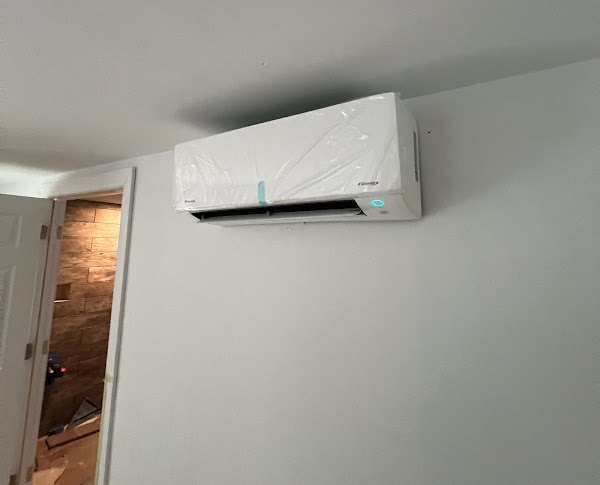
What matters more than the brand
A mini split is less forgiving of a sloppy install than a furnace is. The whole system is a sealed refrigerant loop, and most of what goes wrong in year two was decided on install day. What to look for in whoever puts it in:
- Sized for the room. The right size comes from the room’s walls, windows and exposure, not a rule of thumb. Fairfax County asks for a Manual J load calculation on every HVAC install. An oversized head short-cycles, leaves the room clammy in July and wears out young.
- The head in the right spot. High on a wall where it can throw air across the room. Not over the bed, not behind the bookcase.
- A tight refrigerant line. The line set should be pressure tested, then pulled into a deep vacuum before the refrigerant is let in. Skip that and moisture or a slow leak shows up a year later.
- A plan for the water. A head pulls water out of summer air. It needs a drain line that runs downhill, or a small pump, decided before the hole goes in the wall.
- The outdoor unit up off the ground. On a stand or wall brackets, clear of snow, with room to drain when it defrosts in winter.
- The warranty registered. Most of the longer terms on this page depend on it: 60 days at Fujitsu, Daikin, LG and Samsung, 90 at Mitsubishi Electric and Carrier. Your installer should do it and hand you the proof.
Questions people ask us about mini split brands
What’s the best mini split brand?
Mitsubishi Electric, for most houses. It heats in real cold, makes a head for every kind of room, and through a Diamond Contractor its parts and compressor are covered for twelve years. Fujitsu and Daikin are close behind. Any of the three, sized and installed right, will outlast a pricier system put in badly.
How much does a mini split cost installed?
In our price book, one zone runs $7,000 to $10,000 installed, two zones $11,000 to $15,000 and three zones $12,500 to $18,000. From about $117 a month at 0% APR for 60 months, the whole price financed, on approved credit. Where you land depends on how far the outdoor unit sits from the room, the kind of head and the electrical panel.
Mitsubishi or Fujitsu?
They’re the closest pair on this list. Both have top wall units rated to heat down to -22°F, and both warranties run five years on parts and seven on the compressor, ten and ten registered, twelve and twelve through the maker’s own installer program. Mitsubishi gives you 90 days to register, Fujitsu 60. We lean Mitsubishi for its range of indoor units and because we can give you its twelve-year term ourselves.
Mitsubishi or Daikin?
Mitsubishi for cold-weather heating and the range of head styles: its FX and GX Hyper-Heat units heat down to -22°F, Daikin’s ATMOSPHERA and AURORA to -13°F. Daikin for the easier warranty: twelve years on parts just for registering within 60 days, where Mitsubishi’s twelve needs a Diamond Contractor. Both are good buys.
Mitsubishi or LG?
LG has the deeper cold rating on paper. Its ARTCOOL Deluxe holds 100% of its heat at -13°F and runs to -31°F; Mitsubishi’s FX Hyper-Heat holds 100% to -10°F and heats to -22°F. LG’s warranty needs an LG-trained installer even for the base terms. We still pick Mitsubishi for its range of indoor units and the twelve-year term we can register for you, but an LG put in by someone who knows it is a fair choice.
Fujitsu or Daikin?
Fujitsu for cold: its Orion XLTH+ heats down to -22°F, Daikin’s ATMOSPHERA and AURORA to -13°F. Daikin for the easy warranty: twelve years on parts for registering within 60 days, where Fujitsu’s twelve needs one of its program installers. Fujitsu is also mid-rename and now sells as Fujitsu AIRSTAGE.
Who makes Trane mini splits?
Mitsubishi Electric. Trane doesn’t sell a mini split of its own in the US. It partners with Mitsubishi, and Trane says each of those systems is made by Mitsubishi Electric Trane HVAC US, the joint venture Trane’s parent company owns with Mitsubishi Electric. American Standard’s ductless works the same way.
Does Carrier make mini splits?
Yes, in three tiers: Comfort, Performance and Infinity. Carrier rates its top single-zone system, the Infinity 35, at up to 35.1 SEER2 with heating down to -22°F. Register it within 90 days for ten years on parts. We’re Carrier experts.
Is MrCool any good?
For what it is, yes. It’s the one brand here built for a homeowner to put in without a vacuum pump: the line sets come charged with refrigerant and snap together. You get five years on parts and seven on the compressor, no labor. The catches are in MrCool’s own paperwork: its manual wants a licensed electrician on the wiring, a line set connected twice voids the warranty, and EPA says connecting pre-charged lines takes Section 608 technician certification. For a garage or a workshop it’s a fair buy. For the room you sleep in, we’d want a pro-installed system with a longer warranty.
Can I install a mini split myself?
With MrCool’s DIY kit, people do. With most other brands, a do-it-yourself install costs you the warranty: Senville says so outright, and the big brands’ longer terms depend on a licensed contractor and registration. Either way the new circuit is electrical work, and in Fairfax County a new system needs a mechanical permit and an electrical permit. You can pull those for your own house.
What’s the best mini split for a cold climate?
Look for a model rated to hold 100% of its heat at 5°F and keep heating well below zero. Mitsubishi’s FX and GX Hyper-Heat, Fujitsu’s Orion XLTH+, Carrier’s Infinity 35, Samsung’s WindFree Max Heat and Gree’s Sapphire are all rated to heat at -22°F, and LG’s ARTCOOL Deluxe runs to -31°F. Any of them covers a Northern Virginia winter. The bigger risk is a head sized wrong for the room.
Do you work on mini splits someone else installed?
Yes, the major brands, whoever put them in. The diagnostic visit is $99, and you get the problem and the price in writing before any work starts. If the system is still under its parts warranty the part may be covered, but the labor usually isn’t.
Ready to price a mini split?
Pick from the top of the list, then put your real scrutiny on the installer. Did they look at the room? Is the whole job in writing? Will they register the warranty? If you’re already holding a quote, our free second opinion is built for exactly that, and anything we’re running right now is on our offers page.
When you’re ready, call (703) 997-9757 or book online. For every other kind of heating and cooling, see the best HVAC brands and our heating page.
More brand rankings from our installers: the best HVAC brands, furnace brands, heat pump brands, water heater brands and tankless water heater brands.
SwiftPro Heating, Cooling & Plumbing installs and services ductless mini splits, heat pumps, furnaces and air conditioners across Northern Virginia, out of Chantilly and Ashburn. SwiftPro is a Mitsubishi Electric Diamond Contractor and a Trane Comfort Specialist, family owned, with Virginia Class A contractor license 2705192276, rated 5.0 stars across 1,131 reviews on Google, Angi, Yelp, the BBB and Facebook. Read the reviews.