


Written October 2026 from our own MagicPak jobs, with MagicPak’s own manuals and spec sheets, the EPA, the Department of Energy and the Code of Virginia read at the source the same week.
A Magic Pak (the maker spells it MagicPak) is a whole heating and cooling system in one cabinet: the furnace or heat pump, the air conditioner and the blower, standing in a closet against an outside wall and breathing through a louvered grille in that wall. No outdoor unit, no refrigerant lines. A new MagicPak from us starts at $142/mo at 0% APR for 60 months, or $8,500 to $13,400 installed in the same wall opening, anywhere in Northern Virginia. Monthly figures on the starting price, the whole price financed, on approved credit. The lender sets the final terms.
If yours quit, take five minutes on the checks below before you call: the breaker, the filter, the louver outside and the drain can each stop a MagicPak cold. Still nothing? Call (703) 997-9757. Every kind of condo system books on our condo HVAC page, MagicPaks included.
Most of the MagicPaks we replace are in garden condos in Alexandria and Falls Church, with more in Reston, Annandale, Arlington and Manassas: mostly 1.5 and 2 tons, gas and heat pump both.

How to tell you have a Magic Pak, and not something that looks like one
Inside, one tall cabinet in a closet on an outside wall, ductwork off the top, nothing else in that closet heating or cooling. Outside, a louvered grille in the wall right behind it, 29 inches wide; on a V-Series it’s 29 by 45 (MagicPak’s comparison guide). No pad, no rooftop unit, no copper lines: the compressor and both coils live in the cabinet.
Three look-alikes get called MagicPaks. A PTAC sits under a window and serves one room. A First Co through-the-wall system is two pieces, a condensing unit in the wall and an air handler in the closet (First Co HVAC). A closet unit fed by water pipes from the building is usually a water source heat pump.
Reading a MagicPak model number off the rating plate
The rating plate is a sticker on the front panel, and it tells you what the unit burns, how big it is, what refrigerant is in it and how old it is: in the serial number, the second pair of digits is the year, so 8409C12345 was built in 2009 (MagicPak’s FAQs). Then match the letters in the model number:
| Letters | What it is | Where the heat comes from |
|---|---|---|
| HWC | V-Series, gas heat, electric cooling | A gas burner, 80% or up to 95% AFUE |
| EWC | V-Series, electric heat, electric cooling | Heat strips, 5 to 15 kW |
| MGE | M-Series, gas heat, electric cooling | A gas burner, 80% (MGE8) or 95% (MGE9) |
| MHP | M-Series heat pump | The heat pump, 3 to 10 kW of strips as backup |
| MCE | M-Series, electric cooling and heat | Heat strips, up to 10 kW |
The numbers decode too. On a current HWC836-7-11-18P, the 8 is 80% AFUE, the 36 is 36,000 Btu an hour of gas input, the 7 means R-454B, the 11 is the 11.7 SEER2 class and the 18 is 18,000 Btu of cooling, a ton and a half (MagicPak’s number guide). On an EWC10-7-11-18P, the 10 is a 10 kW heater. Older plates put the heat first: 38HWC244 is 38,000 Btu of gas input and 2 tons of cooling, and MagicPak’s 2005 sheet for it lists R-22 (2005 spec sheet). Cooling Btu divided by 12,000 is tons.
Photograph the plate and the louver outside. Those two pictures answer most of what we’d ask before a visit.
Before you call: the five-minute Magic Pak check
- The thermostat. Heat or Cool, not Off, a few degrees past the room, fresh batteries if the screen is blank. A heat pump in defrost can look like nothing is happening for a few minutes.
- The breaker. A MagicPak runs on 208/230 volts on its own double breaker. Tripped? Reset it once. If it trips again, leave it off and call.
- The filter. Power off, access panel off, filter out. Can’t see light through it? Wash it, dry it, put it back. Never run it without one.
- The louver. Outside, clear leaves, plants, snow and anything leaning on the grille. Don’t cover or screen it: MagicPak says many facade designs cut a unit’s performance and some damage it (louver instructions).
- The drain. Water on the closet floor or in the pan means a backed-up drain. Thermostat to Off, mop up, call.

Smell gas near a gas MagicPak? Skip the list. Washington Gas says to leave the building right away, then call 911 and its leak line, 844-WASHGAS (927-4427), option 1, from outside (Washington Gas).
MagicPak heat pump or gas: how each one heats
A MagicPak heat pump (MHP) pulls heat from the outside air through the louver, with 3, 5, 7 or 10 kW of electric strips in the cabinet as backup. MagicPak rates it to run down to -5°F with no low-temperature compressor cutoff (MHP spec sheet). On a cold, damp morning it defrosts its outdoor coil for up to 14 minutes and runs the backup heat meanwhile (MHP manual). The heat kit’s size is a line on our quote, because it carries the coldest nights. AUX or EM HEAT on the thermostat? Aux heat vs. emergency heat.
A gas MagicPak (HWC or MGE) has a small direct-vent furnace inside: it pulls its combustion air from outdoors and pushes its exhaust out through that same louver, no chimney needed (HWC manual). The louver’s top fins angle up and the bottom ones down, so flue gas and hot condenser air leave without being pulled straight back in (louver instructions). That’s why the vent outlet must never be altered or extended and the grille has to stay clear. If something blocks the heat exchanger, a rollout switch shuts the burners off, and it gets reset only after a technician finds the cause.
An electric MagicPak (EWC or MCE) is air conditioning plus heat strips. No gas, no flue.
How long a Magic Pak lasts, and what wears one out here
MagicPak publishes a warranty, not a life expectancy: 5 years on parts, 20 on the stainless heat exchanger, no registration needed (MagicPak warranty). The Department of Energy plans on 15 years for an air-source heat pump (DOE), and the first sign on ENERGY STAR’s when-to-replace list is a heat pump or air conditioner more than 10 years old (ENERGY STAR). A MagicPak is both in one box. One still running on R-22 was built before 2010, when new R-22 equipment stopped (EPA).
What wears them out in Northern Virginia is mostly what happens around the box:
- The louver. It’s the unit’s lungs: condenser air in and out and, on a gas unit, combustion air in and exhaust out. A shrub grown in front of it, piled mulch or January ice makes the compressor run hot and can shut a gas burner down. MagicPak’s manual says to keep trees and landscaping off it and keep it as clear of ice as possible.
- The drain. Our summers pull a lot of water out of a condo’s air, and it runs through a short plastic tube to a trap in the closet. A kinked tube or a slimed trap puts that water on the closet floor, and in a garden condo its next stop is the ceiling below. MagicPak installs a float switch at the factory on both current series (MagicPak’s FAQs); an older unit may have none, and a safety switch is a small part worth adding.
- The filter and the coil. MagicPak says to clean the filter at least once every heating and every cooling season (EWC manual). The condenser coil hides behind the louver and loads up with lint and leaves like any outdoor coil; cleaning it is one of the only jobs the sealed cooling section needs.
One yearly visit covers the coil, the drain, the louver and the burners or strips. Comfort+ is $199 a year or $20 a month, with a heating visit every fall and a cooling visit every spring.

R-454B and your MagicPak: what the refrigerant change means for a replacement
Since January 1, 2025, new home air conditioning and heat pump systems can’t be built with a refrigerant whose global warming potential tops 700 (EPA). R-410A, which MagicPaks built from about 2010 through 2024 run on, is 2,088; R-454B is 465 (EPA’s table). MagicPaks built since 2025 are R-454B models, the 7 in the new model numbers. The full story is in R-454B refrigerant. For a MagicPak owner:
- Nothing forces you out. The EPA says existing systems can keep being repaired (EPA). R-22 is harder: none has been made since 2020, and a leak on an R-22 MagicPak usually starts the replacement conversation.
- R-454B is mildly flammable, rated A2L. MagicPak calls for technicians trained on it, gas models fully ducted, and electric or heat pump models on an open return only with a refrigerant detection kit (comparison guide). A closet with no return duct may need one built, or the kit, as part of the swap.
- Some V-Series units have a middle option. The cooling section slides out whole, and MagicPak sells an R-454B replacement chassis for R-410A cabinets, matched to the old tonnage. The unit must be ducted, and before start-up the installer walks the testing agency through the job on a video call, or the warranty is void. R-22 cabinets don’t qualify (chassis instructions). Young cabinet, dead compressor? Ask about it before buying a whole unit.
The wall sleeve and louver: when a new MagicPak fits the opening you have
A MagicPak slides into a metal wall sleeve lining the hole in the building, and the louver covers the sleeve outside. MagicPak kept the original unit’s dimensions in the V-Series and sells it as its retrofit and replacement line (MagicPak); the M-Series is a different design with a smaller louver. So in most garden condos a new V-Series goes back into the opening that’s there, and nobody walking past can tell anything changed. Before we quote, we check:
- The plate, to match heat type, gas input and tonnage. Same size is the starting point; a load calculation decides if it should change.
- The sleeve. Rust through the bottom, torn gaskets or an out-of-square sleeve gets fixed first. MagicPak wants the sleeve sealed to the wall weather-tight with non-hardening caulk, and never as the unit’s only support (HWC manual).
- The drain holes at the bottom of the sleeve and unit, which must never be blocked.
- The closet. About 29 inches clear in front, so the cooling section can slide out for service. A closet built tighter or used for storage makes every future repair harder.
- The circuit and gas line. Breaker and wire matched to the new rating plate, and a gas shutoff and union a technician can reach.
Some older openings take a unit ordered to match, which we’ve done on condo jobs here.
Magic Pak replacement cost in Northern Virginia
A new MagicPak from us runs $8,500 to $13,400 installed, heat pump or gas, in the same wall opening, matched to the louver and closet you have, with the old one hauled out and the drain and wiring checked. From about $142 a month at 0% APR for 60 months, the whole price financed, on approved credit. Where you land comes down to gas or heat pump, tonnage, the heat kit, the thermostat, and whether the closet, sleeve or return needs work first. The other ways out, at our prices from sold condo jobs:
| Option | What it is | Our price, installed |
|---|---|---|
| New MagicPak | Same box, same opening, heat pump or gas | $8,500 to $13,400, from $142/mo at 0% APR for 60 months |
| Through-the-wall split | A condensing unit in the wall and an air handler in the closet, replaced as a matched pair | $7,900 to $12,500, from $132/mo at 0% APR for 60 months |
| Through-the-wall AC and coil only | Half of a split, when the closet half still has years left | $6,100 to $8,000, from $102/mo at 0% APR for 60 months |
| PTAC, per unit | A one-room unit under a window | $2,600 to $4,400, from $43/mo at 0% APR for 60 months |
| Ductless mini split | An outdoor unit and a head in each room | On our ductless mini split page |
Monthly figures: 60mo @ 0% APR on each starting price, the whole price financed, on approved credit. Longer plans lower the payment and cost more in total. The lender sets the final terms.
Two years of our labor come with the install. How financing works is on our financing page, and this month’s deals are on our offers page. Keeping the one you have? A repair starts with our $99 diagnostic, priced in writing before anything is ordered.
Through the wall air conditioner and heater: another MagicPak, a split or a mini split
Another MagicPak wins most of the time. It fits the opening, reuses the ducts and drain, and changes nothing outside. That matters more than people expect: Virginia’s Condominium Act says no owner may change the exterior appearance of a unit or any other part of the condominium except as the condo’s own documents allow (§ 55.1-1931), and whether the louver and sleeve are yours, everyone’s or a “limited common element” is in your declaration (§ 55.1-1900). The trade-off is efficiency. Most MagicPaks sit in the Department of Energy’s space-constrained class (MagicPak), where the federal floor is 11.7 SEER2 for cooling and 11.9 SEER2 with 6.3 HSPF2 for a heat pump; a split heat pump must reach 14.3 SEER2 and 7.5 HSPF2 (10 CFR 430.32).
A through-the-wall split puts a condensing unit in the wall and its own air handler or furnace in the closet. It makes sense when the closet has room and you want the halves on their own clocks: when the cooling side wears out first, you replace only that half (the third row of the table above). Turning a MagicPak into one changes the closet, the duct connection and often the opening, so we price a conversion on the visit.
A ductless mini split is a heat pump with an outdoor unit, a line set through the wall and a head in each room, held to the higher split-system floor. It also puts a condenser on a balcony, roof or pad, exactly the exterior change the condo’s documents control, and leaves the old ducts and the hole in the wall to deal with. One, two or three zones: ductless mini split cost.

What we’d do in your shoes: if the ducts are sound and your association hasn’t already approved outdoor units, put a new MagicPak back in the same opening. It’s the shortest job, it’s the system the building was designed around, and the outside stays exactly as the board approved it. Convert when you have the board’s yes in writing, the ducts are bad anyway, or the higher efficiency class matters more to you than the paperwork.
The system we put in first
Built to take a beating. Put in by our crew.
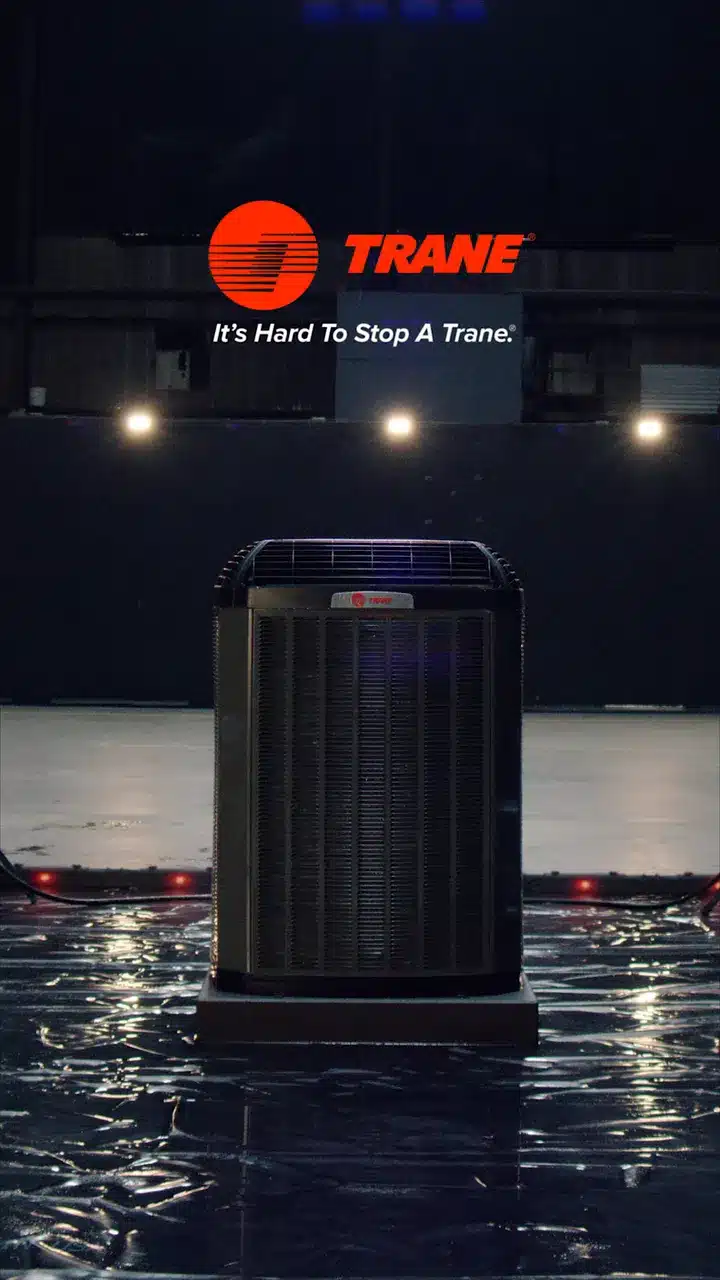
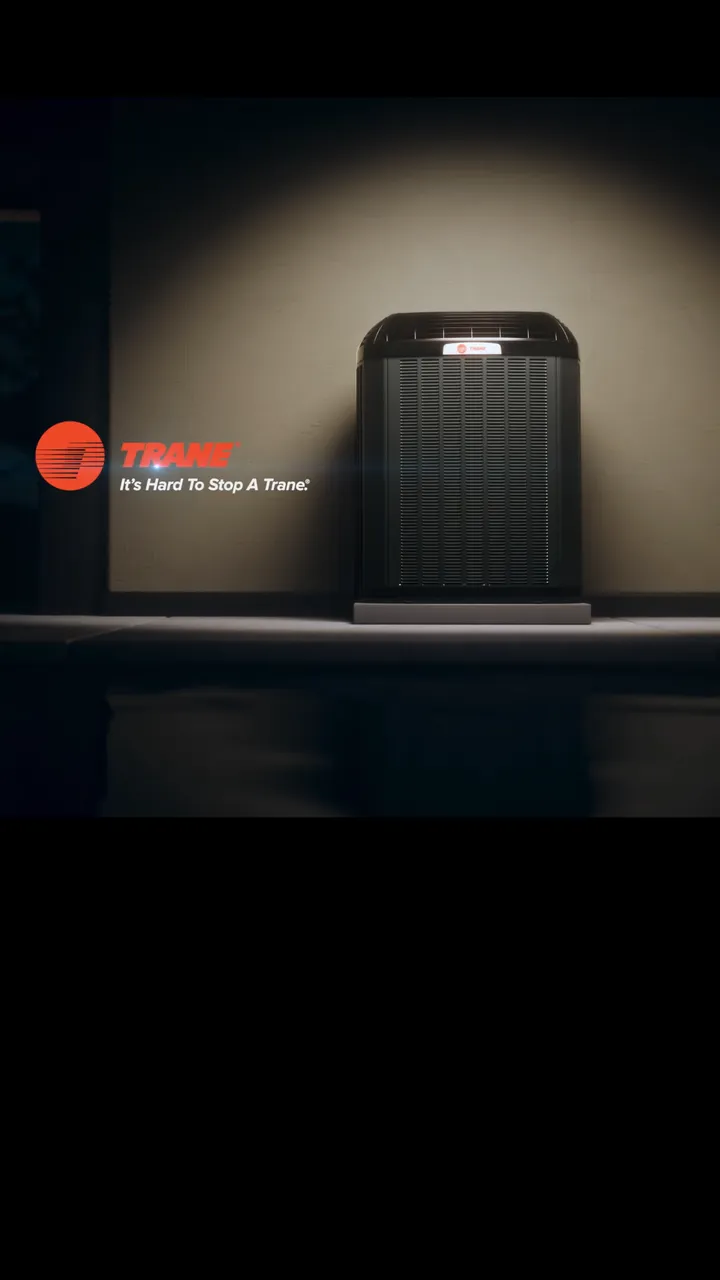
Heat lamps, snow and rain on one outdoor unit: that’s Trane’s own film. We’re a Trane Comfort Specialist, on Trane’s own dealer locator, and when you pick a Trane, our crew puts it in.
Films: Trane’s own.
Magic Pak and MagicPak questions, answered
What is a Magic Pak?
A complete heating and cooling system in one cabinet, made by Allied Air (a Lennox International company) and spelled MagicPak. It stands in a closet on an outside wall and breathes through a louvered grille, with no outdoor unit and no refrigerant lines.
How much does a Magic Pak replacement cost?
From us, a new MagicPak runs $8,500 to $13,400 installed in the same wall opening, heat pump or gas. From about $142 a month at 0% APR for 60 months, the whole price financed, on approved credit.
How long does a MagicPak last?
MagicPak publishes no life expectancy, only a 5-year parts and 20-year heat exchanger warranty. The Department of Energy plans on 15 years for an air-source heat pump, and ENERGY STAR suggests weighing a replacement past 10. The serial number on the front-panel plate dates yours: the second pair of digits is the year. A blocked louver, a dirty filter and a backed-up drain shorten its life.
Is a MagicPak a heat pump?
Some are. The M-Series MHP is a heat pump with 3 to 10 kW of electric backup, rated to run down to -5°F. HWC and MGE models burn gas; EWC and MCE models heat with electric strips. The plate tells you which.
Can I replace a Magic Pak with a mini split?
Yes, but it takes an outdoor unit, a line set and a head in each room, and under Virginia’s Condominium Act your condo’s documents decide whether that outdoor unit can go up. Most owners we work with put a new MagicPak back in the same opening instead.
Will a new MagicPak fit my old wall opening?
Usually. The V-Series keeps the original MagicPak dimensions and is MagicPak’s replacement line. We check the plate, sleeve, drain holes and closet before we quote, and some older openings take a unit ordered to match.
Do MagicPaks use R-454B now?
Yes. MagicPaks built since January 1, 2025 are R-454B, the 7 in the middle of the model number, because new systems can’t use refrigerant over the EPA’s 700 limit. An R-410A MagicPak can still be repaired.
What is a through the wall heat pump?
A heat pump that sits in, or right behind, an opening in an outside wall instead of on a pad outside. A heat pump MagicPak is one; so is a through-the-wall split with a heat pump in the wall, and a PTAC heating one room.
Does a gas MagicPak need a chimney?
No. It’s a direct-vent furnace that takes its combustion air from outside and sends its exhaust out through the louver, and MagicPak says the vent must never be altered or extended. Keep the louver clear of leaves, plants and ice.
Magic Pak replacement in Northern Virginia: call (703) 997-9757
Call (703) 997-9757, book online, or send the form at the top of this page and the office calls or texts you back; have the model number handy. Every condo system we work on, MagicPaks, First Co splits, water source heat pumps and PTACs, is on our condo HVAC page. In a house instead? See heat pump replacement.

SwiftPro Heating, Cooling & Plumbing repairs and replaces MagicPaks, through-the-wall splits, heat pumps, gas furnaces, air conditioners and ductless mini splits across Northern Virginia, from Chantilly and Ashburn, with a dedicated HVAC team and a separate plumbing team. Trane Comfort Specialist, Rheem Pro Partner, Carrier experts and Mitsubishi Electric Diamond Contractor. Family owned, BBB Accredited with an A rating, 24/7 emergency service, Virginia Class A contractor license 2705192276, and rated 5.0 stars across 1,132 reviews on Google, Angi, Yelp, the BBB and Facebook. Read the reviews.


