The short answer
Replace your washing machine’s supply hoses every five years, and any time you get a new washer, even if they look fine. That’s GE Appliances‘ advice, and the Insurance Institute for Business and Home Safety says every three to five years. Braided stainless steel hoses hold up better than rubber, but they still get replaced on schedule. In a Northern Virginia house with the laundry upstairs, a burst hose comes through the ceiling.
Here’s why it matters. A washer hose sits under about 70 pounds of pressure, and State Farm says a failed one can let out about 650 gallons an hour. Gone for a weekend, that’s a flooded floor and the room under it. It’s one of the parts that flood houses most often, and every gallon goes through your meter (why the water bill jumped).
Why hoses fail
Every time the washer finishes filling, its valve snaps shut and the pressure jumps. State Farm explains that the hose balloons out and back each time, and over the years the rubber weakens. Hoses also fail at the crimped metal ends, and they kink when the washer gets pushed back against the wall.
Look at yours every few months. Pull the washer out and check for:
- A bulge or a blister anywhere along the hose.
- Cracks in the rubber, most of all near the ends.
- Rust or white crust at the crimped fittings.
- Drips or damp at either end, at the valve or at the washer.
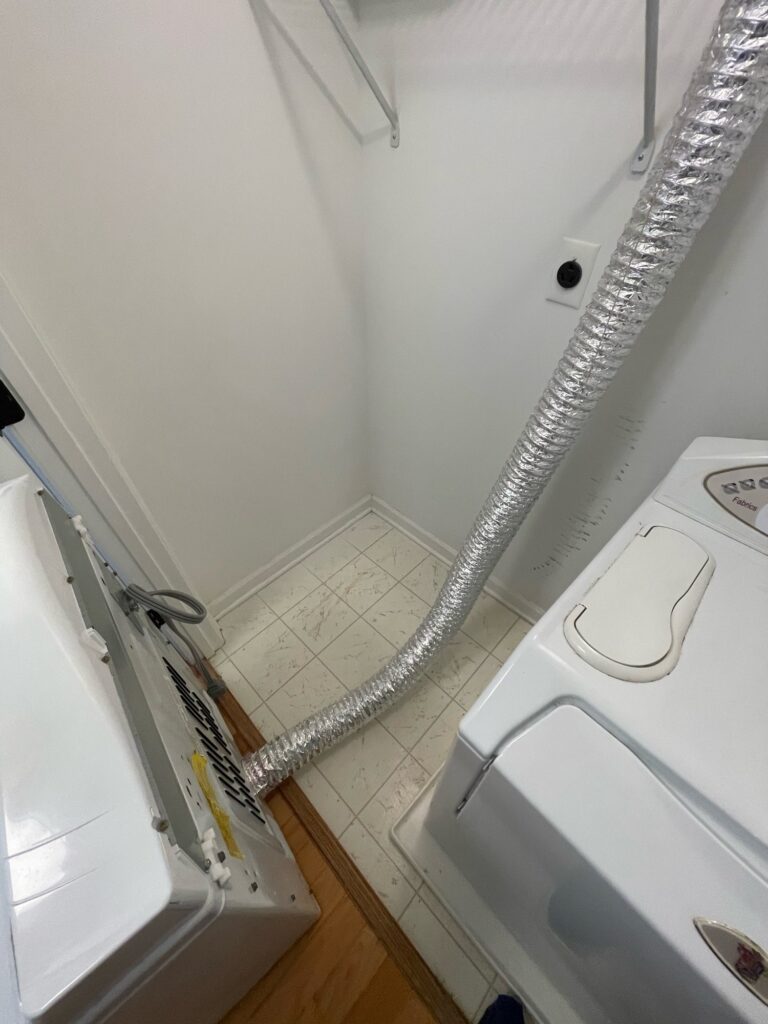
- A kink where the hose bends behind the machine. IBHS says to leave about four inches between the washer and the wall.
Braided steel or rubber
Swipe to see all columns →
| Rubber | Braided stainless steel | |
|---|---|---|
| How it holds up | Weakens a little with every fill | The steel braid keeps the hose from ballooning |
| When to replace | Every three to five years | Every five years: the hose inside the braid still ages |
| What to watch for | Bulges and cracks | A frayed or rusty braid, a kink, rust at the ends |
Either way, both hoses get replaced together, hot and cold, and with new washers in the fittings.
The valves that stop it
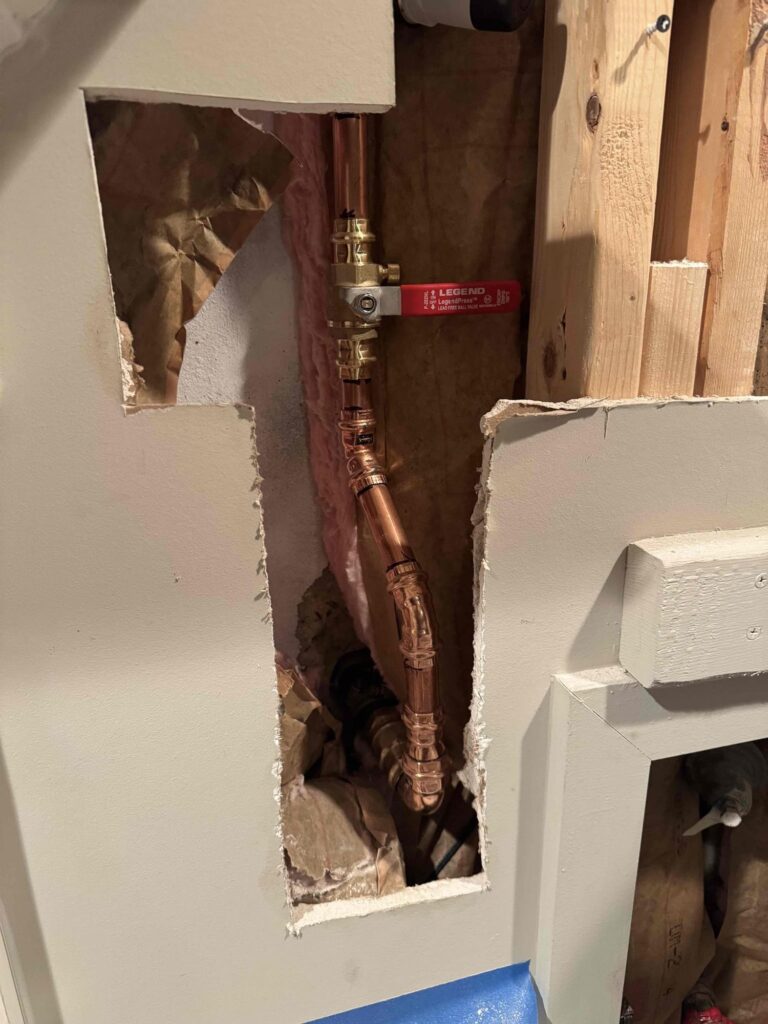
Behind most washers is a box in the wall with two valves, hot and cold, or a single lever that shuts both at once. Turn them off when you’ll be gone more than a couple of days; State Farm says the same. A single lever makes that a one-second habit, and a plumber can swap two old valves for one.
If those valves are stuck or seeping, don’t force them. That’s what the main valve is for: find your shutoff valves before you need them.
If a hose bursts
- Shut the washer’s valves, or the main if you can’t reach them.
- Turn off power to the washer before you touch anything wet.
- Get the water up fast and dry the floor and the ceiling under it (what to do after a burst pipe walks through it).
- Take photos for your insurance before the cleanup gets far.
- Replace both hoses, not just the one that broke.
Upstairs laundry: two more things
- A drain pan under the washer, piped to a drain, catches a slow leak before it reaches the ceiling. IBHS recommends one, most of all on upper floors.
- A leak sensor on the floor, or an automatic shutoff on the main, closes the water when it senses a leak (smart water leak detectors compared).
Water coming back up out of the standpipe is a drain problem, not a hose, and washing machine drain backing up covers it. A puddle in the kitchen sink cabinet instead? Here is how to find that one.
If you already know something’s leaking, a plumbing visit is $49 in regular hours, and the price of the fix is in writing before we start. Booking a plumbing repair? The whole-house plumbing inspection is included, so the next drip gets caught too.
Get a plumber on it
Book a plumber online, call (703) 997-9757, or book the $29 plumbing safety check. We answer day or night. Rated 5.0 stars across 1,138 reviews on Google, Angi, Yelp, the BBB and Facebook, Virginia Class A license 2705192276.
Questions people ask
How often should you replace washing machine hoses?
Every five years, and whenever you get a new washer, per GE Appliances. IBHS and State Farm say every three to five years. Braided steel hoses go on the same schedule.
Are braided stainless steel washer hoses better than rubber?
Yes. The steel braid keeps the hose from ballooning with every fill. The hose inside still ages, so replace them on schedule too.
How much water comes out of a burst washing machine hose?
State Farm puts it at about 650 gallons an hour. Over a weekend away that’s tens of thousands of gallons, which is why the valves get turned off when you travel.
Should I turn off the water to my washing machine when I’m not using it?
When you’ll be away more than a couple of days, yes. A single-lever washer valve makes it a one-second habit.