
There is one question worth answering before you call anybody about a slow drain, and you can answer it yourself in about five minutes with no tools: is this one fixture, or is it the main line?
It matters because the two problems have different urgency, different prices, and different consequences for waiting. One is an annoyance you can sit on until Monday. The other is sewage coming up through the lowest drain in your house, and it gets worse every time somebody upstairs runs water.
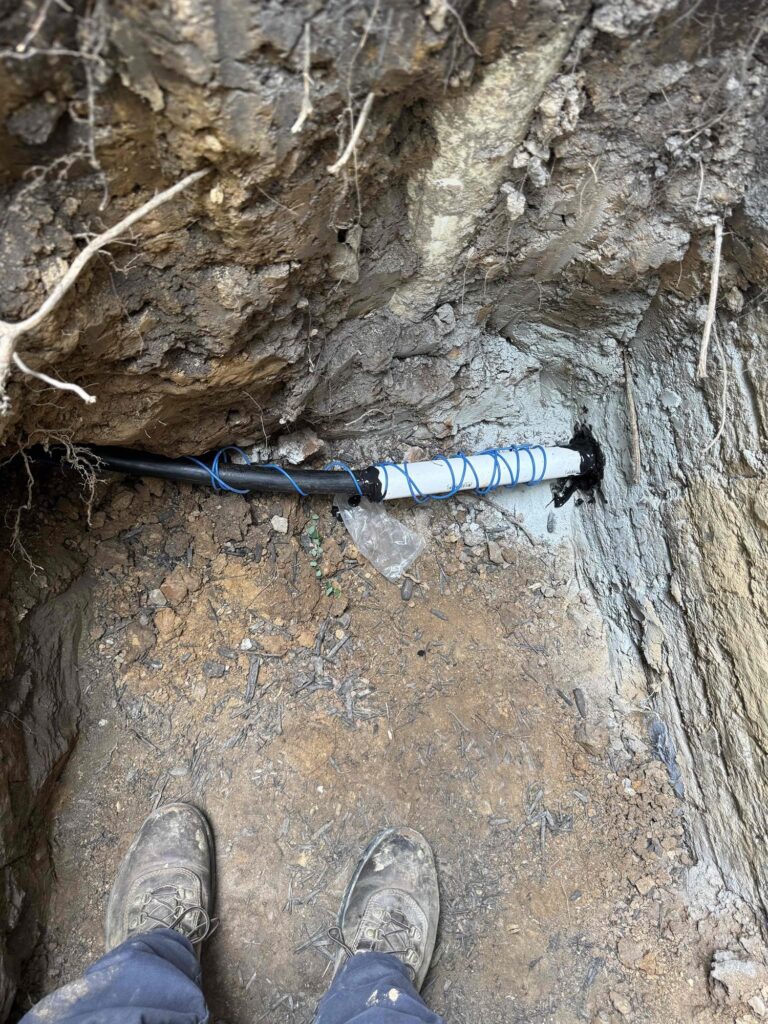
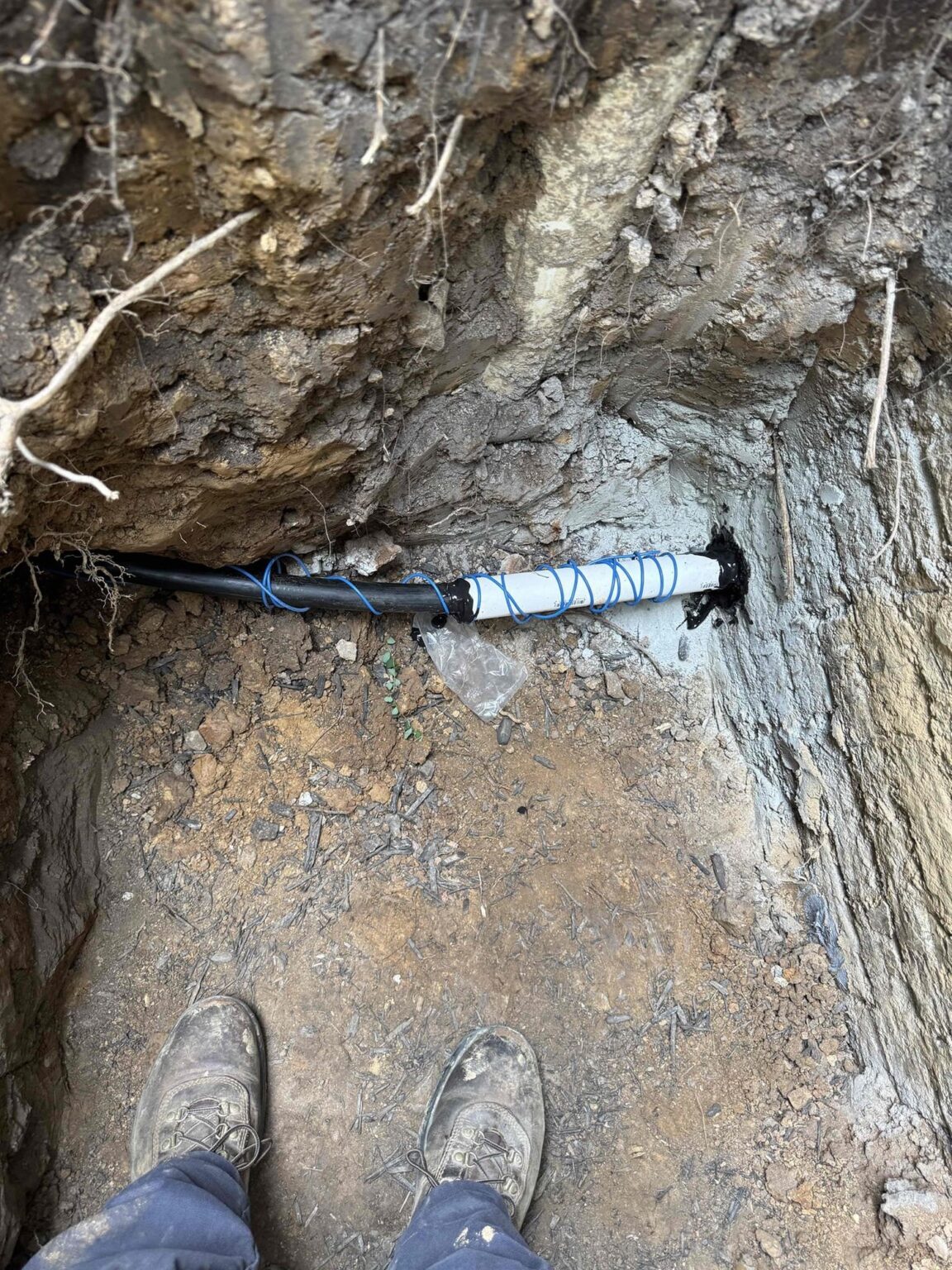
If the test points at the main line, the next question is whether the pipe has to come up at all. Often it does not: a liner cured inside the existing pipe renews the lateral without a trench across the yard, and the camera tells you in an hour which repair you are looking at.
The five-minute test
Go to the lowest level of the house that has plumbing. In most Northern Virginia homes that is a basement, and the fixtures to watch are the floor drain, the basement shower, or the basement toilet.
Now run water somewhere else. Flush an upstairs toilet. Run the kitchen sink for thirty seconds. Start the washing machine.
If the basement fixture gurgles, burps air, or starts filling while you run water elsewhere, that is your main line. Everything in the house drains into one pipe on its way out, and you have just watched water look for somewhere else to go.
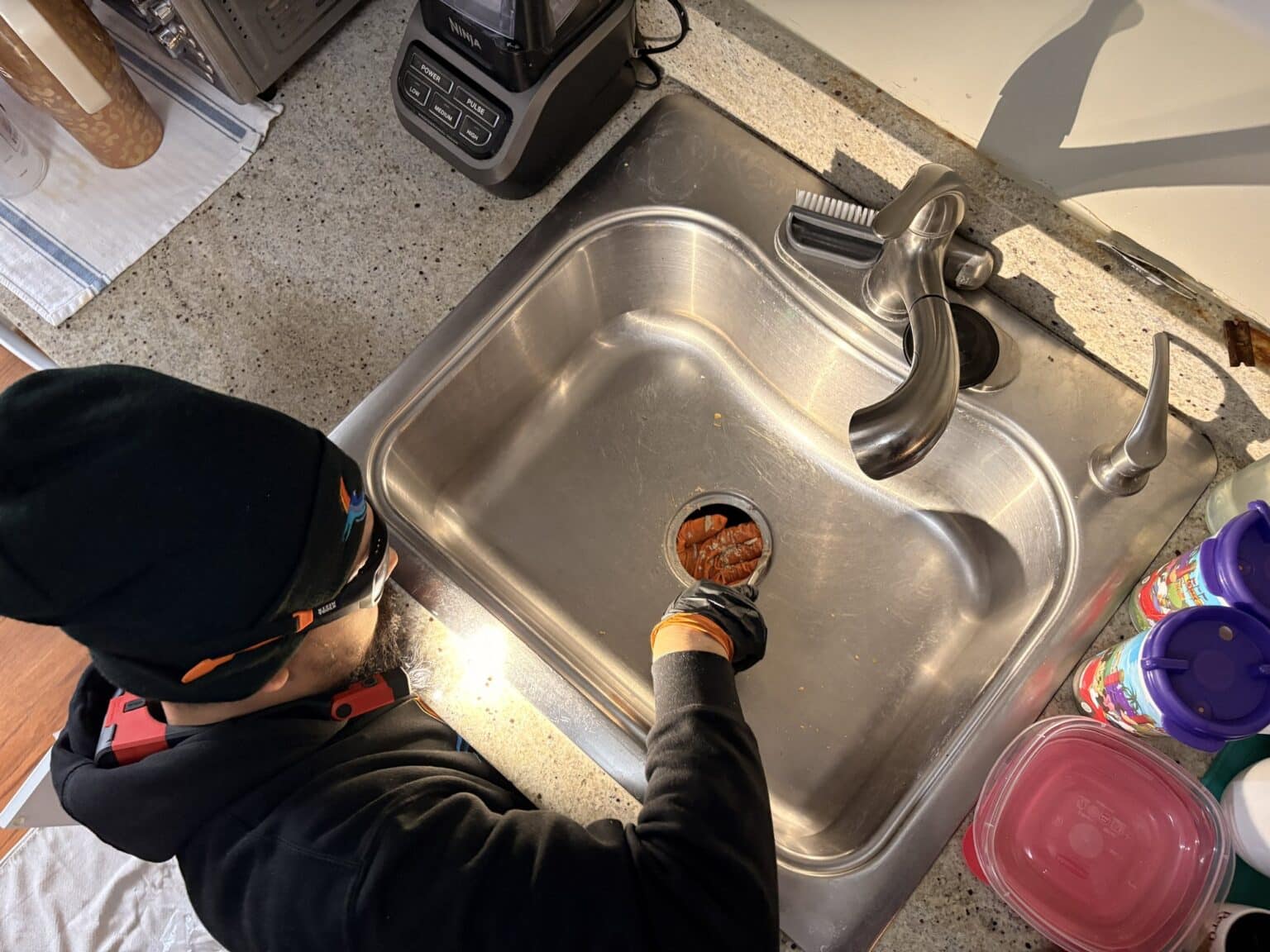
If nothing happens down there, and only the one sink or tub is slow, it is that fixture’s branch. Different problem, much smaller.
No clog at all, just a smell? That’s a different hunt: finding a sewer smell by the room you smell it in.
The other tells
Main line, most likely:
- More than one fixture is slow at the same time, especially on different floors.
- Flushing a toilet makes water rise in a nearby tub or shower.
- The washing machine draining causes a toilet to bubble.
- There is a smell in the basement that was not there last week.
- The lowest drain in the house is the one that backs up first. It always is.
One fixture, most likely:
- Only that sink, tub or shower is affected, and everything else drains normally.
- It has been getting slower for weeks rather than failing overnight.
- It is a bathroom sink or a shower, where hair does most of the damage.
- It is a kitchen sink, where grease does.
Why the main line fails here specifically
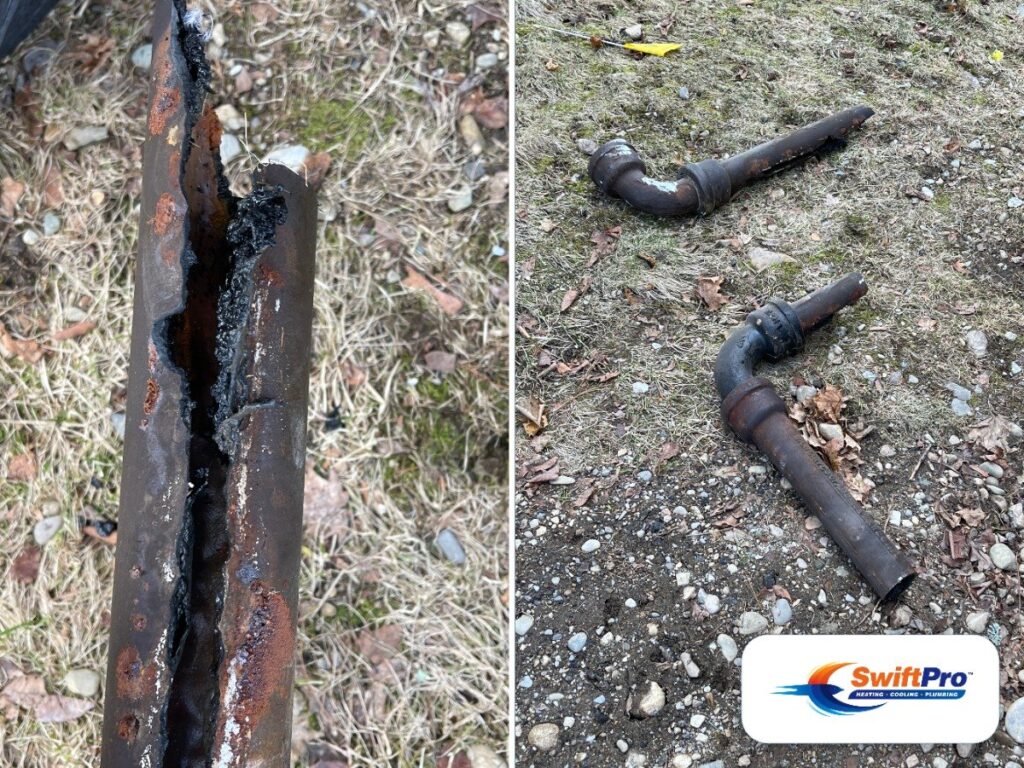
Northern Virginia has a particular combination working against it. A lot of our housing stock went up between the 1950s and the 1980s, which means clay or cast iron sewer laterals in the older neighborhoods. Those materials fail at the joints. Meanwhile the trees planted with those houses are now fifty years into looking for water, and a sewer line is the wettest, most nutrient-rich thing in your yard.
Roots do not break into a healthy pipe. They find a joint that has already shifted or a crack that already exists, and then they grow. That is why a root problem comes back on a schedule: cabling cuts them off, and they regrow toward the same opening.
The other regional factor is the soil. Rock and heavy clay do not settle evenly, and a line that has bellied slightly (dipped, so waste pools instead of running downhill) will collect solids in the low spot forever.
What to do in the next hour
If it is the main line: stop using water. All of it. Every flush, every load of laundry, every shower goes into a pipe that has nowhere to put it, and the exit point is the lowest fixture in your house. Tell everyone in the household. Then call. This one does not improve overnight.
If it is one fixture: you have time. Try the stopper and the strainer first, because hair on a pop-up assembly is the single most common cause and it costs nothing to check. A plunger works in the first minute or not at all, and it works better if you block the sink’s overflow hole with a wet rag so the pressure goes down instead of sideways.
Skip the chemical drain cleaner. It is rough on older pipe, it seldom moves a real blockage, and it makes the line genuinely hazardous for whoever opens it next, which may be one of our technicians and may be you.
What we will do differently for each
For a branch line, we cable the fixture, pull out what is in there, and run water until we are satisfied it is actually gone. Usually under an hour.
For a main line, we want a cleanout. That is the capped access point that lets a bigger machine into the line directly. If the house has one, this is a straightforward job. If it does not, we get access another way, which takes longer.
And for a main line that has backed up before, we will push for a camera. Clearing a line that is broken is renting a solution, and the rent is due every few months. A camera tells you whether you are buying a clearing or a repair, and it tells you where. Here is what both actually cost.
When to stop diagnosing and call
Call now if sewage is coming up anywhere, if more than one fixture is backing up, or if you have a single bathroom and it is out of service. Call during business hours if one drain is slow and everything else is fine, and expect to pay less for it.
SwiftPro clears drains and main lines across Northern Virginia. Call (703) 997-9757, use the emergency line if it is actively backing up, or book online if it can wait for a scheduled slot.
Related: garbage disposal: fix it or replace it.
Watch our crew on real drain and pipe jobs
Real jobs in Northern Virginia homes, filmed by our own crew. Tap one to watch.