

By Tyler Griffin, Founder of SwiftPro
Let that number sink in for a second: around 40 pounds of dust per year in an average home, by some estimates. That’s a full bag of dog food. A packed 13-gallon trash bag. About three to four pounds — a bag of sugar — every single month, floating through the air your family breathes and settling on everything you own.
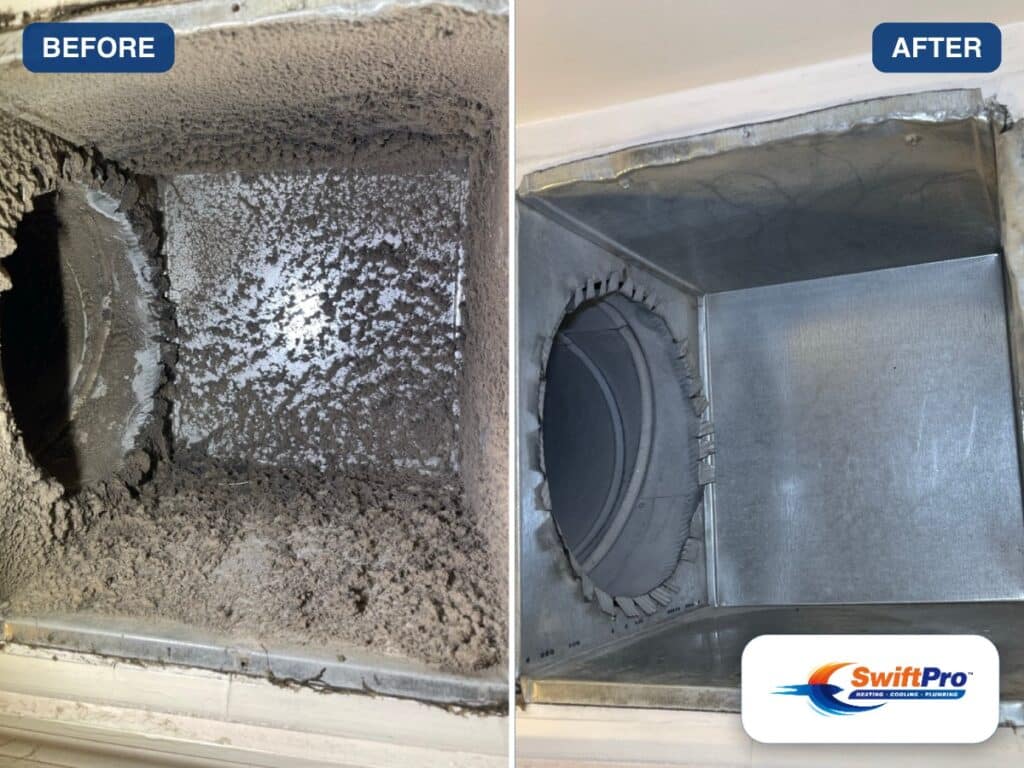
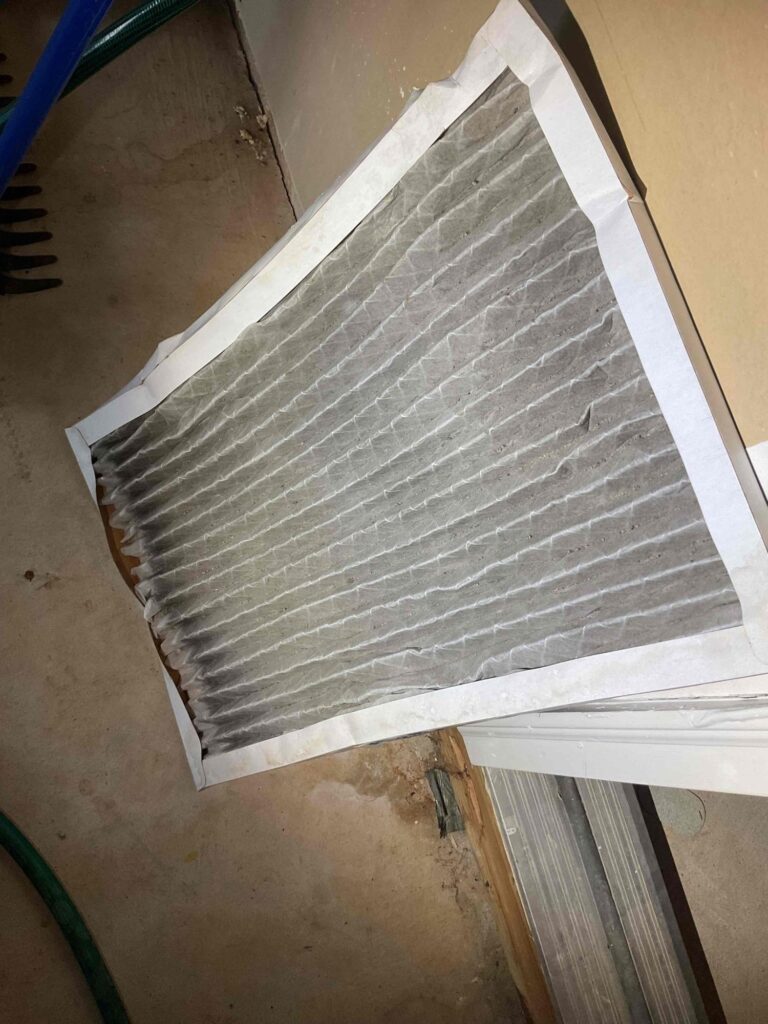
And here’s the part nobody likes to hear: the standard filter in your furnace or air handler was designed to protect your equipment, not your lungs. It catches the big stuff — lint, hair, visible dust. The fine particles (fine dust, pollen fragments, dander, smoke, biological growth spores) sail right through it and back into your rooms.
So if that’s all you’ve got, then yes — your lungs are the filter.
The EPA backs this up: indoor air is often 2 to 5 times more polluted than outdoor air, and Americans spend roughly 90% of their time indoors. Think about it this way — you’ll drink about half a gallon of water today, and you probably care how clean it is. You’ll breathe about 3,000 gallons of air today, most of it inside your home.
What an Air Scrubber Actually Does
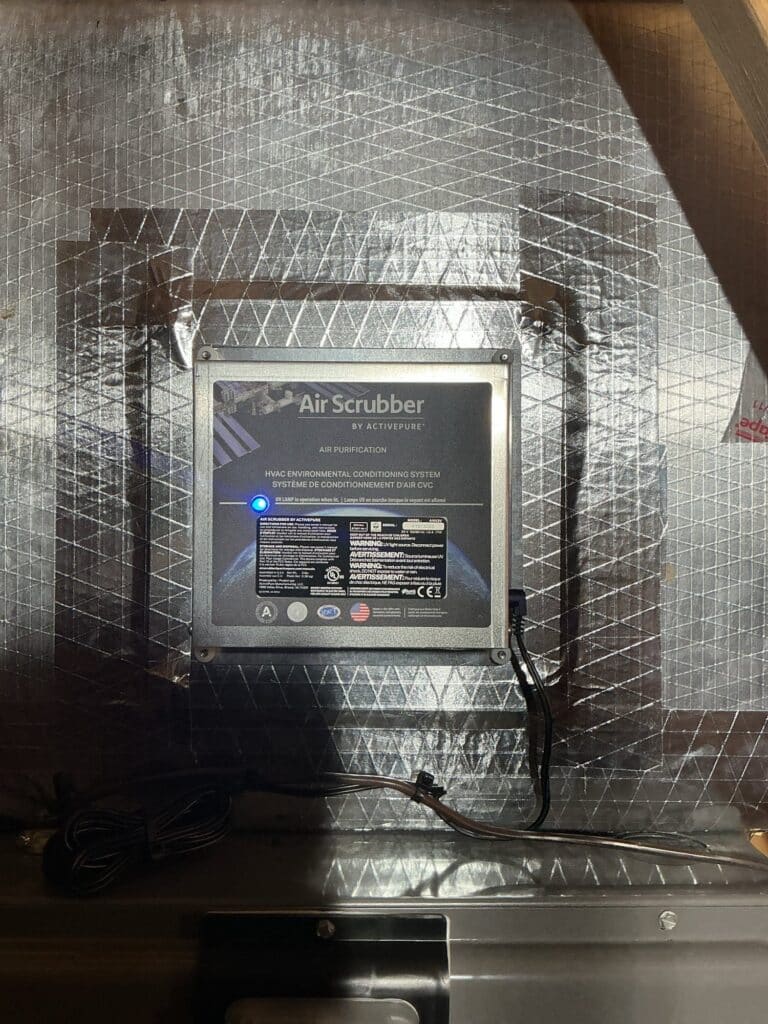
A whole-home air scrubber installs inside your existing ductwork, usually near the air handler. Unlike a passive filter that waits for particles to run into it, a scrubber actively treats the air passing through — and, depending on the technology, sends scrubbing molecules out into your living spaces to break down contaminants at the source: in the air, and even on surfaces like counters and doorknobs.
Every time your heat or AC runs, every room on the duct system gets treated. Nothing to plug in, no floor space lost, nothing to remember to switch on.
The Benefits Homeowners Actually Notice
- Less dusting. Less airborne dust means less settling on furniture. This is usually the first thing people report.
- Allergy and asthma relief. Fewer fine particles — pollen, dander, dust — making it to your lungs. In Northern Virginia’s brutal pollen seasons, this is huge.
- Odors actually go away. Cooking smells, pet smell, mustiness — active scrubbing addresses odors, which no passive filter can do.
- Fresher-feeling air during the months the windows stay shut (which around here is most of January and most of July).
- A cleaner HVAC system, which can help your equipment run more efficiently and last longer.
When Are Air Scrubbers Used? (You’ve Probably Heard About These)
Air scrubbing technology has a serious professional pedigree — these aren’t gadgets. Here’s where they’re used:
- Musty homes. Restoration pros run air scrubbers during biological growth remediation to capture airborne spores. In homes prone to mustiness — finished basements, humid Virginia summers — a whole-home scrubber helps keep spore levels down day to day. (Important: if you have active biological growth, that needs to be found and fixed first. A scrubber manages air; it doesn’t dry out a wet wall.)
- After a fire. Post-fire restoration crews rely on commercial air scrubbers to pull smoke particles and soot out of the air before a home is livable again. The whole-home version applies the same principle to everyday smoke — including wildfire smoke days.
- Cigarette smoke. Buying or inheriting a home a smoker lived in? Tobacco residue and odor cling to everything and keep off-gassing. Scrubbing technology is one of the few things that actively fights it, rather than just masking it.
- Cold and flu season. Several air scrubber technologies are designed to reduce airborne viruses and bacteria — a big reason demand exploded in 2020 and never really came back down. No device makes a home germ-proof, but reducing what’s circulating helps, especially in busy households.
- New construction & renovations. Fresh paint, new carpet, and new cabinets off-gas VOCs (that “new house smell” isn’t a good thing). Scrubbers help clear it out.
- Homes with pets. Dander, hair, and the smell you’ve gone nose-blind to but your guests haven’t.
Transparent Expectations: How Air Scrubbers Actually Work
We’d rather lose a sale than oversell you:
- A scrubber works with a good filter, not instead of one. The filter catches the big stuff; the scrubber handles the fine particles and odors.
- If your ducts are leaky or filthy, fix that first — sometimes the right answer is duct sealing or a $20 filter upgrade, and we’ll tell you so.
- Some devices sold in this category are ozone generators, which the EPA cautions against in occupied spaces. We only install technologies designed to operate within safe standards. Ask us — we’re happy to nerd out.
What Does an Air Scrubber Cost in Northern Virginia?
Most whole-home air scrubber installations run roughly $600 to $2,000 installed, depending on the technology and your existing system. The right recommendation depends on your ductwork, your current filtration, and the specific problem you’re solving — which is why we start with an assessment, not a phone quote.
Stop Being the Filter
SwiftPro is family-owned and based right here in Chantilly. We install whole-home air scrubbers across Fairfax, Arlington, Loudoun, Prince William, and Fauquier Counties — and every install starts with an honest look at your whole system so you’re solving the real problem.
Forty pounds of dust is coming through your house this year. Decide what filters it — call (703) 997-9757 or schedule online. Fast, reliable, done right the first time.