

By Tyler Griffin, Founder of SwiftPro · Updated June 2026
It is late July across Fairfax and Loudoun Counties. The air outside feels saturated and heavy, your driveway is radiating heat, and your outdoor condenser is humming at full capacity. You walk in from the mailbox, wipe your brow, see the hallway thermostat reading 75 degrees, and feel the overwhelming urge to jam the dial down to 65. Stop right there. During a humid Virginia heatwave, that knee-jerk move is the fastest way to overwork your compressor and freeze your equipment. Staying comfortable is about smart home physics, not brute mechanical force, here are the six rules that actually work, plus how to know when it is time to call a pro.
What Makes Our Summer Climate So Exhausting

To understand why your air conditioning struggles so hard in July, look at the regional geography. Northern Virginia sits in a humid subtropical basin defined by thousands of acres of suburban paving. That creates a strong urban heat-island effect across Centreville, Chantilly, Ashburn, and Alexandria, where solar radiation gets trapped in asphalt and dark roof shingles long after sunset.
When outdoor temperatures climb toward 100 degrees, airborne moisture skyrockets. Your air conditioner can spend up to seventy percent of its electrical draw doing nothing more than pulling humidity out of your indoor air before it can even begin lowering the actual temperature. That is why the house can feel sticky even when the thermostat says it should be comfortable.
The 6 Golden Rules for Cooling Your House Down
1. Use Your Ceiling Fans the Right Way
Fans cool skin, not square footage. During a severe heatwave, set your living room and bedroom ceiling fans to spin counterclockwise at high speed. That rotation pushes air straight down toward the floor, creating a wind-chill effect that makes the room feel about four degrees cooler against your body. Turn them off in empty rooms, a fan cooling nobody is just using electricity.
2. Draw the Curtains on Sunny Afternoon Windows
You know what happens to a car parked in a lot at noon with the windows up: sunlight hits the dashboard and turns into trapped radiant heat. The same greenhouse effect happens inside your home every afternoon.
Between the peak solar hours of noon and evening, draw the curtains, pull the cellular shades, and tilt the blinds shut on every sunny window. Blocking direct sun before it strikes your floors stops passive heat loading before your cooling system ever has to fight it.
3. Leave Your Thermostat at One Temperature (The Most Critical Habit)
The biggest heatwave mistake homeowners make is treating the thermostat like a gas pedal. If the house feels warm at 4 PM, cranking the dial from 74 down to 65 does not make the air blow colder. It just makes the system run without ever reaching its set point, which wears it out faster.
The regional reality: when it is 98 to 100 degrees outside, your home can sit a couple of degrees above the setpoint, and that is completely normal. Pick a steady holding temperature like 73 or 74 in the morning, leave the dial alone, and let the equipment keep a steady rhythm.
4. Clean or Change Your Air Filter
Your cooling system breathes through the pleated filter in your return grille or utility closet. During a heatwave the blower motor runs almost nonstop, and if that filter is clogged with dust, pet dander, and pollen, the system chokes for airflow.
A starved coil cannot pull humidity out of the air, and the strained blower drives your bills up. Check the filter every thirty days during extreme heat and replace it the moment it looks dark gray.
5. Clean Debris Off Your Outdoor Condenser Coil
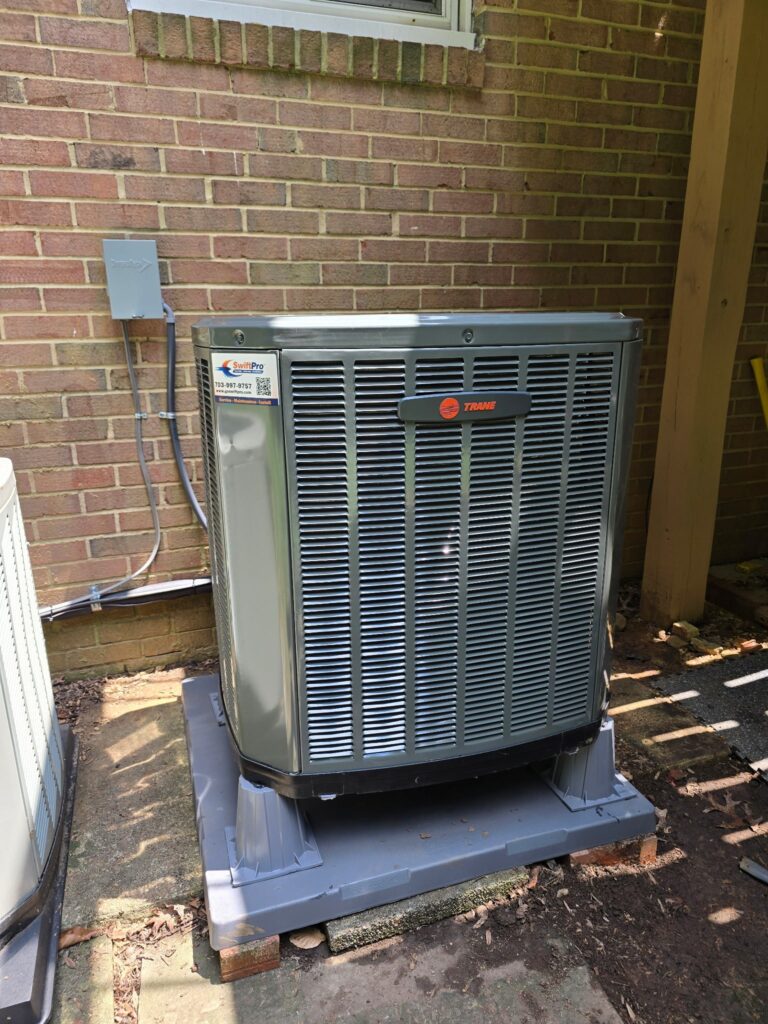
Walk out back and look at the metal condenser cabinet on its pad. That unit is a giant heat exchanger whose whole job is to dump your home’s heat into the outside air. If the aluminum fins are blanketed in cottonwood fluff, grass clippings, or creeping mulch, that heat stays trapped in the coil.
Set a garden hose to a gentle, low-pressure spray and rinse the fins top to bottom. Never use a high-pressure power washer, it will instantly flatten and destroy the delicate cooling fins.
6. Keep Exterior Windows and Doors Shut
Air conditioning is a constant battle against heat and humidity. Cracking a window for a breeze or leaving the patio door open while you grill lets heavy outdoor moisture rush straight into your conditioned home.
Keep every exterior door and window tightly closed during heat advisories, and make sure your weatherstripping still makes solid contact against the door jambs to lock out unconditioned air.
What If You Did All This and the House Still Won’t Cool?
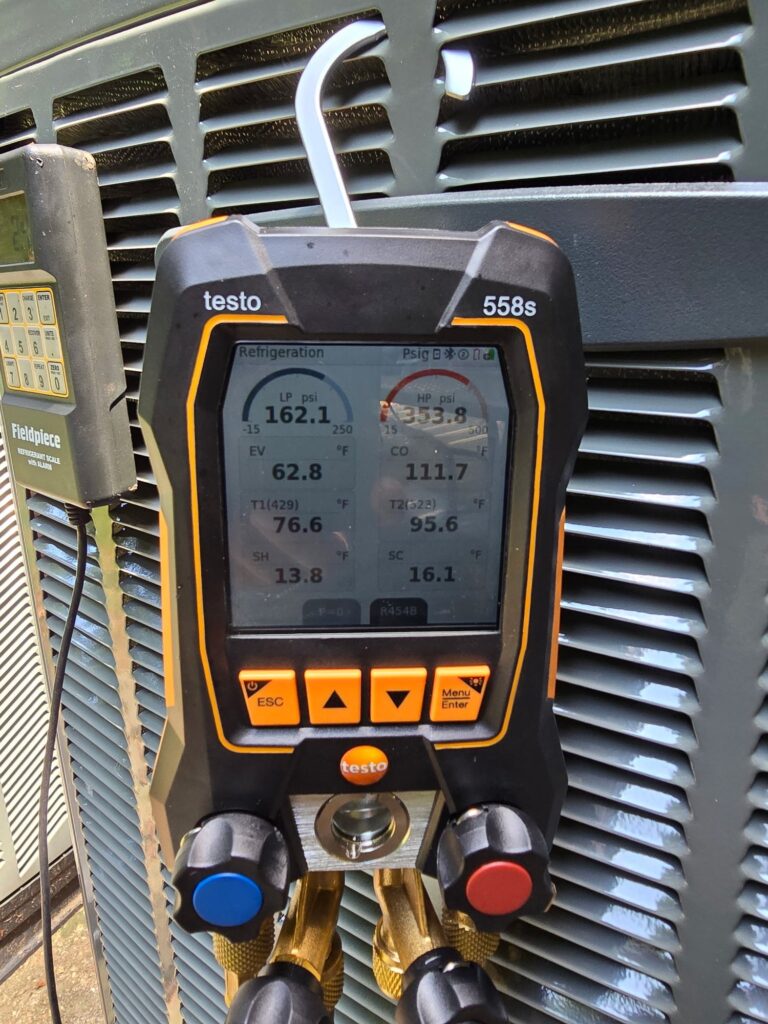
If you drew the drapes, rinsed the condenser, changed the filter, and left the thermostat alone, but your indoor temperature is still stuck above 80 degrees, it may be time to call a licensed HVAC professional for a real diagnostic. An expert can find out whether something deeper is going on inside your equipment.
Severe weather is a mechanical stress test. A system that kept you comfortable on an 82-degree afternoon in May will quickly expose hidden wear when it has to run continuously in triple-digit July heat. Common hidden faults include a weak dual-run capacitor that stops the compressor from starting, a slow refrigerant leak that starves cooling capacity, or a failing blower relay. A proper diagnostic isolates the actual failure so you fix the root cause instead of paying for guesswork.
About SwiftPro Heating, Cooling & Plumbing
SwiftPro Heating, Cooling & Plumbing is a family-owned, locally run company based in Chantilly, serving homeowners across Fairfax, Loudoun, and greater Northern Virginia. We are fully licensed (VA #2705192276) and backed by 1,130 reviews, and we are proudly independent, with no private-equity owners and no corporate call center. Just a local team that treats your home like our own.
Founder Tyler Griffin built SwiftPro on one principle: honest education over high-pressure sales. When your AC struggles in extreme heat, you get a fast, accurate diagnostic and straight local pricing, not a replacement quota.
Need a Professional Eye on Your Struggling AC?
When you call SwiftPro you reach a neighbor here in Chantilly, not a call center three states away. Schedule a visit online or call us directly at (703) 997-9757. We will give you a straight answer about what your system actually needs.
SwiftPro Heating, Cooling & Plumbing · 4230 Lafayette Center Drive, Suite N, Chantilly, VA 20151 · (703) 997-9757 · VA License #2705192276. Published June 2026 as a free homeowner education resource.
Related: which way your ceiling fan should spin, by season, AC died in a heat wave: the first hour.
Watch us find what's wrong with an AC
Real jobs in Northern Virginia homes, filmed by our own crew. Tap one to watch.