If you only do one thing: if your furnace lights, runs for a few seconds, shuts off, and then tries again, count the blinks on the status light before you touch anything. That pattern is usually the flame sensor, and it is one of the cheapest no-heat repairs there is: cleaned, $95 to $180.
It is also the most confusing one, because the furnace is not broken in the way people expect. It lights fine. It just does not believe its own flame.
What a flame sensor does
The flame sensor is a thin metal rod that sits in the flame of one burner, usually with a white ceramic base where it mounts. Its only job is to prove to the control board that the gas is actually burning.
It does that with electricity. The board puts a small voltage on the rod. Flame conducts electricity, and because the burner is much bigger than the rod, the current runs mostly one way, a few millionths of an amp. The board reads that tiny steady current as proof of fire and keeps the gas valve open. No current, and the board assumes the gas is pouring out unlit, so it shuts the gas off within seconds. That is a safety, and it is a good one.
The problem is that a film builds up on the rod. Goodman’s service manual calls it a “nearly invisible coating” that “acts as an insulator.” Enough of it, and the current drops below what the board will accept. The flame is right there. The board cannot see it.
Our crew filmed one on a real job: the flame sensor, up close, in a 34-second video. It is the thin rod with the white base, sitting right where the burner flame hits it.

What it looks and sounds like
You hear the furnace start: the small inducer fan, a click, the igniter glowing, then the burners light with a whoosh. A few seconds later they go out. The furnace clears the flue and tries again. Most furnaces make three to five tries, then stop and lock themselves out. On Trane and Lennox furnaces that lockout lasts an hour. On Carrier, three hours. Then the whole thing starts over.
That is why this gets searched as “furnace not turning on.” In lockout the furnace sits there doing nothing, the thermostat is calling, and the house is getting colder. Turning the power off and on resets the lockout on many furnaces, and it will run the same few seconds and lock out again, because nothing about the sensor changed. Cutting the power can also erase the blink code, which is the most useful clue you have, so write it down first.
Is it the flame sensor, or something else?
| What you see | Usually | If it needs us |
|---|---|---|
| Burners light, go out after a few seconds, tries again | Flame sensor; sometimes a bad ground or the rod bent out of the flame | Cleaned $95 to $180, replaced $240 to $410 |
| Clicking or glowing, but no flame at all | Igniter, or gas not reaching the burners | Igniter $240 to $410 |
| Small fan runs, nothing lights, no glow | Pressure switch, often a clogged condensate drain on a high efficiency furnace | Drain or trap $175 to $420 |
| Runs a few minutes, burners off, fan keeps blowing | Overheating: dirty filter or blocked airflow | Often just a filter |
| Nothing at all | Power switch, breaker, the front door not seated, or a lockout | Diagnostic $99 |
The middle rows each have their own page: the condensate drain that shuts a furnace off, and a furnace that warms up and then blows cold. Prices are our Northern Virginia price book, the same as the full furnace repair list.
Why it gets dirty, and when it keeps getting dirty
A little film after a few years is normal. It comes from what the furnace burns: the gas and the air around the furnace. Goodman puts it plainly: “Contaminated fuel or combustion air can create a nearly invisible coating on the flame sensor.”
So a sensor that needs cleaning every single fall is telling you something about the air the furnace is pulling in. A furnace that pulls its combustion air from a laundry room, a workshop or a storage room is breathing whatever is in that room. That is worth a look on the visit, not just another cleaning.
The same symptom has a few other causes, and the manufacturers list them: a poor ground, power wired with the polarity reversed on some boards, a rod that got bumped out of the flame, or a venting problem that disturbs the flame enough to lose it. That is why the right fix is measured, not cleaned and hoped.
What a proper repair visit includes
Whoever you call, this is what the visit should look like:
- The blink code read against the chart on your furnace. Codes are different on every brand.
- The flame signal measured before anything is touched. There is no single right number: a current Goodman board wants 3 to 8 millionths of an amp, a current Lennox board 2.6 or more, and older boards far less. It gets read against your furnace’s own spec. Lennox’s maintenance list says to check it before and after cleaning.
- The rod cleaned, then measured again, because a clean rod that still reads low means the problem is somewhere else: the ground, the wiring, the rod position, the flame itself.
- A sensor with a cracked white ceramic base replaced rather than cleaned. That is standard trade practice rather than a manufacturer rule.
- The rest looked at while the burner compartment is open: the igniter, the flame color, the venting.
With us, cleaning runs $95 to $180. A new sensor or igniter, $240 to $410. The diagnostic visit is $99.
Can you clean it yourself?
Plenty of videos show it. The manufacturers’ own manuals call it a job for a qualified technician, with the power and the gas turned off first, and on some furnaces the sensor comes out with the whole burner assembly. If you have already watched the video and decided, at least know what Carrier’s manual says to use: “fine steel wool (0000 grade). Do not use sand paper or emery cloth.”
And if the furnace still locks out after a cleaning, stop there. The sensor was not the whole story.
When it is not worth fixing
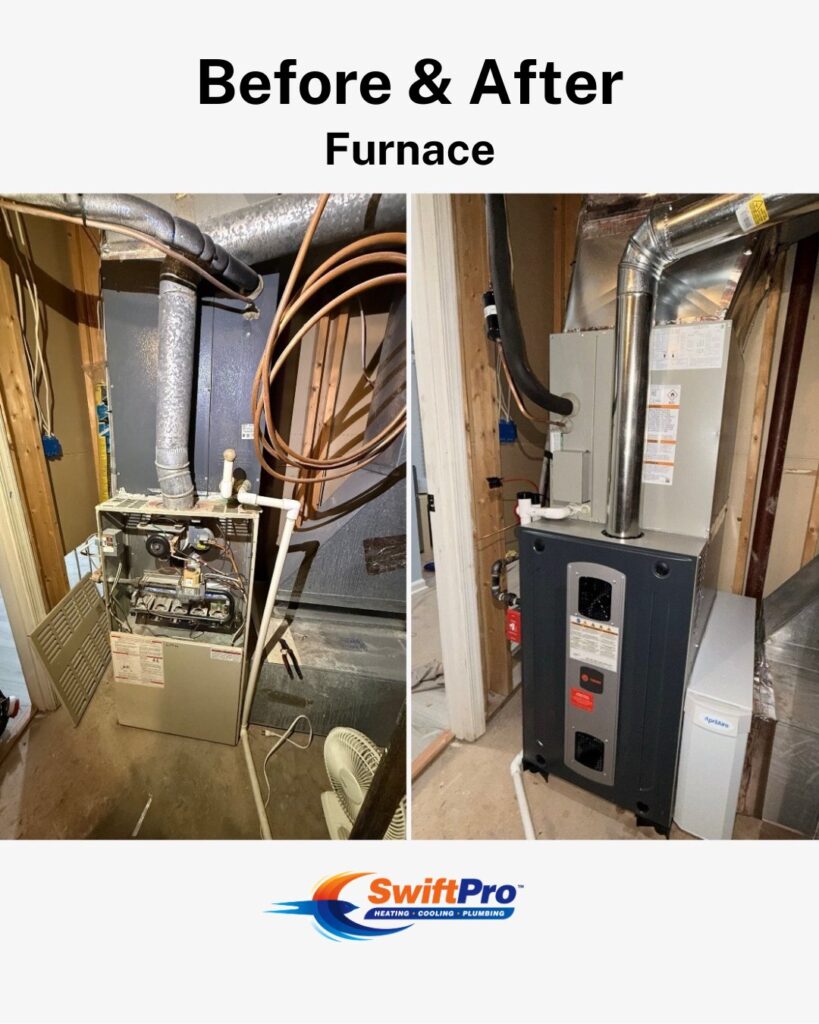
A flame sensor on a furnace of any age is worth cleaning. It is the one repair on the list that almost never turns into a replacement conversation by itself. But if the visit finds a sensor that will not read right because the flame itself is wrong, or the furnace is past fifteen and this is the third no-heat call in two winters, that is when to get the replacement number. The furnace estimator gives it to you for your house size, $4,285 to $14,040 installed. From about $71 a month at 0% APR for 60 months, the whole price financed, on approved credit.
The fall check catches a weak sensor before it locks you out. The $67 Heating Check, through December 31, looks at the burners, igniter and flame sensor on every gas furnace. What a tune-up covers.
Book a repair, or see what a new one costs
Need it fixed? The diagnostic visit is $99, and you get the repair price in writing before any work starts. Book a visit online or call (703) 997-9757, day or night.
What a replacement costs in your house. Answer a few questions and see the installed price for your size: the furnace estimator for a gas furnace (from $4,285) and the heating and cooling estimator for a heat pump or a furnace and AC together (from $8,499). From about $71 a month at 0% APR for 60 months, the whole price financed, on approved credit. Each one lets you book a free in-home measurement.
SwiftPro repairs every brand of gas furnace across Northern Virginia. No heat right now is what the 24 hour line is for.